


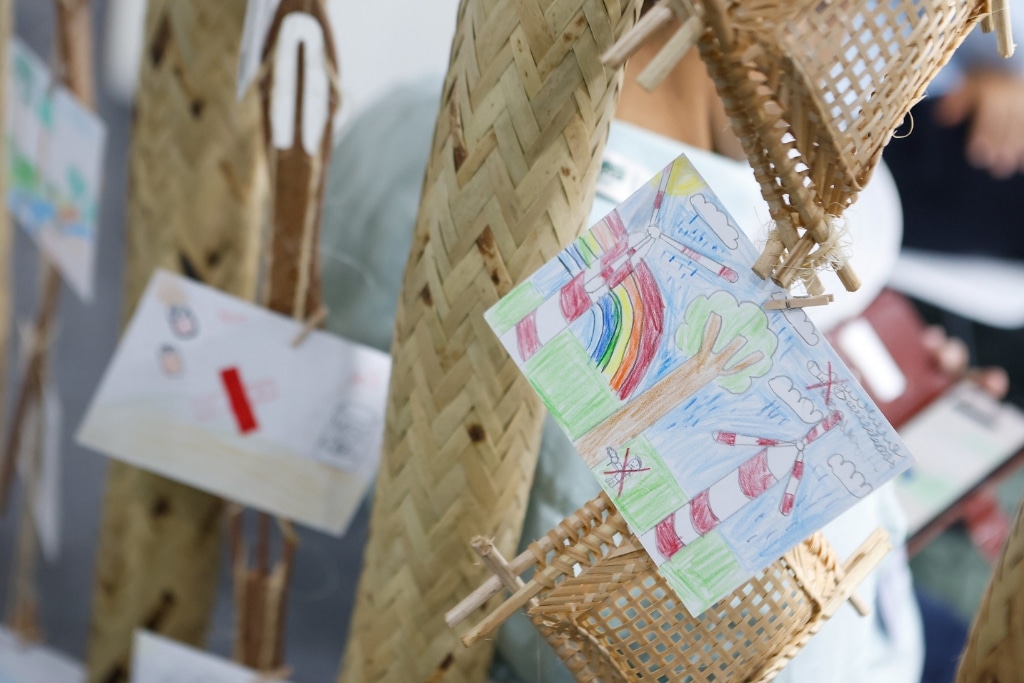
While most sessions by negotiators at COP30 in Belém, Brazil take place behind closed doors, art in the form of dancing, photography, sculpture, poetry, and painting is increasingly being used by attendees and organizers to engage with their audiences and bring marginalized voices to the fore.
—
Climate Elders, a photography exhibition spotlighting the voices and portraits of older people living on the frontlines of climate change, launched on November 7 and will continue until December 31, 2025. Bringing together the work of photographers from over 21 countries, the exhibition reveals the lived experiences of older people whose lives and livelihoods are being reshaped by the climate crisis. Each portrait is accompanied by a personal message addressed to world leaders – intimate reflections that underscore a shared plea for urgency, dignity, and inclusion in global climate policy. Following its run at the Museum of Sacred Art in Belém, Climate Elders will be donated to the museum.
Meanwhile, the Global Ethical Stocktake Pavilion is displaying climate related poetry from its Dialogue series in Asia, Oceania, and America. At several gatherings of the Global Ethical Stocktake, poets accompanied the discussions, listened to all the contributions, and transformed experiences, ideas, and emotions into original creations.

“The result is a sensitive record of the spirit of each dialogue, making poetry an emotional language capable of illuminating dimensions of the climate crisis that politics and science often cannot reach,” the organizers’ display states.

“At the GES Pavilion at COP30, visitors will find this artistic interpretation of the regional dialogues held in Bogotá, Delhi, Sydney, and New York, through the words of poets Rodolfo Ramírez Soto (Colombia), Parneet Kaur (India), Amanda Anastasi (Australia), and Alixa García (Colombia/USA), who give literary form to the climate emergency and reaffirm the role of culture as an inseparable part of the pursuit of climate justice.”
At the Indonesia Pavilion, a dancer in traditional dress performs before each session. Topics at the Malaysian Pavilion cover storytelling and climate fiction as well as technical sessions. Outside the pavilion, guests engage in a painting exercise showcasing Malaysian artistic styles.

Featured image: UN Climate Change/Kiara Worth via Flickr.
You might also like: The Art of Change: Young Artists Are Turning Creativity into Climate Action
This story is funded by readers like you
Our non-profit newsroom provides climate coverage free of charge and advertising. Your one-off or monthly donations play a crucial role in supporting our operations, expanding our reach, and maintaining our editorial independence.
About EO | Mission Statement | Impact & Reach | Write for us