

The 30th UN Conference of the Parties (COP30) – hosted in Belém, Brazil, and attended by over 55,000 people – concluded on Sunday, bringing the year’s most pivotal climate summit to a close. Despite high expectations for the “COP of Truth” to deliver on climate finance, deforestation, and Indigenous rights, the final agreement reflected a complex mix of progress and contention.
—
Key takeaways from COP30 Week 1 and Week 2
With 56,118 delegates registered, the 30th edition of the United Nations Conference of the Parties (COP) was the second-largest COP in history, behind only COP28 in Dubai, which was attended by more than 80,000 people. Among them were some 2,500 Indigenous people and about 1,600 fossil fuel lobbyists.
Brazil and China sent the biggest delegations – 3,805 and 789 delegates, respectively. For the first time in 30 years, the US sent none, a move that some said “cast a shadow” over the debates and intensified the deadlock on core issues such as climate finance and loss and damage.
COP30 was sharp in focus on ramping up climate finance for hard-hit developing nations and tackling deforestation.
Brazil President Luiz Inácio Lula da Silva said at the opening ceremony that COP30 would be the “COP of Truth…the moment for world leaders to prove the seriousness of their commitment to the planet.” For many, that promise did not materialize.
“The truth at COP30, dubbed the ‘COP of Truth,’ is that countries are failing their legal duties,” Erika Lennon, Senior Attorney at the Center for Environmental Law, said on Sunday. We are gathering reactions here.
Read on as Earth.Org recaps the main achievements and failures of COP30.
More on COP30 from Earth.Org (click to view)
News
- Did COP30 Succeed or Fail?
- COP30 Week 2: Recap
- COP30 Week 1: Recap
- Reactions Pour in After Weak COP30 Agreement
- No Mention of Planet-Warming Fossil Fuels in COP30 Agreement
- Misinformation Becomes a Political Weapon Over Fire at COP30
- Business Coalition at COP30 Urges Transition Away From Fossil Fuels
- 83 Countries Join Call to End Fossil Fuels at COP30
- ‘People’s COP’ Marked By Civil Society Protests and Direct Action Events
- American States, Institutions Scramble to Fill Gap Left by US Absence at COP30
- Disability Activists Seek Official Recognition at COP30
- Brazilian Government Announces Ordinances to Recognize 10 Indigenous Lands
- Six Countries Pledge $58.5 Million to Adaptation Fund As UN Warns of $310 Billion Deficit
- Pope Leo Upholds Environmental Legacy of ‘Green’ Pope Francis, Urging Concrete Action on Climate at COP30
- Brazil to Demarcate Indigenous Territories Following Munduruku Protest at COP30
- COP30 Launches Global Declaration to Combat Climate Misinformation, Fake News
- Brazilian Government Seeks to Advance Discussion on Ending Fossil Fuels at COP30
- COP30: Fossil Fuel Lobbyists Outnumber Every Country Delegation Except Brazil
- COP30: Brazilian Government Puts Owners of the World’s Largest Beef Producer on ‘VIP List’
- Despite Record Turnout, Only 14% of Indigenous Brazilians Are Expected to Access Decision-Making Spaces at COP30
- Countries’ Climate Pledges Put World on Track for 12% Reduction in Emissions, UN Says
- Current National Climate Pledges Fall Far Short of What Is Needed to Limit Warming to 1.5C, Report Shows
Explainers
- COP30 Glossary: What You Need to Know About This Year’s UN Climate Summit in Brazil
- COP30 Volunteers Make World’s Biggest Climate Event Possible
- Navigating COP: A Deep Dive into the UN Climate Conference Process
- Oceans at COP30: Moving Beyond Pledges to Build an Architecture for Change
- Climate Adaptation at COP30: What to Expect
- Climate Finance at COP30: What to Expect
- Explainer: Why Gender Will Be High on the Agenda at COP30
- COP30 Volunteers Make World’s Biggest Climate Event Possible
- COP30 Youth ‘Go Bananas’ for Nuclear
Opinion
- Why COP30’s Success Depends on Comprehensive Food System Action
- Why COP30 Needs Indigenous Voices
- At COP30, Wealthy Nations Must Close the Adaptation Gap – My Home of Bangladesh Depends on It
Pre-COP30
- US Will Not Send High-Level Representatives to COP30, White House Says
- EU Agrees on Weakened Emissions Reduction Target Ahead of COP30
- 40 Elite Athletes Call for Urgent Adaptation Finance at COP30 Amid Climate Threat
- UN Climate Chief Urges Countries to Step Up Climate Action, Finance Ahead of COP30
- COP30 Host Brazil Calls For Bold National Emissions Reduction Plans Ahead of September Deadline
- COP30 Presidency Calls For Initiatives to Promote Information Integrity Amid Rampant Climate Disinformation
- Local Leaders to Tackle Climate Issues in Brazil Prior to COP30
- UN Climate Chief Says Energy Transition ‘Unstoppable’ Despite US Exit From Paris Accord, Urges Countries to Deliver on Climate Finance at COP30
Achievements and Failures
Fossil Fuels
The biggest failure of COP30, many agree, is that the final agreement omits any mention of planet-warming fossil fuels. It comes despite an unprecedented number of countries (more than 80 and led by Colombia) and more than 100 organizations, explicitly asked the presidency to develop a roadmap to transition away from fossil fuels. In a letter seen by the Guardian, a group of 29 countries – including Austria, Colombia, Germany, Iceland, Panamá, Mexico and Vanuatu – had even threatened to block any agreement that would not mention a commitment to phase out fossil fuels.
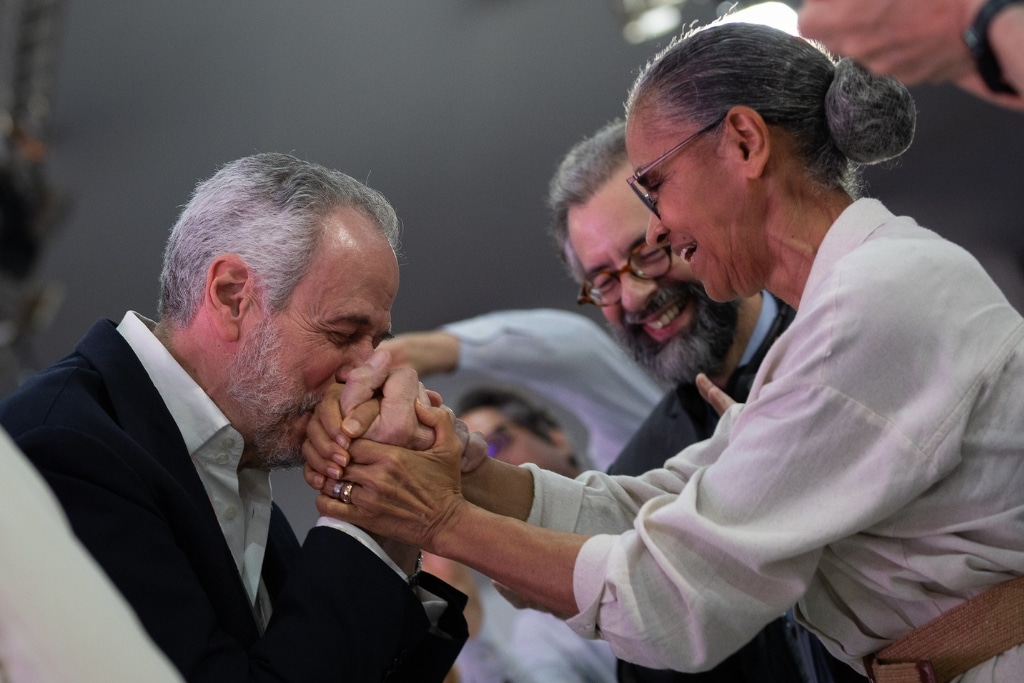
Under pressure from major petrostates, including Saudi Arabia and Russia, COP30 President André Corrêa do Lago ultimately announced a compromise: a voluntary “roadmap” for transitioning away from fossil fuels. This roadmap will proceed outside the formal UN process and be merged with the plan of the Colombia-led “coalition of the willing.” Separately, Colombia announced it will host the world’s first International Conference on the Just Transition Away from Fossil Fuels in April.
According to the Guardian, developing the roadmap would involve science-led high-level dialogues among governments, industry and civil society over the next year, with results to be reported back to COP.
“It took decades for the need to transition away from fossil fuels to be named at COP28. It’s a grave injustice that two years later, historical polluters are still blocking progress in ending the era of fossil fuels by withholding commitment to pay up their climate debt to the Global South on all fronts,” said Avril De Torres, Deputy Executive Director at the Center for Energy, Ecology, and Development.
The closest commitment to a fossil fuel phase-out included in the final agreement was a concession that nations should implement carbon-cutting plans “taking into account the decisions” made over years of UN climate talks, including the unprecedented commitment made at COP28 to “transition away from fossil fuels.”
Climate finance
The final agreement on adaptation “calls” for the tripling of funding for climate adaptation, to be provided by rich countries to protect vulnerable nations from the escalating impacts of climate change. It builds on a previous pledge made at COP26 in 2021 to double adaptation funds to $40 billion by 2025, although details of how that will be implemented, or what the exact amount will be, were left out.
The initial suggested date for disbursing what’s estimated to be $120 billion a year was also pushed back from 2030 to 2035.
The need for adaptation financing in developing countries is significant. In October, the UN Environment Programme estimated this amount to be between $310 billion and $365 billion per year until 2035 – 12 to 14 times more than current financing flows.

Nations also reached long-awaited consensus on a set of indicators to measure progress on the Global Goal on Adaptation (GGA) established in the Paris Agreement, narrowing it down from 10,000 to just 100. The GGA seeks to increase countries’ adaptive capacity, strengthen their resilience, and reduce their vulnerability to climate change through an adequate response to the damage that is already occurring.
Aside from the indicators, the agreement includes a call to launch of the Belém–Addis vision on adaptation – a two-year process to further operationalize the indicators. Addis Abeba, Ethiopia will host COP32 in 2027.
Just Transition
A major outcome was an agreement to establish a just transition “mechanism”, ensuring a fair green transition that takes account the rights of all people, from workers and women to Indigenous people and frontline communities. Parties requested the 64th Sessions of the UNFCCC Subsidiary Bodies, scheduled for June 2026, to recommend a draft decision in order to operationalize the mechanism at next year’s COP31.
“We came here to get the Belém Action Mechanism – for families, for workers, for communities. The adoption of a Just Transition mechanism was a win shaped by years of pressure from civil society,” said Tasneem Essop, Executive Director at Climate Action Network International. “This outcome didn’t fall from the sky; it was carved out through struggle, persistence, and the moral clarity of those living on the frontlines of climate breakdown. Governments must now honour this Just Transition mechanism with real action. Anything less is a betrayal of people – and of the Paris promise.”
Deforestation
Despite being deliberately sited in the heart of the Amazon, COP30 delivered little on forest protection. Although Brazil’s Environment Minister Marina Silva pushed for strong language, the final agreement failed to mention deforestation.
Instead, President Corrêa do Lago announced a separate, voluntary roadmap for forest preservation, mirroring the parallel initiative established for fossil fuels.

“For a COP hosted in the Amazon, it’s shattering that deforestation took a back seat,” said Kelly Dent, Director of External Engagement for World Animal Protection. “The wildlife, indigenous people and traditional communities who call the forest their home deserved better than this.”
President Lula’s flagship initiative to pay for rainforest protection also failed to reach the success initially predicted. 53 countries endorsed the fund, with total pledges standing at $6.6 billion – far off the initial investment target of $25 billion.
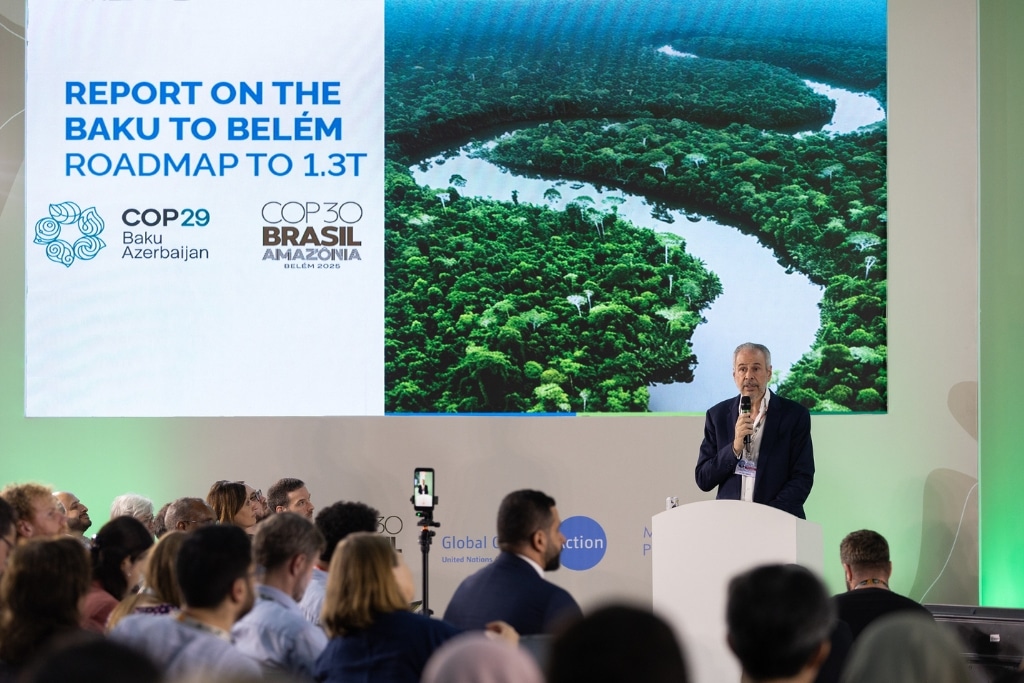
18 board members, equally representing rainforest nations and donor countries, are set to oversee the initiative, which will support up to 70 eligible developing nations. A minimum of 20% must be allocated towards Indigenous groups and traditional communities.
Indigenous Participation
Hosting the conference in Belém, at the heart of the Amazon Basin, was a deliberate choice. Lula called it “a political and symbolic decision,” aimed at showing that the Amazon is an essential part of the climate solution, not merely a topic for debate.
The Brazilian government also committed to unprecedented Indigenous participation, with some 2,500 Indigenous people attending the summit. It marked the first time Indigenous leadership, rights, and knowledge were placed so centrally in global climate negotiations.
“Indigenous Peoples want to take part, not just show up,” said Brazil’s Minister for Indigenous Peoples, Sônia Guajajara. “We want to lead and be part of the solution.” But achieving political influence requires more than participation, and COP30 failed on this front, allowing only 14% (360 individuals) accreditation for the Blue Zone, the restricted area for official negotiations.
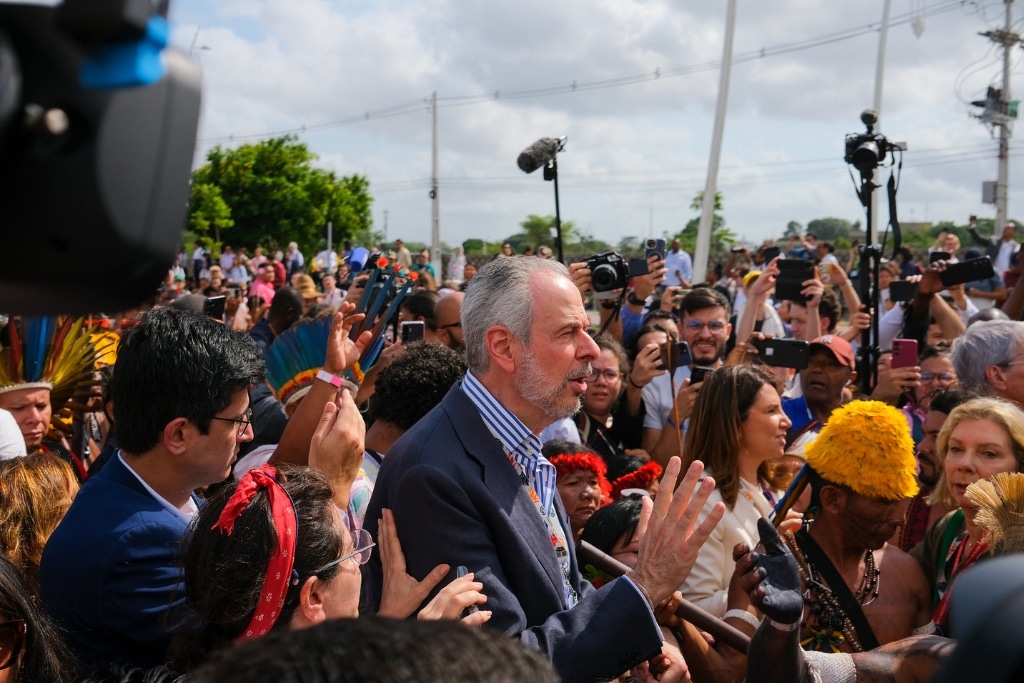
Despite this exclusion, Indigenous-led protests proved impactful: Colombia declared the Amazon an exclusion zone for extractivism, while Brazil announced the demarcation of 10 Indigenous lands– a key demand – during a high-level meeting of the conference. Ministers from several countries and philanthropic leaders participated and signed land protection commitments, recognizing Indigenous people and traditional communities as essential guardians of the forests and central actors in the climate agenda.
During the ceremony, Guajajara also signed a commitment to allocate an additional 59 million hectares of public land to Indigenous peoples to implement Brazil’s National Policy for Territorial and Environmental Management of Indigenous Lands and to consolidate land tenure after the removal of non-Indigenous occupants.

According to Indigenous leaders present at the event, the package of ordinances meets a historical demand for territories to finally be recognized as part of the climate solution, given the proven role of Indigenous lands in containing deforestation and preserving the Amazon.
“The recognition of Indigenous Peoples rights – especially those in voluntary isolation and initial contact – including their right to self-determination, is an important victory of this COP, held for the first time in the Amazon, home to most of the world’s isolated peoples,” said Gisela Hurtado, Senior Amazonia Campaigner at a grassroots environmental organization Stand.earth.
“But let’s be clear: COP30 fell short of delivering the historic decision the world urgently needed. A just transition won’t be possible with the expansion of fossil fuel extraction, nor can it ignore the social, environmental, and human rights risks of the mining boom that is already impacting Indigenous territories.”

Controversies at COP30
For some years now, the presence of fossil fuel lobbyists at COPs has been a given – and COP30 was no different.
An analysis by the Kick Big Polluters Out (KBPO) coalition revealed that one in 25 participants (some 1,600 people) represented the fossil fuel industry. They outnumber all countries’ delegations except Brazil, which has 3,805 delegates in attendance. The group also calculated that lobbyists have received two thirds more passes to COP30 than all the delegates from the 10 most climate vulnerable nations combined.

Climate activists have long called COP meetings a “farce” due to the presence of thousands of fossil fuel representatives, with Global Witness’ investigation reigniting debates over the role of fossil fuels in the summit.
Three petrostates – Azerbaijan, the United Arab Emirates, and Egypt – hosted the last three summits. At each summit, the presence of fossil fuel lobbyists was significant: at least 1,773 at last year’s COP29, at least 2,456 oil and gas lobbyists at COP28 (a record), and more than 630 people at COP27.

What’s Next?
Next year’s COP31 climate summit will be held in Turkey after Australia dropped its bid to host the annual talks after months of negotiations. Instead, Australia agreed to support the Turkish bid in return for their minister chairing the talks – a highly unusual arrangement has taken observers by surprise. The COP Presidency is typically held by the host country. Turkey has proposed holding the 2026 summit in Antalya, a resort city of 2.7 million people.
Featured image: UN Climate Change/Kiara Worth via Flickr.
This story is funded by readers like you
Our non-profit newsroom provides climate coverage free of charge and advertising. Your one-off or monthly donations play a crucial role in supporting our operations, expanding our reach, and maintaining our editorial independence.
About EO | Mission Statement | Impact & Reach | Write for us