


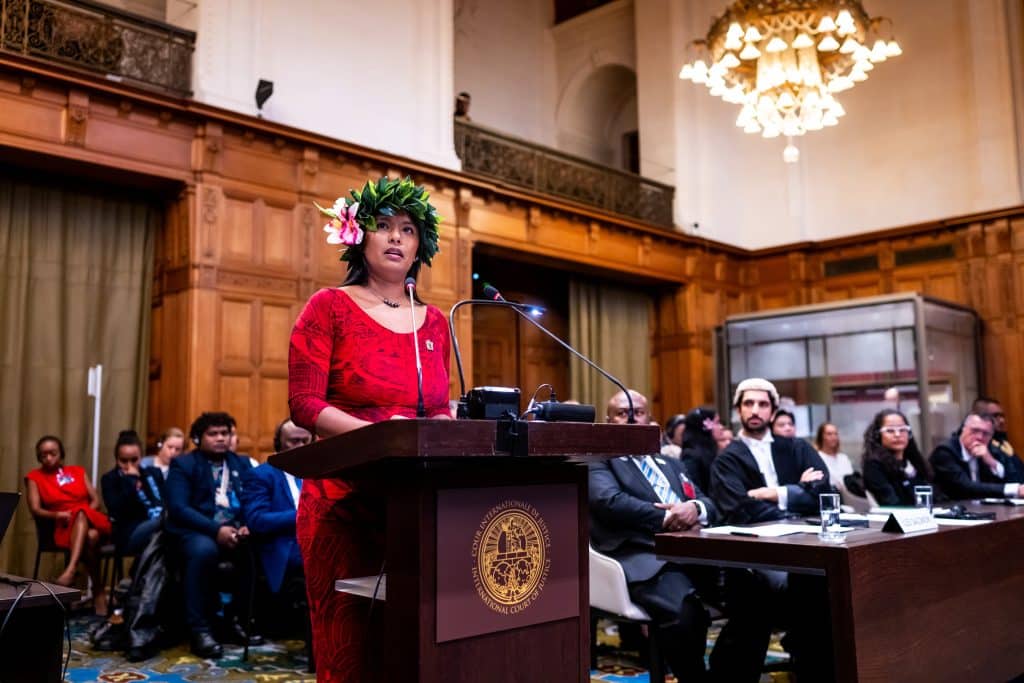
“Climate litigation is not a silver bullet, but it is one of the most powerful tools there is to force a systemic shift in climate action,” according to a new report by the Climate Litigation Network.
—
In the past decade, climate litigation has evolved into a “global accountability system” used by private actors, civil society and individuals locally, regionally, nationally and internationally to hold governments and corporate polluters accountable, according to a new report.
Compiled by the Climate Litigation Network and published Tuesday, the report analyzes how a surge in climate lawsuits in the last 10 years is forcing governments to set clear rules for national climate action, influencing public opinion, and reshaping how investors and regulators perceive climate risk.
A Decade of Climate Litigation
This past decade was framed by two historic climate rulings. Both have marked a legal turning point and reinforced climate litigation cases around the world.
In 2015, the Urgenda Foundation, a Dutch non-profit organization, successfully argued in court that the Dutch government was not doing enough to combat climate change. Their victory marked the first time a court, anywhere in the world, ordered a government to take stronger action on climate.
Following the landmark Urgenda case and the adoption of the Paris Agreement in the same year, individuals and communities worldwide began turning to their national courts to demand stronger climate action from their respective governments. Nearly 3,000 climate case have been filed since then.

Meanwhile, earlier this year, a historic ruling from the International Court of Justice (ICJ) on the responsibilities of states in respect of climate change affirmed the point made by the Hague District Court in 2015 – and many other courts after that: that government actions driving climate change are illegal and states are legally bound to cut their emissions. The court also ruled that states must pursue their “highest possible ambition” in their climate plans and ensure collective measures can limit global warming to 1.5C, the target set in the Paris Agreement.
The ICJ ruling is set to further bolster the hundreds of ongoing and upcoming climate litigation cases around the world.
More on the topic: ICJ Advisory Opinion: The World’s Top Court Has Spoken Unequivocally on States’ Climate Change Obligations
“What was a moral imperative ten years ago has become a legal imperative,” said Sarah Mead, co-Director of the Climate Litigation Network. “We all know that the world’s highest-emitting companies shouldn’t be able to pollute with impunity, making profits on the back of our future. Now the courts are catching up.”
Landmark judgements in the past decade, both at the national and international level, have helped strengthen governments’ climate targets, the report said. Climate laws and net-zero plans have been amended or are in the process of being amended in Brazil, Germany, Ireland, the Netherlands, the UK, Switzerland and South Korea, fossil-fuel projects have been rejected in Australia, and places like Hawaii have committed to decarbonize the transport system.
These legal foundations are now also empowering communities to challenge the world’s biggest corporate polluters, from German RWE and French TotalEnergies to British Shell and American ExxonMobil.
“We’ve never been in a better place to use the law to protect people and planet from climate change,” said Dennis van Berkel, Legal Counsel at Urgenda.
The Climate Litigation Network was established by the Urgenda Foundation to build on that legal strategy, support other cases, and help grow the global movement of climate litigation.
More on the topic: Climate Litigation No Longer a ‘Niche Concern’, 226 New Cases Filed in 2024: Report
Youth-Led Litigation
Young people have increasingly been at the forefront of climate litigation. Many of them have scored historic victories, strengthening youth climate movements worldwide and inspiring fellow activists to follow suit.

Overall, young people often demonstrate a more profound understanding of climate change compared to adults and older generations. According to a InterClimate Network survey published in 2021, more than 8 in 10 young people are concerned about climate change and think it is already having a negative effect on people’s lives. Three-quarters of those surveyed also said they believe the climate crisis will affect their life in the future.
Featured image: UN Photo/ICJ-CIJ/Frank van Beek. Courtesy of the ICJ.
You might also like: When the Law Catches Up: How a Youth-Led Call From the Pacific Is Redefining Environmental Justice
This story is funded by readers like you
Our non-profit newsroom provides climate coverage free of charge and advertising. Your one-off or monthly donations play a crucial role in supporting our operations, expanding our reach, and maintaining our editorial independence.
About EO | Mission Statement | Impact & Reach | Write for us