

“Climate change isn’t just making heat more intense – it’s shrinking the amount of time people can safely go about their daily lives,” said Luke Parsons, a climate scientist at The Nature Conservancy and lead author of the study.
—
Extreme heat is no longer just uncomfortable – it is increasingly making everyday activities unsafe in many parts of the world, according to new research.
Scientists from The Nature Conservancy, a US-headquartered global environmental organization, set out to determine where in the world temperature and humidity are already too high for people to sustain physical activity in a safe manner – a threshold they define as “livability”. They combined more than seven decades of global climate data with a model accounting for how the human body responds to conditions at different stages of life.
They found that around 35% of the global population now lives in areas where heat severely limits safe activity even for younger adults, with the percentage rising to 78% when accounting for the impacts of heat and humidity on older adults (over 65).
Scientists also found that the average younger adult now experiences some 50 hours of severe heat-related livability limitations per year, or about 900 hours – more than a month – per year for the average older adult. In 1950, these figures were 25 and 600, respectively.
For optimal health, the human body requires an internal temperature of around 36.5C (97.7F). When exposed to heat, our body initiates cooling mechanisms to maintain its temperature stable, including sweating to dissipate heat through evaporation and dilating blood vessels to release heat.
In extreme heat conditions, when the environmental temperature exceeds our body’s temperature, these physiological processes are compromised. Elevated humidity levels can further complicate matters, hindering the evaporation of sweat from the skin and thus the body’s cooling down process. In these conditions, even light activity such as climbing stairs becomes can overwhelm the body’s ability to cool down.
“Climate change isn’t just making heat more intense – it’s shrinking the amount of time people can safely go about their daily lives,” said Luke Parsons, a climate scientist at The Nature Conservancy and lead author of the study.
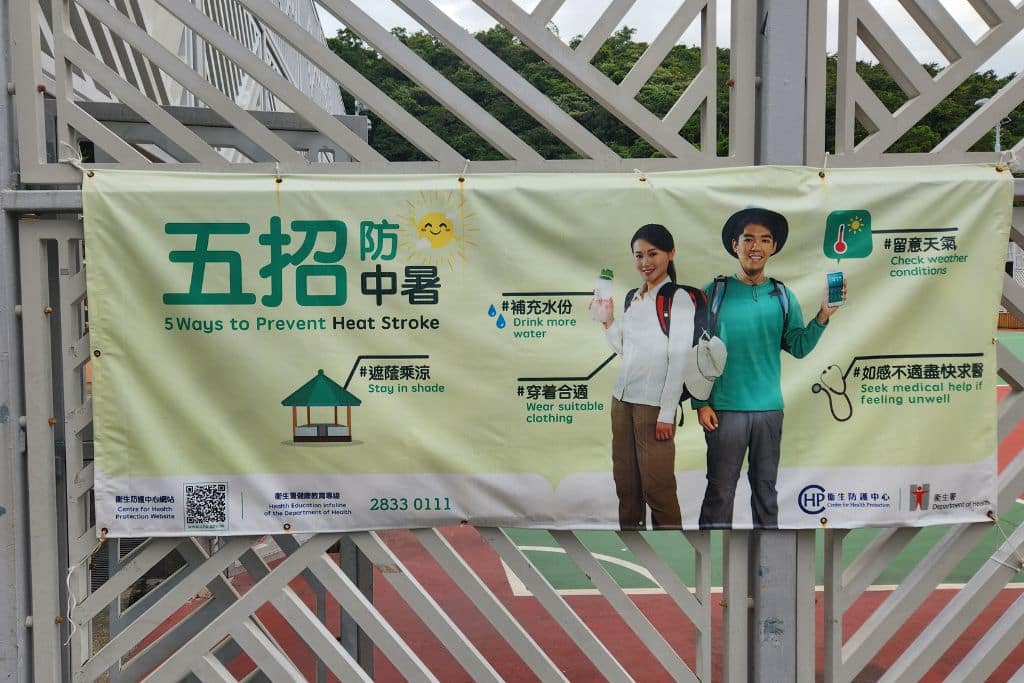
Vulnerable countries with lower adaptability capacity – that is, for example, access to cooling systems like air conditioning – are disproportionately affected. But the study shows that even in wealthier countries, particularly in parts of South and Southwest Asia including the Gulf states, access to such infrastructure is unevenly distributed, putting vulnerable segments of the population like low-income households and migrant workers at greater risk.
Globally, temperatures continue to rise. In 2023, a study warned that heat and humidity levels will reach lethal levels for hours, days, and even weeks in some parts of the world by the end of the current century, making it impossible to stay outdoors.
Featured image: Kyle Lam/hongkongfp.com.
More on the topic: Silent Killer: Understanding the Risks of Extreme Heat
This story is funded by readers like you
Our non-profit newsroom provides climate coverage free of charge and advertising. Your one-off or monthly donations play a crucial role in supporting our operations, expanding our reach, and maintaining our editorial independence.
About EO | Mission Statement | Impact & Reach | Write for us
Earth.Org
Free, non-profit and independent environmental journalism.