

Following recent US-Israeli airstrikes on oil facilities near Tehran, Iran’s capital, black rain blanketed the city. Earth.Org looks at what it is and the threats it poses.
—
As part of a coordinated attack on Iran by the US and Israel, which began on February 28, at least four oil facilities around the Iranian capital of Tehran have reportedly been targeted. The release of chemicals from these facilities, resulting from the incomplete combustion of oil, has led to the emission of soot particles, carbon monoxide, and nitrogen oxides. Combined with the accumulation of dust and debris from the ongoing conflict, these pollutants have created conditions conducive to the formation of black rain.
This phenomenon, however, is not unprecedented. Historical accounts of black rain date back to the atomic bombings of Hiroshima and Nagasaki in 1945. Similar occurrences were reported during the Gulf War in 1990, when massive oil fires in Kuwait darkened the skies, and again in 2019, when São Paulo experienced darkened rainfall linked to intense biomass burning in the South American hinterland. These episodes, affecting millions of people worldwide, are often closely tied to large-scale human activities, particularly those involving conflict or environmental degradation.
Causes of Black Rain
Black acid rain is a toxic mixture of fuel byproducts and atmospheric condensation. It is a rare atmospheric phenomenon that occurs when rain takes on a dark appearance due to the presence of large amounts of suspended matter, such as soot, ash or oil droplets in the atmosphere. In most cases, this phenomenon occurs through the burning of fuels like biomass and crude oil, which release a number of different environmental contaminants, including sulfur dioxide, carbon dioxide, carbon monoxide, nitrogen oxides, volatile organic compounds, polycyclic aromatic hydrocarbons, hydrogen sulfide, and soot.
Once released into the atmosphere, the toxic pollutants mix and react with water, oxygen and other chemicals in clouds, and undergo chemical reactions that lead to the generation of sulfuric acid, nitric acid, and other acidic gases. The condensation of these acids, combined with organic aerosols, forms what is known as black rain.
Clouds carrying these acidic droplets can even be transported by winds over long distances before releasing precipitation, resulting in acid rain through a process known as wet deposition. Alternatively, some pollutant particles may not dissolve in cloud water and instead settle back to the Earth’s surface directly through dry deposition. Rain essentially acts like a vacuum, absorbing chemicals and toxins present in the air and effectively forming a canister of polluted particles that is then spilled back onto the Earth’s surface.
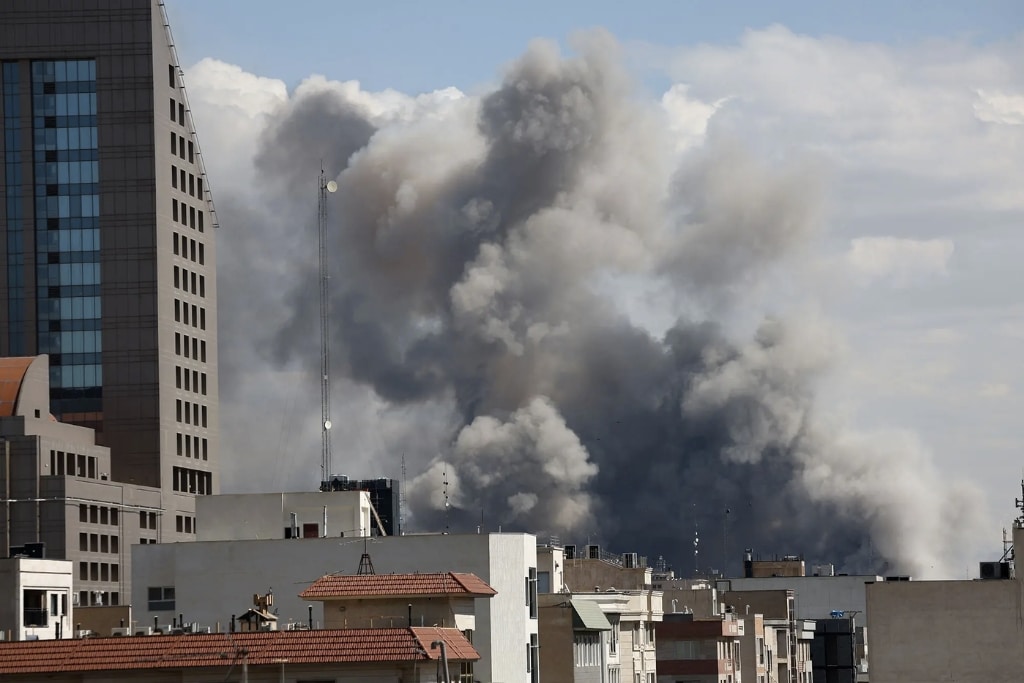
Speaking about the events in Tehran, Akshay Deoras, a Research Scientist at the University of Reading, told the BBC that “raindrops acted like little sponges or magnets, collecting whatever was in the air as they fell, which is why residents observed what’s being described as ‘black rain’.”
You might also like: Explainer: What Is Acid Rain?
The Environmental Toll of Black Rain
Black rain can have significant long-term environmental consequences, particularly for soil chemistry and plant health.
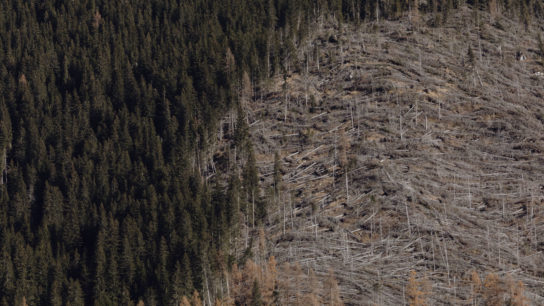
When black rain falls, it acidifies the soil. Typical rain will have a pH of around 5.5, whereas the pH of acid rain is much lower, between 2.0 and 4.0, due to the presence of dissolved sulfur dioxide or nitrogen oxides, among other acidic pollutants. This increased acidity reduces the availability of essential nutrients such as calcium and magnesium, while simultaneously increasing the solubility and mobility of toxic heavy metals like mercury and aluminum. As a result, soils become depleted of vital nutrients, weakening plant systems, reducing photosynthetic efficiency, and ultimately impairing growth and reproduction. Crops such as wheat, corn, and soybeans are especially vulnerable to these effects.
Additionally, heightened soil acidity disrupts and destroys essential microorganisms responsible for breaking down organic matter and maintaining nutrient cycling. This further degrades soil quality, compounding the adverse effects on plant health and agricultural productivity.
Another long-term impact of black rain is its disruption of the Earth’s natural water cycle. When acid rain reaches the Earth’s surface, a significant portion is transported into rivers, lakes, and other water bodies via surface runoff or groundwater flow. This process increases the acidity of these water systems, with particularly sharp pH drops occurring in smaller or confined bodies of water. Acidification renders these ecosystems toxic to sensitive aquatic organisms.
According to the US Environmental Protection Agency (EPA), aquatic ecosystems are among the most vulnerable to the effects of acid rain. Species that inhabit these environments cannot migrate to less acidic areas and may face extinction, leading to cascading effects throughout the food web. For example, frogs can tolerate pH levels as low as 4, but the mayflies they rely on for food are far more sensitive and cannot survive in water with a pH below 5.5. The loss of such sensitive species can trigger a chain reaction, ultimately culminating in the collapse of entire ecosystems.
But the damage caused by black rain extends beyond soil and water systems, setting in motion a destructive cycle that degrades both ecosystems and the atmosphere. This is because the chemical reactions responsible for forming the toxic pollutants that are washed into rivers also release carbon dioxide into the atmosphere, contributing to greenhouse gas accumulation and worsening climate change. This atmospheric degradation creates conditions that make the formation of black rain even more likely, perpetuating the cycle of environmental harm.
Threats to Human Health
The immediate health risks associated with black rain primarily arise from the inhalation of toxic substances suspended in the air. When the pollutants responsible for acid rain are inhaled, they can irritate the respiratory tract and cause breathing difficulties, increasing the risk of asthma, bronchitis, and other chronic respiratory illnesses.
The combined presence of these toxic pollutants can also impair lung function. Acidic aerosols interact with oxidant gases and particulate metals in the respiratory tract, triggering oxidative stress and inflammation in lung tissue. Researchers have further linked exposure to these pollutants with cardiovascular health issues, including an increased risk of heart attacks, particularly for individuals with pre-existing heart disease, as well as cardiopulmonary morbidity. Long-term exposure to some of these compounds also increases the risk of some cancers, according to the World Health Organization. In addition, direct contact with corrosive chemicals present in black rain can cause skin or eye irritation and, in rare cases, can even trigger chemical burns.
Individuals suffering from pre-existing cardiovascular and respiratory issues such as asthma, children, the elderly, and pregnant women are significantly more vulnerable to the effects of toxic pollutants present in the air.
Finally, the environmental impacts of black rain inevitably extend to and affect human health and food security. As contaminated rainfall infiltrates groundwater and surface water systems, it facilitates the leaching of heavy metals and pollutants into drinking water supplies and agricultural crops, increasing the risk of gastrointestinal issues, skin irritation, and a range of other health problems, and threatening global food security.
The events unfolding in Tehran are as a stark reminder of how human conflict can amplify environmental harm, creating long-term consequences that extend far beyond the battlefield.
Featured image: Wikimedia Commons.
This story is funded by readers like you
Our non-profit newsroom provides climate coverage free of charge and advertising. Your one-off or monthly donations play a crucial role in supporting our operations, expanding our reach, and maintaining our editorial independence.
About EO | Mission Statement | Impact & Reach | Write for us
Earth.Org
Free, non-profit and independent environmental journalism.