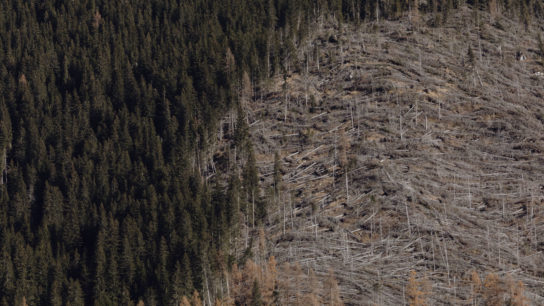



The US EPA has proposed reversing Clean Water Act protections for millions of acres of wetlands and miles of streams to align with a Supreme Court’s 2023 decision, which removed federal safeguards for wetlands that lack a continuous surface connection to larger navigable waters.
—
In late 2025, the US Environmental Protection Agency (EPA) announced plans to revise the 2015 Clean Water Rule, which clarifies water resource management in the country under a provision of the Clean Water Act.
The rule, also known as the Waters of the United States (WOTUS), defines which waterbodies fall under federal protection. It establishes a baseline of safeguards for the rivers and wetlands critical to human and wildlife health, while providing a framework for states, tribes, and local communities to co-steward these vital resources.
With the proposed revision, the agency plans to strictly narrow the definition of WOTUS, focusing on relatively permanent, standing, or continuously flowing water bodies and reducing federal oversight on many wetlands and ephemeral streams. The move would effectively reduce federal protection for millions of acres of wetlands and seasonal streams.

A Brief History of the Clean Water Act
In 1948, then-US President Harry Truman passed the Federal Water Pollution Control Act – the first federal legislation addressing water pollution in the country. The law provided state and local governments financial assistance to help mitigate water quality issues and fund water contamination research efforts across the country. Although the passing of this legislation was pivotal, it lacked water quality objectives, requirements and discharge limits as well as enforceable guidelines.
In 1972, an amendment to the Federal Water Pollution Control Act introduced a new framework with a much more robust and clear set of objectives and methods for enforcement. This transformed the fundamentals of the legislation and became known as the Clean Water Act. Its primary goal is to “restore and maintain the chemical, physical, and biological integrity of the Nation’s Waters,” with other quantifiable goals including zero discharge of pollutants and ensuring water quality standards are fit for swimming and fishing wherever possible.
But what once was a source of bi-partisan support has, in recent years, become a source of disagreement between Democrats and Republicans. In 2019, the Trump administration formally repealed the Clean Water Rule implemented under the Obama administration. Subsequently in 2022, the Biden administration announced a rule that expanded which waters were protected under the Clean Water Act. It also set forth a new definition of “waters of the United States” aimed at lessening ambiguity as to which waters should be federally protected and expanding the definition to encompass a broader range of water bodies, including previously excluded wetlands, streams, and groundwaters across the country.
Supreme Court Ruling Changes Everything
In a 2023 US Supreme Court Case, Sackett v EPA, the justices effectively reduced the authority of the EPA to protect bodies of water defined as “waters of the United States” in the Clean Water Act.
Chantell and Michael Sackett, property owners in rural Idaho, bought land near Priest Lake in 2004 and began backfilling their lot in order to commence construction of a new home. In 2007, the EPA informed the couple that their land contained wetlands that are constituted as “waters of the United States” and that their home construction project was creating discharge into a Priest Lake, a navigable US body of water. The agency claimed that the continuation of their project violated the Clean Water Act and would result in civil and criminal penalties without a permit.
The Sacketts filed suit in 2008, arguing their property was not subject to federal authority under the Clean Water Act. In 2023, the Supreme Court ruled that the wetlands on the Sackett’s property are not federally protected under the Clean Water Act because they are neither relatively permanent bodies of water, water areas that flow continuously, nor connect to navigable water in any clearly defined way. The court’s interpretation of this ruling set a precedent for a decrease in the federal protection of wetlands and waterways across the nation.
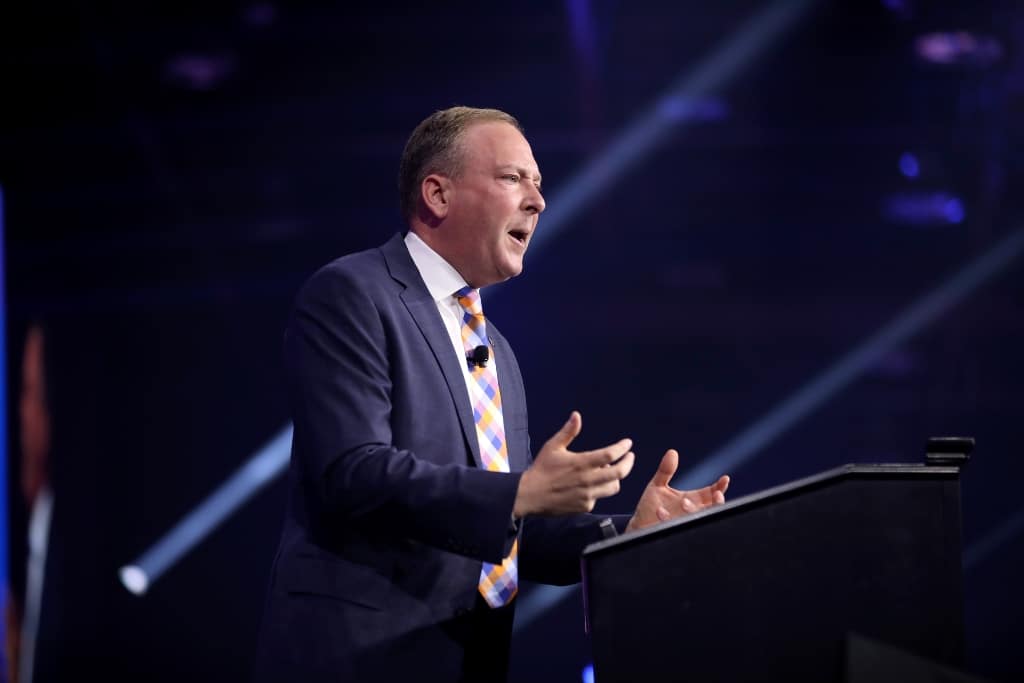
EPA administrator Lee Zeldin has said that the proposed revision to the Clean Water Act will fall in line with the Sackett vs. EPA ruling and help establish a new and robust definition of what falls under the Waters of the United States framework.
Reactions
Those in favor of the revision say environmental protections need to be eliminated in order to reduce the associated higher upfront costs that result from lengthy environmental permitting processes for energy infrastructure, housing, agriculture, and other large projects. Gary Palmer, a Republican Congressman representing the state of Alabama and the chair of the Energy and Commerce Subcommittee on the Environment, told Politico he is “confident that the rule will prioritize clean water while protecting farmers, ranchers, landowners and businesses alike.”
But opposers, including several Democrats, worry that this alteration to the Clean Water Act will create much higher costs for American families trying to source clean drinking water, in addition to a high probability of lasting damage to environmentally sensitive wetlands and waterways.
Arid regions of the US that depend on seasonal waterflow and groundwater for maintaining sufficient drinking water sources, like Nevada, would be particularly impacted by the move. Nevada Democratic representative, Dina Titus, took to social media to express her frustration with the administration’s plan: “Not only would this proposal result in the vast majority of streams in Nevada losing federal protections, it would also jeopardize our groundwater.”
According to the Southern Environmental Law Center (SELC), the move means it will be harder for states and local tribes to contain the impact of large infrastructure projects – like the construction of data centers and dams – on water quality. Moreover, SELC argues that the costs of enabling pollution of water bodies will fall on communities, businesses, as well as local and state governments. According to Patrick Hunter, Senior Attorney at SELC, it is “an ideological solution in search of a problem.”
Andrew Wetzler, Senior Vice President of the Nature Program at the National Resources Defense Council (NRDC), described the plan as a “reckless giveaway to polluters,” adding that “taking away these protections is not just shortsighted – it’s dangerous.” Should the Trump administration’s plan be instituted, millions of acres of previously federally protected wetlands would be at risk of contamination and destruction, according to a 2025 GIS analysis conducted by NRDC.
What’s Next?
A short 45-day comment period for these proposed changes ended on February 17, with the EPA expected to adopt a final rule this spring.
Featured image: United States Army Corps of Engineers, Buffalo District/Flickr.
This story is funded by readers like you
Our non-profit newsroom provides climate coverage free of charge and advertising. Your one-off or monthly donations play a crucial role in supporting our operations, expanding our reach, and maintaining our editorial independence.
About EO | Mission Statement | Impact & Reach | Write for us