

The escalation of hostilities between Iran and the US has evolved into a multifaceted crisis, transforming strategic maritime corridors into primary battlegrounds for state and non-state actors alike. While the world focuses on global oil volatility, potential disruptions in the Bab al-Mandab Strait could push the Horn of Africa toward a humanitarian breaking point by severing critical food and trade lifelines.
—
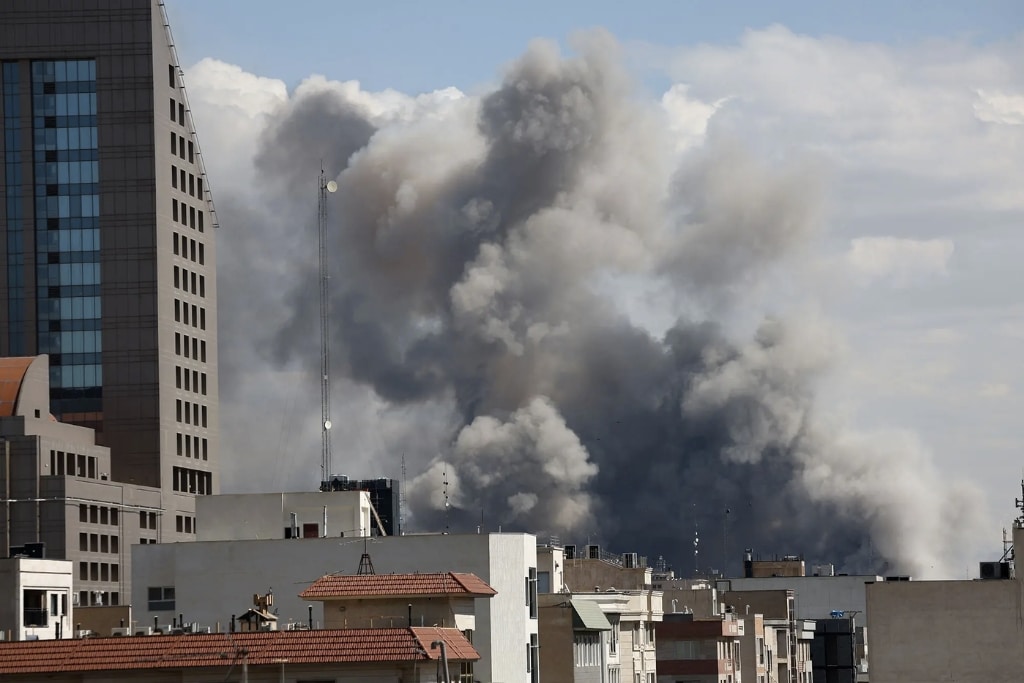
The recent US-Israel attacks on Iran have transformed into a complex, multi-layered conflict shaped by regional alliances, proxy actors, and strategic geography. This transformation has expanded the war beyond the battlefield, turning it into a multifaceted crisis affecting security and economic stability well beyond Iran.
The escalation raised immediate concerns over maritime security in the Persian Gulf, particularly the Strait of Hormuz, through which a significant share of global oil supplies flows. Fears of disruption to this chokepoint contributed to heightened volatility in global energy markets and renewed concerns over a potential oil price shock.

A defining feature of this escalation is the increasing role of non-state actors aligned with Iran. Among them, the Houthi movement in Yemen has emerged as a key actor capable of influencing events far beyond its immediate battlefield. By launching missile and drone attacks on commercial shipping in the Bab al-Mandab Strait and the southern Red Sea, the Houthis have opened a southern front in support of Tehran’s broader confrontation with the U.S. and its allies.
This directly threatens a critical global trade corridor. Given the strait’s geographic proximity to the Horn of Africa and its role as a key gateway for regional imports and maritime trade, these disruptions extend beyond the immediate conflict zone, exposing the Horn of Africa to heightened economic pressure and food insecurity in a context already shaped by conflict and climate-induced crises.
While the Strait of Hormuz has dominated global attention during the escalation, the conflict has also begun to extend toward the Red Sea corridor, bringing the Bab al-Mandab Strait into sharper strategic focus as a secondary but critical maritime chokepoint. A temporary two-week ceasefire between Iran and the US announced earlier this month could ease immediate hostilities in the region, offering a brief window for safer maritime passage through the Bab al-Mandab Strait. But the structural vulnerabilities in the Horn of Africa – such as dependence on imported staples, ongoing conflicts, and growing militarization – mean that economic, food security, and security risks remain elevated despite the ceasefire.
Bab al-Mandab Strait: A Global Maritime Chokepoint
At the center of this escalation lies the Bab al-Mandab Strait, one of the world’s most vital maritime chokepoints. Situated at the southern entrance of the Red Sea, the strait separates Yemen on the Arabian Peninsula from the Djibouti and Eritrea in the Horn of Africa. The strait forms a critical maritime chokepoint linking the Red Sea to the Gulf of Aden and, by extension, to the Indian Ocean, making it a crucial corridor for global trade and the Suez Canal route.

Its importance is underscored by the scale of traffic that passes through it. Estimates indicate that about 9 million barrels of oil transit this corridor each day. According to the US Energy Information Administration, daily oil flows through the Bab al-Mandab Strait rose consistently between 2020 and 2023, reaching a high of about 9.3 million barrels per day. Additionally, nearly 12% of global trade volume moves through the Red Sea route, making it indispensable not only for energy but also for container shipping, food supplies, and manufactured goods.
Historically, disruptions in this area have had immediate consequences on a global level. During previous periods of insecurity, such as during Houthi attacks in the Red Sea in late 2023, maritime traffic along this route was sharply reduced and shipping companies rerouted vessels around the Cape of Good Hope, south of Cape Town, South Africa. This detour extended transit times between Asia and Europe by up to 20 days, while also increasing fuel costs and carbon emissions, causing delays, and disrupting supply chains. More recently, Houthi attacks, combined with the rerouting of shipping, caused oil flows through the strait to plunge from approximately 9 million barrels per day in 2023 to around 4 million barrels per day in 2024, contributing to higher oil prices.
While the Bab al-Mandab Strait controls access to the Red Sea, the Strait of Hormuz is the primary bottleneck for oil shipments from the Persian Gulf itself. Oil prices reached $119 a barrel (Brent crude) in March – their highest level since Russia’s full-scale invasion of Ukraine in February 2022. Simultaneous disruptions of both chokepoints would represent an unprecedented “dual chokepoint stranglehold”, with the potential to trigger a global energy shock comparable to – or even exceeding – past oil crises.
Analysts warn that oil prices could surpass $150 a barrel if both chokepoints were significantly disrupted for prolonged periods, exceeding the record high of $145.29 set in July 2008.
Regional Spillover: Horn of Africa Vulnerabilities
The most profound and immediate regional consequences of this escalation are likely to be felt in the Horn of Africa. Countries such as Somalia, Djibouti, Eritrea, and Sudan, which sit directly along the maritime corridor, find themselves caught in a geopolitical turmoil imposed by the instability in the Bab al-Mandab Strait. Their geographic proximity makes them highly vulnerable not only to security spillover but also to economic disruptions.
A disruption in shipping would mean longer delivery times and higher transport costs, which could lead to rising food prices and supply shortages. Countries in East Africa are particularly vulnerable to food insecurity as domestic consumption heavily relies on imported staples, especially wheat from Europe and the Black Sea region. According to the World Food Programme, wheat accounts for about 67% and 38% of total cereal consumption in Djibouti and Sudan, respectively, and just short of 24% in Ethiopia, Kenya, and Somalia.
Food prices in East Africa rose sharply during 2023–2024 Red Sea disruptions. According to a UN report, median food price inflation peaked at 30% in May 2023 in parts of East Africa, reflecting severe price pressures on staples such as cereals and grains. In a region already affected by climate-induced shocks – increasingly frequent droughts and prolonged food shortages in particular – such price increases risk pushing millions more into severe humanitarian crises.
Djibouti, in particular, symbolizes the structural vulnerability of the region. The country hosts one of Africa’s busiest ports and serves as a critical commercial partner for landlocked Ethiopia, with more than 90% of the latter’s trade transiting through its ports. Any sustained decline in maritime traffic caused by escalation in Bab al-Mandab will not only strain Djibouti’s import-dependent economy but also jeopardize the movement of food and supplies for over 120 million people in Ethiopia, amplifying the regional impact across industries and economies.
Similarly, Somalia relies heavily on imported wheat, fuel, and other essential goods transported through the Suez Canal and Bab al-Mandab corridor. Any delays or increases in shipping and insurance costs are likely to drive up food prices, heightening the risk of food insecurity. According to the latest Integrated Food Security Phase Classification (IPC) report, 6.5 million Somalis – about a third of the population – are facing critical food insecurity, including around 2 million individuals experiencing severe hunger. At the same time, humanitarian operations will be affected by shipping delays and rising security costs, as the deteriorating maritime security, including rising Houthi attacks on international shipping in the Red Sea and resurgence of piracy, would further complicate trade and aid delivery.

In Sudan, the ongoing civil war and prolonged violence have weakened the economy, shrinking it by nearly half and driving millions into poverty and hunger. According to the World Food Programme, an estimated 21.2 million people – about 41% of Sudan’s population – were acutely food insecure already in 2025, with many households struggling to afford staple foods amid conflict-driven market disruptions. The UN indicates that an estimated 33.7 million people – around two thirds of the population – are expected to need humanitarian assistance in 2026.
Given Sudan’s high dependence on imports, any disruption on goods passing through Port Sudan –the country’s largest port and a critical hub for trade and oil exports – would likely worsen shortages of fuel, wheat, medicines and other essential goods.
Horn of Africa at the Crossroads of Global Conflict
The escalation of the war involving Iran, particularly through Houthi intervention, marks a critical turning point with far-reaching implications. The threat to the Bab al-Mandab Strait and the potential spillover of the conflict into the Horn of Africa underscore the vulnerability of global trade and energy networks and the interconnected nature of modern geopolitical crises. The Horn’s exposure to conflict, climate-induced crises, and militarization amplifies the humanitarian and economic consequences of disruptions in maritime traffic.
While a temporary ceasefire may reduce immediate hostilities, the region remains at risk. Rising shipping costs and disrupted food supplies threaten to deepen instability across the region. The Houthis’ capacity to influence global commercial shipping demonstrates how non-state actors can influence global systems traditionally dominated by state actors.
As regional actors compete for control over ports, trade routes, and strategic corridors, the Horn of Africa faces heightened economic pressures and growing food insecurity. Until sustained stability is restored in the Red Sea, the region will remain a critical spillover zone, caught between humanitarian crises, economic vulnerability, and accelerating climate crises, with consequences that extend far beyond its borders.
Featured image: Wikimedia Commons.
This story is funded by readers like you
Our non-profit newsroom provides climate coverage free of charge and advertising. Your one-off or monthly donations play a crucial role in supporting our operations, expanding our reach, and maintaining our editorial independence.
About EO | Mission Statement | Impact & Reach | Write for us
Earth.Org
Free, non-profit and independent environmental journalism.