The past two decades have transformed clean energy technology. The next phase will test whether institutions can turn that progress into reliable supply, affordable bills and public trust.
—
The energy transition is often depicted as a race to deploy more solar panels, wind turbines and electric vehicles. Yet deployment alone cannot resolve questions about planning, funding and public consent. The challenge is not simply whether we can build clean energy, but how to connect it, pay for it and share its benefits.
That is the take-home message of the World Energy Trilemma 2026 Report published last month by the World Energy Council. It is based on five “Regional Leadership Exchanges” involving more than 275 senior leaders from 65 countries, and it complements the Issues Monitor 2026, an online survey of more than 2,750 energy leaders in over 110 countries.
Both reports document a transition that has shifted from the laboratory and the factory floor to cabinet rooms, regulatory hearings, and community meetings. The remaining decisions hinge on who pays, who benefits, who decides, and on whose timetable.
The Early Victories
Engineering and manufacturing have delivered substantial gains. Falling solar and wind costs have strengthened the case for cleaner electricity, while renewable deployment has continued to expand. These achievements make a faster transition possible but do not remove the difficulty of delivering it fairly.

The Trilemma report argues that the energy transition is entering a more demanding phase. Falling technology costs can reduce both bills and emissions. But the remaining choices make the distribution of costs more visible: to communities hosting infrastructure, industries adapting to new markets and consumers financing network upgrades.
Where the Bottlenecks Moved
Things have changed, according to the report: the trade-offs have shifted, becoming more consequential and more local. The bottlenecks extend beyond generation to grids, storage and the integration of different energy sources. Supply chains, land, water and skills also affect delivery.
The International Energy Agency estimates that meeting national energy and climate goals would require adding or refurbishing more than 80 million kilometres of electricity grids by 2040. Building clean power is only part of the task; the other is moving it to where it is needed.
In many countries, renewable projects now are stalled for years awaiting permission to link to the grid, despite being fully financed and technically viable, as new solar and wind capacity is often developed faster than the transmission infrastructure needed to connect it. Reliability also depends on storage, flexible supply and effective system operation. Investigations into widespread blackouts such as the February 2021 Texas power grid failure and the April 2025 Iberian blackout underscore the need to examine operational failures carefully, rather than attribute disruption to a single technology.

The trade-offs become more consequential when infrastructure must be built before the demand that will justify it fully materializes. That raises questions no engineer can answer alone: Who pays for capacity before it is fully used? Which industries remain competitive? And which communities host the lines and pylons?
The choices are local because countries differ in their public finances, institutional capacity and community priorities. Permitting disputes and public opposition can delay projects even when finance and technology are available. The Issues Monitor treats social legitimacy as a form of invisible infrastructure. Public trust must be built alongside physical assets, not sought only after major decisions have been made.
The End of Easy Win-Wins
The report’s data on affordability and resilience articulate the new reality nicely. Systems that are currently both affordable and resilient, on average, have the lowest share of clean energy, about one third. The largest demographic group, around 3.1 billion people, inhabit affordable but less resilient systems, where clean energy accounts for about 39%. More developed European systems (around 60%) are resilient and relatively clean, but they are grappling with affordability. A few countries deliver well on all three parameters, proving the trade-off can be managed. For most, the balance remains out of reach.
For years, the region had been working along one edge of the Trilemma, but now it feels “torn apart by all three edges,” said Claudio Seebach, World Energy Council’s Chair for Latin America and the Caribbean.
Brazil offers an example of how a solution can create a new problem. The country produces about 90% of its electricity from renewables at a competitive cost. But loading more solar with the same daily profile has driven curtailment to record highs. As clean power goes to waste, returns to investors suffer, and new projects stagnate. The trade-off Brazil thought it had solved had not gone away; it had shifted to the design of the market itself.
Rebalancing: A More Realistic Phase
The Council calls its response rebalancing. The energy trilemma describes the challenge of delivering secure, equitable and environmentally sustainable energy. Rebalancing means continually reassessing those priorities as circumstances change, without losing sight of long-term goals.
According to the report, systems that successfully navigate complex transitions share five critical practices that together create resilient systems capable of anticipating challenges and aligning diverse stakeholders around sustainable outcomes.
First, they honestly frame critical trade-offs well before events force a reactive choice, allowing for proactive and deliberate decision-making. Rather than operating in silos, they operate directly at the intersections where energy meets digital infrastructure, industry, finance, communities, and nature.
To maintain effective oversight, these systems rely on institutional governance bodies endowed with the actual mandate and authority to change the rules, rather than just enforcing existing ones. Furthermore, they treat social legitimacy as essential infrastructure, baking community trust and acceptance into projects from day one rather than treating it as an afterthought. Finally, they look beyond simple compromise, actively pursuing synergies with the same rigor they apply to managing trade-offs.
The case studies are instructive. Saudi Arabia uses a committee that cuts across electricity, hydrocarbons, industry, and regulation to coordinate at the highest levels of government. Finland reached 96% fossil-free electricity through consistent, technology-neutral policy signals. In Medellín, Colombia, a public utility earns social licence by embedding shared benefit into project design from day one.
Where headline targets describe an ambition, rebalancing asks leaders to explain choices, sequence investment and adapt as conditions shift. The test is whether it improves delivery, rather than becoming another term for postponing difficult decisions.
Why Africa Matters Most
For African countries, these tensions overlap with an unfinished development agenda. Expanding energy access, supporting industry and reducing emissions must be considered together, not as separate stages.
First comes demand. The Issues Monitor considers the pressures created by artificial intelligence and data centres alongside wider changes in energy use. For African countries, population growth, urbanization and industrial development also make planning for future electricity demand essential.
The second issue is access. 600 million Africans still lack access to electricity, and the Mission 300 initiative, endorsed by thirty African heads of state, has already raised more than US$50 billion to connect 300 million people to electricity by 2030. But the report is frank about the unconnected’s inability to pay the price to be connected and the need for fiscal reform to enable finance. It specifically mentions Nigeria’s tariff reforms, pointing out that below-cost tariffs bankrupt the same utilities the poor depend on. With 85 million Nigerians still off the grid, getting the sequencing right will be crucial.
Then there’s critical minerals. Africa’s cobalt, copper and other mineral resources give it an important role in clean energy supply chains. But mineral wealth does not automatically translate into local development. Earth.Org’s reporting on the social costs of cobalt mining and its environmental impacts in the Democratic Republic of the Congo illustrates why governance must address extraction, local value creation and the protection of communities and ecosystems.

Fourth is green hydrogen, produced by splitting water using renewable electricity. Its potential is significant, but conditional. The Issues Monitor highlights water stress and conversion costs among the constraints. Whether African hydrogen becomes an export commodity or supports domestic industry is also a governance question: who receives the infrastructure, resources and economic benefits?
One last concern is the tension between development needs and the conditions attached to transition finance. Where reliable, affordable alternatives are unavailable, withdrawing finance can leave households and businesses dependent on diesel generators. But the case for gas as a transition fuel requires scrutiny, not an automatic exemption: methane emissions, costs, cleaner alternatives and the risk of long-lived fossil fuel dependence all matter. Fair access to finance should support development without making future decarbonization harder.
The Return of Geopolitics
All of this is now set against a cloudier sky. Peace and stability were flagged as the number one critical uncertainty in the latest Issues Monitor, and the survey closed before the latest escalation in the Middle East and Gulf States. Every geopolitical issue variable measured saw an increase in both impact and uncertainty. Uncertainty around global cooperation and trade rules swelled the most.
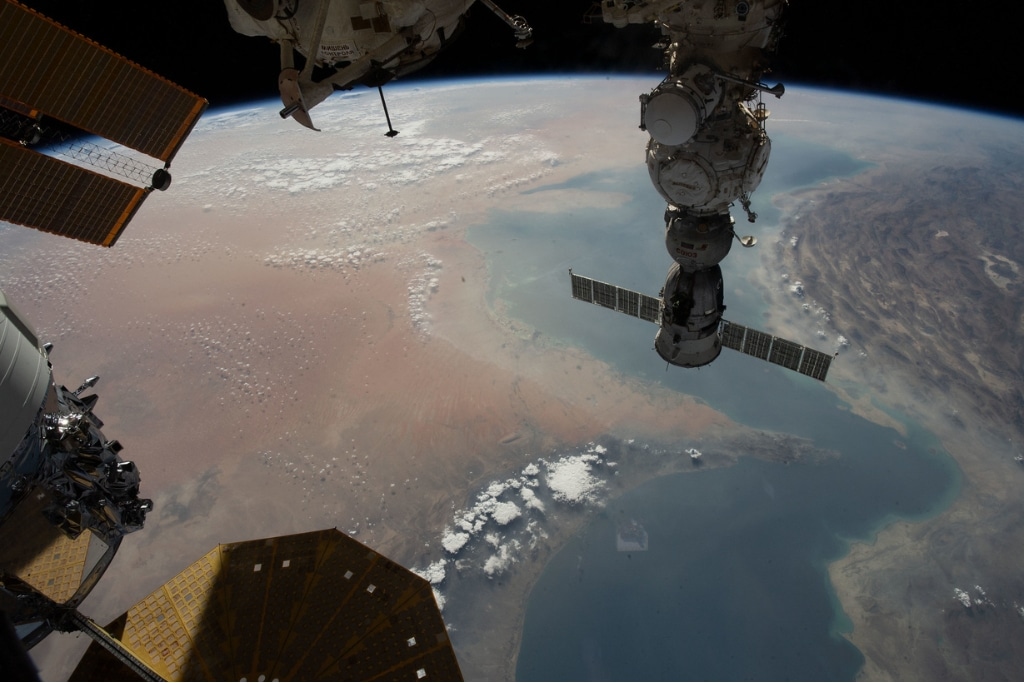
The Trilemma report lays out the implications. Disruptions to the Strait of Hormuz exposed the problems of having a fifth of global oil supply and LNG trade funnelled through a single chokepoint. Import-dependent emerging economies took the sharpest jolts, with some even reverting to coal to ease the energy shortage. Fragmented trade, carbon border adjustments and supply chain nationalism are making energy policy and industrial policy one and the same. The report reframes the question around dependence: who is a country willing to depend on, for what and at what price?
Toward Riyadh
The 27th World Energy Congress is scheduled for Riyadh, Saudi Arabia, in April 2027 under the banner Inspiring Transformations, Delivering Transitions. Its discussions should face a practical test: whether international dialogue helps countries turn competing priorities into workable decisions. No single pathway will suit every country, but every pathway needs institutions capable of delivering it.
The past two decades have proven that we can construct clean energy at scale. The next phase will test whether institutions can reconcile competing priorities, distribute costs fairly and maintain public trust. The technology transition is already under way. Governance must now catch up.
This story is funded by readers like you
Our non-profit newsroom provides climate coverage free of charge and advertising. Your one-off or monthly donations play a crucial role in supporting our operations, expanding our reach, and maintaining our editorial independence.
About EO | Mission Statement | Impact & Reach | Write for us