

For generations, reuse was a matter of necessity: clothes were mended, objects repaired, and nothing functional was thrown away. Today, however, the aesthetics of “conscious consumption” vintage markets in Brooklyn, reclaimed-fashion pop-ups in London, and refurbished smartphones in Berlin carry a moral sheen that obscures where these goods ultimately go when they fail to sell or remain unwanted. What looks like sustainability from New York often ends as landfill pressure, toxic exposure, and economic erosion in Accra, Lagos, Karachi, and beyond.
—
Globally, the fashion industry produces an estimated 92 million tonnes of textile waste every year, with projections reaching 134 million tonnes by 2030. Much of this “donated” clothing in Europe and North America does not end up being reused domestically; studies suggest up to 70% is exported primarily to African and Asian markets. Ghana alone receives roughly 15 million used garments each week.
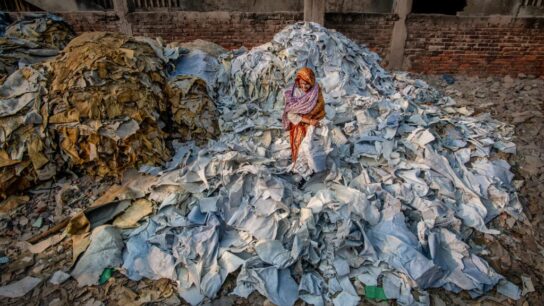
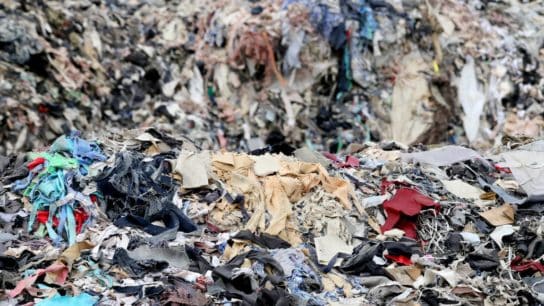
Beneath these shipments is a concealed reality: around 40% of the textiles entering Ghana are unwearable scraps – mould-damaged, frayed, synthetic offcuts that cannot be resold.
The material that cannot be absorbed by local markets piles up in landfills or washes into drainage systems and waterways, gradually breaking down into microplastics. Meanwhile, Ghana’s once-vibrant textile manufacturing sector, employing around 30,000 workers in the 1980s, has shrunk to fewer than 2,000 today. This pattern is echoed in Kenya, Nigeria, Tanzania, and Uganda, where domestic production became uncompetitive in the face of imported second-hand clothing.
The system is presented as reuse, but it functions as disposal via proxy.
Refurbished Tech: The New Device With an Old Shell
The refurbished electronics market is heralded as a solution to fast-paced obsolescence, yet the sustainability claim is not straightforward. Many “refurbished” phones are second-hand only in casing; internally, they contain newly manufactured batteries, chips, or screens, sustaining ongoing extraction of minerals and components.

This becomes clearer when examining battery minerals: about 70% of the world’s cobalt critical for lithium-ion batteries comes from the Democratic Republic of Congo, with 15-30% extracted in artisanal mining conditions that lack adequate labor protections, safety standards, or environmental safeguards. Meanwhile, global e-waste surpasses 50 million tonnes per year, with only about 22% formally recycled. Much of the remainder is dumped into informal recycling streams in places like Ghana, Pakistan, and India, where workers burn wires to extract copper and handle broken screens and toxic residues without gloves, ventilation, or regulatory oversight.
Refurbishment may slow disposal but it does not end extraction or eliminate toxic waste. It merely stages these processes out of sight.
When Thrift Stops Being Access and Becomes Identity
For many consumers in the Global South, second-hand goods remain a lifeline. They offer access to clothing and devices otherwise priced out of reach. But in the Global North, a cultural shift has reframed thrifting from an economic strategy to a lifestyle complete with curated vintage branding, resale platforms, influencer-led styling aesthetics, and moral validation.

On apps like Depop and Vinted, second-hand apparel becomes a priced-up commodity signalling taste and eco-awareness. Meanwhile, in places like Kantamanto Market in Accra, Ghana, thousands of traders and tailors work daily to salvage value from mountains of imported garments, paying high upfront costs to purchase bale-bundles whose contents are unknown until opened. If the bale contains unsellable waste, the economic loss falls entirely on them.
In one world, reuse is a curated aesthetic; in another, it is survival labour.
The Hidden Workers of the ‘Reuse Economy’
At Kantamanto, around 30,000 people sustain a complex network of resale, repair, and tailoring. Porters, often teenagers or young men, carry 55-kilogram bales on their backs for a few cents per trip. Informal e-waste workers in Lagos and Delhi face even harsher conditions: exposure to mercury vapour, lead, lithium dust, acidic solvents, and open-air burning of plastic components.
Yet these workers rarely appear in sustainability narratives. They are not considered in “circular design” panels or in certification schemes. Even regulatory initiatives such as the EU Right-to-Repair framework, expanded in 2025, focus on consumer-based repair access but disregard the conditions of downstream recyclers who absorb the waste burden.
Symbolic Action vs. Systemic Accountability
Across many countries, climate messaging has overemphasized the need for changes in individual behavior – from thrifting and plastic sorting to paper-straw usage and consumer-conscious branding – as if personal virtue could structurally decarbonize the global economy. Scholars refer to this phenomenon as “responsibilisation”: shifting responsibility away from institutions and onto individual consumers.
In African cities, this pattern is compounded by well-intentioned but shallow NGO and Corporate Social Responsibility programs involving plastic collection campaigns, beach clean-ups and youth recycling contests. These events create photo-friendly participation and community engagement, yet contribute little to measurable emissions reduction. A 2024 African Circular Economy Alliance assessment showed that post-consumer plastics account for less than 3% of Africa’s total greenhouse-gas emissions. Meanwhile, the continent’s climate vulnerability stems from systemic drivers such as fossil-fuel extraction and export, gas flaring, diesel-powered electricity, deforestation, livestock-driven agricultural emissions, and weak industrial regulation.
The danger lies not in the activities themselves, but in how they crowd out political will and financial investment for high-leverage interventions. No number of recycled plastic bottles will offset Chevron’s emissions or even Coca-Cola’s role as the world’s largest branded plastic producer.
Who Benefits and Who Carries the Cost
Those who benefit from the thrift-driven sustainability narrative are fast fashion producers, who use overseas donation streams to quietly offload unsold inventory; electronics manufacturers, who repackage second-hand devices with newly sourced components, allowing them to maintain demand for raw materials while marketing products as eco-friendly; and national governments, particularly in the Global North, which leverage the optics of individualized “green” behaviour to defer or dilute the need for stringent regulatory action on production, waste, and corporate accountability.
In stark contrast, the burden falls disproportionately on communities and systems in the Global South: cities across Africa and Asia absorb vast quantities of low-value or unusable textiles and electronics, straining municipal waste management and contributing to persistent landfill and pollution crises. Informal workers, often young, underpaid, and unprotected, face daily exposure to heavy metals, toxic fumes, and hazardous materials as they dismantle e-waste or sort through contaminated clothing bales. Domestic textile and manufacturing industries, once viable sources of employment and self-reliance, have been steadily eroded by the flood of cheap, imported second-hand goods. Overstretched public health systems must respond to respiratory illnesses, chemical burns, and chronic conditions arising from environmental contamination.
The Need for Structural Reforms
Addressing these issues requires structural reforms. Products should be modular and repairable by design, while producers must bear full responsibility for the end-of-life impact of what they make. Exporting waste as “donations” should be outlawed, and investment should shift toward local manufacturing and recycling led by communities, not corporations. Workers in repair and reuse sectors deserve fair wages, safety, and dignity.
The dangerous modern sustainability myth is that every little action helps. In truth, the wrong little actions can delay the major structural reforms we urgently require. If thrift culture brings moral comfort but not emission reduction; if refurbished tech delays disposal but not extraction; if recycling campaigns proliferate while fossil-fuel expansion continues unchallenged, then we are not solving the crisis. We are merely rehearsing sustainability while the problem escalates.
Real progress will come only when regulation replaces symbolism, when systemic accountability overrides feel-good gestures, and when the environmental burden is no longer exported from those with power to those without.
This story is funded by readers like you
Our non-profit newsroom provides climate coverage free of charge and advertising. Your one-off or monthly donations play a crucial role in supporting our operations, expanding our reach, and maintaining our editorial independence.
About EO | Mission Statement | Impact & Reach | Write for us