


As efforts to rewild landscapes grow, a quiet tension persists between preserving human history and healing damaged ecosystems.
—
As someone who has dedicated their career to protecting nature and restoring pristine ecosystems, I sometimes feel a quiet guilt during my walk to work.
Every morning, I find myself in awe of the colleges of Oxford University, which take me back to centuries of history and cultural heritage. And yet, spread across the shire are endless expanses of neatly kept grass meadows, low in biodiversity, filled with ornamental plants and managed parks, offering little in terms of ecological restoration.
I thus ask myself: are cultural heritage and ecological recovery compatible?
When Culture Shapes the Land
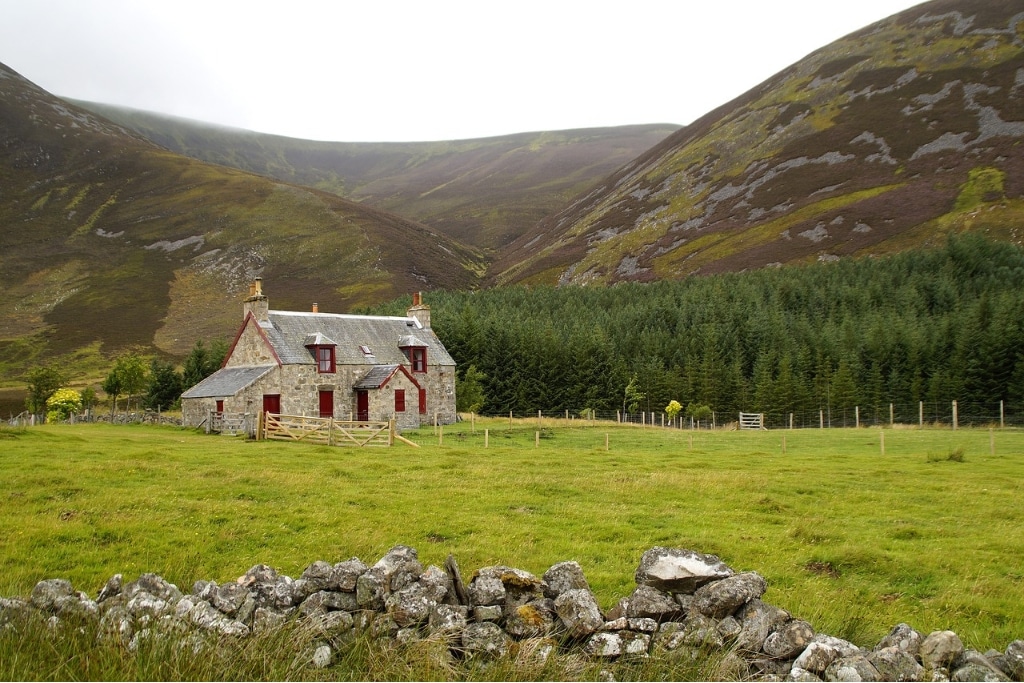
During a university field trip in the Scottish Highlands, my ecology professor described the region not as pristine wilderness, but as a degraded landscape, an “ecological disaster.” A result of centuries of overgrazing, encouraged by aristocratic landowners, keen on preserving their weekend hunting grounds. Trees were systematically kept from regrowing. The ecosystem was, by scientific standards, broken.
To me, however, there is still something charming about these lands, the set of countless Celtic legends. Does this make me a bad environmentalist? Am I betraying the rewilding movement by loving a managed landscape?
Of course not. I still long for wilder ecosystems, for forests filled with ferns and fungi and wild fauna. But I also recognize the aesthetic and value of landscapes shaped by human history.
So, I ask myself: Is appreciating our cultural and anthropogenic heritage inherently at odds with environmental values?
This tension plays out across the world with the case of farming, for instance. The rolling vineyards in the renomated Italian region of Tuscany, now synonymous with romance and identity, are the result of centuries of deforestation and monoculture. Small-scale farmers are a good example of how humans shape land in ways that reflect deep cultural traditions, often at the cost of ecosystems. As a result, farmers become casualties of environmental policies, cast as obstacles to conservation.
But nuances here are important. While farmers may contribute to land degradation, small-scale farming often has a lower environmental impact, benefiting from local distribution and less intensive practices. By targeting certain actors over others, we risk penalizing those with smaller footprints and overlooking larger polluters. More importantly, we miss the chance to learn from and improve sustainable food practices rooted in tradition. When decoupled from extractive systems, small-scale, culturally-rooted land management can be part of the solution.
Ultimately, embracing the complex interplay between culture and nature is essential for effective conservation.
Rethinking the Nature-Culture Divide
Part of the problem lies in how we view nature: as separate from us. Wild spaces are often pictured as dangerous, chaotic, or inaccessible. After all, the human species is celebrated for its ability to work against the forces of nature, to master the soil, the crops, to fight off predators and diseases.
This comes to a philosophical question: are humans part of nature, or have they evolved out of it? 17th-century French philosopher René Descartes stated that humans are distinct from animals and nature. We are, as a species, not only outside but potentially above the natural world. For Francis Bacon, an English philosopher and early advocate of the scientific method, humans used science as a tool to “conquer nature.”
But not all discourses support this divide.
Philosopher Bruno Latour famously rejected the binary of nature versus culture. Robin Wall Kimmerer, in Braiding Sweetgrass, describes how, in some native languages, plants are referred to as “those who take care of us.” So, are we really so separate?
The climate and biodiversity crises are making it clear: we are not. We are entirely dependent on the natural world.
When Conservation Embraces Culture
Some examples across the world remind us that culture and nature do not have to be at odds.
Indigenous communities in the Amazon, whose way of living is grounded in respect for the Earth and its resources, are a prime example of how culture can be linked with a care for and a collective behaviour towards protecting and restoring nature.
The Knepp Estate in Sussex is a groundbreaking rewilding project where conventional farming was replaced with natural grazing by free-roaming animals. This shift has helped restore wildlife and habitats while retaining the estate’s historic core, including its house and gardens. Knepp shows that rewilding can work alongside preserving cultural heritage and land ownership.
These cases reveal that integrating cultural identity into conservation is not a compromise, it is a strength. Projects that embrace both ecological goals and cultural context tend to be more resilient, inclusive, and effective. Working with local communities, respecting the history and values of the land, and building trust are all essential for long-term success of conservation efforts that endure well beyond the initial funding phase.
Ignoring the cultural and social dimension in conservation risks alienating local communities and the broader public. When people feel excluded or that their values and traditions are overlooked, it creates distrust and divides between environmental advocates and those whose support is crucial for successful conservation.
Embracing Complexity and Honesty
Whilst today’s ideologies tend to divide us, and hypocrisy runs the world, we think that admitting uncertainty makes us weak – arguably the biggest problem with modern political thinking. Instead, admitting nuances gives us power.
I support the recovery of our world’s ecosystems and biodiversity, and yet I do appreciate the reflection of our culture and history within our landscapes. Not recognizing the importance of both will only build a stronger divide between environmentalists and the rest of our society. Conservation must be guided by our cultures, values, histories.
This story is funded by readers like you
Our non-profit newsroom provides climate coverage free of charge and advertising. Your one-off or monthly donations play a crucial role in supporting our operations, expanding our reach, and maintaining our editorial independence.
About EO | Mission Statement | Impact & Reach | Write for us