

When a flood, wildfire, or extreme weather event strikes, people with disabilities are among those most likely to be affected – and in some cases even left behind. For this reason, disability activists at COP30 in Belém, Brazil are seeking greater information accessibility, better consideration of people with disabilities in climate adaptation, and an official seat at the table.
—
“Climate justice is nothing without the disabled,” said Muna Shakya. She represents the National Indigenous Disabled Women Association of Nepal at COP30 in Belém, Brazil, seeking greater recognition of the impact of climate change on people with disabilities.
According to the Swiss Disability and Development Consortium (SDDC), 16% of the world’s population – an estimated 1.3 billion people – lives with a disability. 80% of these people live in developing countries, which are disproportionately affected by climate change.
A key focus area for advocates is information accessibility. “[Officials] don’t talk about inclusive accessibility and information related to climate change,” said Shakya.
Meena Paudel, a representative of the Nepal Disabled Women Association, told Earth.Org that people with disabilities are left out whenever climate disasters strike. An example? Early warning systems.
“[T]he [early warning] system is not working for deaf people, who have no access to information in sign language. When we talk about deaf, visually impaired, and other psychosocial disabilities, they cannot access information easily.”
It is important, according to these representatives, to consider disabilities in a family context. “Families need to take care of their children, if they have intellectual or severe disabilities. They face different kinds of effects from climate vulnerability,” said Paudel.

Not only are people with disabilities prevented from accessing information that will help them deal with the impact of climate change, but they are also often left out of discussions on the topic. “They always think of people with disabilities only as victims, but people with disabilities also can support and can contribute to climate justice and climate adaptation,” Paudel argued.
For this reason, Funding Fairer Futures, an European Union-funded project, is encouraging disability-inclusive climate justice in Europe and in the Global South, where people with disabilities are much more likely to be affected by climate change.
“People with disabilities are underrepresented in the development world,” said Simon Burdett, who leads disability-inclusive climate justice for Christian Blind Mission Ireland and manages the Funding Fairer Futures project. “One of the things that we’re doing in this EU-funded project is providing grants to organizations in the Global South so that they can all be led by people with disabilities for people with disabilities.”
At COP30 last week, SDDC launched the Climate Change Through Our Lens project, which shares the voices and stories of 12 women with disabilities in Nepal as they navigate the realities of climate change. The portraits reveal how patriarchal norms, ableism, inaccessible infrastructure, and charity-based approaches to disability exclude women with disabilities from disaster preparedness, response, and climate policy.
Shakya, who took part in the project, shared her experience after a landslide caused by unseasonal rainfall resulted in a water shortage in her area. At the same time, the stories show their resilience, and the power of self-advocacy.
Accessibility at COP30
COP30 organizers have taken steps to ensure the conference is accessible. Accessibility volunteers have been prominent throughout the conference, providing support during the two weeks, and wheelchairs and other accessibility services are visible in common areas.
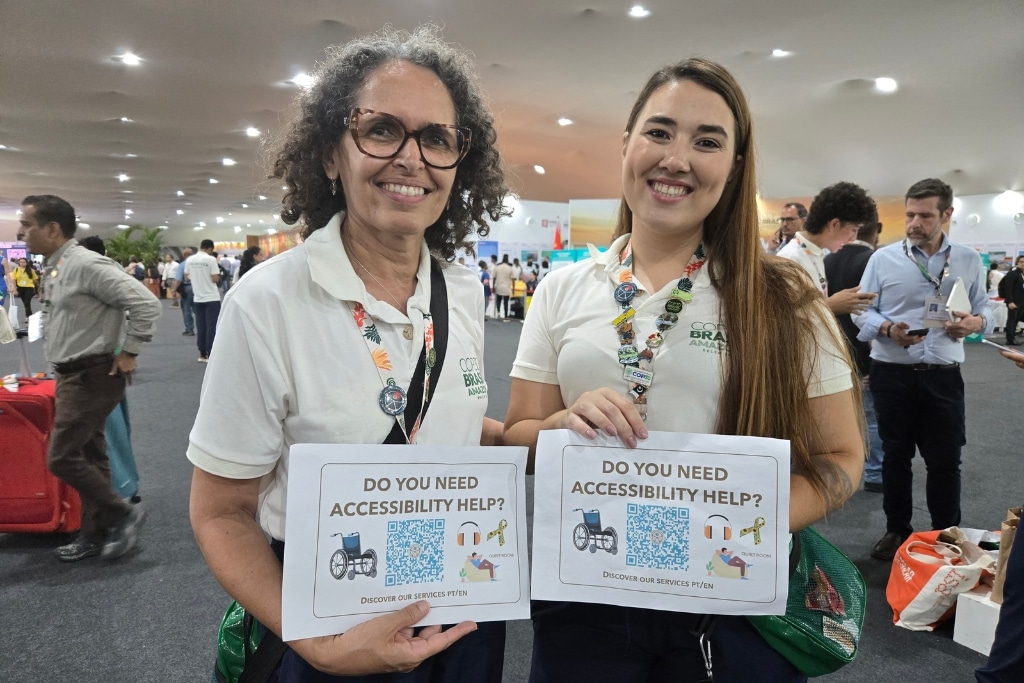
According to the official website, “At COP30, we believe that everyone should be able to fully experience the event – with comfort, independence, and safety. With this in mind, we have prepared a variety of resources and services to ensure that every participant feels welcome, respected, and supported in every detail.”
However, Earth.Org notices that just a few of the onsite events include accessibility services such as sign language interpretation or captioning.
Featured image: UN Climate Change/Diego Herculano via Flickr.
This story is funded by readers like you
Our non-profit newsroom provides climate coverage free of charge and advertising. Your one-off or monthly donations play a crucial role in supporting our operations, expanding our reach, and maintaining our editorial independence.
About EO | Mission Statement | Impact & Reach | Write for us