

July 30 is Earth Overshoot Day, which marks the date when humanity has exhausted nature’s budget for the year. It means that for the rest of the year, we are using resources beyond what our planet provides.
—
Today marks the day when humanity’s resource consumption exceeds the Earth’s capacity to regenerate those resources for the year, a reminder of how unsustainable modern consumption patterns are and how these are adding immense pressure to our planet’s ecosystems.
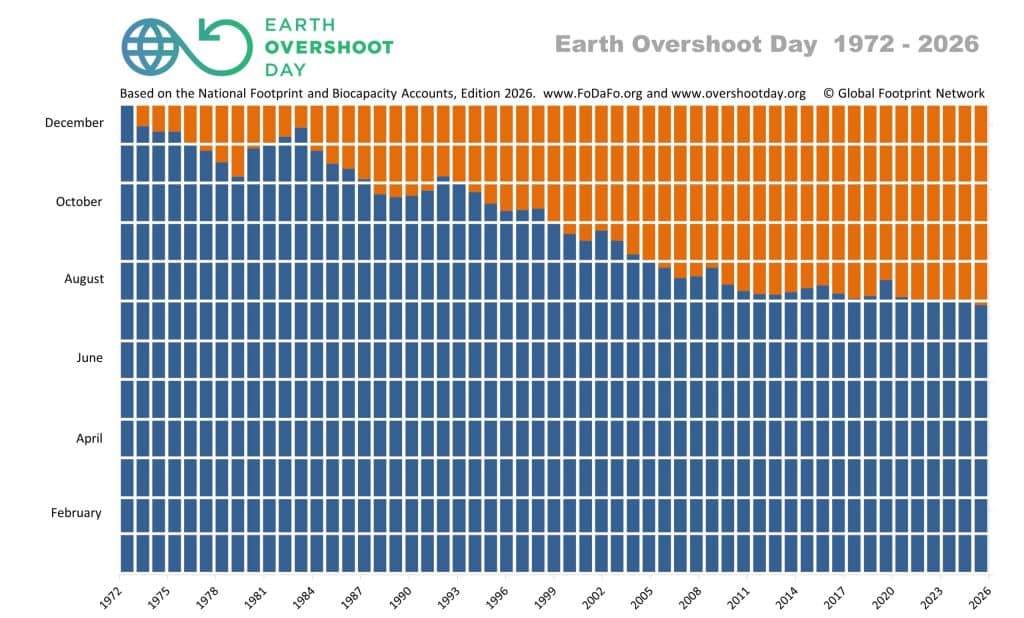
Since the 1970s, human resource use has outstripped Earth’s capacity, building up a massive “ecological debt.” Wiping that debt clean would require 20.6 years of complete planetary rest and recovery – though much of the damage is likely irreversible.
This year, it falls on July 30, a week later compared to last year; overall, however, the day has been occurring earlier since the 1970s. At the current rate of consumption, which is 73% faster than Earth’s ecosystems can regenerate, experts estimate that it would take 1.73 Earths to produce and regenerate all the resources we use today.
“We are stretching the limits of how much ecological damage we can get away with – it is now a quarter into the 21st century and we owe the planet at least 20 years of ecological regeneration, even if we stop any further damage now,” said Lewis Akenji, board member of Global Footprint Network, the international research organization behind Earth Overshoot Day. “If we still want to call this planet home, this level of overshoot calls for a scale of ambition in adaptation and mitigation that should dwarf any previous historical investments we have made, for the sake of our common future.”
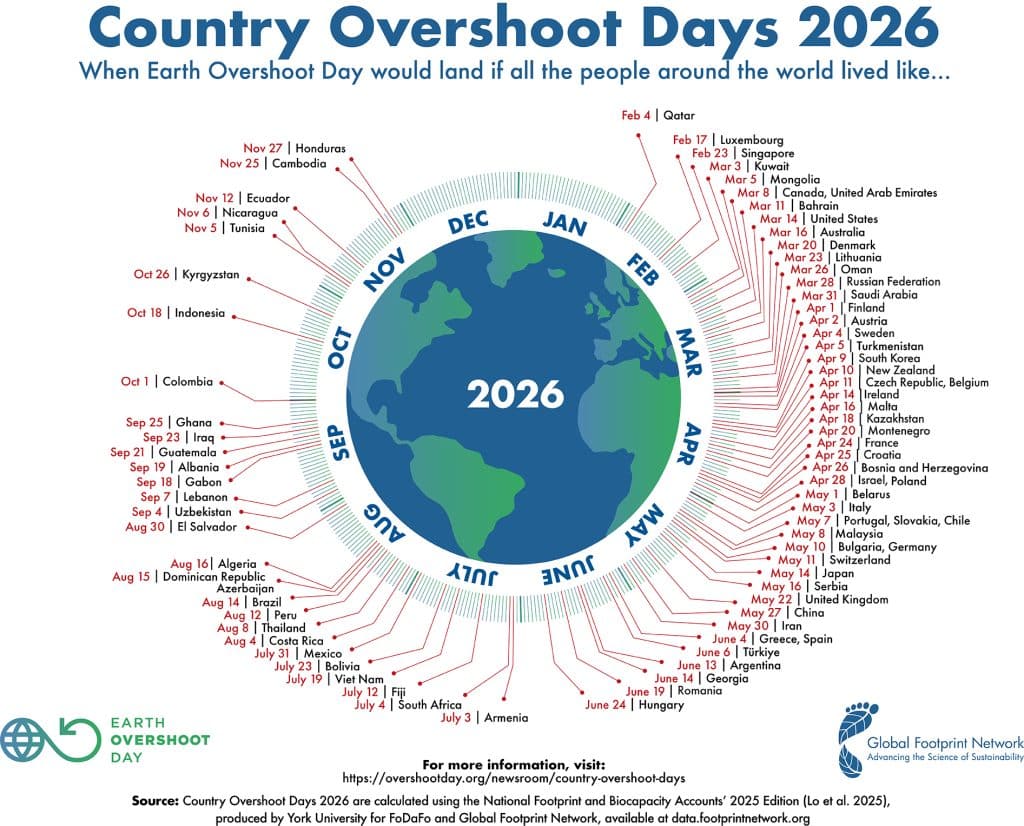
Overshoot days are calculated for individual countries, too. This year, Qatar had the earliest overshoot day (February 4), followed by Luxembourg (February 17), Singapore (February 23) and Kuwait (March 3). The US’s Overshoot Day fell on March 14 and China’s on May 27. Honduras has the latest one on November 27.
💡How can I contribute to a more sustainable planet?
- 🗳️ Vote for climate action: Exercise your democratic rights by supporting candidates and policies that prioritize climate change mitigation and environmental protection. Stay informed with Earth.Org’s election coverage.
- 👣 Reduce your carbon footprint: Make conscious choices to reduce your carbon footprint. Opt for renewable energy sources, conserve energy at home, use public transportation or carpool, and embrace sustainable practices like recycling and composting.
- 💰 Support environmental organizations: Join forces with organizations like Earth.Org and its NGO partners, dedicated to educating the public on environmental issues and solutions, supporting conservation efforts, holding those responsible accountable, and advocating for effective environmental solutions. Your support can amplify their efforts and drive positive change.
- 🌱 Embrace sustainable habits: Make sustainable choices in your everyday life. Reduce single-use plastics, choose eco-friendly products, prioritize a plant-based diet and reduce meat consumption, and opt for sustainable fashion and transportation. Small changes can have a big impact.
- 💬 Be vocal, engage and educate others: Spread awareness about the climate crisis and the importance of environmental stewardship. Engage in conversations, share information, and inspire others to take action. Together, we can create a global movement for a sustainable future.
- 🪧 Stand with climate activists: Show your support for activists on the frontlines of climate action. Attend peaceful protests, rallies, and marches, or join online campaigns to raise awareness and demand policy changes. By amplifying their voices, you contribute to building a stronger movement for climate justice and a sustainable future.
For more actionable steps, visit our ‘What Can I do?‘ page.
This story is funded by readers like you
Our non-profit newsroom provides climate coverage free of charge and advertising. Your one-off or monthly donations play a crucial role in supporting our operations, expanding our reach, and maintaining our editorial independence.
About EO | Mission Statement | Impact & Reach | Write for us