




Editorial Guidelines
Who We Are
Earth.Org is a leading environmental news website dedicated to providing comprehensive coverage of crucial issues affecting our planet through independent, high-quality journalism.
Our goal is to raise awareness and foster a better understanding of the pressing environmental challenges we face, from climate change and energy to pollution and biodiversity loss as well as inspire societal change so that life can be made sustainable on this planet.
Earth.Org is powered by hundreds of volunteer Contributing Writers and data scientists, whose work is closely managed by our Editor-in-Chief. Their expertise and passion drive our mission to deliver accurate and thought-provoking content that informs, educates, and engages our readers.
Share A Story Worth Telling
Contributors retain broad discretion over the topic selection, as long as there is alignment with Earth.Org’s mission to inform the public on key environmental topic areas.
Consult the articles already published on the website to avoid overlaps with existing content. The same topics can be covered again, but a novel and fresh perspective is essential.
Every topic needs to be pre-approved by our Editor-in-Chief, who will also offer tips and guidance in terms of word-count, style, and alternative angles.
New writers are required to read our Editorial Guidelines and sign a consent form agreeing to the terms and conditions outlined in this guide, including our Artificial Intelligence Policy and Copyright Policy.
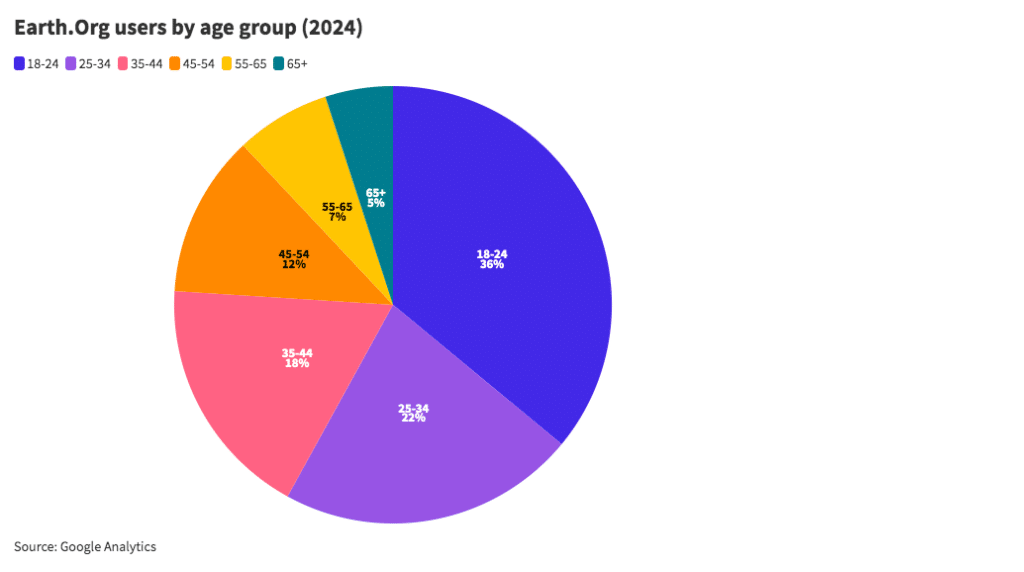
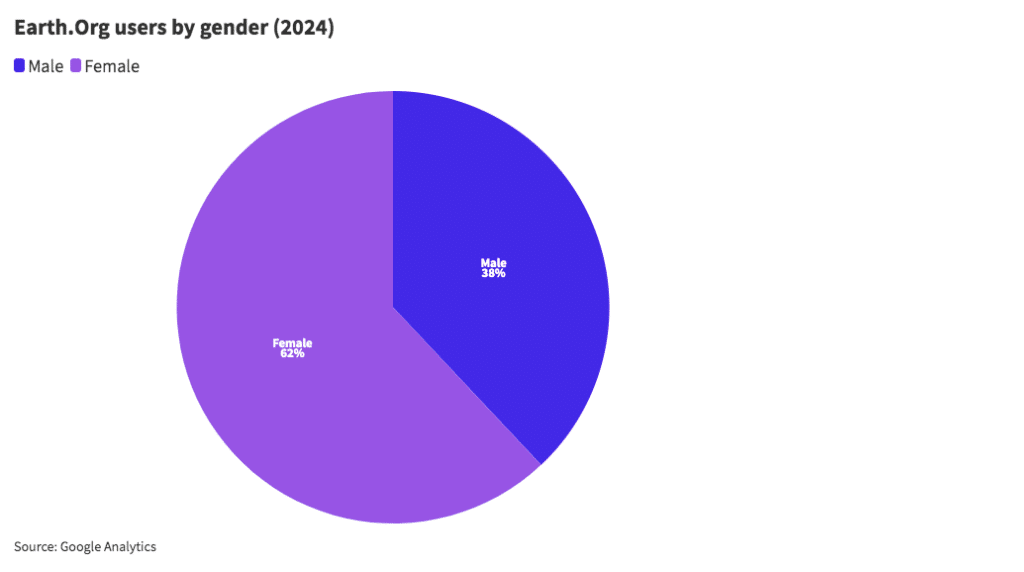
AUDIENCE
- Global – currently over 1 million unique visitors/month.
- English-speaking.
- People concerned about the well-being of planet Earth.
- Generalist & specialist public alike.
- Specialist contributors may in turn become themselves avid readers.
- Equal space to developing economies and mature markets.
TOPICS
- Global warming, temperature trends
- Anthropogenic climate change (causes, effects)
- Loss of biodiversity
- Environmental degradation, conservation efforts
- Deforestation, desertification
- Loss of glaciers, melting ice-caps
- Rising sea levels, ocean acidification
- Coral reefs, oyster reefs, mangroves
- Climate policy
- Extreme weather events, attribution studies
- Carbon-taxation initiatives, carbon capture and storage
- Fossil fuels, renewable energy
- Endangered species, illegal wildlife trade, conservation work
- Technology in the service of environmental causes (e.g. satellite tracking of large mammals, artificial intelligence…)
- Climate activism, climate protests
- Climate litigation
We encourage solutions-oriented stories and stories about people on the frontlines of climate change and climate action.
STORY TYPE
You can choose between the following formats.
1. NEWS
- Purpose: Report recent events, developments, or discoveries relevant to the environment, climate, biodiversity, and sustainability.
- Potential Topics: Policy changes, scientific breakthroughs, natural disasters, environmental activism, major reports, international agreements.
- Tone: Objective, concise, factual, and neutral.
- Word Count: 400–800 words.
- Sources: Multiple reputable sources (e.g., news wires, press releases, official statements, scientific journals).
- Expert Comments: Recommended for added authority, but not always required.
- Other Notes: Avoid speculation; stick to verified facts.
Check out our Breaking News page.
2. ANALYSIS
- Purpose: Examine the implications, causes, or consequences of a recent event, policy, or trend.
- Potential Topics: Impact of new legislation, effectiveness of climate policies, analysis of global emissions trends.
- Tone: Analytical, balanced, evidence-based.
- Word Count: 800–1,200 words.
- Sources: Academic papers, official data, authoritative reports, news articles.
- Expert Comments: Strongly encouraged for depth and credibility.
- Other Notes: Provide context and multiple viewpoints.
No topic is off-limits. You can find some examples here.
3. EXPLAINER
- Purpose: Clarify complex concepts, processes, or issues for a general audience.
- Potential Topics: Carbon trading, biodiversity loss, renewable energy technologies, climate change mechanisms.
- Tone: Accessible, clear, educational, engaging.
- Word Count: 800–1,200 words.
- Sources: Scientific literature, reputable organizations, academic experts.
- Expert Comments: Useful, especially for technical subjects.
- Other Notes: We are happy to consider video interviews for publication on our YouTube channel.
Check out our Explainers page.
4. INTERVIEW
- Purpose: Present the insights, experiences, and opinions of a noteworthy individual.
- Potential Topics: Conversations with scientists, activists, policymakers, indigenous leaders, entrepreneurs.
- Tone: Conversational, respectful, engaging.
- Word Count: 800–1,500 words.
- Sources: Primary interview content, brief contextual background from reputable sources.
- Expert Comments: N/A (interviewee is the expert).
- Other Notes: Transcribe accurately; provide context for the subject’s relevance.
Take a look at some of the interviews we have published throughout the years.
5. FEATURE
- Purpose: Offer an in-depth, narrative-driven look at a person, place, event, or issue.
- Potential Topics: Profiles of environmental leaders, community conservation efforts, case studies, investigative pieces.
- Tone: Engaging, vivid, descriptive.
- Word Count: 1,200–2,000 words.
- Sources: On-the-ground reporting, interviews, multiple secondary sources.
- Expert Comments: Essential; include diverse voices and firsthand accounts.
- Other Notes: Use storytelling techniques; set scenes and develop characters.
4. DATA
- Purpose: Present data-driven insights using visual tools (charts, maps, infographics).
- Potential Topics: Emissions trends, wildlife populations, impacts of deforestation, renewable energy adoption.
- Tone: Clear, precise, informative.
- Word Count: 300–800 words (to accompany visuals).
- Sources: Official datasets, peer-reviewed studies, reputable organizations.
- Expert Comments: Recommended for interpreting and validating complex data but not necessary.
- Other Notes: Ensure visual clarity; include methodology and data sources. You will be closely followed by out Data Visualization Editor William Kin.
Check out our Data Visualization page.
5. OPINION
- Purpose: Argue a clear point of view on an environmental issue.
- Potential Topics: Policy recommendations, critiques of government actions, personal perspectives on sustainability.
- Tone: Persuasive, well-reasoned, respectful; can be subjective.
- Word Count: 600–1,000 words.
- Sources: Support arguments with credible evidence, references, and examples. Must ensure views are backed by facts.
- Expert Comments: Useful if quoting others; main voice is the author’s.
- Other Notes: Disclose any potential conflicts of interest.
6. BOOK REVIEW
- Purpose: Evaluate a recent book relevant to Earth.Org’s themes.
- Potential Topics: Reviews of new titles on climate change, conservation, environmental history, eco-fiction.
- Tone: Thoughtful, critical, balanced, engaging.
- Word Count: 600–1,000 words.
- Sources: The book itself, author background, related literature.
- Expert Comments: Optional; useful for context or comparison.
- Other Notes: We also love speaking with the authors of the books we review. If that’s something you are interested in, let our Editor know.
STYLE & TONE
- Articles should be clear and direct in their communication style to ensure maximum reader comprehension.
- Explain concepts and provide definitions wherever needed.
- Clearly state and fact-check all sources, embedding links throughout the article for easy reference without the need for a separate list of sources (more about fast-checking* below).
- Maintain objectivity in articles, except in opinion pieces. Avoid using first-person narratives, personal thoughts, or opinions.
- Avoid overwhelming the reader with excessive detail. Focus on revealing information rather than burying it in unnecessary minutiae.
- Do not succumb to pessimism; be solution-oriented.
- Headlines can be attention-grabbing but should not be alarmist or catastrophist in nature.
- Strike a balance between overly casual and overly academic language to ensure accessibility without compromising credibility.
- When unsure about the writing style, opt for a dry and factual narrative to maintain a professional tone.
- Ensure that arguments progress logically throughout the article, allowing readers to follow the thought process easily.
- British spelling, please.
FORMATTING
- Unpack acronyms, no matter how obvious they may seem.
- Identify researchers by their institution (e.g.: “Jane Austin from the University of Santa Clara uncovered a new link…”).
- Spell out numbers ‘one’ through ‘nine’, and use numeric symbols thereafter (i.e. “When he was eight years old” and “his team consisted of 11 people”).
- Addressees and dates, however, are always numeric (i.e. “He was born in 1992 and lived on 110th street).
- Use double quotation marks (“) for quotes, and single quotation marks (‘) for a quote within a quote and in headlines and subheadings.
- Place the full stop or comma inside of the quotation mark (i.e. He explains, “It wasn’t a decision we came to lightly.”).
FACT-CHECKING
Misinformation can kill our credibility and reputation. Double-check everything is correctly spelt and factually accurate throughout your article. Tedious work, but it must be done!
Examples of things to fact-check:
- Names, titles, dates, numbers, institutions
- Make sure the URLs work
- References
LAYOUT
Please always include a headline and a brief lede (introduction) no longer than three sentences. If the article is long, consider dividing it into sections using subheadings.
SHARING FORMAT
Please type the article into a Google Doc and share the editing permissions. Alternatively, you can email the content in a Microsoft WordDoc format.
Please use the “track changed” tool during the editing process.
IMAGES
We love images on Earth.Org. We use them to break up text and to support data.
- Make sure every suggested photo is high definition (+1000px).
- Avoid overly-posed photos and stock images.
- Embed any pictures you want us to consider within the text on the Google Doc but please also email the files separately.
- Include a caption and credits, possibly with a link to the original source.
PLEASE NOTE: Writers may only include photos that are copyright-free, in the public domain, or licensed under Creative Commons (with proper attribution if required), and must not use any images that are copyrighted or require payment or permission.
EDITING, ONBOARDING
Our Editor will provide you with constructive feedback. This is a terrific learning opportunity to improve your writing skills.
Probation will last until your third article, after which the Editorial Team will formally welcome you as a full-time contributor (or not) and set up an author page for you.
We will upload the final version of your articles onto our website and disseminate them via our multiple social media channels.
ARTIFICIAL INTELLIGENCE (AI) POLICY
At Earth.Org, we are committed to publishing authentic, original stories written by real people who care deeply about our planet. Using generative AI to write articles can result in lack of attribution, may involve plagiarism and sometimes lead to hallucinated – or false – content.
To maintain the integrity and trustworthiness of our content, the use of artificial intelligence (AI) tools to write, generate, or substantially edit articles is strictly prohibited. All submissions must be the genuine work of the author.
Earth.Org uses multiple AI detection tools and will not accept future submissions from writers found to have used such tools. Writers found to be submitting AI-generated content will be removed from our contributor list.
PLAGIARISM
Plagiarism is a serious violation of academic and journalistic ethics, and it is strictly prohibited at Earth.Org. Writers are expected to produce original content that is not copied from any other source without proper citation.
To ensure the integrity of our platform and uphold the standards of professionalism, all writers must adhere to the following guidelines regarding plagiarism:
- All articles submitted to Earth.Org must be the original work of the writer.
- Directly copying content from external sources without proper attribution is considered plagiarism.
- When referencing external sources or quoting content from other works, writers must provide links to the original sources by embedding them in the text.
- When citing external sources or quoting content from other works, writers should include embedded hyperlinks within the text to direct readers back to the original sources.
- Reusing content from one’s previous work without acknowledgment is also considered a form of plagiarism.
Earth.Org utilizes plagiarism detection tools to ensure the originality of all submitted content. Any article found to contain plagiarized material will be rejected, and further actions may be taken as per Earth.Org’s policies. Violation of the plagiarism policy may result in the removal of the writer’s work from Earth.Org, termination of the writer’s authorship privileges, and other appropriate actions as deemed necessary by the editorial team.
PROMOTIONAL BACKLINKS
We do not accept articles that contain promotional, or otherwise irrelevant backlinks, as they can compromise the credibility and trustworthiness of the information presented.
Any articles found to contain promotional backlinks without prior disclosure to the editor will not be considered for publication on Earth.Org. We reserve the right to reject such submissions and take appropriate actions in line with our Editorial Guidelines.
COPYRIGHT POLICY
The Volunteer acknowledges that any intellectual property developed during their engagement with Earth.Org, including but not limited to reports, articles, and proposals, shall belong to Earth.Org.
The Volunteer grants Earth.Org the non-exclusive right to use, publish, and distribute any intellectual property created during their engagement, with appropriate credit given to the Volunteer.
—
GOOD LUCK and WELCOME TO EARTH.ORG!

