


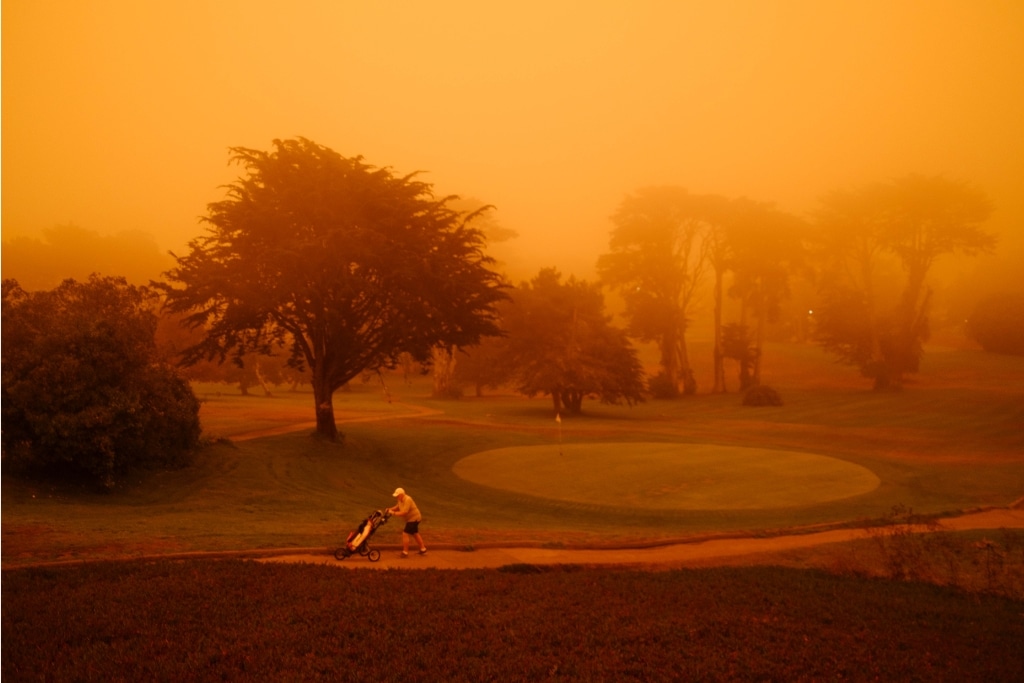
The annual number of synchronous days with fire-prone weather – when multiple places have the right conditions for fires to occur within a few days of each other – went from an average of 22 between 1979 and 1984 to more than 60 days in 2023 and 2024.
—
The number of days with fire-prone conditions globally has nearly tripled in the past 45 years, with more than half of that increase linked to human-caused climate change, according to a new study.
Fire-prone conditions arise when elevated temperatures are accompanied by dry and windy weather. Dry leaves and vegetation acts as fuel, while strong winds can spread wildfires further and faster, making them more difficult to control. Such conditions have been blamed for several recent wildfires events, from those in Los Angeles in January 2025 to the more recent ones affecting southern Australia.
You might also like: ‘Hotter, Drier, and More Flammable’: Climate Change Played a Role in LA Fire
The new study, published Wednesday in Science Advances, identified “significant increases” in synchronous fire weather – when multiple places have the right conditions for fires to occur within a few days of each other – between 1979 and 2024. The annual number of such days went from an average of 22 between 1979 and 1984 to more than 60 days in 2023 and 2024.
The Americas are particularly vulnerable, lead author Cong Yin said, as reported by the Associated Press. In continental US, the number of such days averaged 7.7 between 1979 and 1988. The past decade saw 38 such days per year. Meanwhile, the southern part of South America went from an average of 5.5 synchronous fire weather days a year from 1979 to 1988 to over 70.6 over the last decade, including 118 such days in 2023.

Using computer simulations to compare today’s climate – which is influenced by the presence of planet-warming greenhouse gases in the atmosphere – to a fictional world without fossil fuels, researchers concluded that more than 60% of the global increase in synchronous fire weather days can be attributed to climate change.
More Frequent and Intense
A 2024 study found that both the frequency and intensity of wildfires have more than doubled in the last two decades, as more frequent hot, dry, and windy conditions create the perfect fuel. And when the ecological, social and economic consequences of wildfires were accounted for, six of the last seven years of the analyzed period (2003-2023) were the most “energetically intense”, according to the same study.
Climate change has increased the wildfire season by roughly two weeks on average globally, mostly by enhancing the availability of fuel through heat and dry conditions. The average wildfire season in Western US is now 105 days longer, burns six times as many acres, and sees three times as many large fires – fires that burn more than 1,000 acres compared to the 1970s, according to Climate Central.

Despite an increase in the frequency and severity of wildfires globally, the amount of area burned by wildfires each year has gone down over the last few decades. A 2017 paper published in Science found that global burned area declined by approximately 25% over the past 18 years, despite the influence of climate. The phenomenon can be explained by the decline in burn rates in grasslands and savannas as a result of the expansion and intensification of agriculture.
Featured image: Ken Walton via Wikimedia Commons.
This story is funded by readers like you
Our non-profit newsroom provides climate coverage free of charge and advertising. Your one-off or monthly donations play a crucial role in supporting our operations, expanding our reach, and maintaining our editorial independence.
About EO | Mission Statement | Impact & Reach | Write for us