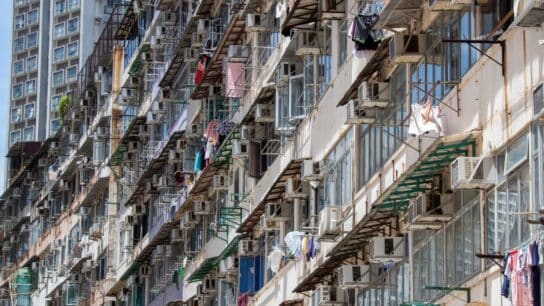


“When people feel that decisions are being made about them, without them, they eventually stop believing in the systems that claim to speak for them,” writes Rich Wilson, Co-Founder of the Global Citizens Assembly.
—
By Rich Wilson
We all know that politics is broken. More than half the world now reports little or no trust in their government. Yet, most leaders respond by acknowledging the crisis in words, while doing very little to address it.
Key decisions that shape everyday life, from what we eat and how we power our homes to what kind of planet our children inherit, remain largely the property of a remarkably small circle of people. This is especially problematic when it comes to climate, where governance systems remain slow and increasingly disconnected from the communities bearing the greatest costs.
It’s worth asking, then, what changing that would actually look like. One answer can be found in a desert on the northern edge of South America.
La Guajira is home to more than 400,000 members of the Wayúu people, one of the region’s largest Indigenous communities.
The Wayúu have a saying: “It is only from strong sunlight and harsh rains that a seed can sprout.” That resilience is lived.
According to the UN, more than two-thirds of the Wayúu population face food insecurity, and child mortality linked to malnutrition runs at six times Colombia’s national average.
Central to Wayúu life is Ley Wayúu, an ancestral system of governance passed down through generations, shaping conflict resolution, land stewardship, and community responsibility.
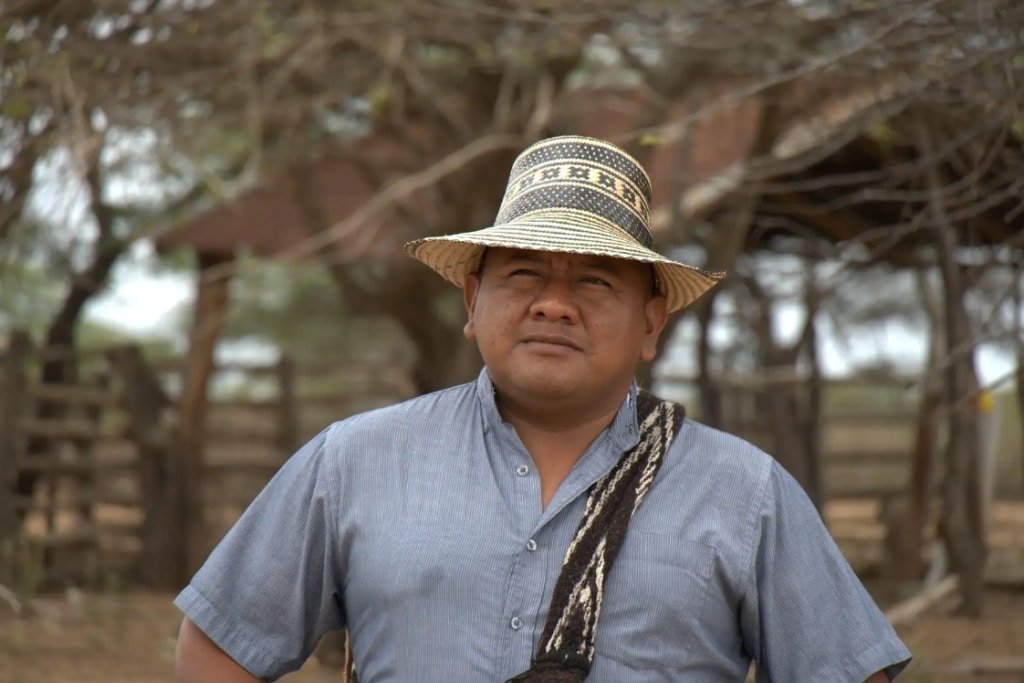
Abraham Jayariyu, a Wayúu leader from La Guajira, carries that knowledge. This year, he shared it on a global stage. He was selected to take part in the Global Citizens’ Assembly for Food Systems and Climate, which brought together 105 people from across the world – a snapshot of the global population by geography, age, gender, education and level of climate risk, as well as their views on the topic.
The assembly supports different people with different relationships to the land to think seriously about how food systems can be made fairer and more resilient as the climate changes.
Citizens’ assemblies, for those unfamiliar, are essentially groups of ordinary people chosen by lottery, who come together for a period of time to make decisions on important issues. They learn from experts, weigh competing perspectives, and deliberate with one another, before arriving at a set of proposals.
It sounds simple. In practice, it’s been surprisingly powerful. Ireland used the model to move on same-sex marriage and abortion after decades of political paralysis on both topics. France’s national climate assembly produced 149 proposals, several of which became law.
As of 2023, more than 700 of these assemblies have been documented worldwide, and when their recommendations are tested against the broader public in polls and referendums, they hold up. People trust the outcomes because they were formulated by the people.
For Jayariyu, participation was not about setting aside his community’s knowledge to engage with the system on its own terms. It was about bringing that knowledge to the fore.
“I highlighted our ancestral wisdom, how our elders worked the land and how we have always had our own ways of sustainability,” he said. “I also listened, because in these spaces, you learn that other people carry knowledge too. Different, but still valuable.”
That exchange, between lived experience and technical expertise, between ancestral knowledge and institutional frameworks, is precisely what citizens’ assemblies are designed to make possible.
By the end of the assembly, participants had agreed on 22 Calls to Action with strong cross-group support. Those proposals are now being presented to policymakers at international climate meetings, and integrated within the UNFCCC negotiation process, supported by a coalition of organizations and governments such as Brazil, which held the COP30 Presidency last year.

Whether or not they are adopted, something more fundamental has already happened. This process has challenged an assumption so baked into our institutions that we barely notice it anymore: that authority on complex questions belongs to experts and officials, and that people like Jayariyu don’t really have that much to add. That assumption, more than almost anything else, is what’s hollowing out trust in democracy. When people feel that decisions are being made about them, without them, they eventually stop believing in the systems that claim to speak for them.
Food systems are among the most significant drivers of the climate crisis, responsible for 30% of global greenhouse gas emissions. The people living most directly with the consequences of that crisis – including farmers, Indigenous people, and communities like the Wayúu – have some of the most relevant knowledge required to address it.
The question is whether climate governance is willing to make room for them. Citizens’ assemblies suggest that when it does, the quality of what becomes possible changes.
Featured image: UN Climate Change/Kiara Worth via Flickr.
—
About the author: Rich is CEO of Iswe and an internationally recognised expert in democratic systems change, specializing in deliberative processes like citizens’ assemblies. He co-founded the Global Citizens’ Assembly in 2019 and in 2003, founded Involve, which became a global leader in democratic reform. A former adviser to the Blair and Brown governments, he has advised the UNDP, WHO, OECD, and multiple national governments. A trustee of Local Trust and recipient of the 2022 Democracy Network Equality and Power Award, he began his career as a climate analyst with SPRU, the IPCC, and the Environment Council.
This story is funded by readers like you
Our non-profit newsroom provides climate coverage free of charge and advertising. Your one-off or monthly donations play a crucial role in supporting our operations, expanding our reach, and maintaining our editorial independence.
About EO | Mission Statement | Impact & Reach | Write for us
Earth.Org
Free, non-profit and independent environmental journalism.