


Solar photovoltaics and wind have the greatest potential for driving the energy transition, according to the International Energy Agency’s latest World Energy Outlook.
—
Demand for coal, the dirtiest of fossil fuels and currently the largest source of global power generation, is expected to decline before the end of the decade, the International Energy Agency (IEA) has said.
In its latest World Energy Outlook report, published earlier this month, the IEA said demand for coal is expected to start declining in most countries after 2030, except India and Southeast Asia. However, demand for other planet-warming fossil fuels, including oil and natural gas, is expected to continue increasing through 2050 under a “current policies” scenario, driven by transport, petrochemicals, and electricity generation in emerging markets and developing economies.
Over the past decade, global energy demand grew by 1.6% annually, on average. While demand is expected to continue rising over the next decade, the growth rate will slow down, with the majority coming from emerging markets and developing economies, the report said.
The rise in energy demand coincides with a rise in the deployment of solar photovoltaics, wind, and nuclear energy. These forms of energy are expected to meet and even outpace additional energy demand in most regions between now and 2030, according to the IEA.
However, without stronger government policies and support to overcome integration challenges, such as grid constraints and insufficient storage, deployment will likely slow down, the IEA said. In this scenario, the agency projects a global average temperature increase of 2C by 2050 and 2.9C by 2100.
Energy Transition
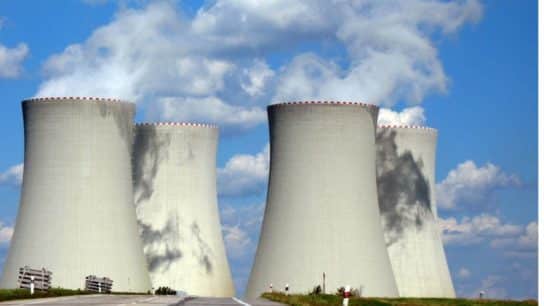
For the next decade, coal and natural gas will still account for the majority of electricity generation. At the same time, nuclear energy is projected to increase by 35% by around 2035 and more than 80% by 2050, supported by government policy in over 40 countries.
Meanwhile, renewable energy – mostly solar and wind power – is expected to account for about half of the world’s electricity generation by 2035. Over the past five years, their installed capacity has increased by 30% each year, driven by China.

Burning fossil fuels to generate electricity releases greenhouse gases that contribute to global warming. This results in long-term shifts in temperature and weather patterns, which is known as climate change.
Featured image: Tom Grundy/hongkongfp.com.
This story is funded by readers like you
Our non-profit newsroom provides climate coverage free of charge and advertising. Your one-off or monthly donations play a crucial role in supporting our operations, expanding our reach, and maintaining our editorial independence.
About EO | Mission Statement | Impact & Reach | Write for us