


iCOSHELLs is a EU-sponsored initiative to achieve the bloc’s ambitious goal of restoring 75% of soils to health status by 2030.
—
By Lea Hüvelmeier-Schmidt
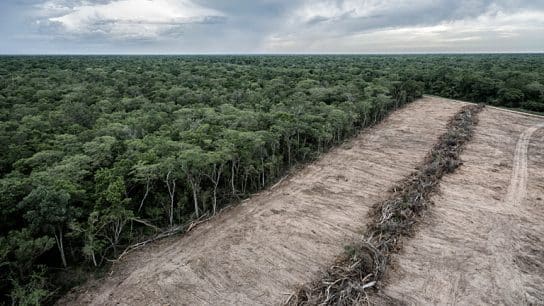
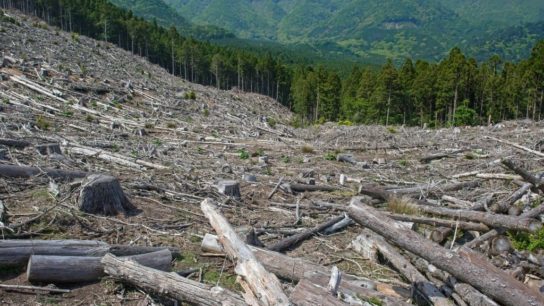
Soil – the unseen foundation of our ecosystems – is under siege. Across Europe, pollution, urban sprawl, intensive farming, and climate change are eroding soil quality. Alarmingly, around 60% of EU soils are in poor condition, threatening food security and biodiversity.
But hope is not lost. The EU’s Mission “A Soil Deal for Europe” aims to restore 75% of soils to healthy status by 2030. Efforts to achieve this include fostering innovative approaches and collaboration across the continent. One of these promising projects is iCOSHELLs. It connects scientific research with on-the-ground action in six “Living Labs” across Europe, including the Basque Country, Bulgaria, Greece, Italy, Southeast Spain, and Sweden.
The solutions to soil degradation are not one-size-fits-all, given Europe’s varied climatic zones and soil types. For instance, while one region might grapple with agricultural soil compaction, another might focus on reclaiming and restoring land in former industrial or mining sites.
iCOSHELLs’ interconnected approach means soil solutions are designed in real conditions, whether revitalizing compacted urban soils in the Basque Country, restoring post-mining land in Greece, or optimizing nutrient flows on thousands of hectares of Swedish farmland. A network of six living labs across Europe, steered by local experts and stakeholders, connecting theory and practice.
Measuring What Matters: The Indicator Catalogue with Global Impact
Comparisons across ecosystems, from Bulgarian vineyards to Spanish semi-arid farms, require shared standards. That’s why CETENMA – an iCOSHELLs partner in Spain – is developing a catalogue of soil health indicators, co-created with all Living Labs.
It covers 12 core indicators, including:
- Physical: bulk density, particle-size composition, water holding capacity;
- Chemical: pH, nutrient levels, organic and total carbon, electrical conductivity, cation exchange capacity;
- Biological: microbial diversity, soil respiration.
Samples are taken before, during, and after experiments, using composite cores, in accredited labs. Round-robin tests guarantee that data remains comparable, even across borders.
“If we’re testing solutions in different places, we need indicators that let us track improvement,” said Erik Sindhöj, researcher at Sweden’s RISE and Scientific Lead of the iCOSHELLs project.
Soil health tracking is not just data, it is a foundation for wider transformation.
Soil Strategy for Scalable Action
Restoring soil health delivers real outcomes: higher crop yields, enhanced biodiversity, and resilience to drought and floods. But scaling such benefits requires airtight monitoring, clear protocols, and shared frameworks.
This approach is also embedded in EU policy ambitions. The forthcoming Soil Monitoring Law will require Member States to adopt standardized soil descriptors and methodologies, ensuring that monitoring of soil attributes, from pH to biodiversity, is carried out consistently across Europe. Inventories of contaminated sites, harmonized protocols, and tailored support for farmers will form part of this unified effort.
Supporting this ambition, the EU Soil Observatory is being developed as a single platform, a “dashboard of dashboards”, to provide high-resolution, harmonized, and quality-assured soil data across the bloc. Its Soil Health Dashboard will make information accessible to policymakers, researchers, and citizens alike, creating a shared evidence base for soil action.
Complementary initiatives such as Soil Health Benchmarks, with harmonized sampling protocols for urban, agricultural, and forest soils, and the Soil Health Data Cube, which compiles indicators, terrain data, and crop models into an open-access system, show how research outputs like iCOSHELLs can plug into larger European infrastructures.
This is no longer just an aspiration but a systematic design principle: with harmonized methods and shared data platforms, results from a vineyard in Bulgaria or a mine site in Greece can inform soil recovery strategies across the continent.
Rather than a set of tools, the initiative lays out the infrastructure for grounded environmental solutions that scales from local action to European policy.
Why It Matters
Healthy soils underpin our planet. They are powerful carbon sinks, widely outperforming forests and oceans. Degraded soils strip away our ability to feed ourselves, filter water, or curb climate change.
iCOSHELLs bridges the gap between ambitious EU goals and meaningful action, rooted in science, anchored in communities, and driven by shared data.
As spaces and livelihoods become more fragile, the Living Labs show us how to measure, manage, and multiply success, from robust research to resilient soil.
—
About the author: Lea Hüvelmeier-Schmidt is a project manager and science communicator at the European Science Communication Institute (ESCI). She coordinates research dissemination, improves online communication, and organizes public workshops. With a background in marketing, PR, and media, she helps scientists turn complex ideas into compelling stories that connect with diverse audiences and bridge the gap between research and society.
This story is funded by readers like you
Our non-profit newsroom provides climate coverage free of charge and advertising. Your one-off or monthly donations play a crucial role in supporting our operations, expanding our reach, and maintaining our editorial independence.
About EO | Mission Statement | Impact & Reach | Write for us