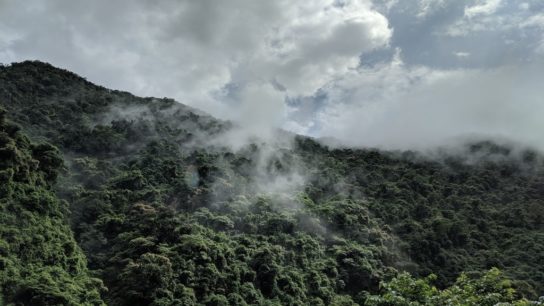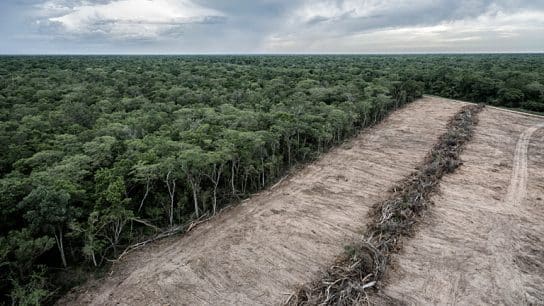


As the Lunar New Year begins, a collection of conservation wins offers renewed hope that biodiversity loss can be reversed, including green sea turtles coming back from the brink of extinction, wild horses returning to central Asia and rhino poaching declining.
—
Last week, firecrackers went off around the world in celebration of the Lunar New Year. According to the Chinese zodiac, 2026 welcomes the year of the Fire Horse – a symbol of vitality, energy and momentum. Experts recommend slowing down and managing the fast-paced changes of the Fire Horse by staying grounded.
In that spirit, let us pause and reflect on some of the recent progress on biodiversity restoration. From species coming back from the brink of extinction to a decrease in wildlife crimes, here are some of the best conservation stories from 2025.
From Endangered to Recovering
The International Union for Conservation of Nature (IUCN) is the global authority on the status of the natural world. As part of this work, it publishes the Red List of Threatened Species – the most comprehensive database on the conservation status of animals, plants and fungi, which categorizes species on a scale from “least concern” to “extinct”. Last year, the organization released the latest edition of the Red List, announcing that 20 species were downlisted, meaning they are no longer threatened with extinction.
Topping the list was the green sea turtle, now classified as “least concern”. In the late 20th century, the species experienced a 48-67% decline due to factors including climate change, pollution, commercial fishing and illegal wildlife trade. However, thanks to conservation efforts, populations have increased by about 28% compared to recorded levels in the 1970s-80s.

“The ongoing global recovery of the green turtle is a powerful example of what coordinated global conservation over decades can achieve to stabilise and even restore populations of long-lived marine species,” said Roderic Mast, the Co-Chair of IUCN’s Species Survival Commission Marine Turtle Specialist Group.
Along with green sea turtles, 12 bird species were also downlisted, including the Rodrigues fody and warbler, the last two bird species endemic to the small Mauritian island of Rodrigues. Populations of Alexandrine parakeets – named after Alexander the Great, who brought the bird back to Europe from his conquests in the Punjab – have also rebounded, with 90% of the overall population increasing.
Two types of snail, three kinds of seabream, and a little nocturnal marsupial known as the shark bay bandicoot were also downlisted.
Long-Lost Species Come Home
In 2025, animals were spotted in places where they had not been seen for decades or even centuries across a diversity of landscapes.
In Papua New Guinea, for example, a survey of local fishers led to the rediscovery of the sailback houndshark, which had not been officially recorded since 1970. In conversations with local residents, researchers were told that six houndsharks had been caught as by-catch between 2020 and 2022. This finding highlights the vital importance of supplementing scientific research with local knowledge.
Meanwhile, in Nepal, scientists recorded the presence of the Asian small-clawed otter – the world’s smallest otter – for the first time in 185 years. Although the otter’s vast range stretches from Indonesia to Nepal, it is currently classified as “vulnerable to extinction” on the IUCN Red List. The confirmed sighting came from Nepalese forestry officials who found an injured juvenile, offering a rare confirmation of the species’ continued presence in the region.

Over in the Eastern Cape province of South Africa, wild Cape vultures were sighted on a farm for the first time in three decades. The birds – the only species endemic to South Africa – have been steadily declining since the 1980s. “Sightings like this […] prove our work is making a difference, motivating us to keep fighting for these critical birds,” said Kerri Wolter, CEO and Founder of Vulpro, the organization that recorded the sighting.
Rewilding Success Stories
What better way to mark the year of the Fire Horse than with the return of wild horses around the world? Two parallel initiatives are reintroducing Przewalski’s horses to fragile ecosystems, in the hopes of protecting and preserving local biodiversity. The world’s last subspecies were last seen in the wild in the 1960s. Today, all surviving Przewalski’s horses are descended from just 13 individuals through zoo breeding programs.

Efforts to rewild the horses began in China and Mongolia in the 1990s. Now, through the Prague Zoo’s Return of the Wild Horses project, rewilding is expanding into Kazakhstan. In 2025, seven horses were released into the Altyn Dala State Nature Reserve in Central Kazakhstan through the initiative, with more expected to be released in the coming years.
In Spain, Przewalski’s horses are also being introduced to the municipality of Villanueva de Alcorón in Guadalajara, where wild horses roamed the Iberian highlands 10,000 years ago. 16 horses were first brought to the area in 2023, with the herd growing to 35 as of 2025. Conservationists hope that through grazing, the horses will mitigate the spread of wildfires which have had devastating impacts on local biodiversity.
In another rewilding win, the European wildcat is returning to the UK after being declared functionally extinct in 2019. For the last three years, 46 of these small felines have been released into the Cairngorms National Park in Scotland. In a sign that rewilding efforts have been successful, seven females gave birth to kittens in 2024, followed by five more last year.
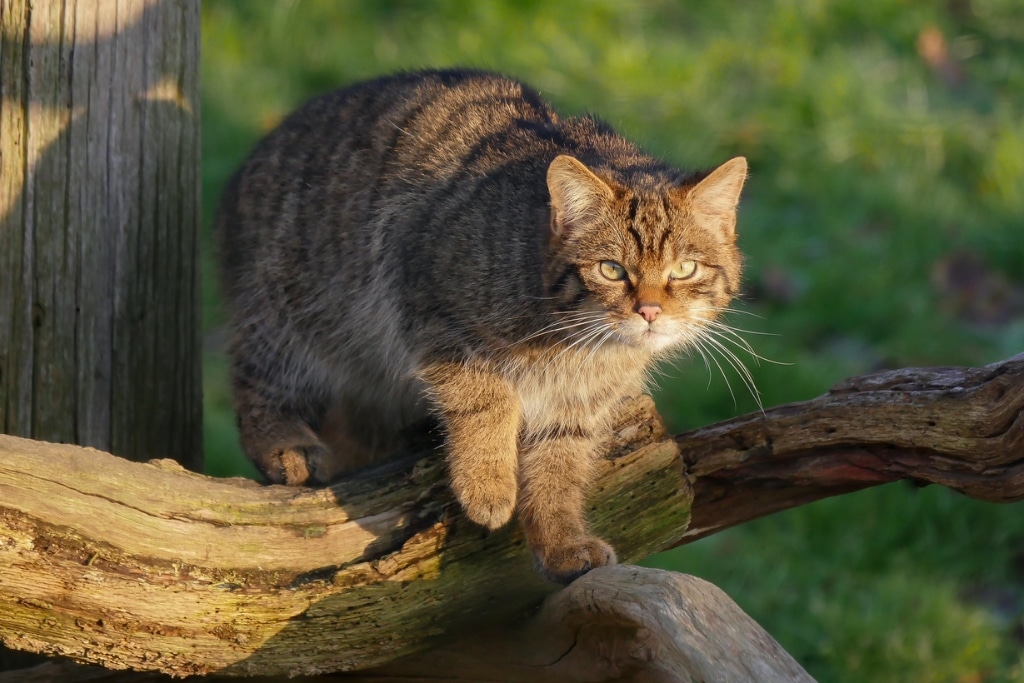
“Just a few years ago, the species was teetering on the edge of extinction in Scotland. Now we’re watching them not only survive but start to raise their own kittens in the wild. That gives us real hope for the future”, said Helen Senn, Project Lead at Saving Wildcats. The South West Wildcat Project has similar plans to release 50 wildcats in England, starting in 2028.
The pine marten is also being reintroduced in parts of England. Once prevalent across the UK, the small woodland mammal now only survives in Scotland. Following a successful reintroduction of 15 martens in Dartmoor in 2024, 19 martens were released in Exmoor last September.
You might also like: Rewilding in Practice: The Return of the Scottish Wildcat
Shifting Trends in Illegal Wildlife Trade
Following decades of sustained pressure, new reports indicate that certain wildlife crimes are decreasing. According to a 2025 IUCN press release, poaching of African white rhinos has been declining since 2021, reaching its lowest rates since 2011 last year. Reports from the Indian state of Assam indicate that no one-horned rhino was poached in 2025 either.
“Rhino conservation is proving that change is possible. While challenges do remain, successes in South Asia and parts of Africa show that intelligence-led enforcement, community engagement, and secure habitats can reverse declines,” said IUCN Director General Grethel Aguliar.
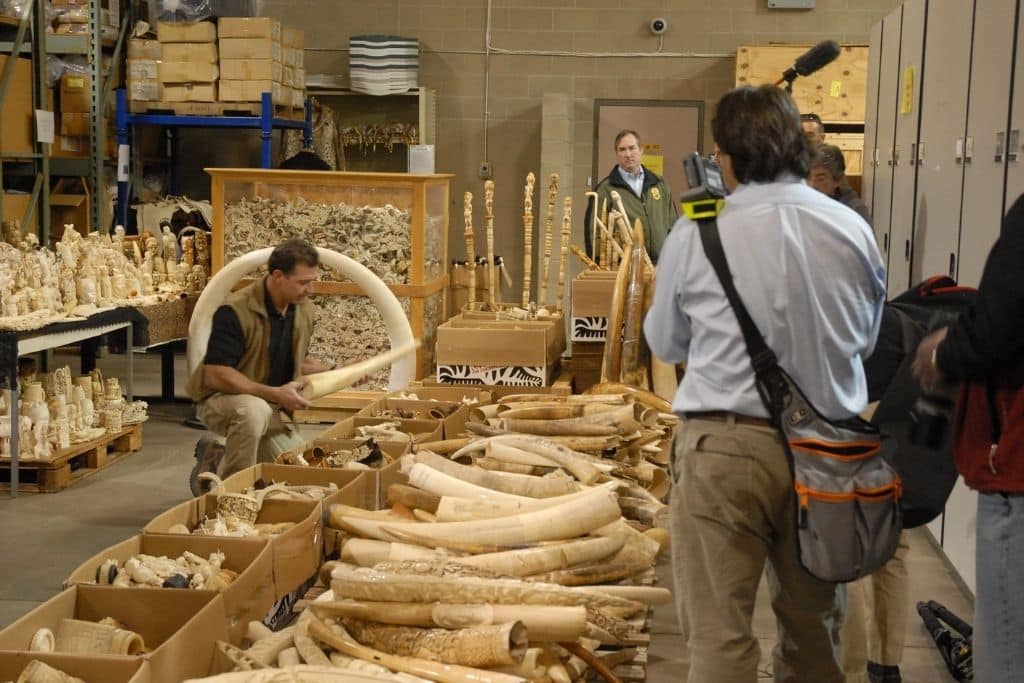
According to the Wildlife Justice Commission, the trafficking of pangolin scales and ivory from Asia and Africa has decreased since global supply chains were disrupted by Covid-19. Between 2020 and 2024, the number of multi-ton seizures of ivory and pangolin scales substantially dropped. Additionally, the price of pangolin scales fell by around 70% between 2017 and 2021, while the price of ivory has been declining since 2013 – both signs of weakening demand.
Finally, a study conducted in the Brazilian Amazon and published last year revealed that community-led patrols reduced the number of recorded environmental crimes by 80% in the 2003-2013 period. Contrastingly, government-led enforcement operations in comparable areas and for the same period led to no reductions. Once more, these findings underscore the importance of centering local communities within conservation efforts.
The Case for Optimism
These stories offer a glimmer of hope at the start of a year that will undoubtedly be taxing. Optimism in these uncertain times can feel risky, and even naive, but it can also be a tool for resistance. It reminds us that we can recover.
Progress does not happen overnight. It shows up in quiet, often unpredictable ways. It might take the shape of a young otter or a wild horse. It grows out of continued, concerted efforts by communities to do the right thing, to right the wrongs of the past and build a better future.
These stories remind us that when people come together to take action, even the most fragile ecosystems can rebound and thrive.
Featured image: Wikimedia Commons.
This story is funded by readers like you
Our non-profit newsroom provides climate coverage free of charge and advertising. Your one-off or monthly donations play a crucial role in supporting our operations, expanding our reach, and maintaining our editorial independence.
About EO | Mission Statement | Impact & Reach | Write for us