

Mayotte’s vast lagoon is bleaching. Heat stress has pushed corals past their limits, while drought and storm damage on land have amplified the shock. This photostory documents what I have seen underwater, connects it to water and forest crises on the island, and outlines what can still be done locally.
—
The first time I saw coral losing its colors was in Fiji. I was diving to capture the raw beauty of the ocean when a reef lit up in fluorescent pinks, acid greens, and electric blues. It was breathtaking – but I did not immediately understand that this explosion of color could be a warning flare. After talking with local guides, I learned that corals, stressed by heat, sometimes glow before they expel their symbiotic algae and starve.
What I admired with fascination was dying. That lesson followed me home and changed how I look at every reef I visit.
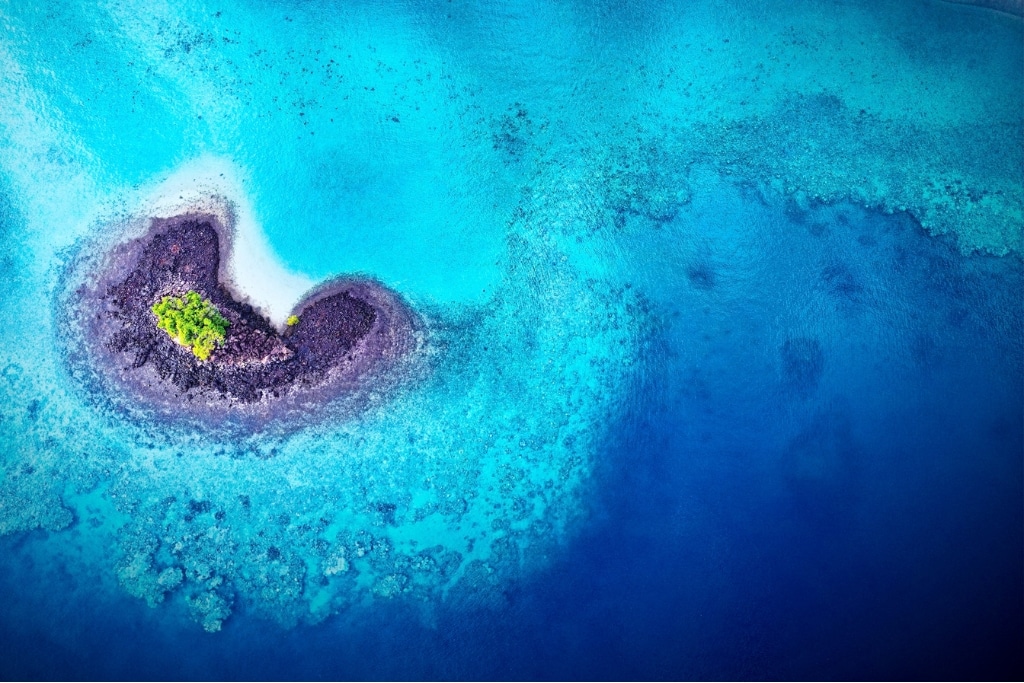
Mayotte: A Lagoon in Real Time
Today, I live in Mayotte, in the Indian Ocean. Here, bleaching is not an abstract headline; it is daily life. The lagoon has been warming slowly but steadily. In 2024, the pattern shifted from isolated patches to a broad, silent transformation. At some sites, like in Passe en S, coral cover dropped from 59% to below 30% in just a few months – a brutal decline.
Reefs I knew by heart — vibrant, noisy, crowded with life – turned pale and oddly quiet. They did not just lose color; they lost their function: architecture for fish, food for invertebrates, protection for the coast. It is not only an ecological loss; it is a wound in the landscape, a warning rising from the depths.

How Bleaching Works and How We Measure It
Corals live close to their upper thermal limit. A persistent rise of just 1-2C above seasonal norms can trigger bleaching. Sustained heat – tracked as Degree Heating Weeks (DHW) – pushes them over the edge. At first, corals expel zooxanthellae, turning bone-white. If heat stress eases, some can recover, slowly rebuilding their energy reserves. If it doesn’t, they die.
Managers and scientists pair satellite alerts with in-water loggers to read these thresholds: when DHW accumulates, when night temperatures stop dropping enough for relief, when a “recovery window” closes. That is the invisible story behind the pale reefs we see: a curve on a graph, then a colorless skeleton on the seabed.

Beyond the Reef: A Water Crisis on Land
Heat and drought do not stop at the reef crest. Mayotte’s drinking water depends on rainfall and hillside reservoirs. In recent years, cuts have been scheduled for days at a time; households often turn to bottled water to cope. It is a public-health necessity – and a solid-waste nightmare for a small island where everything runs downhill to the lagoon.
When plastic management systems are overwhelmed, bottles and fragments escape. The same heat that exhausts corals also dries soils and reduces streamflow, lowering reservoir levels and concentrating pollutants. Climate stress is never just one problem at a time; it is a tangle.

Chido: The Cyclone that Changed Everything
On 14 December, 2024, Cyclone Chido struck Mayotte – the strongest in decades. Winds topped 200 km/h (124 mph), entire stands of trees fell, slopes collapsed, and roofs tore away. But the most damaging effects were not always visible. When the storm uprooted thousands of trees, it dismantled a natural system: fewer trees meant less humidity, fewer clouds, and less rain.
Where roots once held soil and slowed water, bare ground now sheds sediment in the first heavy shower. That sediment rushes into streams and out to the lagoon, settling on reefs as a brown shroud that blocks light and suffocates already weakened colonies. Storms and heat do not just add up – they multiply each other’s impacts.

Roots, Forests, and Mangroves: The Island’s Shock Absorbers
Forests and mangroves are Mayotte’s living water infrastructure. On the hills, deep-rooted native trees stabilize soil, sponge rainfall, and release it slowly into streams. In the intertidal zone, mangroves trap sediment and filter nutrients before they reach the reef. Remove these buffers and every downpour becomes a flush.
Mayotte has lost a significant share of forest cover over recent decades; mangrove belts are fragmented in places where pressure is highest. Replanting native species is not cosmetic landscaping — it is watershed protection and coastal defense. In practical terms, that means restoring slopes above sediment-prone bays, protecting remaining mangrove stands, and giving them room to expand.
Why It Matters
Reefs are food, protection, and identity. They support fisheries and tourism, buffer waves during storms, and keep beaches from washing away. When coral dies, fish communities change; catches fall for small-scale fishers who can least afford it. When reefs flatten, waves bite deeper into the coast. When water cuts stretch for days, families make hard choices that ripple into the lagoon via plastic and wastewater.
Climate change can sound abstract until you realize it affects what pours from your tap, what ends up on your table, and the shore you walk with your children.

What Now?
Reduce direct pressure on reefs
Ban anchoring on coral and expand no-take/no-anchor zones in sensitive passes and reef flats. Use mooring buoys and enforce speed and wake limits. Manage fishing effort in the lagoon, where biomass is already under stress, to give recovering corals time to re-house marine life. Comparable community-backed protections elsewhere have enabled real rebounds.
Track heat, act on thresholds
When temperature loggers and DHW alerts cross agreed trigger points, activate temporary measures: guided-only access, stricter mooring rules, “look but don’t touch” protocols for dive centers, and targeted communication so residents and visitors understand why these steps matter.
Rebuild green infrastructure
On eroding slopes, replant native, deep-rooted species (for example, drought-tolerant trees adapted to local soils) and restore riparian buffers so rainwater is slowed, filtered, and absorbed before it reaches the lagoon. Protect and reconnect mangrove stands as first-line filters.
Secure resilient freshwater
Accelerate storage, treatment, and distribution upgrades to reduce reliance on emergency bottled water during cuts. Pair this with local collection, sorting, and recycling systems that prevent plastic leakage in crisis periods. Water security is reef security.
A Mirror for the World
What is happening in Mayotte is not an isolated case. Around the tropics, heat stress has pushed many reefs into bleaching in recent years. On land, drought has tightened its grip from southern Europe to the western United States, forcing rationing, drying rivers, and straining old infrastructure. The details vary, but the pattern is familiar: heat, water stress, extreme weather – and ecosystems caught in the middle. Corals are sentinels because they react quickly and visibly. When they fade, they are telling us something about the water we all share.

Final Thoughts
Every dive is a suspended moment. I photograph to keep a record, to document what’s fading — not out of nostalgia, but to make choices visible. Bleaching speaks without noise, but with urgency. Unlike Vegas, what happens in Mayotte doesn’t stay in Mayotte. What bleaches here, what fades, what dies, eventually shows up somewhere else. The lagoon is a mirror. It is time to act while recovery is still possible.
Featured image: Serge Melesan.
—
Check out other Earth.Org’s photostories here.
This story is funded by readers like you
Our non-profit newsroom provides climate coverage free of charge and advertising. Your one-off or monthly donations play a crucial role in supporting our operations, expanding our reach, and maintaining our editorial independence.
About EO | Mission Statement | Impact & Reach | Write for us