


October 20 marks International Sloth Day, a day dedicated to celebrating these enigmatic and often critically endangered creatures. Established in 2010 by the Colombian animal welfare group AIUNAU, this annual observance aims to boost global awareness and protection for sloths. Read on to uncover some fascinating facts about these strange and gentle animals, and discover why increased knowledge is the first step toward safeguarding their future.
—
1. There are six extant species, which can be divided into two groups: three-toed sloths and two-toed sloths. Besides the difference in the number of digits on their front limbs, two-toed sloths tend to be slightly larger. However, the extinct giant ground could reach lengths of over three metres and weigh a ton. Three-toed sloths are more docile and have a smaller range of rainforest habitat.
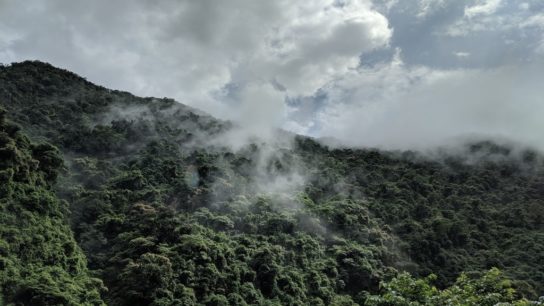
2. Sloths are native to the rainforests of Central and South America.
3. The Pygmy three-toed sloth is classified as Critically Endangered on the IUCN Red List, while the Maned three-toed sloth is Endangered.
4. The sloth’s diet consist of mostly leaves, which explains their famed slowness. Leaves are not energy-rich, meaning sloths need to sleep more and move slowly to save energy; they travel up to 36 metres and sleep for 15 to 20 hours a day.
5. It can take sloths days to digest a single leaf!
6. Sloths have a slightly lower body core temperature than most mammals and they can become sluggish if their temperature drops too low.
7. Sloths have an incredibly slow metabolism, only relieving themselves once or twice a week.
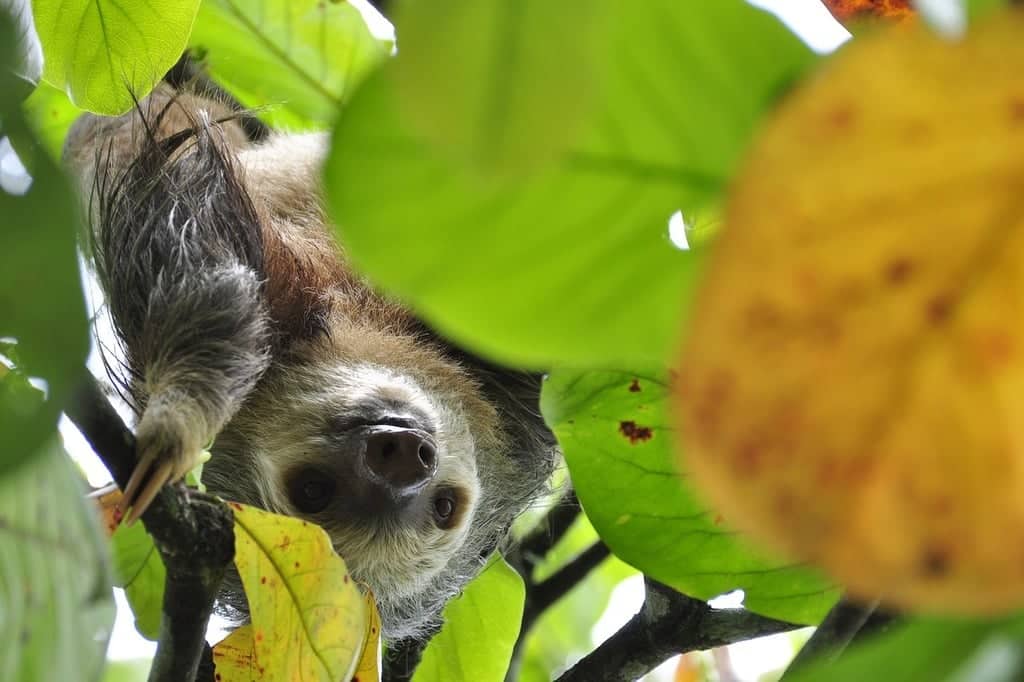
8. According to World Animal Protection, sloths spend 90% of their time hanging upside down. This is because they have certain physiological adaptations that bear the weight of their internal organs and prevent them from pushing down on the diaphragm.
9. While they are notoriously slow on land, they are good swimmers. Sloths are able to travel three times as fast in the water as they do on land and hold their breath for up to 40 minutes at a time. This is because their multi-chamber stomach has developed as a response to their slow digestion, but can also act as a floatation device.
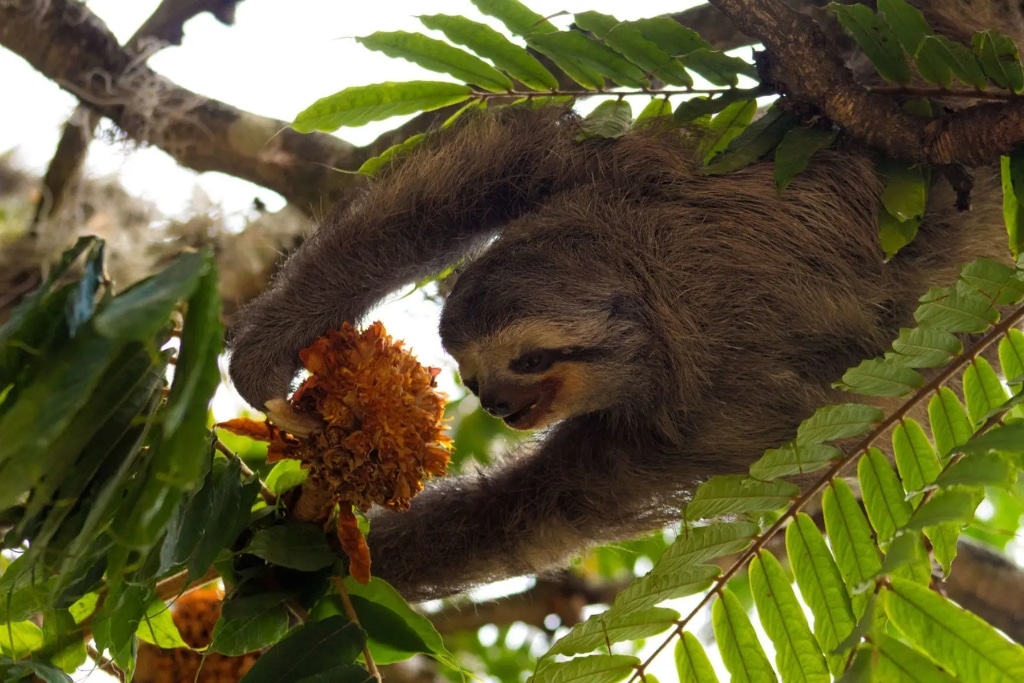
10. Sloths’ long, coarse fur grows in the opposite direction to most other mammals. Additionally, it contains algae, which helps camouflage the animal when in the treetops. In 2010, researchers found that a type of green algae called Trichophilus welckeri passes down from mother sloth to baby sloth, suggesting a co-evolutionary relationship between the two species.
11. Besides algae, sloths’ fur has grooves and cracks that house a variety of insects, like beetles, moths, fungi and cockroaches.
12. The biggest threat facing sloths is deforestation and habitat loss, which stems from factors like logging, agriculture, and urban development.
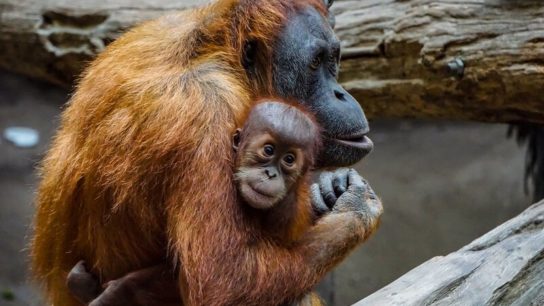
13. Baby sloths cling to their mothers for up to six months after birth. Once they separate themselves, young sloths stay close to their mothers for two to four years, depending on the species.
Featured image: Wikimedia Commons.
You might also like: The Precarious Existence of Critically Endangered Gorillas
This story is funded by readers like you
Our non-profit newsroom provides climate coverage free of charge and advertising. Your one-off or monthly donations play a crucial role in supporting our operations, expanding our reach, and maintaining our editorial independence.
About EO | Mission Statement | Impact & Reach | Write for us