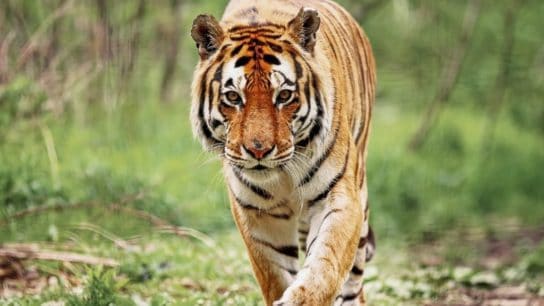


Tigers are vital to the health of entire ecosystems, yet fewer than 3,140 remain free in the wild. Habitat destruction, poaching and human tiger conflict are pushing these incredible animals closer to extinction. This International Tiger Day, we shine a light on one of the most critically endangered of them all – the Sumatran tiger.
—
Tigers (Panthera tigris) are the world’s largest wild cats. Elusive, solitary beings, they are the apex predator in their habitat. They hold deep cultural significance in many regions and communities across Asia.
But their survival hangs by a thread, with all subspecies of tigers in a desperate fight for their future.
The Last Tigers of Indonesia
The Sumatran tiger – Indonesia’s critically endangered king of the jungle – faces the grim reality of being lost forever. With fewer than 300 left in the wild, time is running out to save it. Sumatran tigers are the last tigers left in Indonesia, with the Balinese and Javanese tigers already extinct.

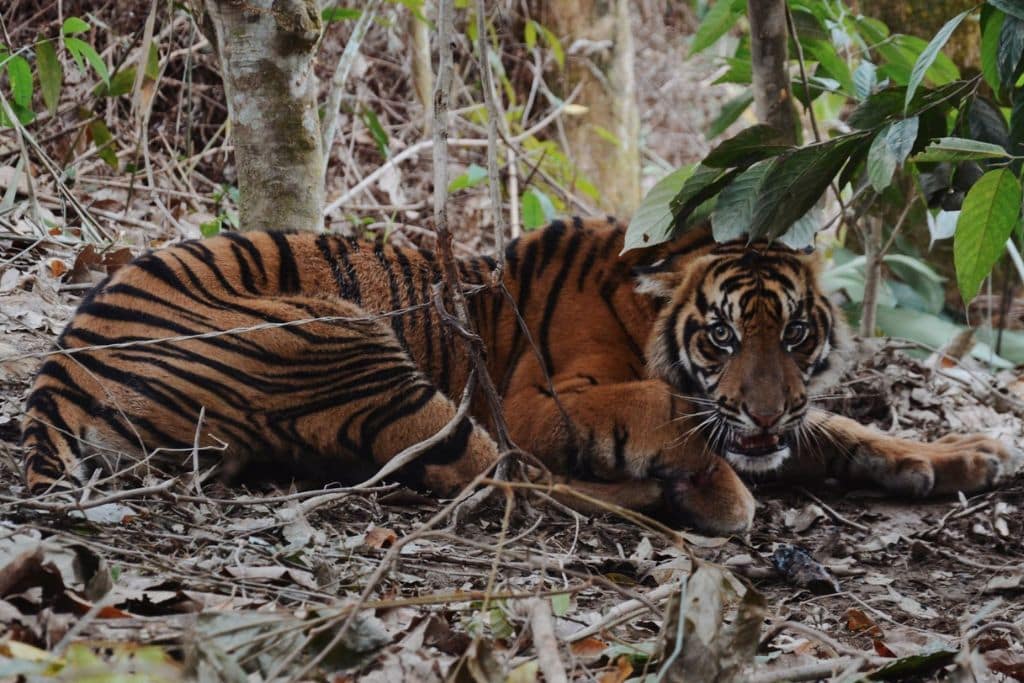
Sumatran tigers are the smallest of the tiger subspecies, with rich, dark orange fur and tightly spaced stripes that help them blend seamlessly into their dense jungle surroundings. They have long, thick whiskers and a distinctive mane-like hair growth around their necks.
As solitary hunters, they rely on stealth and strength to rule their territory. They are essential for healthy forests, controlling prey populations and helping maintain forest biodiversity in Indonesia’s fragile ecosystems.
But without immediate and collective action, Sumatran tigers could be lost forever.
“Tigers are powerful forces of nature; they are guardians of the forest. When we protect tigers, we protect everything that shares their home,” said Leif Cocks, Founder of the International Tiger Project.
Deadly Threats to Sumatran Tigers
1. Habitat destruction
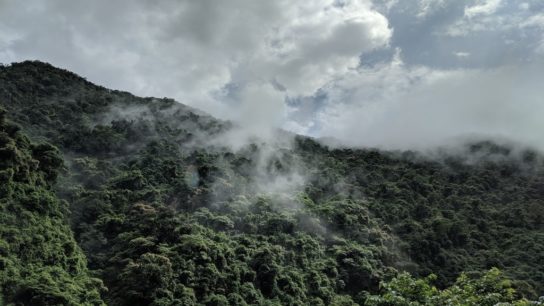
Forests in Indonesia are being destroyed at an alarming rate, cleared for illegal logging, mining and palm oil plantations. As tiger forests fall, so does their chance of survival. They are losing their hunting grounds, shelter and safe spaces to raise their cubs.
Tigers are territorial and need vast areas of intact forest to thrive. Females in particular do not like to share their space. Male cubs leave their mothers at around 18 months of age, seeking their own territory to rule. They bide their time, waiting to take over larger forest spaces claimed by dominant males.
But with shrinking forests, they have less space to rule, and less land to live instinctively and naturally in the wild.
2. Human-tiger conflict
As tiger forest disappears, so does their prey. Tigers are left hungry and desperate, forced to hunt closer and closer to villages, where they enter farmland and attack livestock. Conflict is rising with local communities as villagers retaliate to protect their livelihoods. Tigers are injured or killed in the process, worsening their already critical status.
3. Poaching and the illegal wildlife trade
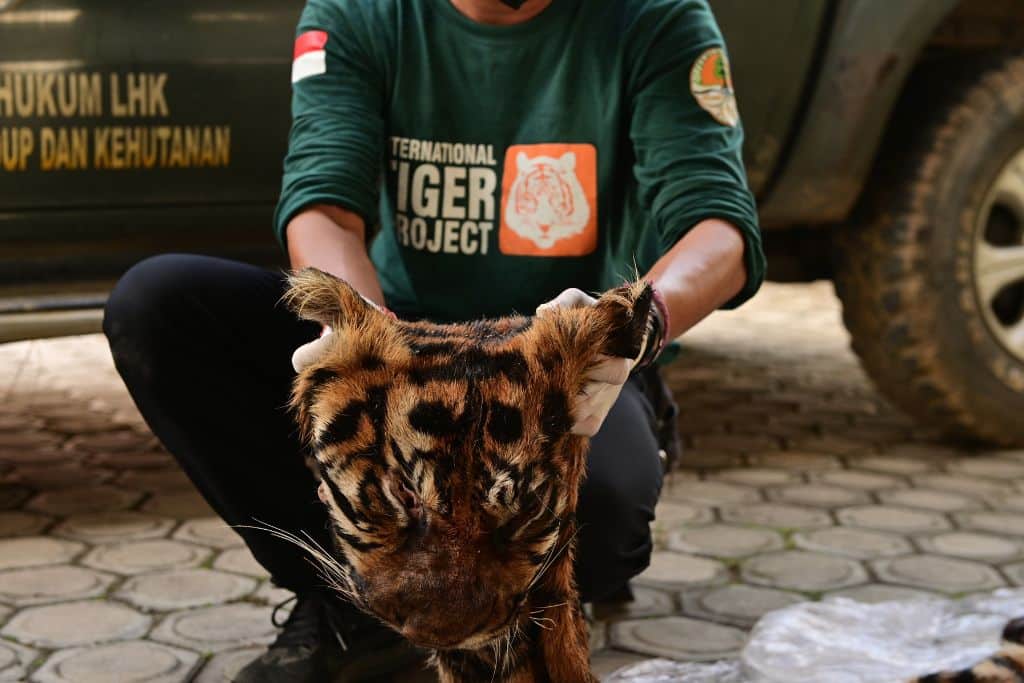
Despite being legally protected, Sumatran tigers are relentlessly targeted in illegal wildlife trade. Poachers set deadly traps in the forest, leaving tigers injured or dead.
Their skin, bones, claws and teeth are sold on the black market for high prices, driven by demand for traditional medicines, souvenirs and trophies. Tragically, the rewards for poaching often outweigh the risks, as weak law enforcement and low penalties in Indonesia allow the illegal trade to thrive. A 2025 study found that poaching remains a top threat to Sumatran tigers, calling for strong patrols and tougher penalties to end the slaughter.
Save the Sumatran Tiger
As the last surviving tigers in Indonesia, if we lose the Sumatran tiger, we lose a symbol of wild Indonesia and the balance of its forests.
“The Sumatran tiger is standing on the brink of extinction. If we lose them, it won’t just be a tragedy for Indonesia, it will be a tragedy for the world. We need urgent, united action to protect forests and stop poaching before these magnificent animals vanish forever,” said Cocks.
By protecting forests, strengthening anti-poaching patrols, and supporting community programs that promote co-existence, we can give Sumatran tigers a fighting chance. Join us this International Tiger Day, and help protect the last Sumatran tigers, before it is too late.
—
Find out more about the International Tiger Project and how you can help on its website. Your support will help save Sumatran tiger habitat, and protect the last remaining tigers from the threat of poaching and conflict.
To learn more about this topic, check our our Endangered Species Spotlight on the Tiger
This story is funded by readers like you
Our non-profit newsroom provides climate coverage free of charge and advertising. Your one-off or monthly donations play a crucial role in supporting our operations, expanding our reach, and maintaining our editorial independence.
About EO | Mission Statement | Impact & Reach | Write for us