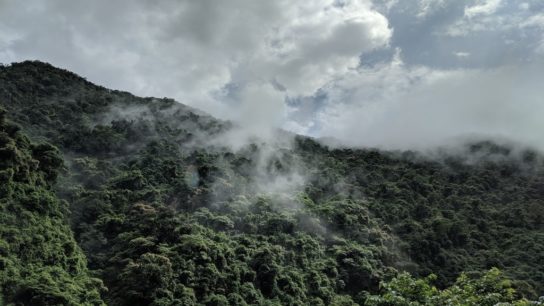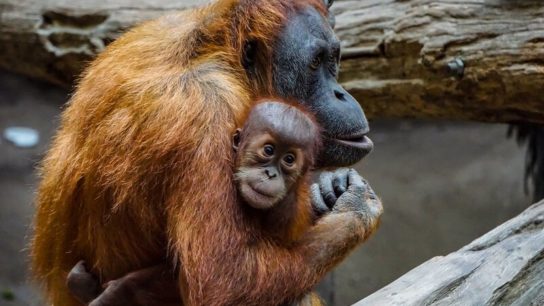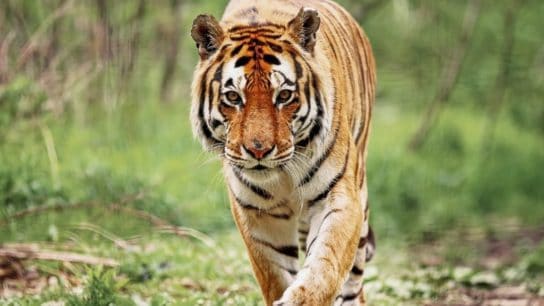



Biologically inspired designs transform nature’s 3.8 billion years of evolutionary research into human breakthroughs. Yet, as species vanish and children spend 50% less time outdoors, we risk severing the pipeline that turns natural curiosity into sustainable innovation. Protecting biodiversity and restoring youth access to the living world aren’t just environmental goals; they are essential to safeguarding humanity’s future ingenuity.
—
Japanese engineer Eiji Nakatsu drew inspiration from the kingfisher’s beak when redesigning Japan’s famous high-speed railway network, the Shinkansen, to reduce tunnel noise and improve aerodynamics. His interventions made the train 10% faster and 15% more energy-efficient. All this because someone paid close attention to nature.
That single act of observation is known as biomimicry, and it may be one of the most consequential tools humanity possesses for solving the problems of the 21st century. Yet, at the very moment we need it most, we are raising a generation that may never develop the habit of looking.
Nature’s R&D Department: 3.8 Billion Years in the Making
Biomimicry is the practice of learning from and emulating nature’s designs, processes, and systems to solve human challenges. The word itself comes from the Greek bios (life) and mimesis (imitation). It is not a new concept – Leonardo da Vinci sketched flying machines modelled on birds in the 15th century – but it only gained remarkable scientific and commercial traction in recent decades.
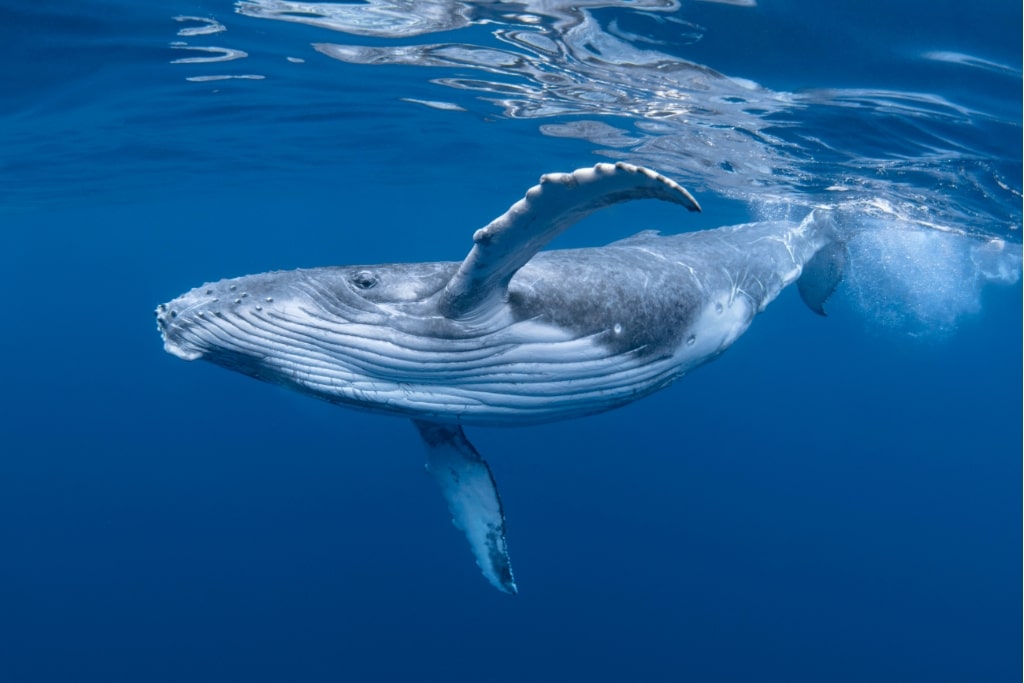
The examples of nature’s ingenuity are everywhere, yet they rarely come from the animals that grace conservation campaigns. Velcro emerged when an engineer examined burdock seeds clinging to his dog’s coat. Humpback whale flippers have reshaped wind turbine blades to boost efficiency, while the venom of a slow-moving cone snail yielded a painkiller 1,000 times more potent than morphine. Even horseshoe crab blood remains indispensable for testing the sterility of vaccines and medical equipment worldwide.
None of these are charismatic megafauna. They are humble, easily overlooked organisms whose extraordinary secrets were unlocked only because someone, somewhere, took the time to look.
An Erased Blueprint
Species extinction rates are 100-1,000 times higher than natural background rates. The Intergovernmental Science-Policy Platform on Biodiversity and Ecosystem Services warns that approximately one million species face extinction within decades. We have lost 73% of vertebrate wildlife populations since 1970.
Each species lost is not merely an ecological tragedy. It is an erased blueprint; a silenced solution; a question that humanity will never get to ask nature, because the organism that held the answer no longer exists.
The Screen Generation
Here is where the crisis deepens into something more personal, more generational, and ultimately more preventable.
Research and public health data consistently show that children and teenagers spend several hours of their day engaged with screens – a trend that accelerated significantly during and after the Covid-19 pandemic. Meanwhile, research indicates children today spend 50% less time in unstructured outdoor play than children did in the 1970s. Only 27% of children regularly play outside their homes, a sharp decline from 80% of baby boomers who reported regular outdoor play during their childhood.
This matters for biomimicry in a way that rarely gets discussed.
Darwin collected beetles obsessively. Jane Goodall watched insects for hours. Janine Benyus’s childhood forest immersion shaped her life’s work. Biomimicry doesn’t begin in a laboratory, it begins with curiosity ignited by direct encounter with the living world.
A child who watches a gecko climb glass or wonders why a spider’s web survives storms carries a question no textbook planted. That question is a seed. The laboratory is where it flowers.
But a child whose relationship with nature is mediated through screens is consuming nature, not encountering it. Consumers rarely become discoverers.
The Skills We Are Losing
Biomimicry requires a unique set of skills that are best developed through immersion in nature. It begins with observational acuity, the ability to notice the fine details of how a gecko effortlessly climbs vertical surfaces, how a lotus leaf naturally repels water, or how termite mounds regulate temperature with remarkable precision. It also demands pattern recognition, where connections are made between biological systems and human challenges, allowing nature’s solutions to inspire innovation.

Equally important is systems thinking – the understanding that organisms do not exist in isolation but function within complex environmental relationships. Above all, biomimicry is driven by wonder and curiosity, the instinct to ask, “How does that work?” and “Could we do that too?”
These are not skills cultivated solely through textbooks or screens but also through direct, repeated, and unstructured engagement with the natural world.
Reconnecting the Next Generation
Initiatives worldwide are turning this tide. K-12 biomimicry programs now weave nature observation directly into STEM curricula, while forest schools, citizen science projects, and gamified “bioblitzes” bring students outdoors. These efforts prove that when children engage with nature as a source of inquiry rather than a subject to memorize, curiosity follows naturally. They move from learning about the natural world to learning from it.
What We Must Do
The solution lies not in abandoning technology but in insisting that nature retains its irreplaceable role as the original laboratory of human ingenuity
1. Protect biodiversity
Every species we save is a library of potential solutions preserved. Conservation is innovation security.
2. Mandate nature literacy in education
Schools must integrate nature-based learning as a structural feature, not occasional field trips. This means, regular outdoor learning time in all schools, integration of biomimicry into STEM curricula and training teachers to facilitate nature-based inquiry.
3. Redesign childhood and urban spaces
Urban planners must prioritize green infrastructure giving children genuine access to living systems. Parents must occasionally choose forest over screen. We need a cultural shift that values unstructured outdoor play as essential and not optional, screen time limits that prioritize real-world exploration and urban planning that ensures all children have access to green spaces.
4. Support equity in nature access
For many children, the barrier isn’t screens but rather the absence of safe, accessible green space. Nature connection shouldn’t be a privilege. We must address safety concerns, lack of nearby nature, and economic constraints.
5. Make the connection visible
Communicators must help people understand that protecting rainforests isn’t only about carbon or charismatic species. It is about preserving the universe of questions nature is still waiting to answer.
A Question for Parents, Educators, and Policymakers
When was the last time you saw a child stop and truly observe a bird, an insect, or a plant with genuine, unhurried curiosity? If the answer is “rarely” or “never,” we have a problem. Not just an environmental problem. An innovation problem.
The most important laboratory on Earth is not a building. It is the living world itself. And we are closing it, one species at a time, one childhood at a time.
The question is whether we will pay attention before it is too late. That, too, is something nature has been trying to teach us all along.
Featured image: Katrin Bolovtsova.
This story is funded by readers like you
Our non-profit newsroom provides climate coverage free of charge and advertising. Your one-off or monthly donations play a crucial role in supporting our operations, expanding our reach, and maintaining our editorial independence.
About EO | Mission Statement | Impact & Reach | Write for us