


Nuclear power has long been hailed as a low-carbon energy source capable of meeting the world’s growing electricity needs without the carbon footprint of fossil fuels. Yet, one problem remains: what should we do with the radioactive waste that lingers for tens of thousands of years? More recently, the idea of nuclear waste recycling has re-emerged as a potential solution. But is it truly viable, or just a “green” mirage masking deeper challenges?
—
Nuclear energy has yet to become a widely accepted or fully integrated component of the global energy supply, despite its undoubtedly strong potential as a dependable and low-carbon energy source.
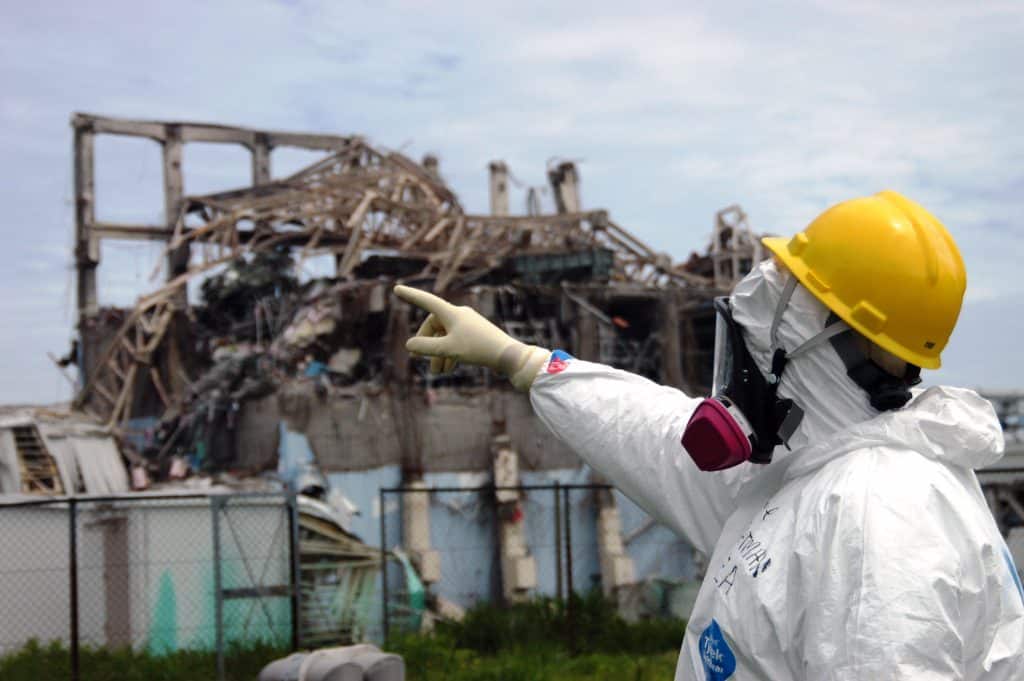
The hesitation and fear for large scale nuclear integration is not unwarranted, especially with the reputation that nuclear fission has already etched onto the geopolitical world and into public memory. The Three Mile Island partial meltdown in 1979 raised early alarms in the US; the Chernobyl explosion in 1986 turned vast swaths of Ukraine and Belarus into exclusion zones; and the Fukushima Daiichi disaster in 2011 reignited fears about nuclear safety in the face of natural catastrophes.
Pros and Cons
For over seven decades, nuclear energy has stood as one of humanity’s most paradoxical technological achievements, capable of producing vast amounts of low-carbon electricity, yet shadowed by fear and controversy.
The tale of how this energy was harnessed for commercial use begins in the late 1930s, when the discovery of nuclear fission, the splitting of uranium atoms to release energy, gave rise to both the atomic bomb and, soon after, the world’s first nuclear reactors. In 1951, the Experimental Breeder Reactor-I in Idaho became the first to generate electricity using this concept. By the 1960s, nuclear power plants were being built across the US, Europe, and the Soviet Union, promising a new era of energy abundance.
Despite decades of technological progress, nuclear energy has never achieved, or even been close to achieving, the global reach once imagined. At its peak in the mid-1990s, it supplied 17% of global electricity. Today, it accounts for around 9%, concentrated mainly in a handful of countries, including the US, France, China, Russia, and South Korea.
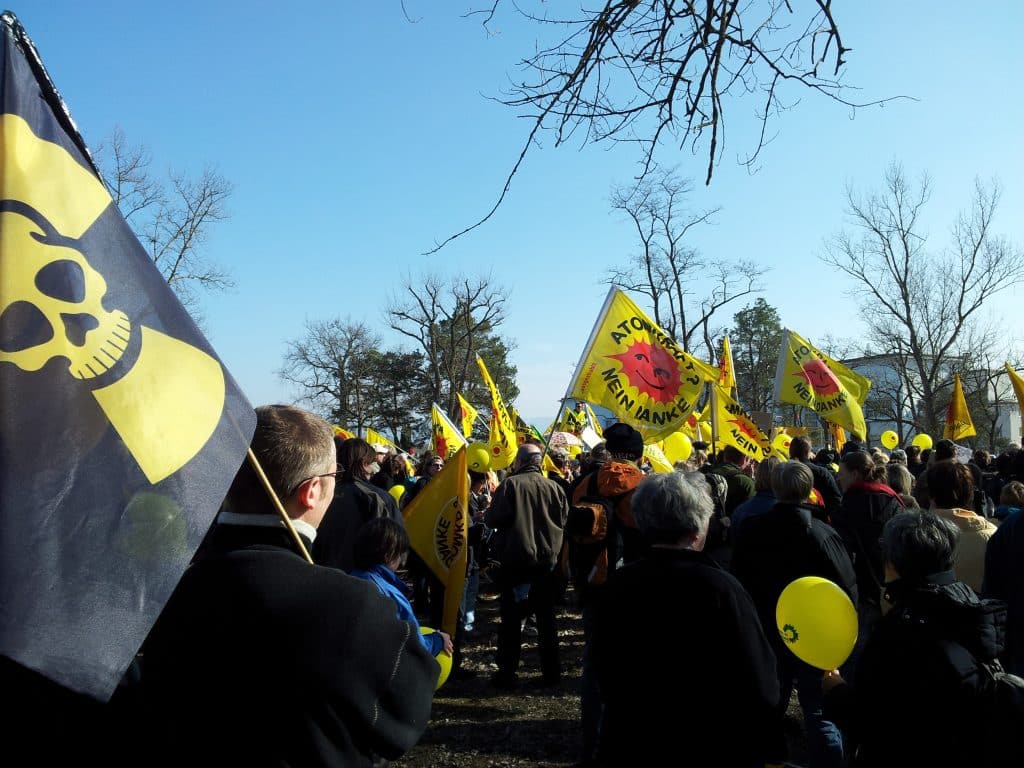
Most others remain hesitant, deterred by a list of concerns to nuclear energy deployment that is probably familiar to readers: safety risks associated with radiation leaks and reactor accidents; high capital costs and long construction timelines; public distrust fueled by environmental and security fears; and challenges in handling and storing nuclear waste.
Let’s dive deeper into the latter.
More on the topic: The Advantages and Disadvantages of Nuclear Energy
Harnessing the Power of Nuclear Fission
To understand what nuclear waste is, and what the recycling of it entails, it is important to understand where the waste comes from and what the process of producing nuclear energy looks like.
At its core, a nuclear power plant works by splitting atoms to release energy, a process known as nuclear fission. Most reactors use uranium-235, a naturally occurring isotope of uranium, as their primary fuel. The uranium is formed into small pellets, each about the size of a fingertip, and stacked into long fuel rods made of metal.
Inside the reactor, when a uranium-235 nucleus absorbs a neutron, it becomes unstable and splits into smaller nuclei, releasing energy in the form of heat; more neutrons, which go on to trigger further reactions (a chain reaction); and fission products, which are the radioactive fragments left behind.
This heat is used to produce steam that drives turbines, generating electricity, very much like in a conventional power plant. But as the fuel continues to undergo fission, the concentration of uranium-235 decreases, and fission products accumulate, which absorb neutrons and eventually make the fuel inefficient. It is at this point that the spent fuel is removed and replaced with new rods, beginning the cycle anew.
Theoretically, one kilogram of uranium contains the same amount of energy as 2.7 million kilograms of coal. In practice, however, spent nuclear fuel still contains about 95-96% of its original uranium mass (much of which remains un‑fissioned), only about 1% plutonium, and around 3-4% fission products. Essentially, this means that the actual energy extracted is only a small fraction of the total potential – although still quite a lot compared to traditional energy sources.
Different Types of Waste
The radioactive waste left behind after nuclear fission includes material that must be carefully handled, monitored, cooled, and eventually isolated from the environment. However, this waste exists across a wide spectrum of radioactivity, meaning not all of it poses the same level of risk.
Low-level waste (LLW)
This includes things like contaminated clothing, gloves, tools, and lab equipment. LLW is only slightly radioactive and does not require shielding beyond standard containers. It is compacted or incinerated, and then stored in near-surface disposal facilities.
About 97% of the waste produced by the nuclear power industry is classified as low-intermediate level waste (items with low-level radioactivity).
Intermediate-level waste (ILW)
This waste contains higher concentrations of radioactivity, often from reactor components, resins, or chemical sludge. ILW requires shielded storage, such as concrete drums, and is usually stored for decades before permanent disposal in engineered facilities.
High-level waste (HLW)
This is the most dangerous category, albeit also the smallest, consisting primarily of spent fuel rods removed from reactors. It makes up a mere 0.2% of France’s total radioactive waste volume following fuel reprocessing.
HLW is intensely radioactive and thermally hot, requiring cooling and heavy shielding to prevent harm. It is initially stored in deep cooling pools at the reactor site for five to ten years, where water serves both to shield radiation and carry away heat. After the initial cooling in pools, HLW is usually transferred to dry casks – heavily shielded containers designed to store the material safely.
Simply storing this waste and keeping it locked away unattended is not the best way to deal with it, because of the potential risks it carries. The long-term plan is geological disposal: placing waste deep underground in stable rock formations that can contain radioactivity for potentially tens of thousands of years. Countries like Finland and Sweden have begun building such facilities, but nothing entirely operational exists yet.
Nuclear Waste Recycling: How It Works
The concept behind nuclear waste recycling, also called waste reprocessing, is conceptually relatively straightforward; rather than treating spent fuel as useless, it is chemically processed to separate out the materials that can still produce energy. Spent fuel rods are dominant in U-238, which although not fissile in conventional reactors, can be converted to Plutonium-239, a fissile material.
In the reprocessing plant, spent fuel is dissolved in strong acids, allowing operators to extract uranium and plutonium. These materials are then fabricated into new fuel, often in the form of Mixed Oxide (MOX) fuel, which blends plutonium with depleted uranium. This new fuel can be loaded back into reactors, effectively “closing the fuel cycle”.
But there is a problem: nuclear waste reprocessing is technically complex, and requires specialized, heavily shielded facilities, along with being frightfully expensive, much more expensive than simply using fresh uranium. Not to mention the proliferation risks it carries, as the extracted plutonium could, in principle, be diverted to weapons if safeguards fail.
For these reasons, only a few countries, notably France, Russia, and Japan, have pursued commercial reprocessing, while others, including the United States, prefer the simpler “once-through” cycle: storing spent fuel securely while exploring long-term disposal solutions.
Outlook
Ultimately, while nuclear waste recycling can recover energy and reduce waste volume, it is not a panacea. It does not eliminate the need for secure, long-term storage of high-level waste, and it adds complexity, cost, and security considerations to the nuclear fuel cycle.
While many environmental, commercial adoption, and techno-economic studies are ongoing to assess the practical feasibility of nuclear waste recycling, in today’s world, it remains primarily a tool rather than a definitive solution. Its broader adoption will depend on achieving the right balance between energy recovery, economic viability, and safety.
This story is funded by readers like you
Our non-profit newsroom provides climate coverage free of charge and advertising. Your one-off or monthly donations play a crucial role in supporting our operations, expanding our reach, and maintaining our editorial independence.
About EO | Mission Statement | Impact & Reach | Write for us