

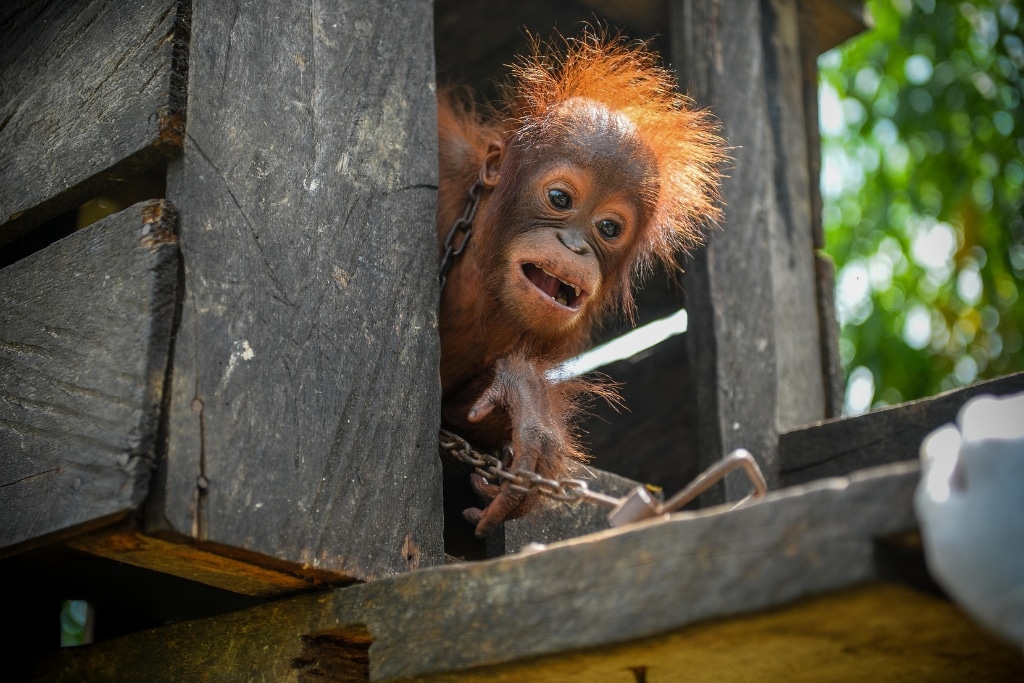
At just 18 months old, Jack the orangutan has spent much of his life in captivity. Instead of growing up in the forest under his mother’s care, he was kept illegally as a family pet, confined, restrained, and deprived of the natural behaviors essential to his species.
—
Jack, a young orangutan that spent much of his life in captivity, is free.
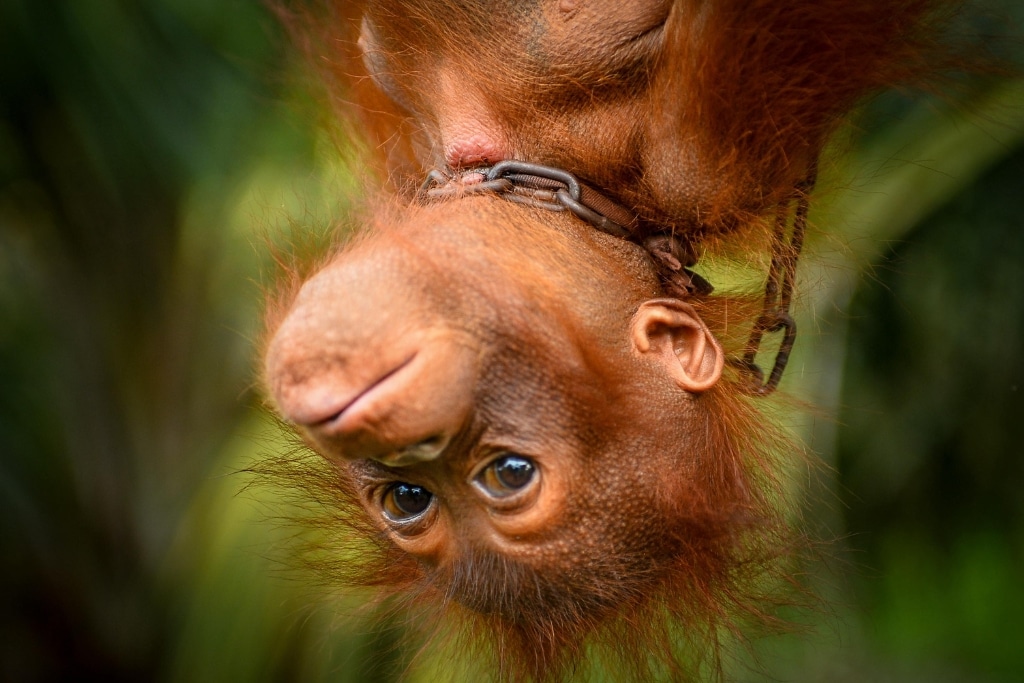
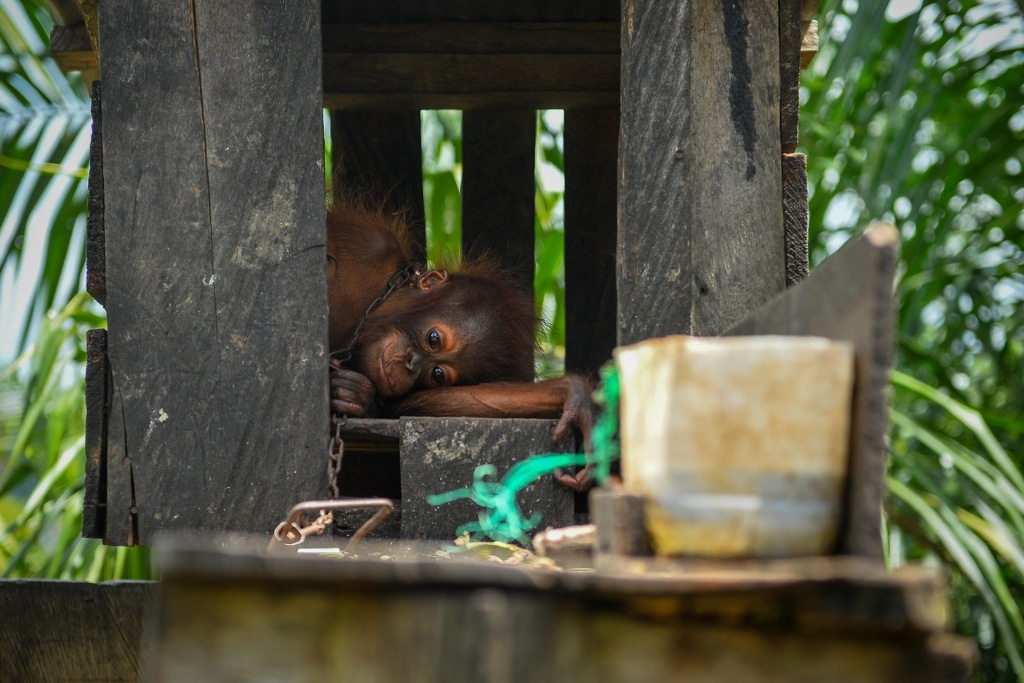
In December, The Orangutan Project, in collaboration with its partners, rescued Jack and transferred him to their BORA Rescue Centre in East Borne, Indonesia. At the time of his rescue, a heavy chain was locked around his neck, and he was confined to a small wooden box, two metres above the ground. The chain and ropes used to restrain him had caused a deep, open wound on his neck, which became clearly visible when he hung upside down.
Jack was found alone, frightened, and far from the forest environment where orangutans belong. He was taken from his mother, who would normally nurture him for many years. In the wild, orangutan mothers teach their young essential skills, like climbing, foraging, nest building, and navigating the complex social and ecological demands of forest life. Instead, Jack was locked up, unable to express natural behaviors or develop the skills needed for survival in the wild.
Orangutans are one of the most intelligent species on Earth, with strong cognitive and emotional capacities. As a result, they deeply experience grief, stress and loss. At such a young age, Jack has suffered significant psychological trauma. He now faces a long recovery from both the physical and emotional effects of his early life.
Now at the rescue centre in East Kalimantan, Indonesia, Jack is safe and receiving comprehensive care. His neck wound is healing well, and he has undergone full medical examinations. He is eating regularly and showing positive signs of overall health. Once he completes quarantine and is medically cleared, he will be introduced to other orphaned youngsters in our care. His caregivers describe him as gentle, curious and playful, all behaviors typical of a young orangutan when given a safe environment.
In the coming months, Jack will begin a long-term rehabilitation process that will take many years. He’ll begin Jungle School, learning everything his mother would have taught him in the wild. In a safe forest setting, infants like Jack can experience the forest, interact with other orangutans, learn essential survival skills, and build confidence and independence.
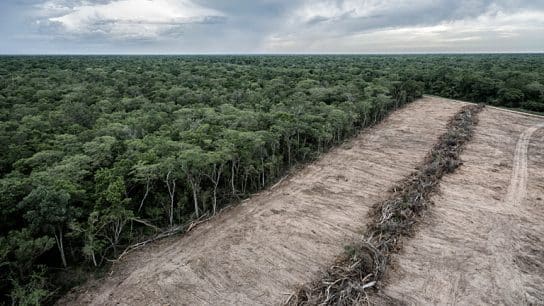
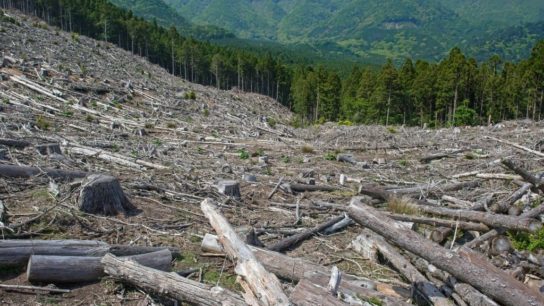
Jack’s story, while distressing, is not uncommon. Poaching and the illegal wildlife trade remain a major threat to the Critically Endangered orangutan species. Orangutan mothers are often made vulnerable by land clearing, and killed for their babies. Babies are sold on the black market as “cute” family pets. In the wild, orangutan infants remain dependent on their mothers for well over eight years of age. Removing them from this natural environment has devastating consequences, not only for individuals but for the long-term survival of the species.
At the BORA Rescue Centre, The Orangutan Project rehabilitates rescued orangutans, so they can eventually return to life in the wild. When they are ready, rehabilitated orangutans are released into protected forest areas, where they live independently, reproduce, raise their young, and contribute to the survival of their species.
Featured image: Photo: The Orangutan Project.
More on the topic: Beyond Rescue: The Intensive Rehabilitation of Rescued, Orphaned Orangutans
—
The Borneo Orangutan Rescue Alliance (BORA) is a collaboration with The Orangutan Project’s COP partners, and the Indonesian Ministry of Forestry. Find out more about the work of The Orangutan Project and how you can help here. Your support will help provide food, medicine, expert care and safe forests for rescued and orphaned orangutans like Jack to return to the wild, where they belong.
This story is funded by readers like you
Our non-profit newsroom provides climate coverage free of charge and advertising. Your one-off or monthly donations play a crucial role in supporting our operations, expanding our reach, and maintaining our editorial independence.
About EO | Mission Statement | Impact & Reach | Write for us