

On our warming planet, wildlife is on the move. Its redistribution is wide, complex and hard to predict since not every species responds to the same cues, or shifts at the same speed. To protect biodiversity, conservation approaches must shift as well, matching the pace of change.
—
As the climate shifts, animals face a crisis of spatial survival: the landscapes they once called home are becoming unrecognizable or unreachable. Species’ ranges are already shifting towards the poles, but also to higher altitudes and cooler latitudes to track more favorable life conditions. The timing of migrations – the cyclical journeys species embark on to breed or find peak resources – also risks falling out of sync with seasonal triggers like day length and snowmelt.
Climate change is already forcing some species to move, disrupting the ecosystem services they provide to people and ecosystems around the world, but migratory and moving patterns are less clear-cut than we might assume. A 2023 study showed that less than half of the documented range shifts follow predictable patterns in direction or speed, a conclusion reached in another assessment on migratory species from the same year.
While some of the available data shows significant gaps in the monitoring of regions or species groups, these climate-driven changes are already redrawing many of the maps we use to understand and protect biodiversity, asking conservation practices to go beyond fixed protected areas and focus on dynamic and flexible approaches to keep up and preserve as many species as possible.
A Reshuffling of Species
In the Arctic and Sub-Arctic, caribou are facing a compounding set of climate pressures. Spring snow is melting prematurely, while rain-on-ice events create impenetrable crusts that lock away the vegetation herds depend on to rebuild their fat stores. Summer offers no respite either. Rising temperatures have led to more intense and frequent insect swarms; the resulting harassment forces the caribou to stay in constant motion, burning through calories that would otherwise be used for weight gain and reproduction. The end result is a dangerous phenological mismatch: spring arrives too soon, vegetation peaks before the herds can reach their seasonal grazing grounds, and the ancient routes connecting their winter and summer ranges are being altered, shortened, or in some cases, abandoned entirely.

But these pressures do not just threaten animals. For many Indigenous communities, caribou provide food, clothes, tools or shelter. While unpredictable changes in migration routes can disrupt that bond, Indigenous communities’ knowledge remains invaluable to scientists trying to understand these herds, what they are experiencing, and where they might be heading next. Caribou have endured past climate shifts, but the speed of the current one leaves little space for the adaptive responses that allowed survival in the past.
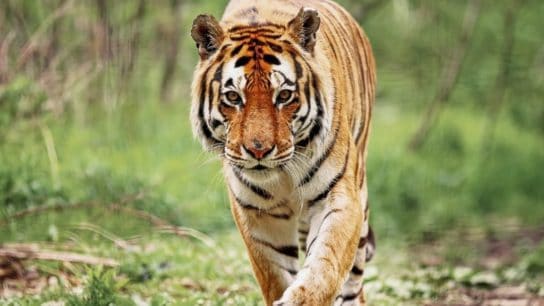
This pattern is repeating itself across several different landscapes. Bengal tigers, for example, have been spotted at remarkable heights in Nepal, Bhutan, and India, and some models predict their potential shifts from the lowlands forests to the high-altitude habitats of the Eastern Himalayan region. In the Sundarban – the vast, low-lying mangroves delta region between India and Bangladesh – sea levels and saltwater intrusion are slowly swallowing several lands, with no easy escape route to higher ground left for tigers, which are forced inland. There, they risk direct contact with the communities who farm and fish along the delta’s edges. In such cases, identifying and protecting wildlife corridors is often key to avoid escalating tensions and to prevent damage and conflict.
On the tundra of northern Europe and North America, the poleward expansion of the red fox into the territory of the Arctic fox has become a textbook example of how warming can reshape ecological neighborhoods. Warmer winters can reduce the physiological cost of living at high latitudes for red foxes, allowing them to adapt to these new environments; on the other hand, their expansion may also be linked to human activity: food from settlements and garbage dumps may have significantly helped them in their travel north. Disentangling the relative influences of all global drivers – including climate change – behind such expansion remains a challenge, especially when it comes to understanding what the Arctic food web might look like in the decades ahead.
For the Svalbard-breeding barnacle goose, warming has reshaped an entire flyway. These birds, who migrate each spring from Scotland to the High Arctic, depend on a series of stopovers along the Norwegian coast to refuel on grass before the last sprint north. Due to rising spring temperatures, pastures at northern sites, like the Vesterålen archipelago, have begun growing earlier in the season. This makes them more attractive stopovers than traditional sites like Helgeland further south.
Notably, younger Arctic geese have spearheaded this change. Through a combination of individual trial-and-error and social learning, this new migration route has rippled quickly through the entire population. At first glance, this seems like a perfect example of climate adaptation, as arriving earlier to match the spring thaw can actually boost the birds’ reproductive success. Yet climate warming is currently outpacing biological evolution. Even if the geese change their route, they still risk a “phenological mismatch” – arriving too late for the peak food supply if their egg-laying does not stay perfectly in sync with the shifting seasons.

A less visible and quieter redistribution is also occurring underwater. With temperatures rising across the North and Barents Seas, some demersal fish – species that live and feed near the ocean floor – are moving northwards into deeper and cooler waters. Other warm-adapted boreal and temperate species are also found in territories once dominated by cold-water Arctic species like the polar cod. This small, ice-associated fish, alone channels more than 70% of the energy transfer between zooplankton and higher trophic levels. In practice, it is the link that converts microscopic plankton into food accessible to whales, seals, and seabirds. As the borealization – the gradual northward advance of boreal species into Arctic waters as temperatures rise – accelerates, we not only risk losing a single species; we are looking at the potential collapse of entire food webs and the unravelling of ancient ecological balances.
Conservation For a Moving World
These events remind us that nature is incredibly resourceful and unpredictable. Yet, while these are remarkable stories of adaptation, they also serve as a warning about thresholds – points where the speed of climate change simply outpaces the speed of biological response.
When this happens, conventional conservation – which focuses on keeping nature exactly as it was – becomes obsolete. In its place, a new toolkit is emerging. This means assisted migrations for species that cannot move fast enough; the creation of dynamic corridors that act as mobile highways for wildlife tracking their climate niche; and the design of management frameworks that slash human-driven stressors, providing the resilience nature needs to navigate a warming world.
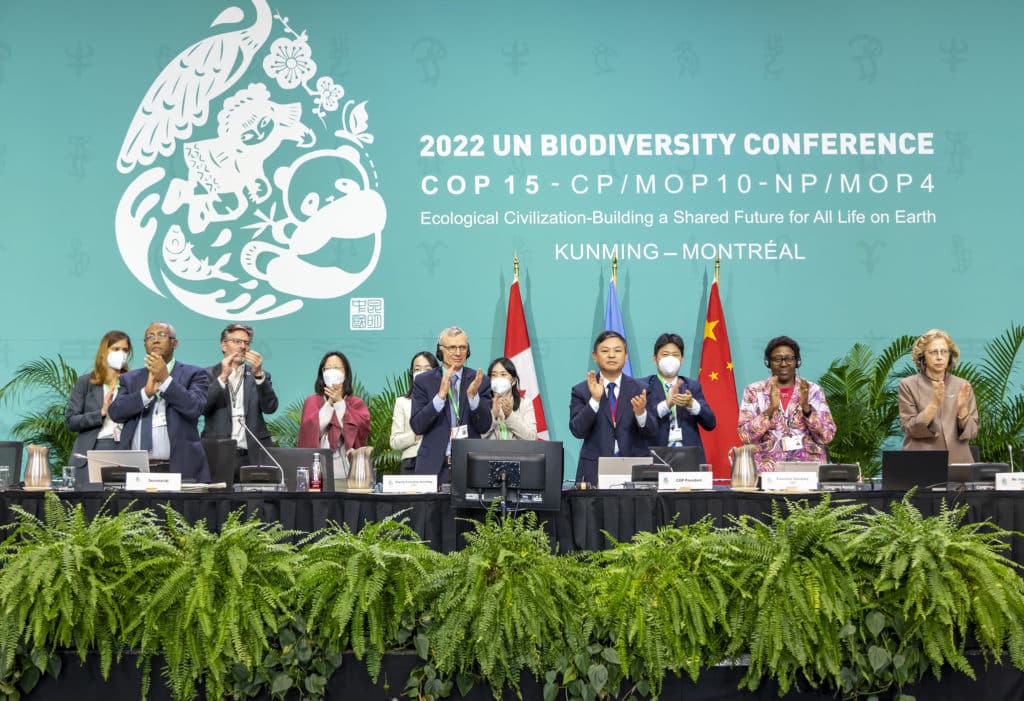
Politically speaking, 196 nations committed to minimize their climate change impacts through mitigation, adaptation, and enhanced ecosystem connectivity, with the ultimate goal of halting and reversing nature loss by 2030 when they signed the Kunming-Montreal Global Biodiversity Framework (GBF) in 2022. But in order to actually translate these objectives into action, we need a stronger and more comprehensive knowledge of biodiversity.
In this sense, progress is already underway. Platforms like iNaturalist allow anyone with a smartphone to photograph and log wildlife observations, which are then reviewed by a global community of naturalists until a consensus identification is reached. The use of such data in peer reviewed research has grown tenfold in the last five years, making citizen science a key contributor to global biodiversity data; a first national survey employing airborne environmental DNA in the UK identified over 1,100 taxa simultaneously at national scale; digital twin approaches now make it possible to integrate datasets in near real time, generating daily ecological forecasts that can substantially improve predictions for species on the move.
But data alone is not enough. 110 out of 365 indicators in the GBF could directly involve Indigenous Peoples, local communities and citizen scientists in community-based monitoring, and a further 185 could benefit from broader citizen involvement in data collection. A 2024 expert workshop hosted by UNEP-WCMC also concluded that respecting Indigenous peoples’ knowledge systems and ensuring their meaningful participation is essential for delivering the GBF in line with its vision of living in harmony with and valuing nature.
The knowledge belonging to these communities can enrich scientific datasets in temporal depth and anchor observations to relationships undetectable from remote sensing. Ultimately, it represents a form of ecological understanding that has maintained its accuracy across millennia.
What takes shape is a vision of a collective biodiversity science: bringing together ecologists, biologists, citizens, Indigenous communities and policymakers to create continuous dialogues, in order to make biodiversity assessments that are locally grounded but globally scalable, capable of feeding into international frameworks without erasing the local knowledge that makes them meaningful.
Caribou, tigers, geese, polar cod, foxes are doing what nature has always done to persist on the planet. We, as humans, can try something different: adapt and build strategies that keep pace with a rapidly changing world, and work together toward the goal of helping nature, and ultimately ourselves.
This story is funded by readers like you
Our non-profit newsroom provides climate coverage free of charge and advertising. Your one-off or monthly donations play a crucial role in supporting our operations, expanding our reach, and maintaining our editorial independence.
About EO | Mission Statement | Impact & Reach | Write for us