The world needs climate strategies with fast returns. Soil restoration might be the answer, writes Rico Rau, Policy Analyst at Save Soil
—
By Rico Rau
For three decades, the climate debate and climate policy have been defined by the impacts of greenhouse gas emissions on our planet and its climate.
For long-term global temperature regulation, a transition away from fossil fuels and emissions they produce is, of course, necessary and unavoidable. However, as the stakes rise as we collectively fail to meet our carbon reduction reduction targets, it is time we focus our efforts on the strategies that can deliver the fastest cooling effects, while securing our food and water systems. Global soil restoration is one such strategy.
According to a new report from Save Soil and Conscious Planet, CO2 drives just 5% of Earth’s heat dynamics. The other 95% is governed by water and by the health of the soils that regulate it.
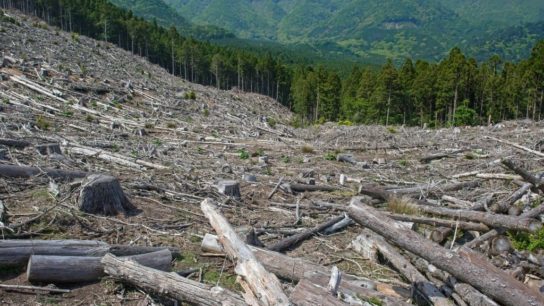
52% of global agricultural land is already degraded, and nearly a third of US soils are severely eroded, at rates up to 10 times faster than natural formation. In Europe, 60-70% of soils are considered unhealthy. Over the last 50 years, we have destroyed 410 million hectares of natural wetlands – an area larger than the entire European Union – at a cost of $5.1 trillion in lost ecosystem services. To an audience of US policymakers at a private session of the Center for Strategic and International Studies in Washington, Sadhguru, Founder of the Save Soil movement, referred to soil degradation as a “national security crisis.”
So, how does soil regulate temperatures? The answer lies in the regulation of the water cycle.
Healthy soil forms a living, porous underground matrix, built from organic matter, mineral particles, fungal networks and billions of microbial organisms. This network absorbs, stores and releases water in a process known as evapotranspiration. This process exports roughly 80 watts per square meter of solar energy back into the atmosphere, making it Earth’s primary thermal regulator.
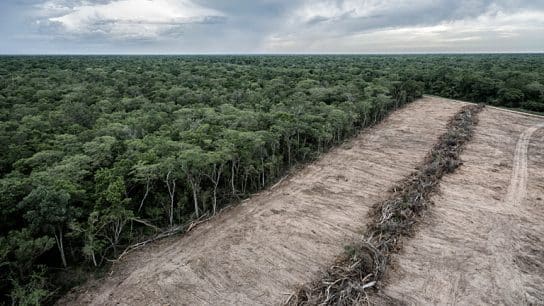
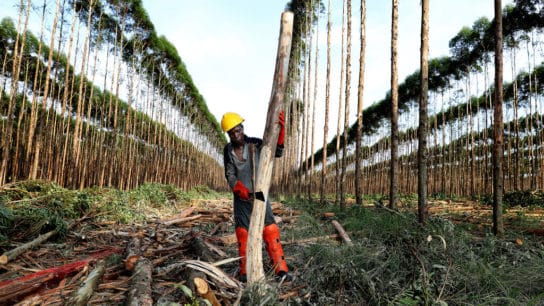
A single cubic meter of healthy soil can contain 25,000 kilometres of fungal hyphae. When we degrade that structure through intensive, monocrop agriculture, we don’t just undermine our primary food source; we are actively dismantling the planet’s most powerful cooling mechanism. Restoring it could offset a cooling force three times larger than the total warming effect of all human-induced greenhouse gases combined.
Let’s imagine for a moment that human-induced climate change did not exist. The case for global soil restoration would remain potent.
The most recent war in Iran has reminded us just how dependent our food systems are on fossil fuel-derived fertilizers. The conflict drove up input costs across global supply chains, squeezing the margins of smallholder farmers, who were already operating on the edge.
Smallholder farmers produce around a third of the world’s food, yet they receive less than 1% of global climate finance. In sub-Saharan Africa and Asia, that figure rises to 70-80% of total food supply. When their margins collapse, food systems collapse along with them.

Regenerative farming has to be part of the solution. By rebuilding soil organic matter, farmers can reduce their reliance on synthetic inputs, improve water retention, and restore the productivity of land that industrial methods have exhausted in the long term.
Research from the US state of Kansas suggests that a full transition to regenerative practices could increase farm profitability by 120% over time. Every 1% increase in soil organic matter allows a hectare to retain an additional 250,000 litres of water – the equivalent of a small swimming pool.
The world needs climate strategies with fast returns. 2026 is shaping up to be another record-breaking year for extreme weather. The return of the El Niño climate pattern is expected to intensify patterns of heat and drought that were already unprecedented.
This is perfectly in tune with our current trajectory. Heatwaves, floods and droughts are becoming more frequent, severe and economically devastating. Global drought-related damages now exceed $307 billion annually. As the need for climate readjustment accelerates, we cannot afford to rely solely on carbon reductions that will take decades to stabilize runaway temperatures.
Soil restoration is different. The total energy imbalance currently driving global warming sits at approximately 0.9 watts per square meter. Restoring healthy soil and vegetation cover could reactivate a cooling force of up to 3.0 watts per square meter – not in 50 years, but through changes that begin the moment degraded land starts to recover. Improved soil health across global agricultural lands could also sequester an estimated 3-5 gigatonnes of CO2 annually. This is why we must pursue soil restoration alongside carbon reduction as a climate strategy. Soil restoration is carbon reduction.
Soil restoration will not just buffer us against rising temperatures. It can help alleviate water scarcity, support food systems that are coming under increasing pressure, and insulate farming communities from the volatility of international fertilizer trade.
Governments around the world must stop treating soil health purely as a farming issue. Healthy soils are essential national, and global, infrastructure. They are our reservoirs, our breadbaskets, our carbon sponges, our heat regulators, and the foundation of our economic survival.
Without a globally binding framework for soil protection, comparable to the Paris Agreement for the atmosphere or UNCLOS for the oceans, progress will remain piecemeal and inadequate.
The ground beneath our feet will turn to dirt if we treat it as such. Soil is the world’s most vital organ; it’s time to take it off life support.
—
About the author: Rico Rau is a German environmental economist serving as the Global Focal Point for the UNCCD Youth Caucus, and a policy advisor with Save Soil in South India.
This story is funded by readers like you
Our non-profit newsroom provides climate coverage free of charge and advertising. Your one-off or monthly donations play a crucial role in supporting our operations, expanding our reach, and maintaining our editorial independence.
About EO | Mission Statement | Impact & Reach | Write for us
Earth.Org
Free, non-profit and independent environmental journalism.