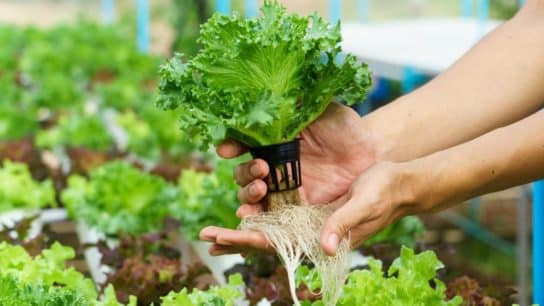



In celebration of International Day of Awareness of Food Loss and Waste, Earth.Org revisits 11 effective solutions to tackle food waste for businesses, producers, retailers, and consumers.
__
The issue of food waste ranges from industrial to individual; there are many contributing factors towards why food is wasted, such as purchasing preferences, excess production, retail standards, convenience, and cost.
Food waste affects all three realms of sustainability: environmental, economic and social. It is a societal issue that touches everyone around the globe.
It also contributes to the larger issue of climate change. Food systems in their entirety are responsible for one-third of all human-caused greenhouse gas emissions, with food loss and waste contributing to some 8-10% of these emissions annually.
Now, more than ever, we need solutions to food waste. Everyone has a role to play, from large corporations to small communities. While innovators have explored various solutions in the science and technology industry, there’s still much more to be done.
The Benefits of Reducing Food Waste
Reducing food waste shouldn’t just be seen as a charitable act; it also offers significant and often unrecognized benefits that go beyond the environment. For businesses, implementing innovative solutions can lead to substantial profits. By redirecting excess food to communities that need it, companies can save money and reduce their methane emissions simultaneously.
Educating the public about these benefits can encourage both businesses and consumers to monitor their waste more closely, driving a more comprehensive and impactful change.
You might also like: What is Food Waste?
Creating Circular Food Systems
Businesses can benefit in the reduction of food waste economically, socially and, on a broader scale, environmentally.
Inspired by Patagonia’s sustainability effort, the University of Maine’s Mitchell Center Team Project conducted a research project that looked into empowering businesses to adopt more sustainable food management practices. The study was conducted in collaboration with stakeholders from Maine’s various food-related industries, from grocery stores and farms to restaurants and hospitals.
The aim of the project was to determine how easily these changes can be adapted to fit the individual lifestyles of consumers.
Using a triple bottom line approach, businesses were encouraged to equally prioritize their monetary profits with their environmental and social responsibilities. They recommended food systems to be reworked from a linear one into a circular one. In a linear system, there is a simple relationship between production to consumption, in which the end result is waste. However, with a circular economy, the goal is to recycle waste into a resource that can be used to create new products.
Six solutions were developed through stakeholder collaboration, each one focusing on either reduction, recovery, or recycling:
1. Measuring and tracking all food storage
Businesses were encouraged to use pre-existing food waste tracking technology. These systems can help make businesses aware of the money they are wasting on food waste that never gets to consumers.
2. Creating a “Food Rescue” system
This solution utilized a web-based system that matched locally available food to local food needs and volunteers to transfer the food to those most in need.
3. Promoting statewide consumer and producer waste education
Consumer education and awareness about the food system and the waste was encouraged. Doing so helped people see the true value of the food they are purchasing. Implementing education programs in schools can also be an effective way to educate the public.
4. Building food handling and processing infrastructure
This solution focuses on “upcycling” food that is already in the system, e.g. turning tomatoes into tomato sauce and increasing demand in canning and processing food for long-term storage.
The aim here is to connect key members of the food system and create synergy among handling and processing stakeholders. Primary issues to be addressed are transportation availability, storage limitations, and restrictions associated with food donation.
5. Educate producers on the advantages of donating
The primary goal here is to educate stakeholders on food donation incentives, legal protection, and offer guidance on relevant governmental agencies.
6. Composting alternatives
This solution aims to increase available options for composting and other alternatives to disposal of food in landfills. Developing statewide practices to divert food waste from landfills can make huge cost savings possible.

Changing Food Crops
The Intergovernmental Panel on Climate Change (IPCC) recommends that producers and farmers consider transitioning to more sustainable crops. The IPCC believes that changing what we eat and grow is crucial for improving food security and reducing greenhouse gas (GHG) emissions. This can be achieved by cultivating crops that are low-maintenance, resilient to extreme weather events, and can be integrated into pastures and arable land. These “climate-resilient” crops are an essential part of creating a more sustainable food system that can withstand the challenges of a changing climate.
For other ways to reduce food waste on the producer level, the US Department of Agriculture (USDA) recommends the following solutions for producers and farmers:
1. On-farm storage
On-farm storage is a great way to reduce post-harvest loss. Farmers should have effective, safe and accessible storage for their products. Some countries might offer a farm storage facility loan program that provides low-interest financing to help producers build or upgrade storage.
2. Value-added products
This is where you can enhance the value of products by upcycling them into another product. The potential to reduce food waste can be made if we create value-added products. A good example of this is growing out black solider fly larvae to bioconvert the organic waste into sustainable insect protein, oil and frass which eliminates or abates on farm emissions.
3. Secondary markets that produce delivery services
More and more businesses offer weekly or bimonthly boxes of food products that have been directly sourced from farmers. Farmers could directly collaborate with these markets to effectively control their food production.
4. Donations
Donations from farmers can help provide individuals with fresh produce if they have limited access to it. There have been laws and programs created to make donations easy — liability protection, tax benefits, picking and pack-out costs, gleaning etc.
5. Feeding animals
Using food scraps as animal feed is a centuries-old practice and an easy way to divert food waste. However, since these animals—especially cattle—produce methane, better methods for recycling waste, like insect farming, need to be deployed.
Redirecting Food Surplus and Educational Campaigns
Food waste from restaurants and business accounts for 28% of all the food wasted globally. To tackle this issue, we must advocate for policies that limit waste and redirect surplus food to where it’s needed most, such as through food recovery programs that donate to shelters. Retailers can also make a wide variety of changes to reduce their waste, including upgrading their hardware with the latest technology, prioritizing long-term sustainability over short-term returns, modifying internal policies, and ensuring all food—even “wonky” produce—is accepted for sale.
Supermarkets, in particular, play a significant role as they can provide education, inspiration, and advice to their customers. Consumers often look to them for guidance on how to tackle food waste at home. Retailers can create campaigns and provide literature, like magazines and membership programs, offering tips on food waste prevention and recipes that utilize leftovers.
A successful example is the increasing number of “wonky vegetable” initiatives implemented by supermarkets in recent years. These programs encourage consumers to buy food that doesn’t meet strict aesthetic criteria, marketing it in an appealing way. For instance, in 2021, Tesco’s Perfectly Imperfect food waste scheme reportedly saved at least 50 million packs of fruits and vegetables from being discarded.

Rethink Our Food Perceptions and Habits
Food waste isn’t just a corporate issue; individuals are also responsible, as household waste accounts for 37% of the global total. To make a real difference, we need to change our habits and mindset.
A simple way to reduce food waste at home is to get organized. You can arrange your fridge so that items with the nearest expiration dates are front and center. Keeping a running list of your food inventory and its use-by dates can also help prevent overbuying and forgotten food. While this might seem time-consuming, a 2020 study showed that these small habits can lead to significant savings of both food and money.
We also need to shift our perception of food. Instead of cooking whatever we’re in the mood for, we should make meal decisions based on what needs to be used first. Furthermore, researching recipes that use leftovers and food scraps is a great way to be more resourceful. For example, increasing composting rates globally could generate carbon savings equivalent to taking roughly 15 million passenger vehicles off the road for three decades.
Sustainable Dietary Choices
Making changes to our diet can also have a significant impact. Experts agree that we consume too much fish, fats, sugars, and processed foods. The Intergovernmental Panel on Climate Change (IPCC) recommends that we shift to a diet that primarily consists of low-carbon-footprint foods. This means focusing on items like secondary cereals, pulses, fruits, and vegetables.
By making a conscious effort to eat more plant-based foods, we can ensure a balanced diet while also lowering our carbon footprint. Meal-prepping is another excellent habit that can save time and resources, helping you avoid overbuying and food waste.
You might also like: 25 Shocking Facts About Food Waste
6 Key Facts to Help Consumers Make More Conscious Choices
Understanding food labels can help you organize your food shopping.
1. “Sell by” date
This date indicates the last day a product should be sold for peak quality. This date does not mean the food is no longer safe to eat; it simply suggests that the item may start to lose some of its freshness.
2. “Best if used by (or before)” date
This date indicates when the food will be at its best quality to eat. It does not mean the food is inedible after this date, but merely informs the customer of the best time to consume the food for optimal flavor and freshness.
3. “Guaranteed fresh” date
This date refers to the date when the item is at its optimal freshness. This is usually used for bakery items.
4. “Pack date”
This is usually found on canned or packaged food. It tells us when the product was packed. It does not indicate when it needs to be consumed by.
5. “Use By” date
This is the last date that the manufacturer guarantees the product to be at its maximum quality.
6. “Expires on” date
This date is most commonly found on perishable goods like meat, dairy, and eggs. Unlike “sell by” or “best by” dates, which are about peak quality, the expiration date is directly tied to food safety.
Knowing the meaning of these dates is useful. However, it should be noted that some manufacturers might not put them on their products. For example, if you go to a meat market or a fish market, you may receive products in an ordinary bag, without a label.
Here is a basic guide for when food is safe to eat:
- Milk – usually safe after one week after opening.
- Eggs – when stored properly in the refrigerator, eggs are often fine from three to five weeks from the date of purchase.
- Poultry and seafood – cook or freeze within one to two days from purchase.
- Beef or pork – cook or freeze within three to five days.
- Canned goods – safe to eat for years after the “best by” date as long as the can is not damaged (dented, bulging, or leaking). The acidity of the food can affect its taste and texture over time, but generally, canned goods are shelf-stable for a very long period.
Benefits of Reducing Food Waste at Home
Even though you will be making a conscious effort to help the environment, you will also be receiving benefits from reducing your food waste:
- Money saved by planning what to buy properly.
- Maintaining a healthy weight and preventing overeating.
- Lessening the chances of food poisoning in your household, as storing contaminated food could accidentally be consumed without you realizing.
- A well-organised, fresh-smelling pantry. There will be no bad smell or messy food waste around your pantry.
- Pest control You can keep away pests, such as rats, flies and cockroaches.
Featured image by Marco Verch/Flickr.
This story is funded by readers like you
Our non-profit newsroom provides climate coverage free of charge and advertising. Your one-off or monthly donations play a crucial role in supporting our operations, expanding our reach, and maintaining our editorial independence.
About EO | Mission Statement | Impact & Reach | Write for us
This article was originally published on April 8, 2023.