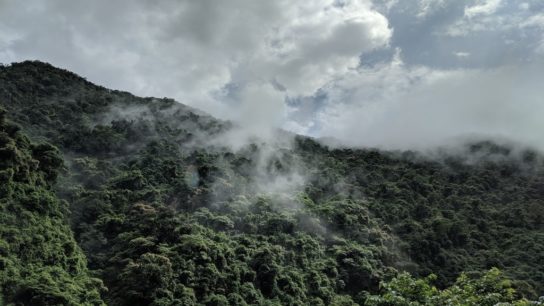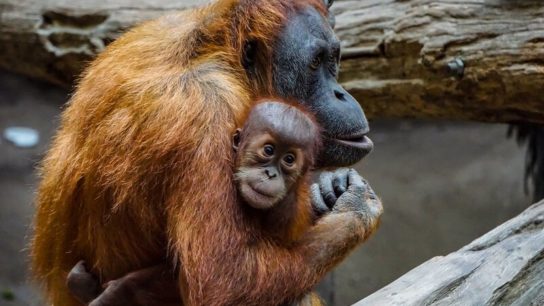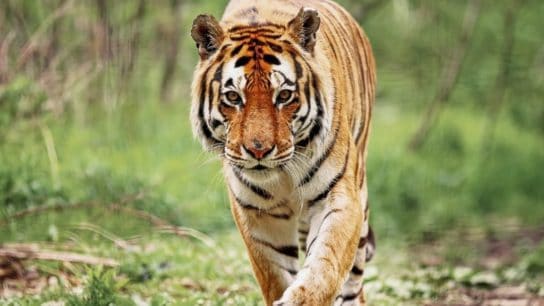



In the forests of eastern Madagascar, a ghost with luminous eyes roams the night: the aye-aye. Once feared as a harbinger of death, it now draws curious travelers and livelihoods alike, embodying the fragile balance between conservation and survival.
—
In Madagascar, survival is inseparable from nature. Over 81% of the population lives on less than $2.15 a day, and access to basic services remains scarce: only 56% of people have access to basic drinking water and around 30-40% to electricity. In this context of hardship, protecting ecosystems is not a moral luxury – it is a survival strategy.
Yet here lies the paradox: conserving forests and their iconic inhabitants, like the nocturnal aye-aye, directly sustains livelihoods through tourism. But the very infrastructure needed to host visitors – hotels, roads, hot showers, meals – creates new pressures. Wood is cut to heat water, farmland is cleared for crops, and fish stocks are depleted to feed travelers.

From Superstition to Pride
For generations, the aye-aye was considered an omen of death. Its long skeletal finger, used to tap and extract larvae from wood, inspired fear and superstition. Villagers believed its mere presence foretold tragedy, and many were killed on sight. Its name, aye-aye, is thought to derive from cries of fear at the animal’s appearance.
Today, the shift is striking. In Andasibe, the aye-aye has become a source of pride, a rare species that attracts visitors and sustains livelihoods. Local guides who once might have feared it now protect it. One explains: “No tourists, no lemurs. But no forests, no future.” This reversal, from cursed to cherished, embodies the ability of communities to reshape their relationship with nature.
Tourism as Lifeline and Burden
Nature-based tourism is one of Madagascar’s economic pillars. In 2019, it represented 12.7% of GDP and provided nearly 10% of total employment. For many families, it is the only alternative to subsistence farming or precarious fishing. A guesthouse can pay for a child’s education. A guide’s salary can support an extended family. Roads built for tourists connect villages otherwise cut off during the rainy season.
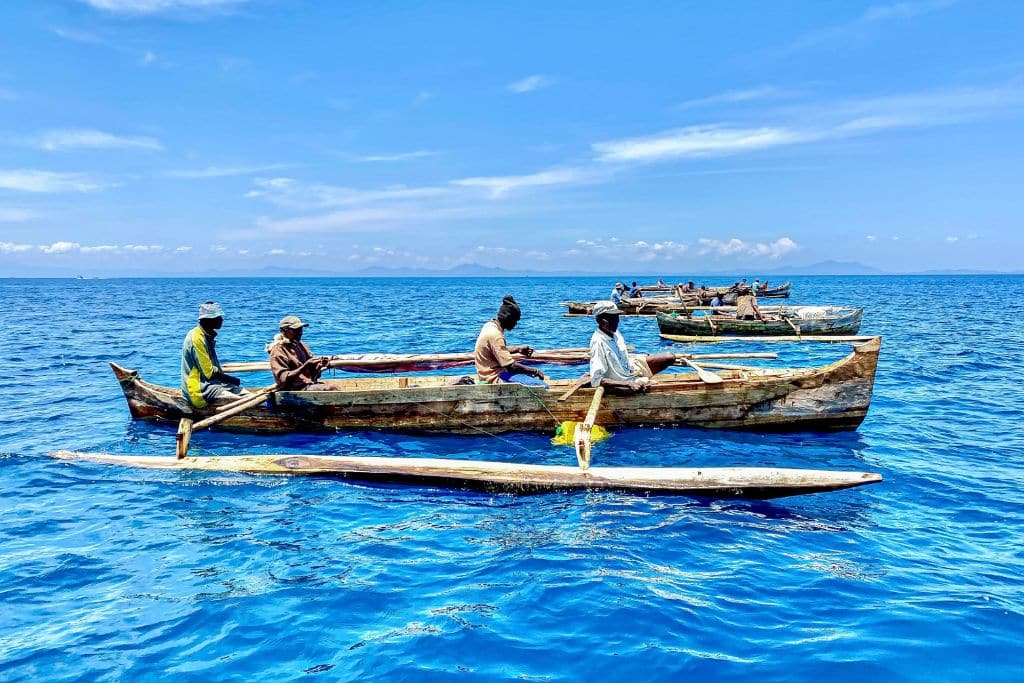
Yet the same flow of visitors demands more than the land and sea can offer. Wood is burned to provide hot water. Forests are cleared to grow rice and vegetables for hotels. Fish that once fed local families are now served to tourists in seaside restaurants. Waste accumulates in rivers and beaches.
This dual reality raises a deeper question: what does “good development” mean in Madagascar? Is it measured in jobs created, electricity lines extended, and paved roads? Or in forests still standing, rivers running clean, and lemurs alive in the canopy?
Perhaps the challenge is not to reject tourism, but to tune its engine, to find the right fuel mix. Too rich, and it burns the forest. Too lean, and the community stalls in poverty. Somewhere in between lies a balance where livelihoods and ecosystems can both breathe.
Unique Biodiversity Under Threat
Madagascar is legendary for its biodiversity: nearly 95% of its species exist nowhere else on Earth. But this natural wealth is vanishing. More than 40% of original forests are already gone, and 98% of lemur species – including the aye-aye – are now threatened with extinction, according to the International Union for Conservation of Nature (IUCN).

The threats are not only from chainsaws. Along the Pangalanes Canal and in fishing villages near Toamasina, traditional traps line the shores. Coastal communities rely on artisanal fishing to survive. But pressure on marine resources is rising fast, driven not just by local demand but also by foreign fleets and shifting weather patterns.
Again, tourism cuts both ways. Some hotels invest in conservation and source food responsibly. Others contribute to overfishing, waste, and resource depletion./

Geopolitics and Dependency
Local dilemmas are compounded by global politics. In recent years, Chinese investment – in mines, ports, and infrastructure – has surged in Madagascar. According to a 2025 report from Le Journal de Mayotte, Beijing has expanded its economic footprint aggressively, while the US has threatened tariffs of over 40% on Malagasy exports. The result: Madagascar is increasingly dependent on China.
With limited resources, the government struggles to regulate industries or enforce environmental protections. Mining concessions are often granted without thorough impact studies, leading to irreversible damage to land and livelihoods.

Exported Pollution from the Global North
Wealthy countries praise their green transitions. But rather than solving their own problems, they often export them.
In Madagascar’s capital Antananarivo, thousands of second-hand diesel cars, banned from French roads, now clog the streets. Old clothes, outdated electronics, and used batteries flow into African markets, adding to local waste burdens.
The question is simple: are we really reducing our footprint, or just shifting it elsewhere?

Learning from Our Mistakes
Europe and North America built their prosperity on deforestation, coal, oil, and overexploitation. Madagascar faces a choice: repeat these mistakes, or chart a new course.
The country has the opportunity and responsibility to define a model of development that raises living standards without sacrificing its forests and reefs. Development that does not burn trees for electricity or empty the ocean for mass tourism.
Good development, in this sense, is not about copying the North but about avoiding its errors. Madagascar can become a living example of balance, a place where people and ecosystems rise together.
A Fragile Hope
Amid contradictions and pressures, hope persists. The aye-aye survives, not only because of scientific efforts, but because local communities have found reasons to care, to preserve, to adapt.

Perhaps that is the deeper message. In protecting the aye-aye, we also protect ourselves, our forests, our oceans, and the fragile balance that keeps the world breathing.
With over 40% of Madagascar’s forests already gone, how much more can we afford to erase?
Featured image: Serge Melesan
—
Check out other Earth.Org’s photostories here.
This story is funded by readers like you
Our non-profit newsroom provides climate coverage free of charge and advertising. Your one-off or monthly donations play a crucial role in supporting our operations, expanding our reach, and maintaining our editorial independence.
About EO | Mission Statement | Impact & Reach | Write for us