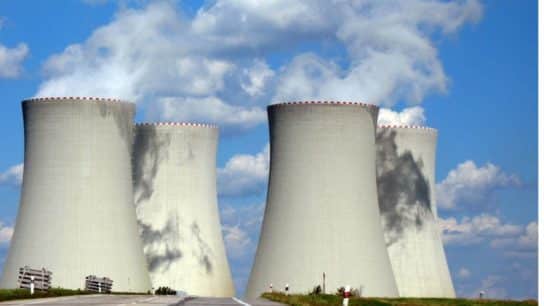



As the world decarbonizes, what happens to the coal plants left behind? Some countries are reimagining them to serve a new role in a low-carbon future.
—
For more than a century, coal powered industrial growth. Entire towns and regional economies were built around coal mines and power stations. Today, as the world shifts to clean energy and decarbonizes, many of these coal-dependent regions face economic decline. The challenge is no longer only how to close coal plants safely, but what comes next for workers, infrastructure, and local communities.
The pressure to transition away from planet-warming fossil fuels is already underway in many parts of the world. In the United States, coal capacity is down by around 60% since 2010, according to the International Energy Agency (IEA). In the European Union, countries including Germany, Spain and the Netherlands have set legally binding coal phase-out deadlines before 2030. The Global South is also facing mounting pressure to cancel new coal financing.
Without planned transition strategies, retired coal sites risk becoming abandoned industrial zones, driving job losses, population outmigration, and shrinking municipal tax bases. However, emerging techno-economic pathways show that former coal regions can be repurposed into clean energy industrial hubs, turning stranded fossil fuel assets into engines of the green economy.
The solution? There are various ways that have been employed throughout the world, some of which are discussed below.
Hidden Value of Existing Coal Infrastructure
Coal plants exist on strategically valuable industrial land. They already have grid interconnections, transmission capacity and industrial zoning permits that make it easier for these sites to host utility-scale solar farms, wind farms, and grid-scale battery storage.
Building new renewable energy projects typically requires lengthy approval processes and costly grid upgrades. Repurposing former coal sites avoids these barriers. This approach accelerates renewable roll-out while preserving grid reliability and local employment opportunities.In the Eastern US, for example, retired coal plant sites in Appalachia are being redeveloped into solar and battery projects, supported by the Biden administration’s flagship Inflation Reduction Act.
Coal mining leaves behind land that offers larger flat areas. Once reclaimed, this land can be suitable for solar panel assembly plants or wind turbine blade manufacturing or green hydrogen electrolysis facilities.
Germany is a great example of this. The Ruhr region transitioned from coal mining to advanced manufacturing and clean tech research parks over two decades through coordinated industrial policy and public investment – proof that long-term planning can convert declining fossil-fuel regions into innovation centres rather than economic dead zones.
Another pathway is underground mines serving as long-term energy storage facilities. To ensure reliable power supply, grids require storage technologies capable of delivering electricity for several hours or days. Decommissioned mines offer natural cavities that can store pumped hydro energy, where water is pumped uphill using excess electricity and released to generate power when needed – or compressed-air energy storage, where air is pressurised underground and later released through turbines. Pilot projects in Spain and the UK are testing mine-based gravity and compressed-air storage.
Transition for Coal Workers
Coal workers already possess transferable skills like electrical maintenance skills, heavy machinery operation experience, and safety training. Short retraining programs can shift them into solar installation, wind turbine maintenance, and grid operations. Retraining initiatives, wage insurance programs, and regional investment funds are increasingly being adopted to support a “just transition” – a policy framework ensuring that workers and communities benefit from the shift to clean energy rather than bearing its costs alone.
Final Thoughts
With strategic reinvestment moving forward, regions can gain new industries with higher long-term job stability and local ownership of energy assets. Community investment schemes and clean-tech innovation clusters further increase regional resilience.
The transformation is not automatic. It requires coordinated policy, public-private financing, workforce planning, and long-term political commitment. However, the examples emerging across Europe and North America demonstrate that coal’s decline does not have to mean regional decline.
As the world decarbonizes, the future of former coal regions will depend on whether governments and industry treat plant closures as endings or as opportunities to build the next generation of clean energy industrial hubs.
Photo: Tom Grundy/hongkongfp.com.
This story is funded by readers like you
Our non-profit newsroom provides climate coverage free of charge and advertising. Your one-off or monthly donations play a crucial role in supporting our operations, expanding our reach, and maintaining our editorial independence.
About EO | Mission Statement | Impact & Reach | Write for us