


During my dives in Mayotte, I often encounter lionfish. Motionless, perched on a rock or suspended mid-water, they appear to float between two worlds. With the look of a miniature underwater dragon, they fascinate: striped bodies, fan-like fins, perfectly aligned venomous spines. Almost like a creature from a marine fairytale. But behind this beauty lies a quiet imbalance.
—
Originally from the Indo-Pacific, lionfish now thrive well beyond their native range. In the tropical waters of Mayotte, their spread is both silent and concerning. Armed with venomous spines, lightning-fast reflexes, and an insatiable appetite for small reef fish, they disrupt fragile coral ecosystems.
With no natural predators to keep them in check, lionfish multiply freely and reshape reef dynamics. They are voracious feeders, consuming up to 90% of their own body weight in prey each day, and a single female can lay up to two million eggs per year. This combination of high appetite and rapid reproduction makes the lionfish a major threat to marine biodiversity.

The scale of their impact is staggering. In the Atlantic, a single lionfish on a reef can reduce the recruitment of native fish by 79% within just a few weeks, and in the Bahamas, the abundance of certain native species has declined by up to 95% following lionfish invasions.
In the Indian Ocean, where lionfish are native, such detailed figures are not yet available. But in Mayotte, divers and scientists alike report a visible increase in their presence, especially during episodes of coral stress.
Mayotte: A Case Study in Imbalance
In Mayotte’s lagoon, lionfish have become far more common than before – at times appearing more numerous than species typically expected to dominate, such as anthias. That is not normal. Coral degradation and warming seas have weakened reef structures, opening the door for lionfish to assert themselves. Once rare, they are now omnipresent, haunting the cracks of dying coral.
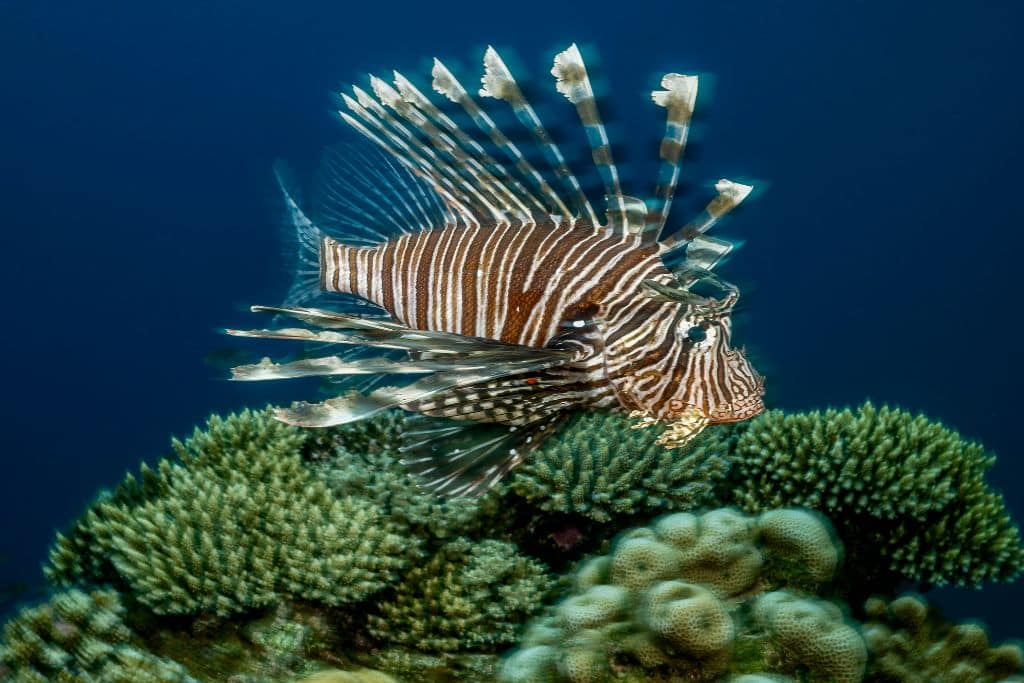
As waters warm, lionfish gain ground. Not only do they expand their range, but reef fish that might once have limited them struggle to survive in these disturbed conditions. The weaker the ecosystem, the stronger the lionfish becomes. It is a predator tailor-made for the Anthropocene – our current geological epoch, where human activity has become the dominant force shaping natural systems.
Climate change, ocean acidification, pollution, biodiversity loss – lionfish find fertile ground in these disruptions. In a sense, they are symbols of this new era: species that thrive opportunistically while fragile ecosystems collapse.
How Lionfish Reached New Waters
Once confined to the Indian and western Pacific Oceans, lionfish have colonized new regions through two main routes: the aquarium trade and maritime corridors. In the United States, lionfish released into the wild – either accidentally or intentionally – have invaded the Caribbean and Atlantic coast. In the Mediterranean, they arrived from the Red Sea via the Suez Canal, taking advantage of warmer waters to establish themselves in areas previously inaccessible.
Their spread has been made easier by the absence of predators and a climate increasingly favorable to tropical species.

What Can Be Done?
In some parts of the world, “lionfish derbies” and regulated culling have helped reduce populations. Culinary initiatives have also promoted lionfish as a sustainable seafood alternative. In Mayotte, awareness remains limited – but images are often worth more than a thousand words. They can inform, alert, and perhaps inspire local action.

The lionfish embodies one of the ocean’s most troubling paradoxes: a creature of extraordinary beauty whose unchecked spread threatens entire ecosystems. Its presence reminds us that every imbalance we create, however discreet, can turn into a major ecological crisis. And in that silence, we must learn to listen, to observe, and to act.
Featured image: Serge Melesan.
This story is funded by readers like you
Our non-profit newsroom provides climate coverage free of charge and advertising. Your one-off or monthly donations play a crucial role in supporting our operations, expanding our reach, and maintaining our editorial independence.
About EO | Mission Statement | Impact & Reach | Write for us