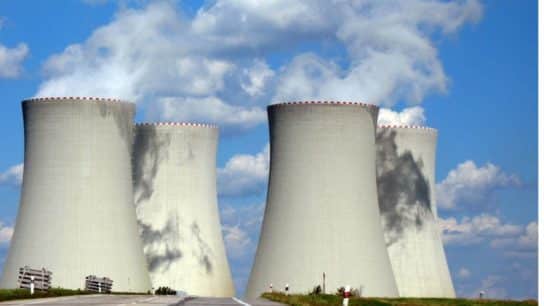


The global effort to stabilize the climate has been caught in the geopolitical crossfire of a new Cold War between Washington and Beijing.
—
The oil and gas companies that donated heavily to support Donald Trump’s 2024 reelection campaign have been repaid many times over since the US and Israel started a war with Iran in late February. The skyrocketing fuel prices that are affecting ordinary people across the globe are a gift for fossil fuel giants, for whom the spike has meant an extra $30 million in profit every hour in the first month of the conflict.
But the longer term results of Trump’s warmaking may dampen his donors’ mood. The closure of the Strait of Hormuz has been an emphatic reminder that as well as being the key to the fight against climate change, renewable energy sources offer security against the geopolitical shockwaves that have become increasingly frequent in recent years. This reality has sent countries scrambling to invest in clean energy, doubling Chinese solar panel exports (already at nearly unprecedented levels) in March.
China began investing heavily in the green industry some 20 years ago, and this strategic foresight has made it the world’s unrivalled leader in renewable energy technology. Today, the nation produces 80-90% of the world’s solar panels and wind turbines, patents more clean energy technologies than any other country, and installs more renewable capacity each year than the rest of the world combined. While China should not be taken uncritically as a climate champion – it remains a coal behemoth – it is, as Columbia University Professor Adam Tooze has written, “the only large country driving the energy transition at anything close to the necessary speed and scale.”

A very different story is unfolding in the United States. The explosive growth of fracking between the early 2000s and now made the nation into the world’s largest oil and natural gas producer. However, the Biden administration made at least an attempt to moderate this with a net-zero by 2050 commitment and unprecedented renewable energy investments through its Inflation Reduction Act.
Moderation, of course, has never been Trump’s style, and since returning to the White House in 2025, he has comprehensively jettisoned any semblance of US climate policy. Climate Action Tracker has called the administration’s various moves to promote fossil fuel production, block renewables projects, and withdraw from international climate cooperation “the most aggressive, comprehensive, and consequential climate policy rollback [it has] ever analysed.” As a result, the International Energy Agency has halved its 2030 growth forecast for US renewable energy capacity. But this has also given China, which already had an overwhelming clean energy lead, an invaluable advantage.
The Tragedy of Green Power Politics
With the world currently on track for a catastrophic 2.6C of warming by 2100, a bold global plan to scale up renewable energy installations is the only way to curb greenhouse gas emissions, which continue to rise. Yet despite the recent boom, the rate of clean energy uptake outside of China remains far below the level necessary to achieve net zero emissions by 2050 – the pathway the International Energy Agency says is necessary to have even a chance of limiting warming to the Paris Agreement’s 1.5C target. A reason for this is that the US-China rivalry is creating interests and anxieties that work against the needs of decarbonization.
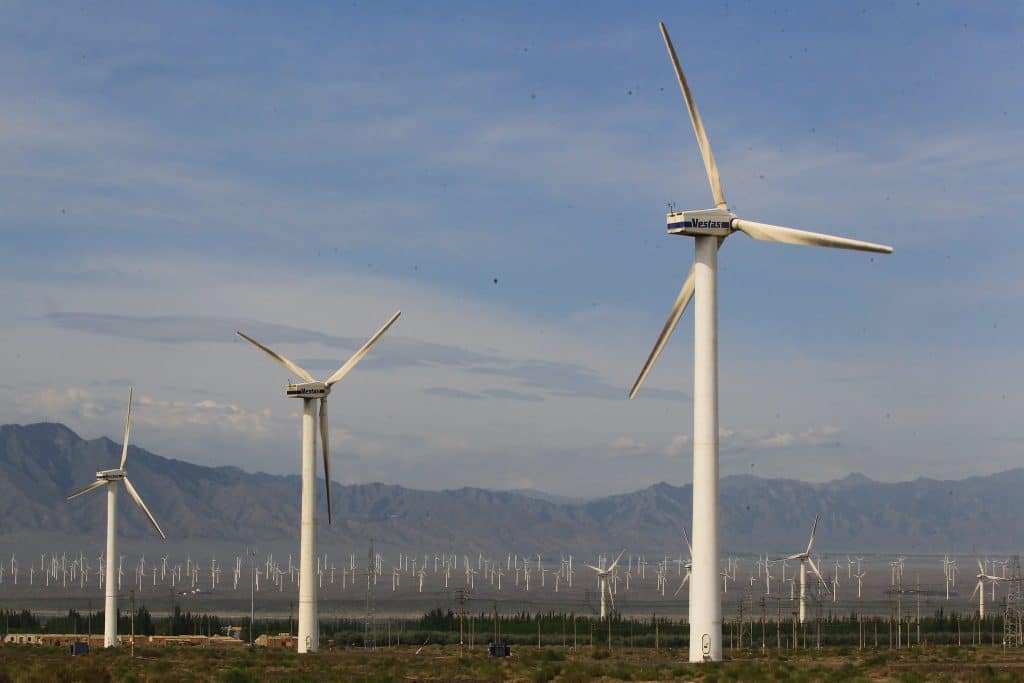
In a world where renewable energy technologies are produced overwhelmingly by China, a global energy transition is in Beijing’s economic interest. Chinese President Xi Jinping tacitly acknowledged this by calling for the “free flow of quality green products… [to] all corners of the world” in his 2025 UN Climate Summit speech. That “free flow”, as a curb to world fossil fuel demand, threatens to undermine the global influence of the US – the world’s oil and gas leader.
No wonder, then, that the Trump administration has launched an offensive against clean energy. At home, it plays a vigorous game of tariff whack-a-mole to block solar imports from each new country Chinese manufacturers set up in – Vietnam and Malaysia last year, India and Indonesia this year.
Internationally, Washington has been busy extracting long-term agreements from key partners like the European Union, Japan and South Korea to buy more US fossil fuels in exchange for tariff reductions and defence commitments. The “goal”, writes Christoph Nedopil, Director of the Griffith Asia Institute, is to “prop up energy sources facing cost pressures from green technology, strengthen US control of energy flows, and shut out China.” US natural gas firms, anticipating the feeding frenzy to come, plan to more than double their export capacity by 2029.

US-aligned governments have followed suit with anti-China renewable policies of their own. Last year, Japan ended subsidies for large solar farms, with Prime Minister Sanae Takaichi declaring that “we strongly oppose covering our beautiful country with foreign-made solar panels” and pledging investments worth $36 billion in US oil and gas projects instead. Meanwhile, Italy modified its solar subsidy policy to exclude projects that use Chinese panels and, in March, the UK government blocked a Chinese firm’s 1.5-billion-pound (US$2.038 billion) plans to build a wind turbine factory in Scotland on national security grounds.
What About Asia?
With the US and its allies accounting for about a quarter of global emissions annually, their subordination of decarbonization to great power jingoism is tragic, but not decisive in humanity’s common struggle against climate change. Over the next decade, the core of the global energy system will shift even more deeply to Asia, with rapidly growing economies like India, Indonesia and Vietnam representing the bulk of future energy demand growth. The critical question is how these new needs will be met.
The White House is already at work trying to sway the issue its way. Last year, Indonesia agreed to spend $15 billion a year on US oil and gas in exchange for tariff relief. But negotiations for a similar deal with India are on ice as the Iran war exposes the incoherence of Trump’s energy geopolitics. While India shares American wariness about China’s green supply chain dominance, it isn’t clear that dependence on dirty energy flows that are jeopardized each time a petrostate embarks on a military misadventure is preferable.
India’s broader energy strategy represents a more constructive path forward than Washington’s fossil-fueled counterrevolution. Although it still relies on China-made inputs, government support has enabled India’s own solar panel manufacturing industry to expand rapidly, more than doubling last year to 210 gigawatts of productive capacity – four times what the US can manufacture. This provides a robust base to power the country’s growth over the coming decades. And, if India’s green rise can loosen the link between renewables and China, perhaps it can lower the temperature of the energy transition for the rest of the world, too.
Featured image: Joan Sullivan / Climate Visuals Countdown.
This story is funded by readers like you
Our non-profit newsroom provides climate coverage free of charge and advertising. Your one-off or monthly donations play a crucial role in supporting our operations, expanding our reach, and maintaining our editorial independence.
About EO | Mission Statement | Impact & Reach | Write for us