


When a Sumatran elephant is sick or injured in the wild, expert care can mean the difference between life and death. Yet, across the island of Sumatra, there are very few trained wildlife veterinarians equipped to respond. That’s where the Wildlife Ambulance comes in. Based in the Aceh Jaya Regency of Sumatra, this mobile veterinary unit is more than just a rescue service. They are a lifeline for elephants in crisis, and a training ground for the people who will fight for their survival.
—
By Leif Cocks
Sumatran elephants are among the most endangered animals on Earth. As ecosystem engineers, they shape forests, spread seeds, and maintain biodiversity that countless other species depend on.
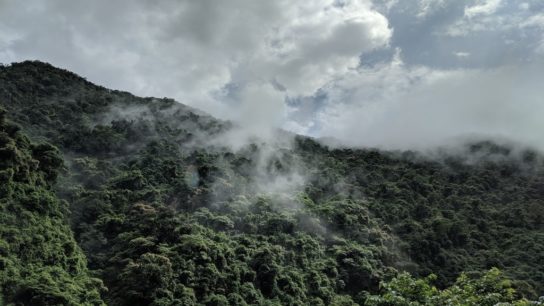
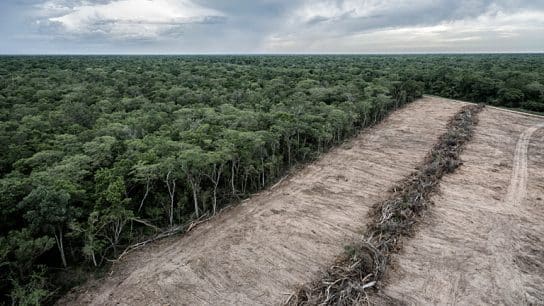
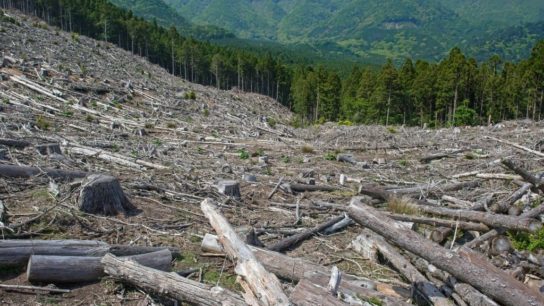
Yet their future hangs in the balance. Vast tracts of forest are cleared for farming, unsustainable monocultures, mining and expanding villages. As their natural homes shrink, elephants are forced into closer contact and deadly conflict with humans. Poaching and snares continue to cause devastating injuries, while habitat fragmentation leaves herds isolated and vulnerable.
Without skilled wildlife veterinary care to intervene, many of the last remaining Sumatran elephants face needless suffering and death. With so few experts trained to treat them, every injury carries a heavy cost. Not only for the individual elephant, but their entire species, and the fragile ecosystems they sustain.
“Every elephant that survives means a chance for the species to survive,” said Leif Cocks, conservationist and founder of International Elephant Project. “When we heal one elephant, we’re helping to heal our entire planet.”
Wildlife Ambulance
Protecting Sumatran elephants requires more than emergency rescues. It demands skilled hands, expert knowledge, and a long-term dedication to their care and survival. Yet in Sumatra, there is only one veterinary clinic, wildlife training is rare, and opportunities for field-based training are limited.
The Wildlife Ambulance, run in partnership with International Elephant Project and Syiah Kuala University and led by Senior Veterinarian Christopher Stremme, is helping bridge this gap, offering intensive, hands-on training to veterinary students and young professionals. Participants learn to conduct elephant health checks, respond to emergencies, diagnose disease, and even master the delicate art of elephant foot care – a vital skill for maintaining long-term health in both captive and wild elephants.
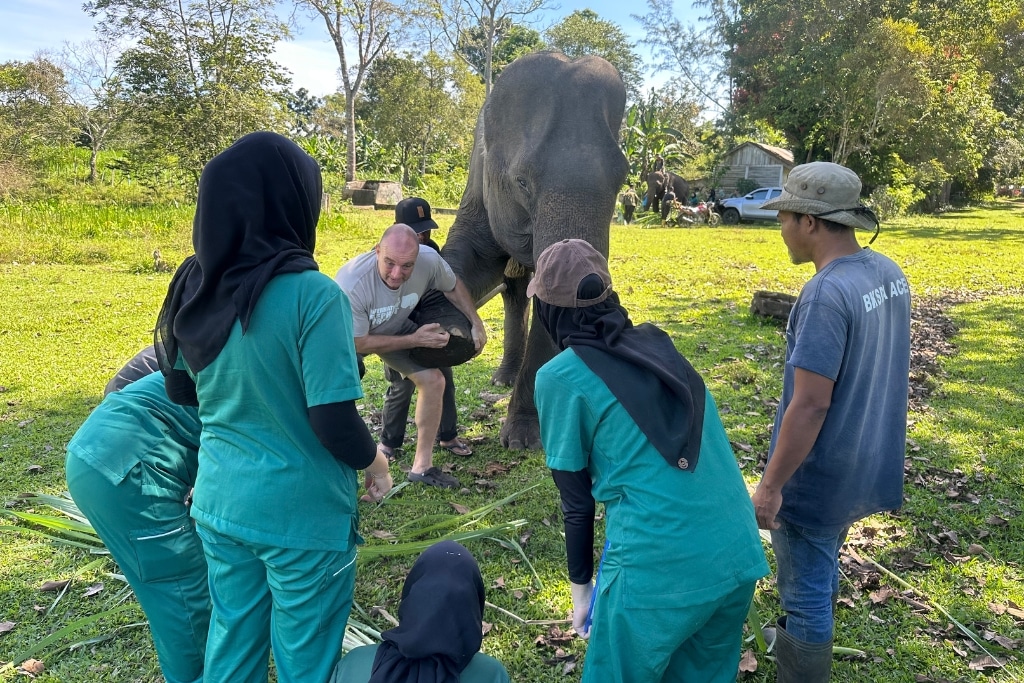
For many students, it is the first time they have ever stood beside an elephant. These training sessions and formative moments transform abstract study into real, practical lessons that will save countless lives.
“The first time students stand beside an elephant, everything changes,” said Cocks. “Being right there, beside an elephant, students understand the scale of responsibility that comes with caring for these gentle giants. That experience stays with them for life.”
In-field training also gives final-year vet students direct experience in emergency rescue and rehabilitation of wild elephants. They learn how to treat wounds, manage sedation, and navigate the logistical challenges of caring for animals that can weigh up to five tonnes. Some students assist with long-term rehabilitation, helping elephants recover from injuries severe enough to prevent an immediate return to the wild.
These practical experiences build not just technical skills but also empathy and resolve, qualities essential for those who will one day lead Indonesia’s wildlife health and conservation efforts.

The Wildlife Ambulance’s work extends beyond Sumatra. While local lectures connect students and veterinarians across Indonesia, international seminars bring together participants from more than a dozen countries. From treating common foot injuries to tackling emerging elephant diseases, this exchange of expertise strengthens global capacity for wildlife and elephant care.
Elephant education reaches deep into local communities, too. In Sumatra, school children are invited to learn about elephant behaviour, understanding why they are vital to the forests their families depend on too. These moments of learning help plant early seeds of stewardship in the next generation.
Conservation through Education
Every student trained, every lecture delivered, and every child inspired brings us one step closer to a safer future for Sumatran elephants. The Wildlife Ambulance proves that effective conservation is as much about education as it as about rescue.
“The need for trained wildlife vets is urgent,” said Cocks. “If we don’t invest in people now, we risk losing not just individual elephants, but an entire species of self aware ‘persons’.”

By equipping young veterinarians and conservationists with the skills they need today, we are safeguarding the elephants of tomorrow. Each trainee who walks away with new knowledge becomes part of a growing global network of wildlife defenders–people ready to stand between elephants and extinction.
Sumatran elephants are vital to the health of entire ecosystems. Protecting them means investing in people who can care, heal and defend them for generations to come.
—
Find out more about the International Elephant Project and how you can help here. Your support will help give urgent medical care to wild elephants, save their habitat, and protect them from deadly threats of poaching and conflict.
This story is funded by readers like you
Our non-profit newsroom provides climate coverage free of charge and advertising. Your one-off or monthly donations play a crucial role in supporting our operations, expanding our reach, and maintaining our editorial independence.
About EO | Mission Statement | Impact & Reach | Write for us