


“Science provides the pathway; spiritual vision may provide the will,” writes Cristina-Ioana Dragomir, a Clinical Associate Professor at New York University.
—
By Cristina-Ioana Dragomir
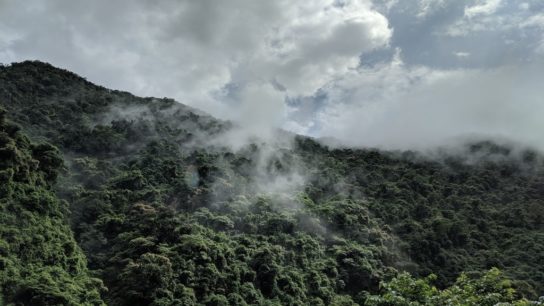
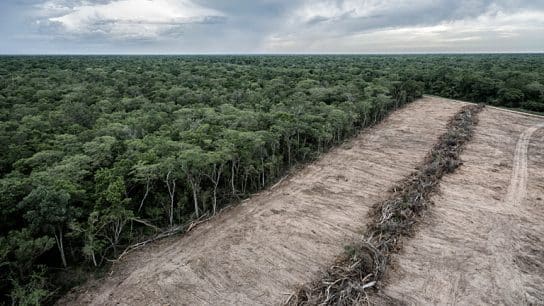
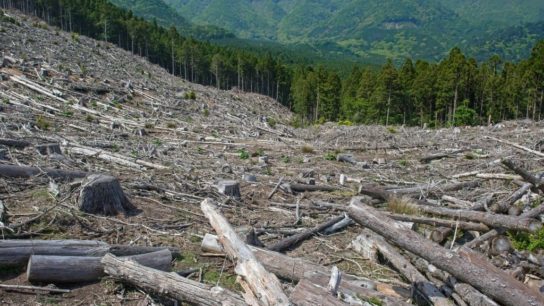
Soil degradation is accelerating worldwide. According to UN estimates, up to 75% of global land is currently degraded, from 30% just a decade ago. If current trajectories continue, more than 90% of the world’s soil could be degraded by 2050.
The scale of this loss is difficult to conceptualize, but the numbers are stark: about 100 million hectares are lost to degradation each year. Research estimates that the world loses between 24 and 40 billion tons of fertile soil every year, while researchers document steep declines in biodiversity.
The consequences extend far beyond agriculture. Declining soil health undermines water regulation, biodiversity, climate mitigation, and is a security threat amplifier, threatening progress across multiple UN Sustainable Development Goals. For more than half a century, soil scientists have warned about the accelerating deterioration of the Earth’s living substrate. Yet despite decades of data, international reports, and policy frameworks, destruction persists. Erosion, organic matter loss, contamination, salinization, and structural collapse all undermine the stability of the biosphere. Soil degradation is no longer a technical problem awaiting the right fix; it can be understood as a civilizational crisis.
A Failure of World-Making
If the science is clear, why does the crisis persist? The answer lies not only in inadequate policies but in a deeper conceptual failure of how soil is understood. Modern societies continue to relate to soil as a resource to be exploited, or dismiss it as “dirt”, often treating it as a passive substrate that can be extracted or replaced at will.
This worldview, rooted in modernity’s entrenched nature-culture divide imagining humans independent from nature, shapes our political institutions, economic systems, and consumption habits. It narrows the ethical and imaginative horizons from which environmental action can emerge. We live within a “mobilization gap”, caught between the clarity of scientific evidence and the inertia of our cultural, emotional, and socio-political frameworks.
Responding to this crisis requires more than improved technologies or stricter regulations. It demands a reorientation of imagination – a worldview in which soil is experienced not as an inert commodity, but as a co-creator of life: a living relational partner whose wellbeing is inseparable from our own. The obstacle to protecting soil is not the absence of scientific knowledge, but can be understood as a failure of “worldview-making”.
A Different Kind of Environmental Actor
In this conceptual vacuum, new actors and alternative forms of environmental leadership have begun to take shape. Figures from spiritual traditions are stepping into planetary-scale environmental discourse, challenging the assumption that environmental governance belongs exclusively to scientific and technocratic experts.
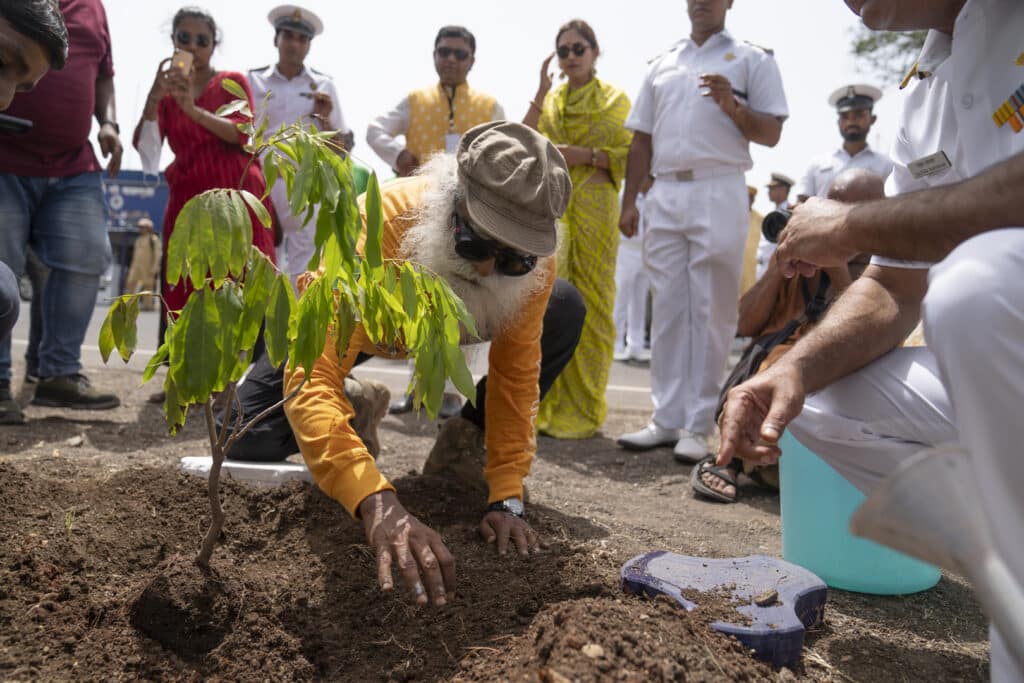
A prominent response to this impasse is the Save Soil movement, initiated by Jagi Vasudev, known globally as Sadhguru. In the making for decades, the movement finally launched in 2022, when the 65-year-old mystic undertook a 100-day, 30,000-kilometre motorcycle journey across 27 countries. Along the way, he participated in more than 600 public events, met dozens of heads of state, collaborated with UN agencies, while creating a global digital campaign.
When I asked him why a spiritual leader is advocating for soil health, he looked straight into my eyes and said: “Why not? Don’t I live here too?”. This answer, deceptively simple, reframes the conversation. It suggests that the missing ingredient in global soil restoration is not more data, but a different kind of engagement, one that speaks simultaneously to human life and planetary responsibility.
You might also like: On A Mission to Keep the Magic of Soil Alive: An Interview With Sadhguru
Network-Spiritual Environmentalism
The Save Soil movement is not a traditional environmental campaign but a new mode of action that converges spiritual vision, digital infrastructures, and transnational advocacy mobilizing people at scale. While spirituality has long connected with ecology (Laudato Si,’ Indigenous ecological cosmologies), Save Soil innovates by operating within highly networked digital ecosystems. It utilizes a hybrid model creating a network-spiritual environmentalism.
First, it offers a worldview: a narrative that soil is “a part of our life,” connecting the environment to inner awareness. Second, its work is grounded in scientific legitimacy, utilizing partnerships with soil scientists, agronomists, and UN experts. Finally, these elements are pushed through a well-orchestrated digital strategy with the aim of influencing policy outcomes. This includes meetings with heads of state, developing an awareness movement aimed at yielding political results.
A New Vision for Soil
Movements grounded in spiritual or values-based mobilization are not without criticism. Skeptics argue that an emphasis on inner transformation risks depoliticizing environmental crises, shifting attention away from structural drivers like industrial agriculture, weak regulation, and corporate interests. Others question how awareness-driven campaigns translate into measurable outcomes in a domain as complex and slow-moving as soil restoration, where improvements take decades to materialize.
These concerns are serious and reflect broader debates about how social movements translate awareness into structural change. Indeed, public mobilization should not be seen as a substitute for science-based policy, but as its necessary complement. By encouraging public engagement and expanding political imagination, such movements can help create the social conditions under which soil policies become politically sustainable.
Soil degradation continues because we lack the collective capacity to act. Movements like Save Soil point us toward a broader vision where environmental leadership crosses the boundaries between spirituality, science, policy, and public imagination. Dismissing spiritual figures from this arena is analytically mistaken and politically frail at a time when soil systems are disintegrating.
As ecological collapse accelerates, restoring the world’s soils will require hybrid, value-driven movements. But we must understand awareness as a precondition for change, not an endpoint. Impactful, structural change still requires institutional processes and long-term engagements. Ultimately, science provides the pathway; spiritual vision may provide the will. It is now up to us to channel that will into action, by demanding policies that protect soil as a living ecosystem and engaging in the restoration of the land beneath our feet.
—
About the author: Dr. Cristina-Ioana Dragomir is a Clinical Associate Professor at New York University/Liberal Studies & Center for Urban Science and Progress. A political ethnographer, her research focuses on climate change, migration, and social justice. She is currently developing a book project on environmental governance and contemporary soil-focused mobilizations.
This story is funded by readers like you
Our non-profit newsroom provides climate coverage free of charge and advertising. Your one-off or monthly donations play a crucial role in supporting our operations, expanding our reach, and maintaining our editorial independence.
About EO | Mission Statement | Impact & Reach | Write for us