



This weekly round-up brings you key climate news from the past seven days, including confirmation that 2025 was the third hottest year on record, controversies around new US food guidelines and two back-to-back court defeats for the Trump administration.
—
1. 2025 Was Third Warmest Year on Record
2025 was the third warmest year ever recorded.
With a global average temperature of 14.97C, last year was just 0.01C cooler than 2023 and 0.13C cooler than 2024, the warmest year on record, according to data from the European Centre for Medium-Range Weather Forecasts’ (ECMRW) Copernicus Climate Change Service.
A significant portion of the world experienced warmer-than-average temperatures in 2025. This included the Arctic and Antarctic, which saw their second-highest and highest value on record. Record-high annual temperatures were also recorded in the northwestern and southwestern Pacific, the northeastern Atlantic, far eastern and north-western Europe and central Asia.
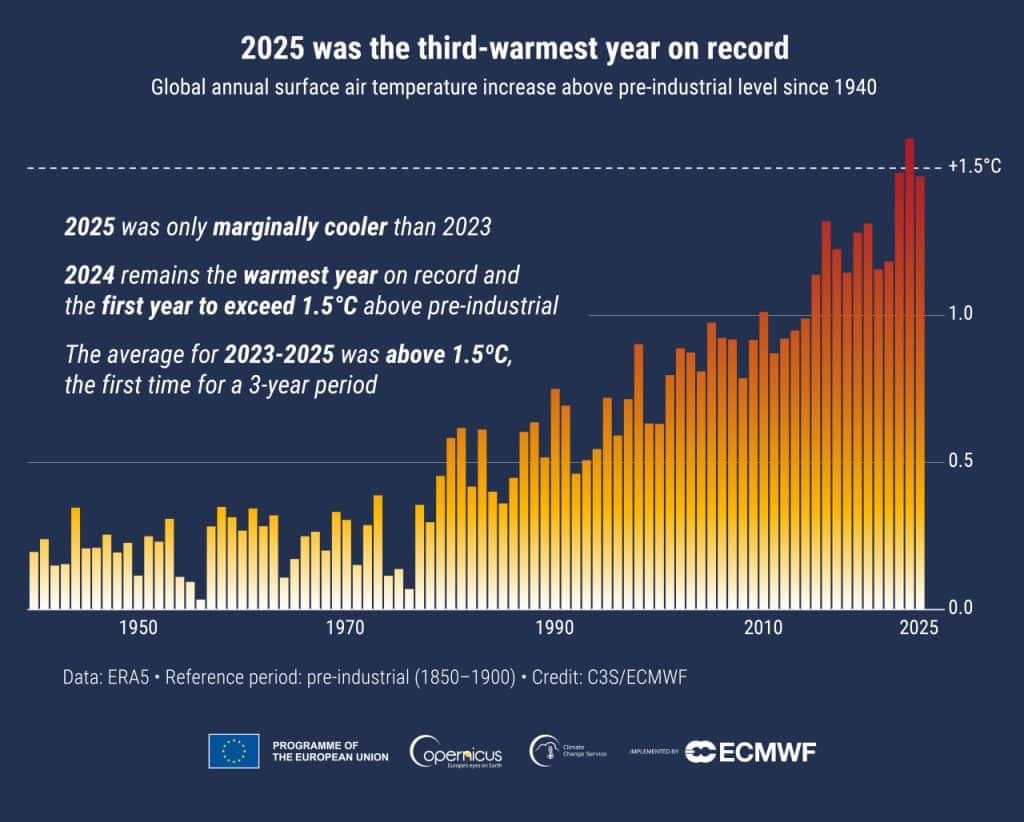
The past 11 years have been the 11 warmest on record. This “provides further evidence of the unmistakable trend towards a hotter climate,” according to Carlo Buontempo, Director of the Copernicus Climate Change Service. “The world is rapidly approaching the long-term temperature limit set by the Paris agreement. We are bound to pass it; the choice we now have is how to best manage the inevitable overshoot and its consequences on societies and natural systems.”
Full story here.
2. Two Courts Block Trump Administration’s Attempt to Halt Clean Energy Projects
Two separate rulings this week represented a major setback to the Trump administration’s efforts to obstruct renewable energy initiatives and other climate-focused projects across the nation.
On Monday, Judge Amit P. Mehta of the US District Court for the District of Columbia ruled that the administration’s decision to halt millions of dollars in clean energy grants was “unlawful” as it primarily targeted projects in Democratic-led states. The judge also instructed the administration to restore the grants and cover the plaintiffs’ legal fees.
The second defeat came on Tuesday, when a federal judge in Washington, DC, ruled that Danish wind farm developer Orsted can proceed with the construction of a $5 billion wind farm off the coast of Rhode Island. Construction was 90% complete when the Interior Department ordered a 90-day pause on that and four other offshore wind projects last month, citing undisclosed national security concerns.
Full story here.
3. New US Food Guidelines Prioritize Emissions-Intensive Meat and Dairy Industries
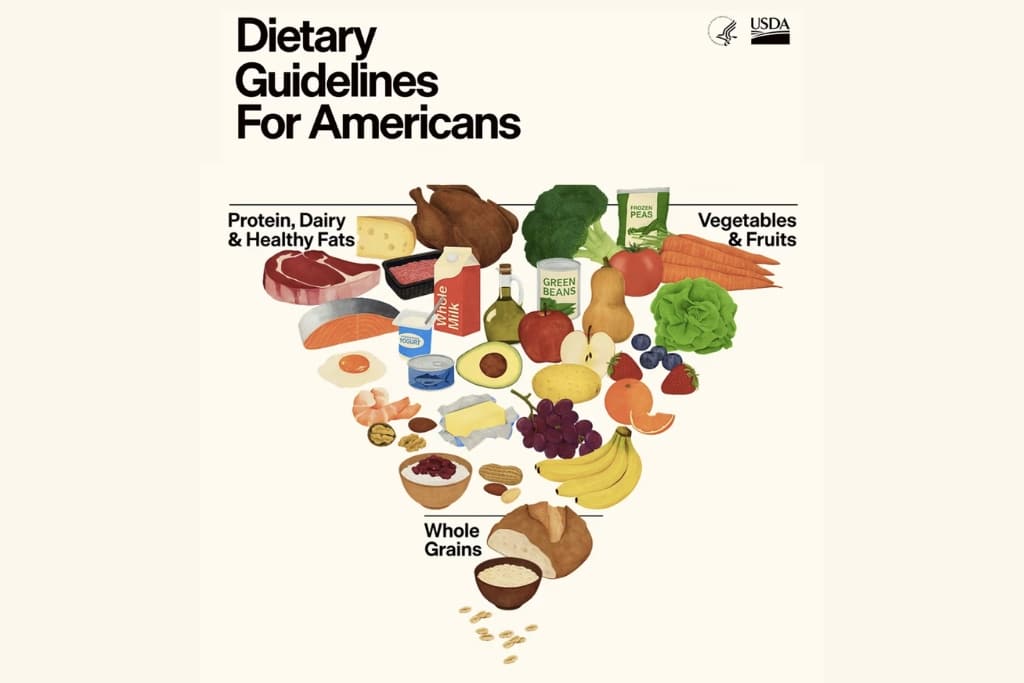
A food pyramid encourages Americans to consume more meat and dairy products for higher protein intake, ignoring their large contribution to planet-warming emissions and environmental degradation.
Health Secretary Robert F. Kennedy Jr. and Department of Agriculture Secretary Brooke Rollins unveiled the new food guidelines, including a reverted food pyramid, last week. Together with fruit and vegetables, meat and milk products figure at the top of the pyramid.
The changes have raised concerns among environmental experts and scientists, who point at dairy and meat’s huge share of global emissions. Livestock supply chains (meat, dairy and eggs) account for around 14.5% of global greenhouse gas emissions, according to the UN.
Beef and lamb are among the highest environmentally damaging sources of protein, as they require huge amount of land, water, and feed as well as the conversion of natural ecosystems for pastures. As for milk, cow’s milk produces roughly three times more emissions than plant-based, protein-rich options like pea and soy milk.
“If someone did care about environment or climate change, one would have a hard time signing onto these new dietary guidelines,” said EAT-Lancet Commission Co-Chair Walter Willett.
Full story here.
4. Richest 1% Exhausted Their Carbon Budget for 2026 in Just 10 Days, Says Oxfam
It took the wealthiest 1% only 10 days to exhaust their annual fair share of emissions, an Oxfam study revealed. To limit warming to 1.5C, they would have to slash their emissions by 97% by the decade’s end.
As emissions grow, so do the impacts of the climate crisis – such as more frequent and destructive extreme weather events. According to the charity’s research, some 1.3 million heat-related deaths by the end of the century will be attributable to the emissions the richest 1% generated in just one year.
But the global elite’s lifestyle is not the only driver of emissions. The carbon footprint from a single billionaire’s investments – typically in polluting industries like fossil fuels – is 346,000 times greater than that of the average person, the charity revealed in an earlier study.
In 2024, the emissions linked to the investments of the 308 billionaires totalled 586 million tonnes of CO2 – more than the combined emissions of 118 countries.
Full story here.
5. Hong Kong Breaks 20 Weather and Temperature Records in 2025, City’s Sixth Hottest Year
Hong Kong broke 20 weather and temperature records in 2025, the city’s sixth warmest year since record-keeping began in 1884. These included the highest absolute maximum temperature for June (35.6C), the highest total daily rainfall for August (398.9 mm), and the highest monthly mean temperature for October (25.6C).
Last year, the city’s hottest since since at least 1884, 35 temperature records were broken.
All 12 months of 2025 were warmer than usual, the Hong Kong Observatory said last week. The annual mean temperature was 24.3C, 0.8C above the 1991-2020 average. The annual maximum temperature stood at 27.1C and the annual minimum temperature at 22.4C – one of the fifth and one of the sixth highest since 1884, respectively.
Full story here.