



A new analysis reveals that the US will achieve 10% of its Global Methane Pledge target thanks to actions already taken or underway from just eight US states.
—
By Kim Finlay
The climate news cycle rarely brings good tidings. Between rising global temperatures, extreme weather events, and political gridlock that stalls federal action, it is easy to fall into despair about our planet’s future. But here’s a glimmer of hope amid the gloom, and it is hiding in plain sight – buried beneath our feet in the nation’s 2,600 municipal solid waste landfills.
While landfilled organic waste is a sleeping giant of the climate crisis, we already have a vast array of solutions at our fingertips, just waiting to be implemented. In fact, a new analysis by Full Circle Future reveals we will achieve 10% of the US’s Global Methane Pledge target. This is thanks to actions already taken or underway from just eight US states – California, Oregon, Washington, Colorado, Illinois, Michigan, New York, and Maryland – to adopt and implement practical, commonsense improvements to landfill emissions standards and organics recycling policies. That is a reduction of 800,000 metric tons of methane. The best part? These states do not need to wait for federal permission – they are acting now.
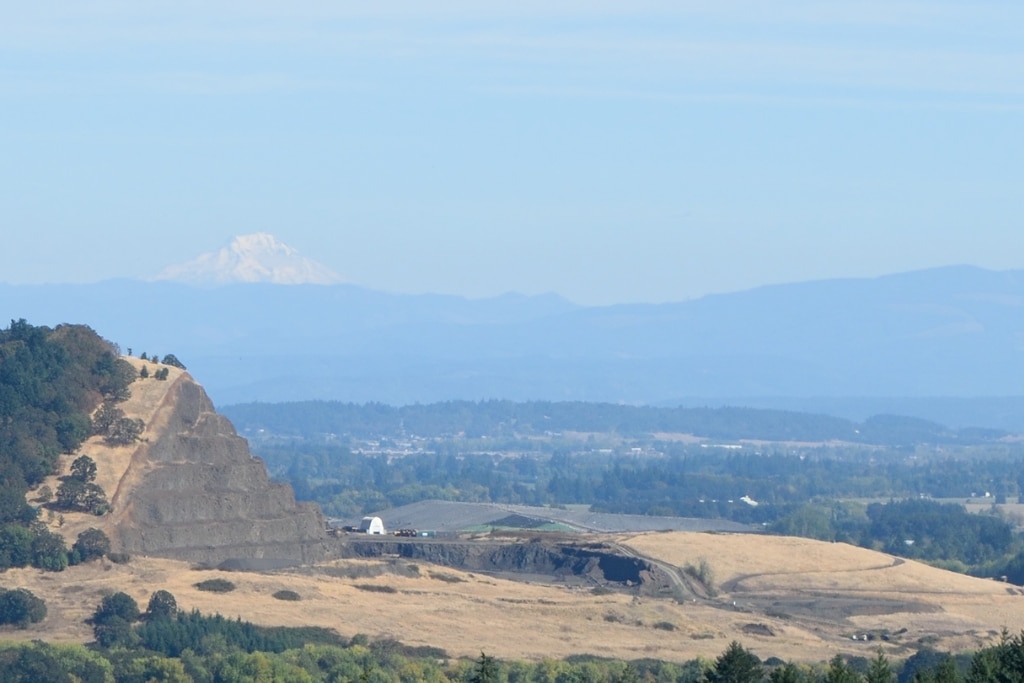
Washington, Maryland, and Oregon have already passed state landfill rules that exceed EPA standards. This summer, Oregon Governor Tina Kotek signed first-of-its-kind legislation requiring the state to ensure Coffin Butte Landfill is using drones, satellite information, or other modern technologies to detect methane leaks. Colorado air regulators are poised to vote on draft rules that emphasize improved landfill cover practices and gas collection systems. And, 15 years after passing their own landfill methane rules, California air regulators have proposed a long-awaited overhaul.
This momentum is undeniable and underscores a larger truth: federal action may stall, but state and subnational leadership can move mountains, as evidenced by the leadership of groups like the Subnational Methane Action Coalition. And the private and non-profit sectors can fill in the gaps.
Thanks to advances in technology, companies offer an impressive toolbox of solutions, including robot dogs, drones, fixed sensors, and satellite mapping, designed to make invisible methane emissions visible and actionable. Now, hundreds of landfills across the country, including California’s Orange County Waste & Recycling, rely on smart landfill technology to monitor methane emissions, cutting climate pollution from these facilities up to 15%.
Reducing methane from landfills also means reducing the many other pollutants that it brings along for the ride – toxins like benzene, toluene, and volatile organic compounds (VOCs) that make people sick. Landfills from Los Angeles to upstate New York affect real families in real neighborhoods. Stronger emissions standards aren’t just climate policy; they are a public health imperative that resonates across political divides.
The timing couldn’t be better. This week marks the end of COP30, where solutions to methane emissions were in the spotlight. Even as federal progress is undermined at every turn, the US still has a meaningful contribution to the conversation: eight states moving forward with solutions that are proven, practical, and available today. This is what serious climate action looks like when political will aligns with available tools.
Previous research showed that stronger federal landfill regulations could reduce landfill methane emissions by 56% through 2050. But we do not need to wait for federal regulations to achieve significant cuts. We can do this state by state, landfill by landfill.
The climate crisis remains daunting. But state and local action on organic waste reminds us that not every problem requires a technological miracle or a political breakthrough. Sometimes, the path forward simply requires choosing to implement the solutions in front of us. If action by just eight states can slash 10% off our global pledge, imagine the possibilities if all fifty rose to the occasion.
As COP30 concludes and global leaders return home to implement methane-cutting solutions, our state leaders have a compelling story to tell: we are not just talking about cutting methane. We’re already doing it. And we implore others to follow.
—
About the author: Kim Finlay is the Director of Research and Analytics at Full Circle Future, a U.S.-based nonprofit organization working to reduce pollution from landfills and advance sustainable and harm-reducing alternatives to landfilling and incineration.
This story is funded by readers like you
Our non-profit newsroom provides climate coverage free of charge and advertising. Your one-off or monthly donations play a crucial role in supporting our operations, expanding our reach, and maintaining our editorial independence.
About EO | Mission Statement | Impact & Reach | Write for us