



Ratcheting up an earlier demand to make the care of the planet an “absolute priority”, a group of Olympians and athletes have published a new open letter appealing to the International Olympic Committee to formally exclude sponsors from the fossil fuel industry.
—
As the 2026 Milan-Cortina Winter Olympic Games captivate viewers around the world, both fans and players are concerned about the impact of rising temperatures and extreme weather, with some fearing that outdoor winter sports such as skiing may become a thing of the past.
Last week, an open letter addressed to the President, the International Olympic Committee (IOC) Executive Board and IOC Members, urged them to take a series of concrete steps against fossil fuel sponsors. These include establishing a formal dialogue with athlete representatives at the IOC Executive Board level and grounding the dialogue in “science and athlete experience” as well as creating a clear sponsor eligibility policy banning fossil fuel companies and integrating this policy into IOC’s strategic framework. The letter was signed by 88 Olympians and Paralympians and 53 elite athletes “who dream of one day becoming an Olympian.”
“We welcome that the IOC has committed to ensuring that the Olympic Games lead on sustainability and serve as a catalyst for long-term sustainable development. However, accepting that the organizers of the Games may establish partnerships with fossil fuel companies directly undermines these principles,” the letter read. “As our winters melt, summer athletes are simultaneously being pushed to their physical limits by record-breaking heatwaves that gamble with athlete health. We believe it is a contradiction to celebrate human achievement while being funded by the industry that threatens the fundamental conditions, from reliable snow to safe temperatures, upon which all Olympic sports depend.”
The letter also traces the history of major Olympic policy pivot points, comparing today’s change with the decision to go smoke-free for the 1988 games in Calgary, Canada.
It came days after Greenpeace Italy published a video urging the organizers of the Olympics to end their “absurd” partnership with Italian oil and gas giant Eni.
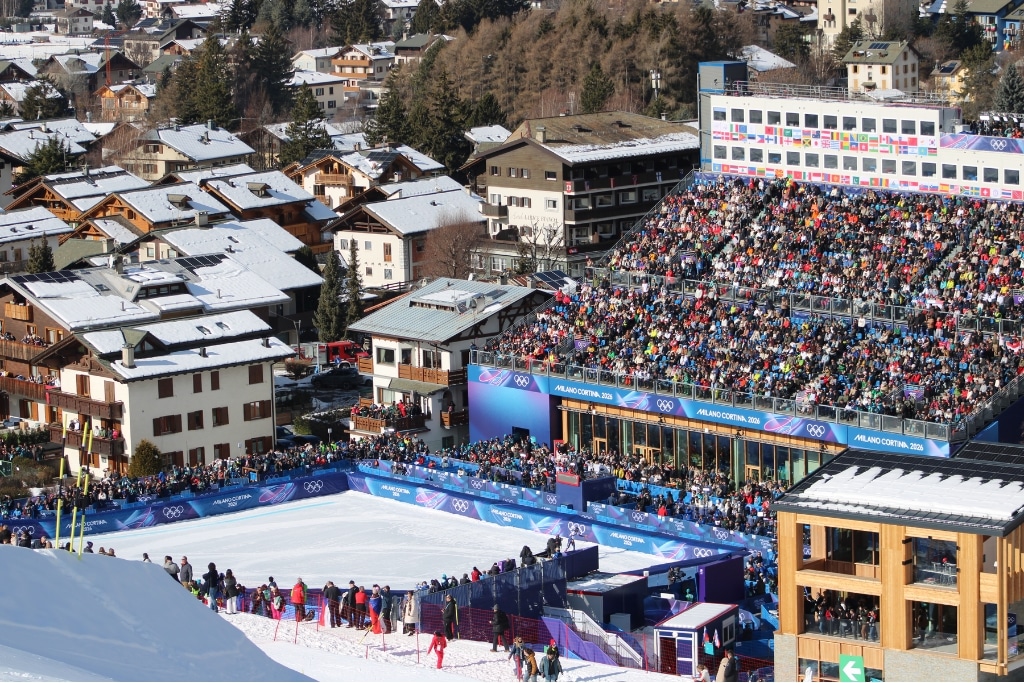
The Beijing Winter Olympics in 2022 were the first to rely on artificial snow, as is true for Cortina, Italy, this year, amid poor snow coverage. Likewise, the Paris Olympics in 2024 were plagued by extreme heat. There, temperatures reached 40C on some days, highlighting the average increase in summer temperatures of 3.1C since the 1924 Paris Olympics a century earlier. Higher temperatures at the 2014 Winter Olympics in Sochi, Russia, were one of the causes of injuries among Paralympic athletes, according to a study by the University of Brighton.
The IOC has adopted the so-called Fit for the Future framework, which forms working groups for four areas: Youth Olympic Games, sports program, for the protection of the female category, and for commercial partnership and marketing.
The Commercial Partnerships and Marketing Working Group, under which any fossil fuel ad ban would fall, surveys the IOC’s existing programs, platforms and systems, how it engages with partners, and how it can evolve to “ensure that it is fit for today’s competitive market.” The group, chaired by IOC member Luis Alberto Moreno, also covers the future of the Olympic Broadcasting Services and Olympic Channel Services.A recent poll conducted by Novus for the New Weather Institute found that in Italy, where the 2026 Winter Olympics are taking place, 77% of the population believes that winter sports should stop advertising “emission-intensive companies”. The comparable number in France, where the 2030 Games will occur, is 83%. In the UK, which hosted the 2020 games, only 5% of the population would oppose a ban on fossil fuel ads, while 77% think it is a good idea.

The letter marks a growing number of appeals by elite athletes to protect the climate. In March 2025, a group of Olympians from 89 countries and representing more than 50 different sports issued an earlier a list of demands for the incoming IOC President, highlighting risks to the players, fans, sports, and society and calling for “bold” action. In October, 40 athletes called for adaptation finance at COP30, with backing from the Gates Foundation, Global Citizen and the Global Center on Adaptation.
Featured image: Andy Miah/Flickr.
You might also like: How Climate Change Is Affecting Professional Sports Worldwide
This story is funded by readers like you
Our non-profit newsroom provides climate coverage free of charge and advertising. Your one-off or monthly donations play a crucial role in supporting our operations, expanding our reach, and maintaining our editorial independence.
About EO | Mission Statement | Impact & Reach | Write for us