

Orangutans are running out of forest, and out of time. Here’s what we can do to ensure they don’t go extinct.
––
After humans, orangutans are among the most intelligent beings on Earth. They are self-aware, sentient persons, and as such they deeply feel loss and grief.
Sharing 97% of our DNA, they are one of our closest relatives in the animal kingdom. That shared DNA shows up in surprising ways, from problem-solving and their use of tools to their social bonds and even their sense of humor.
Despite this, they are also one of the most critically endangered animals in the world. Deforestation, habitat loss, poaching and human-orangutan conflict are driving them closer and closer to the edge of extinction.
So what does it actually take to save them?
A Species Facing Extinction
There are three species of orangutan: the Sumatran orangutan (Pongo abelii), Bornean orangutan (Pongo pygmaeus), and Tapanuli orangutan (Pongo tapanuliensis). All three are classified as critically endangered. The latter, only identified as its own species in 2017, counts just 700 individuals. That makes it one of the rarest great apes alive.
Orangutans live in the lowland rainforests of two Southeast Asian islands: Borneo and Sumatra. They are the largest tree-dwelling animals on Earth, spending most of their lives high in the forest canopy.

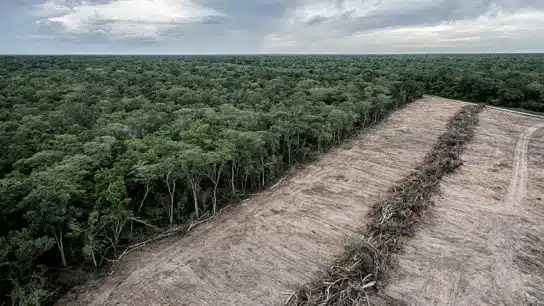
Lowland rainforests are the richest, most biologically dense habitat – the same habitat that also happens to be cleared aggressively for mining and unsustainable monocultures. What is left behind is rarely intact forest at a smaller scale. It is fragmented forest, cut into patches too small and too isolated for both the forest and the orangutans to survive in.
Three Deadly Threats
Orangutans face three main threats to their survival.
1. Habitat destruction
Vast areas of rainforest are bulldozed and burned for unsustainable large scale coal mining, palm oil, pulp and paper, and rubber plantations. Rich, living ecosystems are replaced with row after row of unsustainable monocultures, wiping out food sources, displacing and killing wildlife, harming surrounding communities, and turning thriving forests into biological wastelands.

2. Poaching and the illegal wildlife trade
As their forests are cleared, orangutans are forced out into the open, so poachers can strike. Baby orangutans are brutally hunted and captured, stolen from the forest and sold on the black market as pets. To get the baby, poachers almost always have to kill the mother first.
3. Human-orangutan conflict
As forest shrinks, orangutans move into farmland in search of food. To farmers, they are pests, a threat to crops, and a problem to be eliminated. Orangutans are beaten, shot, macheted, and burned alive. They are snared in traps. Others are captured and kept in horrific conditions.

Underneath all three threats sits a biological reality that makes orangutans especially fragile. They are among the slowest-reproducing mammals on Earth. A female Sumatran orangutan, for example, has on average a baby only once every nine years – the longest birth interval of any land mammal. That means every single breeding female matters enormously to the future of the species. Lose too many, and the population won’t recover.
Saving the Orangutan
Saving a species this vulnerable takes more than protecting just individual animals. It takes saving entire ecosystems capable of sustaining viable populations, through a coordinated, long-term approach across everything orangutans depend on: protected rainforest, rescue, rehabilitation, and the communities who share that landscape.
This is the model The Orangutan Project applies, built on four interlocking pillars:
- Protecting rainforests: securing legal conservation status for rainforest removes it from the threat of clearing, safeguarding both habitat and the orangutans within it.
- Restoring and patrolling rainforests: ranger teams on the ground defend orangutan habitat from illegal logging, land clearing, farming, and poaching.
- Rescuing, rehabilitating and releasing orangutans: displaced, vulnerable and captive orangutans are rescued from danger, and given the safe space to learn the skills they need to survive. They are then released back into protected rainforest.
- Community empowerment and education: forest-edge communities are engaged as active partners in protecting orangutans and the ecosystems they both depend on.
None of these pillars function in isolation. Rescued orangutans need protected forest to be released into. Protected forests need rangers to defend it. Rangers need communities invested in the mission, not working against it. Saving the orangutan means safeguarding the entire system that sustains it.

Orangutans do not exist in isolation either. Their rainforests shelter thousands of other species and sustain the communities who rely on them for clean water, food, and livelihoods. Protecting orangutans means protecting all other species that coexist with them.
How You Can Help
Saving orangutans is a long-term commitment, and you can be a direct part of it. The most effective way to protect their species for years to come, is with a regular gift.
- Save Forest: with a monthly gift, you can protect a patch of rainforest from destruction, giving orangutans a long-term home where they can thrive in the wild.
- Adopt a rescued, orphaned orangutan and support their long-term care, giving them the skills they need for the chance to one day return to the wild.
Orangutans have shared this planet with us for hundreds of thousands of years. What happens over the next few matters more than any before it.
Featured image: The Orangutan Project.
Find out more about the work of The Orangutan Project and how you can save a patch of rainforest, adopt an orangutan, or give a one time gift at theorangutanproject.org.
This story is funded by readers like you
Our non-profit newsroom provides climate coverage free of charge and advertising. Your one-off or monthly donations play a crucial role in supporting our operations, expanding our reach, and maintaining our editorial independence.
About EO | Mission Statement | Impact & Reach | Write for us