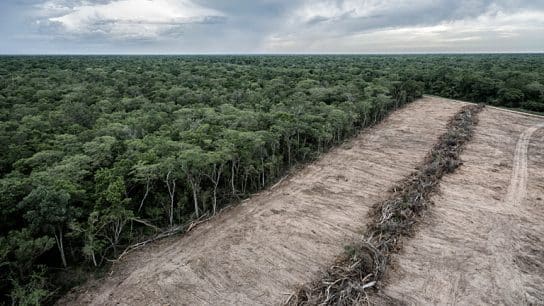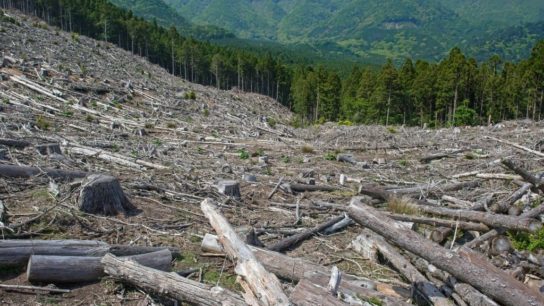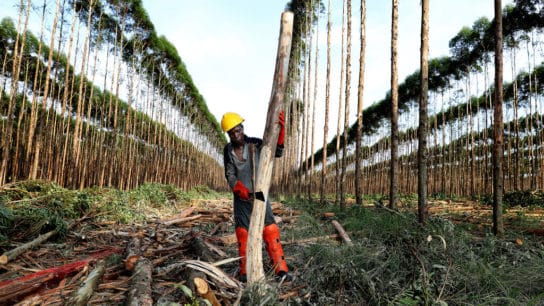


“The greatest legacy we can leave for our children is an environment of rich soil and water. Only in preserving the quality of the soil, the quality of the planet and life will endure,” writes Sadhguru, Founder of Isha Foundation and Conscious Planet.
—
By Sadhguru
From a very early age, my engagement with the rivers, forests and mountains of southern India has been very deep, to an extent where, when I was 11 years of age, I lived off the jungle for days on end. When I was 17, I lived off Cauvery river, a major lifeline in southern India, and floated down it – 163 kilometers in thirteen days – on just four truck tubes and a few bamboos.
In the last 25 years, I have been watching with great concern how Cauvery is depleting. Today, when I go and look at the same places, tears come to my eyes because you can just walk across the river. The water availability has gone down tremendously in the last 50 years. In 2017, when we launched a painting competition in over 130,000 schools across India, a lot of children painted rivers of sand, not of water. That is what the future generation thinks of as a river.
How Are Water and Soil Connected?
In general, most rivers in India are suffering from depletion. There are many reasons for this, but one fundamental reason is that the soil quality is depleting. If you take away organic matter from the soil, it becomes sand. If you put organic matter into sand, it becomes soil. Only soil that is rich in organic matter and which is in shade has the capability to absorb and hold water. As the level of organic matter in soil increases, it is able to store much more water.
But right now, soil organic matter in most parts of the world has gone below 3-6% – the minimum requirement for healthy soil in most regions of the world. In large parts of the world, it is well below 1%.
How do you put organic material back into the soil? The only way is through leaves from the trees and animal waste. We have to bring soil under vegetation cover. If there is substantial vegetation, when it rains, the water will sink into the soil, which will hold it as it trickles down to groundwater, and then slowly flows into rivers, tanks, wells and lakes.
Global Warming, Water Scarcity & Soil
Four billion people experience severe water scarcity for some part of the year. Studies estimate that water scarcity will go up many-fold if temperatures rise by 3C. If the world gets warmer, water will not be in rivers, lakes, or ice caps, where we need it. It will be in the ocean where it will be of no use to us.
When it comes to climate change, the focus seems to be on automobiles, the oil industry, and so on. But there is no way you can address climate change or global warming without addressing soil degradation. Healthy soil is one of the best carbon sinks in the world, even better than the ocean in terms of square footage. If the soil is covered and has organic matter, it absorbs carbon from the atmosphere. At the same time, unhealthy soil, which is ploughed and exposed, is a source of emission of carbon dioxide.
So, soil, water, air – these are not different things. I have been asked many times, “What are the three major things that the world should focus on to undo the damage that has been done to the environment in the last 100 years?” I say, “Soil, soil and soil.” If we fix the soil, the water can be fixed and air can be fixed. So, our attention has to shift to soil.
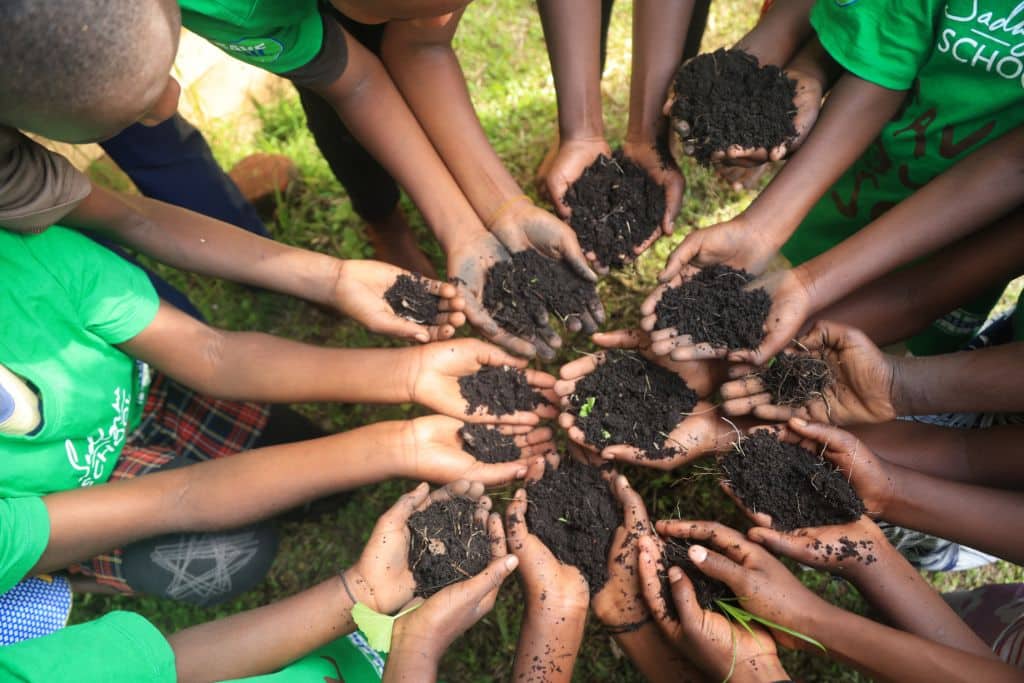
Soil degradation is a global scale disaster, but it can be turned around simply with a committed focus. It does not need any absolutely new technology or trillions of dollars. What it needs is a committed approach from the governments.
Talk About It
In a democracy, the most important thing is the people’s voice. So, people must use their voice. Bring awareness in your nation and in the rest of the world that the soil upon which we stand and walk is the basis of our life.
Say something about soil, at least for five to ten minutes a day. Take it to social media. Put a sticker on your car that says “Save Soil.” If you send a WhatsApp message, close it with “Save Soil.” If you speak to someone, say “Save Soil.” Write a letter to your prime minister, president, or your local representatives, and urge them to take action. Reach as many people as you can, because when people speak up, governments will make the necessary policy changes.
The greatest legacy we can leave for our children is an environment of rich soil and water. Only in preserving the quality of the soil, the quality of the planet and life will endure.
—
About the author: Yogi, Mystic and Visionary, Sadhguru is the Founder of Isha Foundation and Conscious Planet. Through Conscious Planet, he has initiated the Save Soil, Rally for Rivers and Cauvery Calling projects. These initiatives have been recognized globally as game-changers for establishing a blueprint for economic development that is ecologically sustainable and socially equitable.
This story is funded by readers like you
Our non-profit newsroom provides climate coverage free of charge and advertising. Your one-off or monthly donations play a crucial role in supporting our operations, expanding our reach, and maintaining our editorial independence.
About EO | Mission Statement | Impact & Reach | Write for us