
In a statement, the Ocean Observatories Initiative (OOI) encouraged scientists, researchers and educators to continue using its datasets in proposals, publications, and presentations. “Continued engagement demonstrates the scientific impact and wide-ranging applications enabled by the OOI and its data, underscoring its importance as a resource for the oceanographic community,” it said.
—
The Trump administration is dismantling a decade-old, deep-ocean observation network that scientists have used to track changes in the ocean and monitor marine heatwaves and coastal flooding.
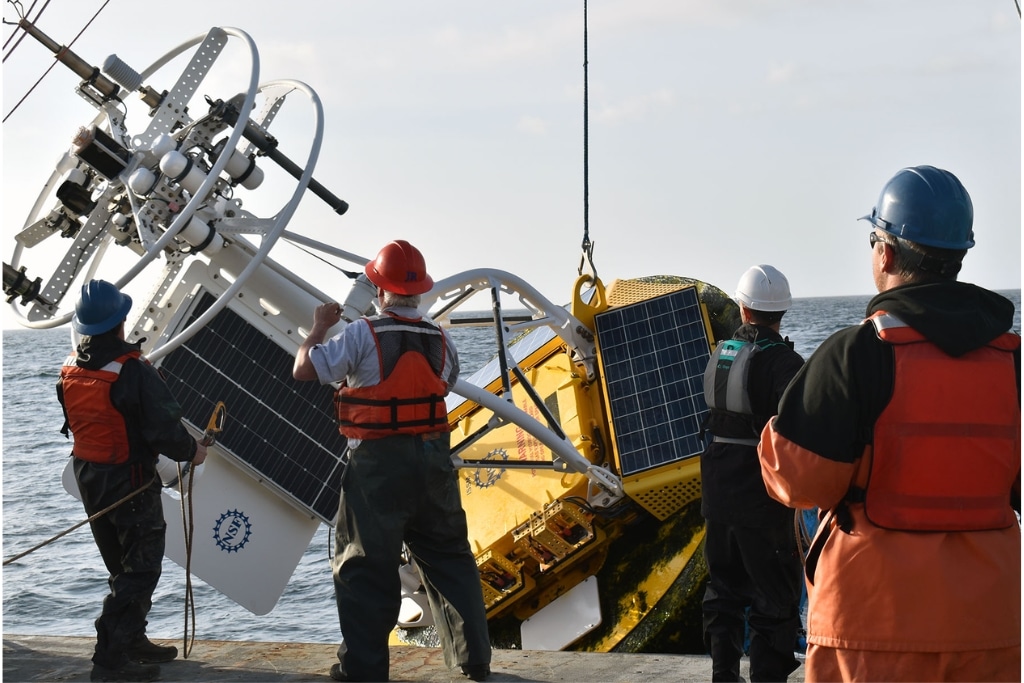
On May 21, the Ocean Observatories Initiative (OOI) announced that the recovery of over 900 in-water instruments at four of five operating arrays – the Irminger Sea, Station Papa, Endurance and Pioneer Arrays – has already begun and will take approximately 15 months. All previously collected data will remain accessible through the OOI Data Center while the Regional Cabled Array will continue operating, it added.

The network encouraged scientists, researchers and educators to continue using its datasets in proposals, publications, and presentations. “Continued engagement demonstrates the scientific impact and wide-ranging applications enabled by the OOI and its data, underscoring its importance as a resource for the oceanographic community,” it said.
In a statement issued a day later, Jim Edson, the initiative’s Principal Investigator, thanked those involved in making the project possible. “Over more than a decade, OOI has delivered the world’s most advanced continuously operating ocean observing systems, supporting science, engineering, education, and workforce development across the ocean sciences community. We are profoundly grateful for the extraordinary efforts of the scientists, engineers, operators, educators, students, and partners who made this facility possible and who continue to advance its legacy through the use of its data,” Edson said.
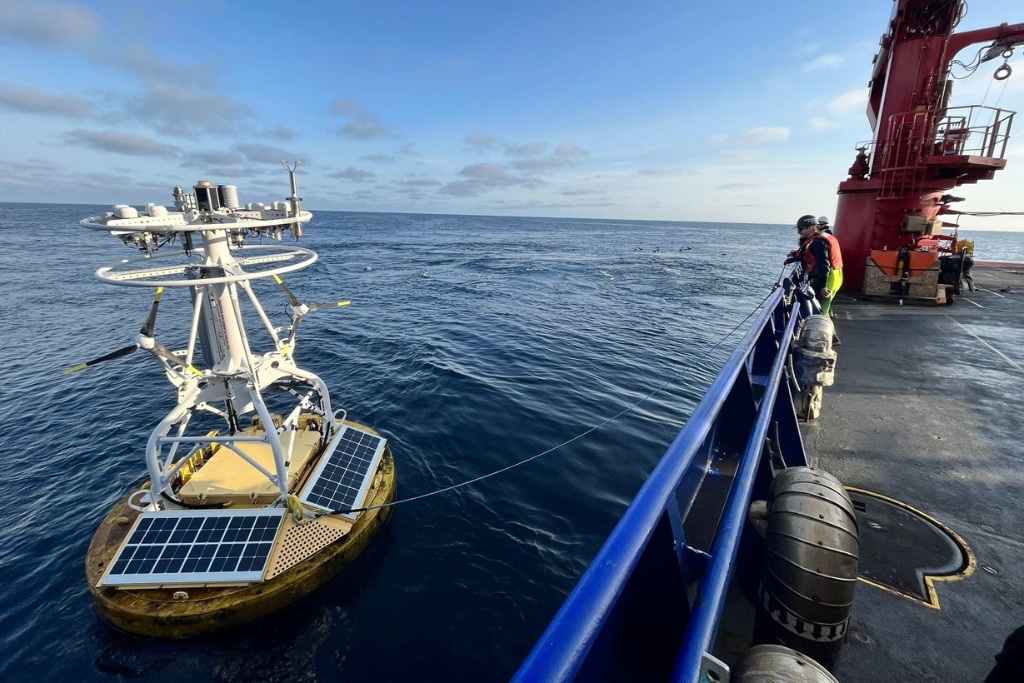
Funded by the National Science Foundation, the network was designed to collect physical, chemical, geological, and biological ocean data for up to 30 years. Scientists used the data collected by more than 900 instruments at five arrays in the Pacific and Atlantic Oceans to monitor and understand marine heatwaves and coastal flooding, assess ocean acidification, measure carbon sequestration and study deep-ocean ecosystems.
The data also helped monitor changes in the Atlantic Meridional Overturning Circulation, better known as AMOC, a key component in global climate regulation. The system is part of a global pattern called thermohaline circulation, or what scientists refer to as the “great ocean conveyor belt”, a constantly moving system of deep-ocean water driven by differences in temperature and salinity. This natural process of global ocean current circulation helps ensure the Earth’s oceans remain continually mixed and that heat and energy are evenly distributed.
Scientists have repeatedly warned that the AMOC is nearing a tipping point as the planet heats up. Without this constant flow of current circulation, regional temperatures would become more extreme – intense heat near the equator and freezing in the poles – making less land on Earth habitable.
Part of a Broader Pattern
The move marks another escalation in the Trump administration’s broader campaign to erase federal climate science and research.
Since taking office, President Trump has fired tens of thousands of federal workers from agencies such as the US Agency for International Development, the Environmental Protection Agency, the Forest Service, and the National Oceanic and Atmospheric Administration (NOAA). Many of these employees were engaged in vital climate-related research and conservation work, as well as providing essential services like weather forecasting and wildlife monitoring.
The National Science Foundation was also affected, losing an estimated 40% of its members to cuts by the administration between January 2025 and February 2026. In April, the administration fired all board members of the National Science Foundation without providing an explanation for the decision.
Trump is also seeking to dismantle key research centers, including the Colorado-headquartered National Center for Atmospheric Research, which provides critical data on air quality, tools to improve aircraft safety, wildfire mitigation strategies, and forecasts for droughts, extreme precipitation events, and tropical cyclones. Another target is NOAA’s Mauna Loa Observatory, which has been collecting essential data on climate change, atmospheric composition, and air quality since the 1950s.
The White House also terminated funding for the US Global Change Research Program, the federal body responsible for producing the nation’s most comprehensive climate reports on the impacts of rising global temperatures. It shut down climate.gov, NOAA’s primary public-facing website for climate science, and axed NOAA’s Billion Dollar Weather and Climate Disaster dataset, which provided vital information for first responders, the insurance industry and researchers to plan recovery efforts and assess weather-related risks.
The cuts extended to international climate efforts as well. In February, the administration pulled the US out of global discussions regarding an upcoming global climate change assessment carried out by the Intergovernmental Panel on Climate Change (IPCC). Trump also ordered federal scientists at NOAA and the US Global Change Research Program to cease all work related to IPCC climate assessments, effectively ending US involvement in one of the world’s most critical climate evaluations.
Craig McLean, NOAA’s acting chief scientist during the first Trump term, said the with the move, the adminitration is pushing the US “back yet again into a rear seat in global scientific leadership.”
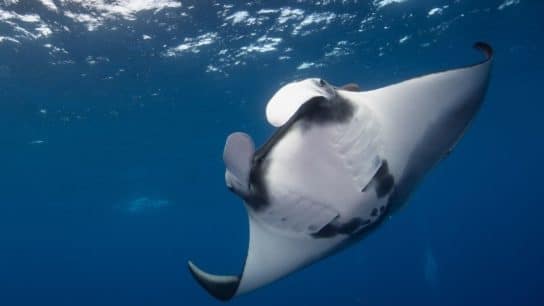
Featured image: Andrew Reed/WHOI via Ocean Observatories Initiative.
This story is funded by readers like you
Our non-profit newsroom provides climate coverage free of charge and advertising. Your one-off or monthly donations play a crucial role in supporting our operations, expanding our reach, and maintaining our editorial independence.
About EO | Mission Statement | Impact & Reach | Write for us