After substantial progress under President Lula’s third administration, the potential return of a right-wing government in Brazil could mean an end to key protections for the Amazon rainforest – the world’s largest land-based carbon sink and biodiversity hotspot.
—
In the first round of Brazil’s presidential election on October 4, incumbent President Luiz Inácio Lula da Silva (nicknamed Lula) and right-wing Senator Flávio Bolsonaro gained the highest number of votes, requiring a runoff election that will take place on October 25. The results will determine the fate of the Amazon.
Spanning 6.9 million square kilometers and covering around 40% of the South American continent, the Amazon rainforest boasts the highest level of biodiversity on Earth. It is home to 300 Indigenous groups and serves as a source for a unique range of pharmaceutical innovations.
But pressures from rising temperatures and encroachment by industrial agriculture are threatening its very existence. “We are close to achieving the tipping point,” forest governance advisor Artur Monteiro, founder of advisory platform Makaxera, told Earth.Org. By the time this critical threshold is reached, it could trigger the rainforest’s collapse “within 10 years.”
“The forest could get drier and drier, and transform into a savannah,” Monteiro explained.
The impact of rising temperatures and accompanying wildfires risks weakening global climate regulation, altering regional climates, and accelerating biodiversity loss, research shows. Social impacts may include displacement, health risks, and the erosion of Indigenous culture.
Politics Have Shaped the Amazon Rainforest for Decades
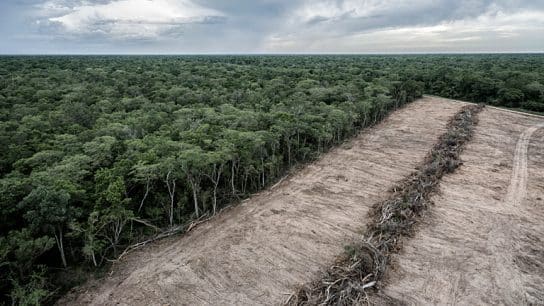
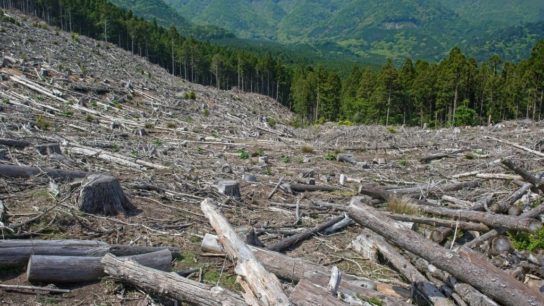
Meanwhile, Amazon deforestation has continued throughout the past several decades, and nearly a fifth of the original area has already been lost. Yet during Lula’s first two terms in office, between 2003 and 2010, deforestation rates dropped significantly, followed by further declines upon his return to office in 2023. Meanwhile, Flávio Bolsonaro is expected to continue the right-wing policies of his father Jair, who was Brazil’s president from 2019 to 2023 and is currently serving a 27-year sentence for plotting a coup after losing the last election to Lula in 2022.

His administration saw an all-out assault on environmental and Indigenous protections in favor of industrial agriculture and livestock interests under the guidance of then-environment minister Ricardo Salles. His regime saw the rate of Amazon deforestation reach 13,000 square kilometers, the highest in a decade, along with a dramatic rise in assassinations of Indigenous leaders and record illegal Indigenous land invasions.
More on the topic: At Least 124 Land and Environmental Defenders Killed in 2025, Mostly in Latin America: Report
According to Monteiro, although Flávio Bolsonaro’s policies depart from those of his father in some ways, his administration would essentially signal a return to his father’s doctrine. “There is a huge continuity. The institutional instruments that protect that forest are going to be dismantled,” he said.
These institutions include enforcement mechanisms that have protected the Amazon in the past. The previous Bolsonaro administration slashed the number of inspectors at IBAMA – the “forest police” that enforces environmental laws – by more than half. Adding to that, 98% of fines levied against violators were left unpaid.
Weaponizing the Law
Legal mechanisms that currently protect the Amazon are also expected to weaken under a Flávio Bolsonaro regime. While around half of the Amazon is protected through reserves and Indigenous land, another fifth is already deforested, and designated as agricultural land. The remaining 30% is neither protected nor degraded. This leaves unprotected areas vulnerable to exploitation and subsequent deforestation if commercial agriculture is legalized there. “Flávio says he will end illegal deforestation by 2029, but the question is what will be considered ‘legal’,” Monteiro said.

GRID-Arendal/Flickr.
Another area of concern is the so-called “Marco Temporal” – a legal doctrine whereby Brazil would only recognize Indigenous lands if the Indigenous community controlled that land in 1988, when Brazil’s constitution was promulgated. However, because this time period coincided with the end of the previous military dictatorship, many Indigenous communities had already been pushed out by then. The doctrine, first proposed in 2012, is now up for vote as a constitutional amendment, and has already been approved by the lower house of Brazil’s Congress. While a new Lula administration would not hold veto power over this congressional decision, the next president is expected to fill four of the eleven Supreme Court seats, affecting anticipated future legal challenges to the amendment.
However, according to Felix Finkbeiner, founder of global non-profit Plant for the Planet, “There is a certain institutional strength and impact.” He told Earth.Org, “Some federal institutions came back to life quickly under the Lula administration. There was meaningful degradation, but a surprising amount of resilience.”
Even if Lula wins the runoffs, efforts to claw back deforested areas or even to lower the rate of deforestation may still be hampered. The October 4 election also flipped a large number of seats in Brazil’s independent Congress, as well as state governors, to the right. Two months ago, Brazil’s Supreme Court upheld laws by conservative state governments that penalized soy traders who abided by the Soy Moratorium. The 2006 agreement banned the purchase of soy grown on land in the Amazon cleared after July 2008, and is believed to have prevented at least 18,000 square kilometers of deforestation.
Other Countries Can Determine the Amazon’s Fate
Given these developments, international mechanisms will gain more importance within Brazil in the next several years.
Among them is the European Union’s 2023 Deforestation Regulation, which will come into effect at the end of this year following a two-year delay because of pressure from some EU and non-EU countries, global business partners and industry. It requires companies that import seven specific commodities into the EU (including soy, cattle, palm oil, and others) to ensure that they were grown on farms that were not deforested after 2020.

Meanwhile, pledges to the Tropical Forest Fund, a global mechanism launched at last year’s COP30 in Brazil that provides financial incentives to nations to protect their forests, now stand at just $7.3 billion, far less than the $10 billion required by the end of the year for it to become operational. “It has never happened that such a massive financial vehicle has been funded so rapidly,” said Finkbeiner, who worries, however, that without Brazilian leadership, other countries might be slow to make pledges.
“The TFFF provides financial incentives for the government to protect the forest, even when they don’t intrinsically care about conservation. I hope this message is understood by the founding governments,” he added.
Featured image: UN Climate Change/Zô Guimarães via Flickr.
This story is funded by readers like you
Our non-profit newsroom provides climate coverage free of charge and advertising. Your one-off or monthly donations play a crucial role in supporting our operations, expanding our reach, and maintaining our editorial independence.
About EO | Mission Statement | Impact & Reach | Write for us