


Listen to the Earth Radio podcast wherever you get your podcasts. New episodes every week.
—
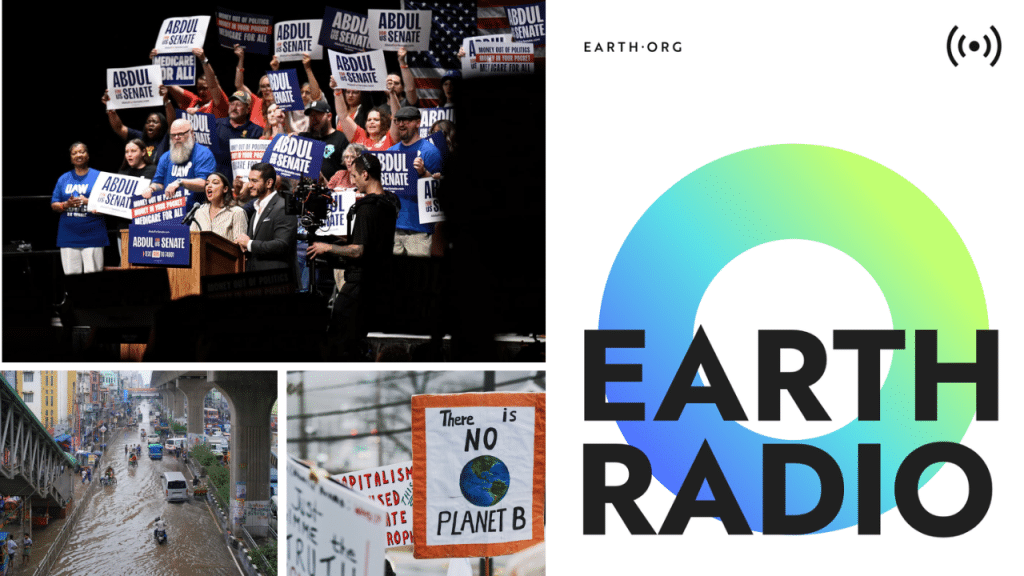
This week on Earth Radio, what do Tuesday’s sweeping Democratic victories mean for the future of US climate policy after a year of rollbacks by the Trump administration? Plus, ahead of next week’s COP31 summit in Turkey, we break down a new UN report revealing that rich nations are falling drastically short of the $305 billion needed each year to help developing countries adapt.
Transcript
This week on Earth Radio, wealthy nations are falling behind on their promise to fund climate adaptation in poorer nations. And most European Union citizens support moving towards green energy. I’m your host Rebekah Hendricks. And first, we’re talking about the blue wave that swept the United States as Democrats picked up major midterm election wins.
We’re going to be diving into what that might mean for climate policy and also taking a look back at how Trump’s second administration has impacted climate legislation and research. After the midterms, Democrats have taken control of both the House and the Senate and flipped many voting districts that have been considered to be deeply Republican for years. We’re already starting to see the impact of this blue wave as investors have pulled their money from large tech companies centering around AI.
In the US, this caused the largest drop in the market since Trump introduced his far-reaching slew of tariffs in April of 2025. And this didn’t just happen in the US. Global markets were rocked as investors anticipate more regulation being placed on AI technology. Large AI data centers are popping up all over the country and they require a lot of water to operate and they have huge energy demands that rely on fossil fuels.
Putting limits on data centers and AI companies could potentially have a major impact on emissions. In the last two years, the Trump administration has continually attacked climate legislation and progress.
The administration reversed the endangerment finding, defunded millions of dollars in climate research, conducted mass layoffs in the Environmental Protection Agency and the National Oceanic and Atmospheric Administration, slashed renewable projects, and eliminated many of the limits to greenhouse gas emissions for power plants. With Democrats in control of the House and Senate, Trump may face larger challenges to his pro-fossil fuels agenda.
But it is important to note that climate change was not a big topic on the campaign trail for Democrats. However, that doesn’t mean that it definitely won’t be a priority for Democrats in the House and Senate. It’s important to keep your eye out on how your representatives are taking action when it comes to climate legislation and reaching out to the office of your representatives in the House and Senate if you feel that they’re not doing enough or representing your values. Wealthy nations are falling short on their promises to help poorer countries build climate adaptations.
The 2026 United Nations Adaptation Gap Report shows that rich countries are falling far behind on the $305 billion a year necessary to help developing countries prepare for the impacts of climate change. Many developing nations around the world lack air conditioning to protect against heatstroke and heat-related death and are not prepared to face major climate disasters like hurricanes, wildfires, and droughts.
Rich nations are overwhelmingly responsible for global warming, but it’s often the poor nations that suffer the most dire consequences. This will likely be a major conversation at COP31 as the UN meets to discuss strategies to address climate change. Keep your eye out for coverage of COP31 beginning in just a few days on November 9th in Turkey.
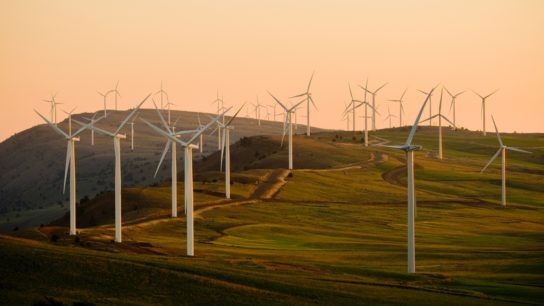
Three in every four European Union citizens believe in the urgent need to move away from fossil fuels and embrace green energy, according to a survey done by the European Investment Bank. The US-Israeli war on Iran has stoked energy anxiety and not just from a climate change standpoint, but an economic one. Oil prices have soared amidst conflict and many people believe that green energy provides more security and lower prices.
87% of respondents said that they want to see a shift to low-carbon energy be a priority.
Earth.Org is a non-profit environmental news organization funded by readers and listeners. For more information, visit our website and subscribe to our new Substack newsletters.
This story is funded by readers like you
Our non-profit newsroom provides climate coverage free of charge and advertising. Your one-off or monthly donations play a crucial role in supporting our operations, expanding our reach, and maintaining our editorial independence.
About EO | Mission Statement | Impact & Reach | Write for us