


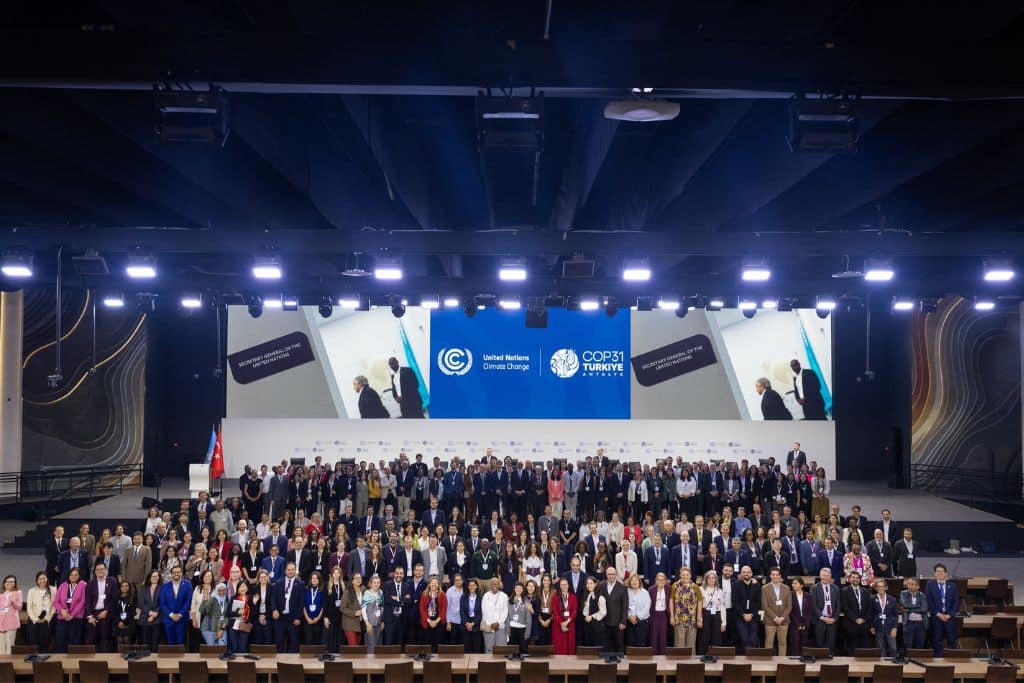
The 31st United Nations climate change conference, COP31, kicked off on Monday in Antalya, Turkey. Some 92,000 people are attending, making it the largest COP in history. Building on previous negotiations, the UN climate summit is expected to seal deals on climate finance for developing countries, electrification and decarbonization. Here is a recap of the main events and announcements from Week 1.
—
COP30 officially kicked off on Monday. With 92,934 delegates registered, COP31 is provisionally the largest climate COP in history. The largest group is made up of delegates representing parties – that is nation-states and the European Union, which have ratified the UN climate convention.
Turkey, unsurprisingly, sent the biggest delegations made up of 2,950 people, according to Carbon Brief. It is followed by Brazil (1,994 people), Nigeria (1,506), China (1,021) and Indonesia (978). For the second time, the US has no official representation, a move in line with the Trump administration’s anti-climate stance. Aside from President Donald Trump, other world leaders – including those of Germany, France, Italy, Denmark, Sweden, Ireland, the Netherlands, Canada and Japan – are also set to skip the summit. British Prime Minister Andy Burnham is the only leader from a G7 country scheduled to address the summit.
“Their absence will not stop the negotiations,” said Chiara Martinelli, Director of Climate Action Network Europe, “but it puts even more responsibility on the ministers and negotiators who are here to show that Europe and other developed countries are serious about delivery.”
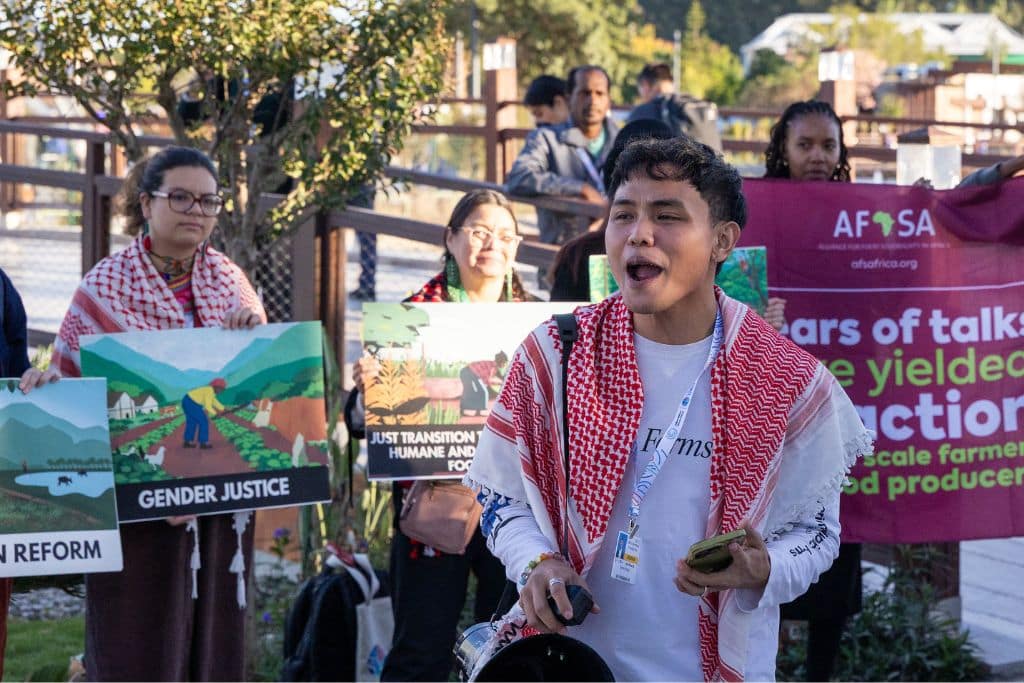
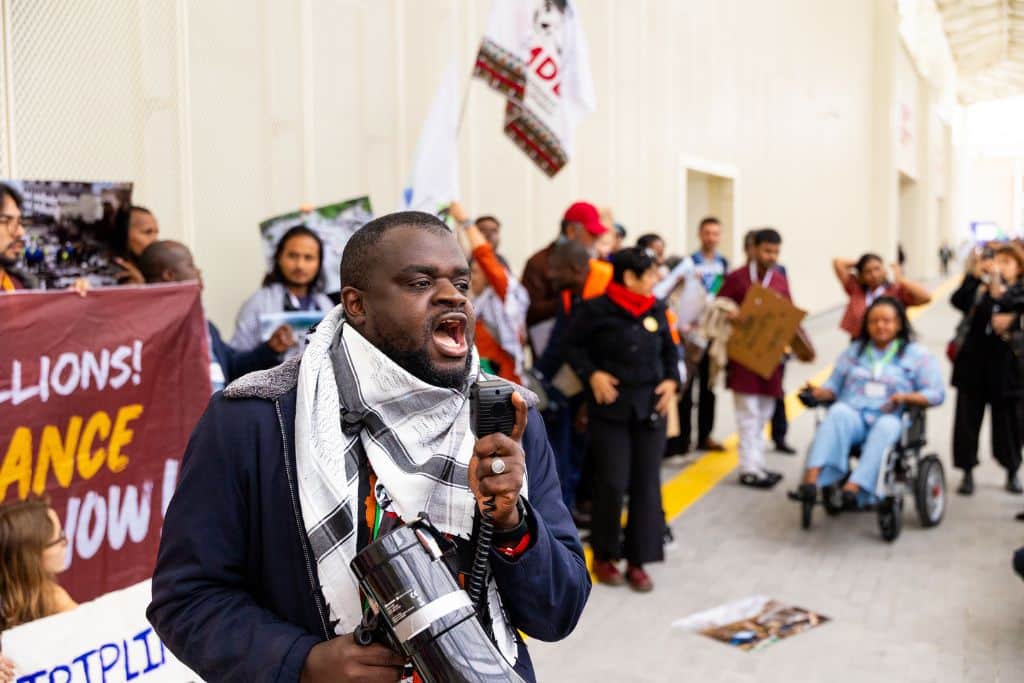
Below is a recap of the main announcements, reports, and protests from COP30 Week 1. If you want to learn more about the UN climate negotiations process, check out this guide on the history of the COP and this glossary with the key terms you will most definitely come across in the coming days.
Main negotiations
On Friday, the UN circulate a “summary of reflections expressed by Parties,” an informal note outlining a wide range of views that is meant to inspire next week’s negotiations of a final deal, which almost 190 nations at the talk need to agree to. A first draft of the final agreement is expected as early as Monday.
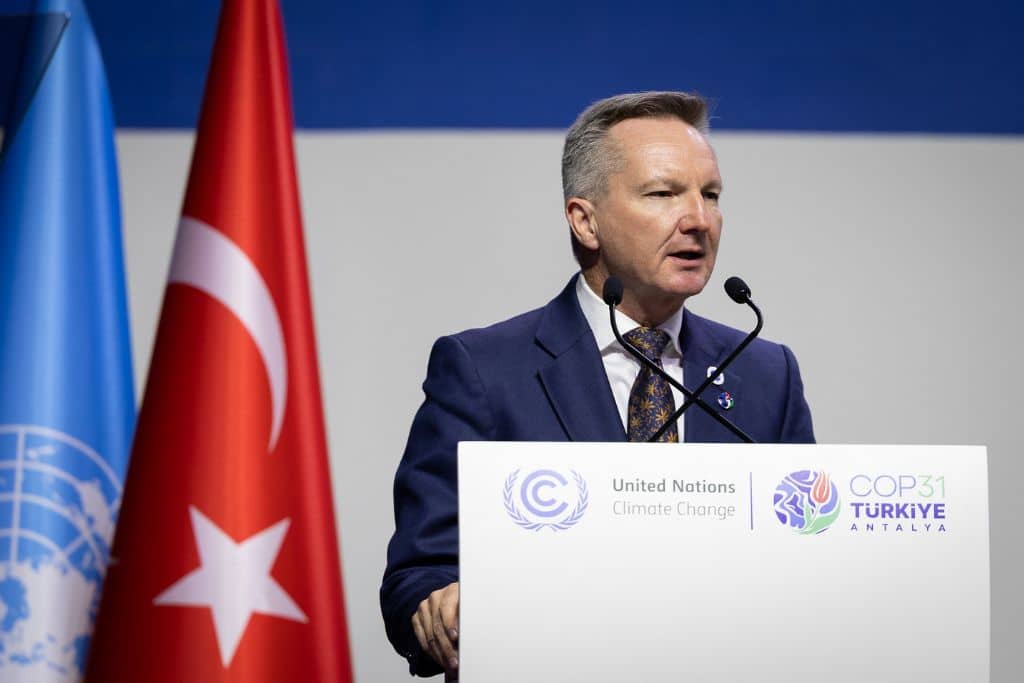
Chris Bowen, the COP31 President of Negotiations and Australia’s Climate Change and Energy Minister noted that negotiations are still in the early stage and sought to reassure parties that “nothing included [in the summary of reflections document] is prejudged, locked in, or will necessarily be included in the final decision.”
Here are some key points from the document:
- Acknowledge historic responsibilities for emissions, consideration of how we got here.
- Insufficient action and finance from developed countries while need for developing nations to receive more assistance to adapt to climate change increases.
- Developed countries should take the lead in submitting national climate plans, known as Nationally Determined Contributions, that are aligned with a 1.5C-warming pathway, including achieving net-zero by an earlier timeframe than developing countries.
- Calls to ramp up adaptation finance and contributions to the Least Developed Countries Fund to help vulnerable nations adapt to climate change.
- Increase electrification globally to 35% by 2035.
- Addressing short lived climate pollutants such as methane.
- Transition away from fossil fuels in energy systems, phase out of inefficient fossil fuel subsidies.
- Welcome/recognize ICJ Advisory Opinion on climate change.
- Request all IPCC AR7 working group reports to be completed in time for GST2
Transitioning Away From Fossil Fuels
Last year’s COP30 in Brazil failed to deliver real progress on fossil fuels, despite an unprecedented coalition of more than 80 countries led by Colombia and more than 100 organizations explicitly demanding a clear call to phase them out. It marked yet another major setback in negotiations that just two years earlier had concluded with the first-ever call to “transition away” from fossil fuels being included in the final agreement, albeit with no deadline or plan for doing so.
Under pressure from major petrostates, including Saudi Arabia and Russia, COP30 President André Corrêa do Lago ultimately announced a compromise: a voluntary roadmap that would proceed outside the formal UN process. This week, the COP30 Presidency presented its Roadmap for Transitioning Away from Fossil Fuels in Energy Systems to Parties and stakeholders. The document, developed through broad international consultations, is a voluntary, non-prescriptive contribution from the COP30 Presidency and it is not subject to negotiation.
An open call on the UN Climate Convention platform drew 267 contributions, and the Roadmap concludes that transitioning away from fossil fuels is urgent, inevitable and yet possible, and that every country can begin taking action, regardless of its starting point.
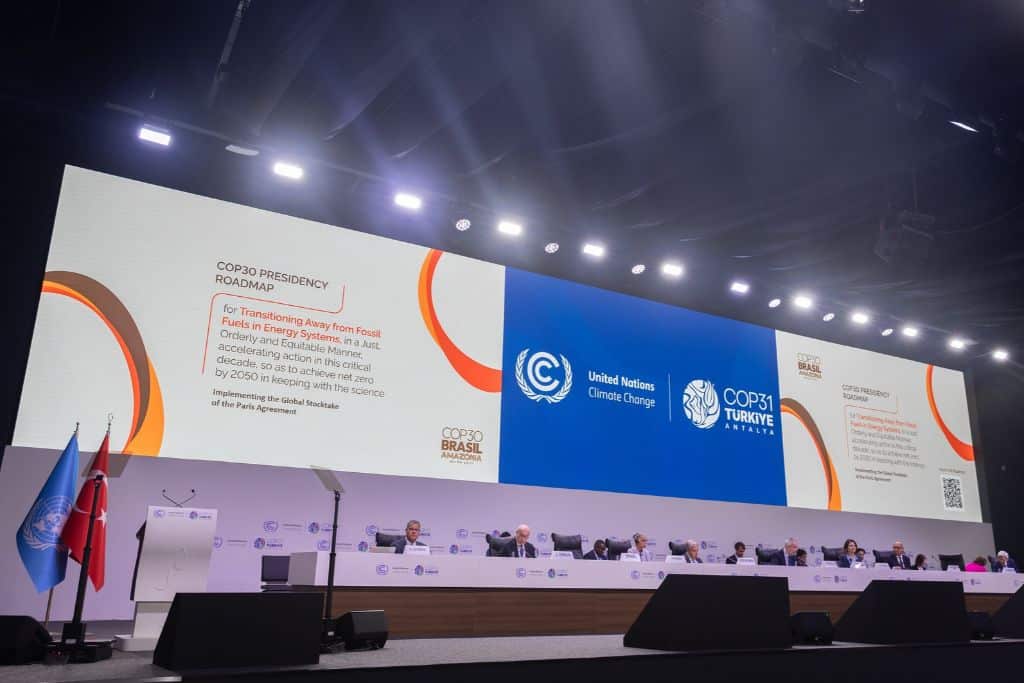
At the center of the Roadmap is the Belém Readiness Approach, which examines countries’ exposure to fossil fuels and their capacity to manage the transition across three complementary pillars: energy demand, energy supply and the broader economy.
The Roadmap also proposes three ways to advance implementation:
- Immediate assessment: Encouraging countries, local governments, and sectors to start acting now by using the Belém Readiness Approach to evaluate their circumstances and set priorities.
- Coordinated action: Launching a collective agenda to speed up joint efforts through 2033.
- Ongoing cooperation: Maintaining international dialogue at future COPs to track progress and solve shared challenges.
Read our newsletter: As the world burns, will COP31 finally ditch fossil fuels?
Finance
Methane
At the COP31 Leaders’ Summit, global leaders and philanthropic partners announced over US$480 million in new funding to accelerate action on methane and other non-CO2 greenhouse gases (super pollutants) across the energy, agriculture, and waste sectors. The contributions build on over $530 million delivered since the launch of the Global Methane Pledge in September 2021. The pledge unites 159 participating countries and the European Commission with the goal of reducing global human-caused methane emissions by at least 30% below 2020 levels by 2030.
Co-hosted by Brazil, China, and the United Kingdom, the summit emphasized the economic advantages of tackling these emissions, noting that the majority of fossil fuel methane reductions can be achieved using existing technologies at little to no net cost. Additionally, Australia endorsed the international statement on reducing fossil fuel methane, Germany launched a global pledge targeting potent sulfur hexafluoride emissions, and institutions like the World Bank highlighted major agricultural productivity initiatives that simultaneously cut emissions.
To help developing nations translate these climate commitments into measurable results, an additional US$25 million was announced for the Super Pollutant Country Action Accelerator, expanding its reach to seven new countries: Ivory Coast, Ethiopia, Fiji, Morocco, Pakistan, the Philippines, and Uzbekistan. This brings the accelerator’s total funding to US$50 million as part of a broader push to support 30 countries by 2030 with dedicated technical assistance and investment-ready projects.
More on the topic: How Do We Reduce Methane Emissions?
Pacific Islands
The Asian Development Bank (ADB) and the Green Climate Fund (GCF), alongside the governments of the Cook Islands and Palau, launched the Regional Programmatic Approach for Climate Action (RPACA), an initiative that aims to mobilize more than $1 billion in financing to support 14 Pacific island economies. Backed by $250 million in GCF funding, the initiative will strengthen critical infrastructure against rising seas and extreme weather, benefiting an estimated 3.7 million people.
“Across the Pacific, rising seas and increasingly destructive storms threaten homes, livelihoods, and the infrastructure that people depend on,” said ADB President Masato Kanda. “For island communities, this is a matter of survival. This investment, which ADB has taken leadership in developing, will help them prepare for the dangers ahead, protect their people, and build a more secure future for their children.”
Windfall tax
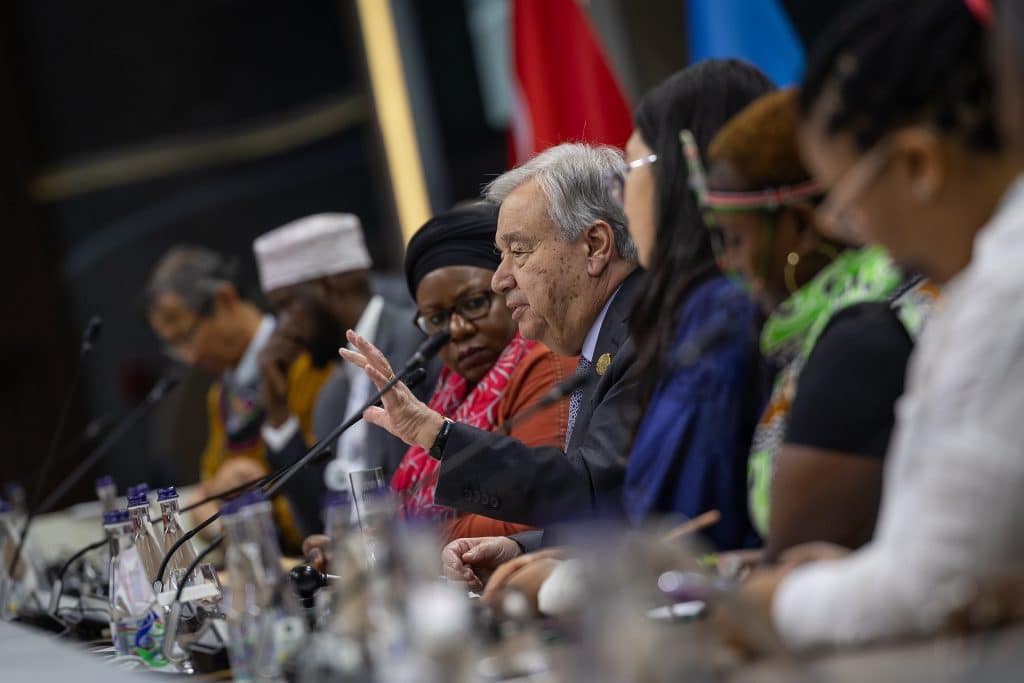
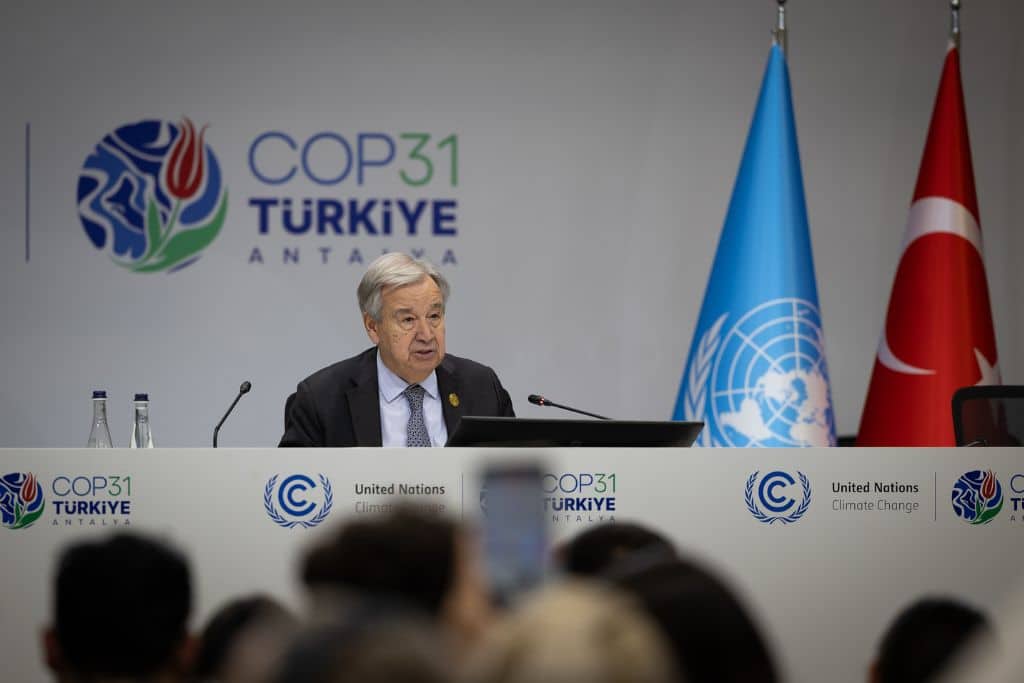
Speaking at the COP31 climate summit in Antalya, Turkey, UN Secretary-General António Guterres urged governments to impose windfall taxes on oil and gas companies to help pay for climate action. He criticized the fossil fuel industry’s surge in wartime earnings, noting that just nine major firms recently netted $95 billion in a single quarter, as ethically indefensible given that their operations drive environmental destruction and global warming.
Guterres emphasized that countries already possess the legal frameworks needed to levy these extra taxes and redirect the revenue toward communities suffering from climate disasters, framing the lack of action purely as an issue of political will.
“There’s something fundamentally wrong,” Guterres said Thursday in an interview with Bloomberg Television at the annual UN climate summit in Antalya, Turkey. “They are making these profits with an activity that is causing severe damage to the global environment and severe damage in the acceleration of climate change.”
“Those taxes should be used to alleviate the situation of those that are suffering,” Guterres said, calling it “a political decision, … not a technical problem.”
More on the topic: What if we taxed Big Oil to ease Europe’s cost-of-living crisis?
UN Report
As it does every year, the UN timed the release of its annual “State of the Climate” report to coincide with the start of the talks. It found that 2026 continued the protracted streak of extraordinary global heat, with several months seeing record-breaking temperatures. This included October, which saw an average global surface air temperature 1.75C above the pre-industrial level and, according to the latest bulletin by the European Union’s Copernicus program, marked the third consecutive month to exceed 1.5C.
Sea level and ocean heat are also at record high levels as El Niño impacts intensify.
Photos

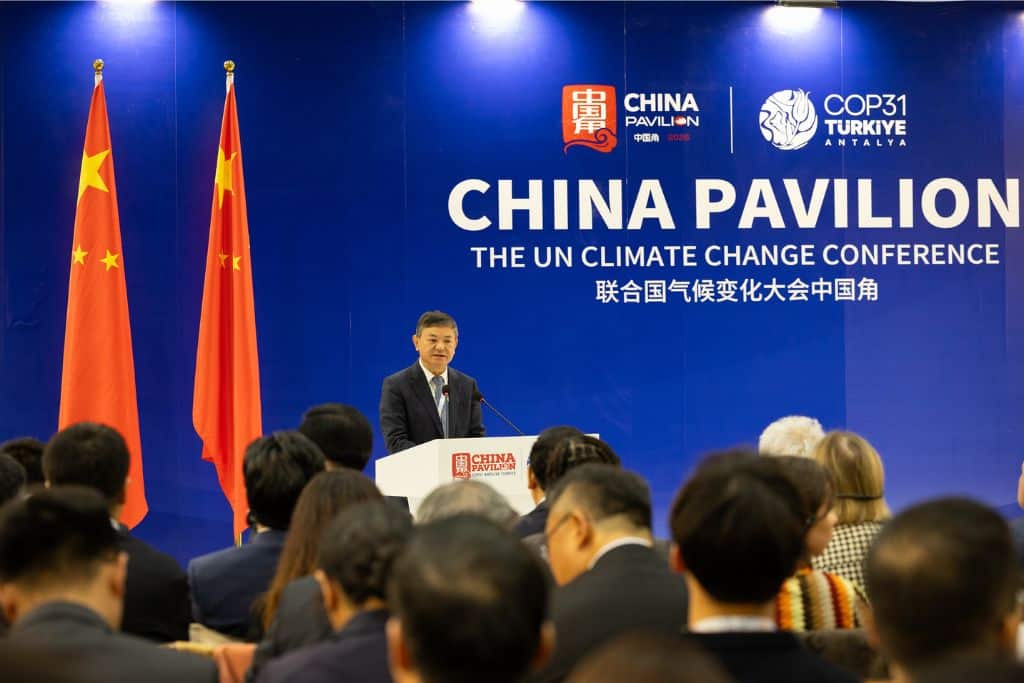
Featured image: UN Climate Change/Kiara Worth via Flickr.