

“Every route where a plane is cheaper than a train is a political failure,” said Herwig Schuster, transport campaigner, Greenpeace Central and Eastern Europe. Flights emit, on average, about five times more CO2 per passenger kilometer than trains.
—
Europe’s tax system disproportionately favors carbon-intensive flights over less carbon-intensive railway, according to a new study that compared ticket prices on 142 routes across 31 European countries.
Published Thursday, the study by environmental group Greenpeace found that 61% of the 109 cross-border journeys were cheaper by plane than by train. France ranked as the most expensive country for cross-border rail travel, with 95% of routes more expensive by train on a majority of the days tested. It was followed by Spain at 92%, the UK at 90% and Italy at 88%.
There are, however, exceptions to the rule. In Baltic countries, Greenpeace found that train was always cheaper than plane. In Poland and Slovenia, cross-border routes were predominantly cheaper by train on 89% and 80% of routes, respectively.
The study also found that 70% of the 33 domestic routes it analyzed are cheaper by train than by plane.
Aviation is one of the most carbon-intensive industries on Earth, accounting for 2.5% of global carbon dioxide (CO2) emissions. This number is only destined to increase as air passengers are expected to reach 17.7 billion by 2043 and 22.3 billion by 2053.
The carbon intensity of flights—that is the grams of CO2 emitted per passenger kilometer, varies depending on flight distance, with long-haul flights generally less carbon intensive than short-haul flights. However, flights are always significantly more polluting than railway, emitting, on average, about five times more CO2 per passenger kilometer than trains.
The study also touched on the “overly complicated” rail ticketing system, finding that on 44 out of the 109 cross-border routes analyzed, it was not – or not always – possible for passengers to acquire tickets for the entire journey in a single purchase. According to Greenpeace, train ticket prices tend to be higher when multiple operators are involved.
‘Political Failure’
European governments subsidize the airline industry with billions of euros annually, mainly by waiving kerosene and value-added tax (VAT) on international tickets. Other forms of transport, including rail, are subject to VAT as well as energy taxes and high track access charges in many countries.
According to Greenpeace, this tax system is a significant enabler of many airlines’ low-cost model, offering tickets for as low as €12.99 (US$15.09).
But there are other ways in which low-cost airlines keep their prices low, including keeping wages and staff numbers low, registering in low-tax countries like Malta and Ireland, and charging for most additional services, from bag check-in to on-board food.
“We can’t keep rewarding the most polluting form of transport. Europe must make trains the cheapest and easiest option — not the last resort,” said Herwig Schuster, transport campaigner at Greenpeace Central and Eastern Europe. “Every route where a plane is cheaper than a train is a political failure.”
In 2021, Austria pioneered Europe’s first “climate ticket” to promote low-carbon mobility, a model later copied by countries including Germany, Hungary and Slovenia followed suit. The unified public transport pass allows for year-round, flat-rate trave, on regional and national public transport services, including trains and buses. Greenpeace urged other countries to follow suit and called for a Europe-wide public transport ticket based on the national climate ticket model.
The environmental group also called for an end to all tax exemptions and subsidies for airports and airlines, as well as a reduction or suspension of track access charges for trains.
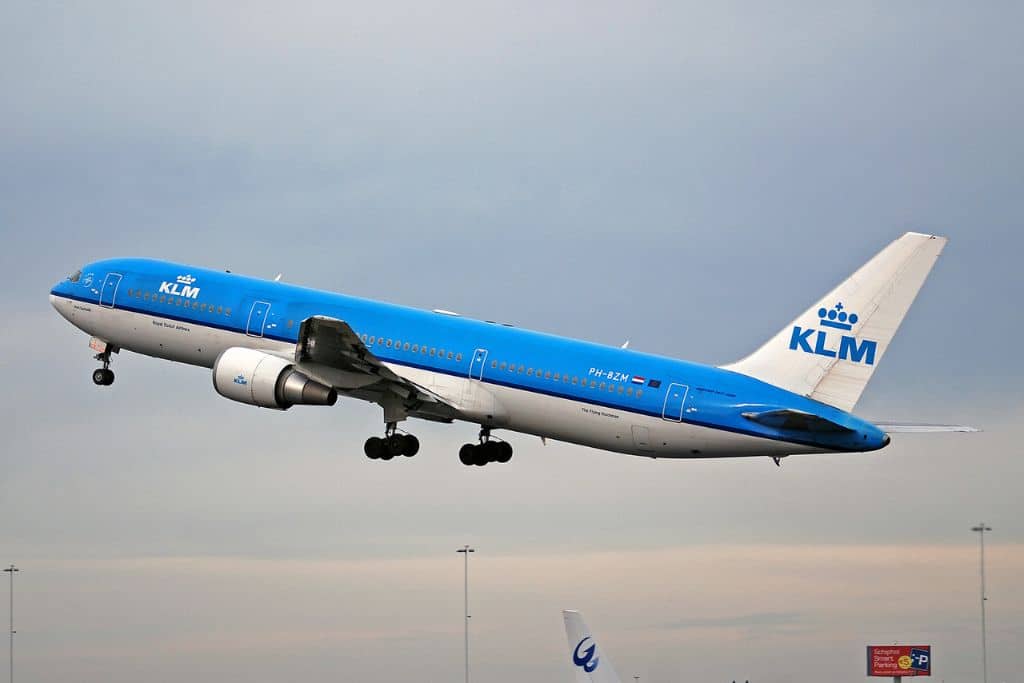
Featured image: Wikimedia Commons.
You might also like: Why It Is Time to End Aviation Subsidies
This story is funded by readers like you
Our non-profit newsroom provides climate coverage free of charge and advertising. Your one-off or monthly donations play a crucial role in supporting our operations, expanding our reach, and maintaining our editorial independence.
About EO | Mission Statement | Impact & Reach | Write for us