


The story of pine trees is a great example of how a single ecosystem can be linked, across the world, to generations of culture and history.
—
Pine forests are an inspiring species, entangled in ecology, history, and culture, and even politics. But before we get to that, let us define what we mean by pine trees.
In botany, pine trees are trees in the genus Pinus only. These are true pines, all part of the pine family (Pinaceae). They include species such as the famous Scots Pine (Pinus sylvestris), the Eastern white pine (Pinus strobus), the Loblolly pine (Pinus taeda) or the Monterey pine (Pinus radiata). The Latin term is assumed to come from Indo-European roots meaning pīt- or peih- meaning “resin” or “sap”.
But in our common language, we typically call pines all evergreen coniferous trees. We forget that these trees include a multitude of species, from Firs (Abies) and Spruces (Picea) to Cedars (Cedrus) and Hemlocks (Tsuga).
Pines, Nature’s Old and Resilient Pioneers
Pine forests are among the most widespread on Earth. The origin of such spread lies within their dispersal mechanisms – how seeds get dispersed for the species to reproduce. Pine’s winged seeds can travel long distances in the wind, an effective mechanism to spread, disperse, and colonize the land. Birds also play an important role in their dispersal by breaking their cones open, notably for the whitebark pine. Some other species, like lodgepole and jack pines (Pinus concorta and Pinus banksiana), have so-called “serotinous cones”, which only open after a fire, making pines a great post-fire colonizer, able to take over the land quickly after huge wildfires.
Although pines are often among the first trees to establish after fire, they are not “pioneer species” in the strict ecological sense. True pioneer species, such as lichens, mosses, grasses, and fast-growing herbaceous plants, are typically the first to colonize bare or severely disturbed ground, initiating soil development and stabilizing the substrate. Once these pioneers create basic organic matter and improve soil structure, early-successional pines can take hold.
Through their roots, pines stabilize soil further; through fallen needles, they add organic matter; and over time they create shade and shelter that allow additional plant and animal species to thrive.
Pine forest occurs naturally in the Northern Hemisphere, in places such as Northern Europe, Russia, Canada, or western US, but they have arrived as far as New Zealand, Chile and Australia, where humans have contributed to their creation, mainly for the timber industry. Since pine trees grow fast, and have large and straight trunks, they are a valuable softwood for construction, paper pulp, and furniture. By being planted where they do not naturally belong, however, they can become invasive, outcompeting native species.
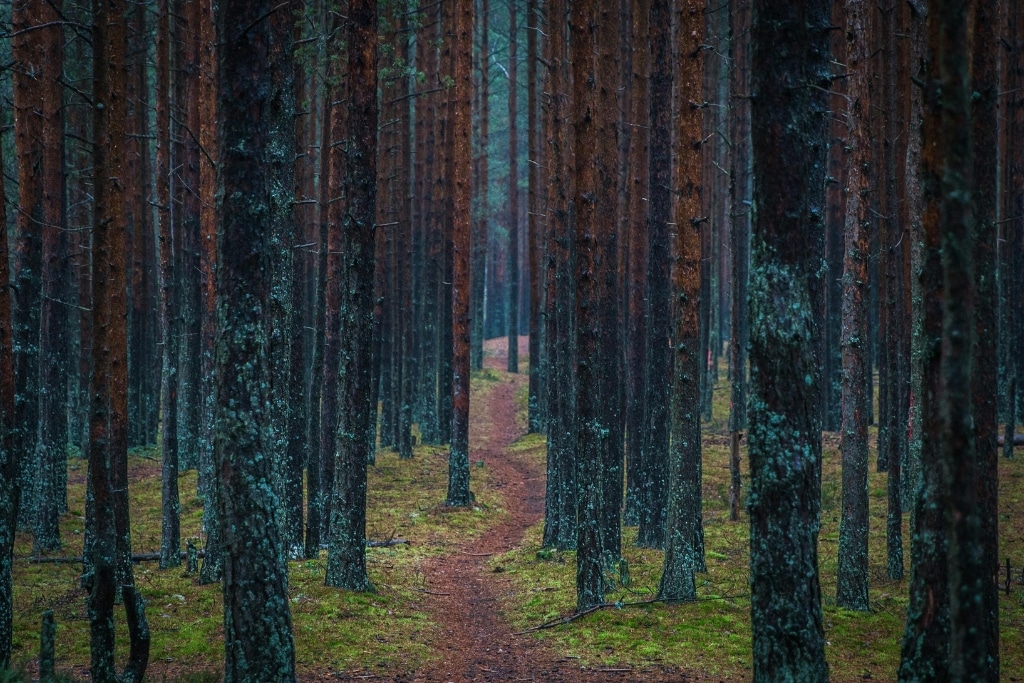
Pines are highly adaptable to diverse environmental conditions, making them exceptionally versatile. As a result, they can be found across various biomes globally, from the Rocky Mountains, the Alps, and the Himalayas, to inland regions like the massive boreal forests of Canada, and even in coastal areas where they often dominate nutrient-poor substrates, such as sandy soil.
The extreme versatility of pine trees also allows them to thrive in vastly different climates. Their range extends from semi-arid deserts to rainforests, from sea level up to 4,000 meters in elevation, and across Earth’s coldest to its hottest continental environments.
Ancient Giants
Pines are an evergreen species, they keep their foliage all year round, rather than losing it seasonally. They are also among the tallest trees on Earth. Some species can reach heights of up to 80 meters, forming prominent features in the landscapes they occupy. Many pines also have remarkable lifespans, having persisted through multiple human civilizations, surviving shifts in climate, ecosystems, and cultures over millennia.
While most species commonly live for several centuries, certain bristlecone pines are nearly 4,800 years old.
Pines Through History and Culture
Pines are part of our culture, and have shaped cultures for centuries.
In Latin America, pine needles are woven into baskets. In Chinese traditional medicine, pine resin is used to soothe burns, wounds and skin rashes, while its needles are used to make ink sticks. In Chinese art and literature, pine is a particular motif, which sometimes combines painting and poetry in the same artwork. Pine represents longevity as well as steadfastness.
Pine appears often in mythology as well. For instance, the Greek god of wine, Dionysus (also called Bacchus), was associated with pine as a symbol of fertility.

Pine trees are part of many national identities, too. In Scotland, the Scots pine has been recognized as the national tree in 2014, being the signature species of the Caledonian Forest. In Scottish folklore, pine trees symbolize resilience and renewal, due to their survival abilities where few other trees can. In Gaelic, Scots pine’s name is ‘giuthas’, appearing in many places’ names such as Glen Giuthas, Invergiuthas (later anglicised to Glen Gushie or Inverness-shire woods).
The Pine also features in traditional Scottish clan’s symbols, such as Clan MacGregor, where pine signifies endurance and homeland. After the Jacobite uprising of 1745 failed, the British government outlawed Highland dress, including clan tartans, as a way to suppress clan identity. In this context, displaying, or attempting to preserve, clan symbols became a quiet form of resistance.
In North America ecosystems, pine forests support species such as the red cockaded woodpecker, which is endangered, or gopher tortoise. Pine forests used to dominate the southeastern US landscapes, covering up to 90 million acres of land from Virginia to Texas. Today, only 3% of that ecosystem remains. It was lost to the extensive timber industry, which took advantage of the abundant pine cover at the time. The wood was used to build homes, businesses, bridges, and even naval shipbuilding.
Pine, Native Americans and Modern Democracy
Pine is also present in Native American traditions and religions. The Haudenosaunee (commonly known as the Iroquois Confederacy) celebrate the Great White Pine tradition. According to their oral history, the Peacemaker planted the Great White Pine as a symbol of peace to unify the nations of the Haudenosaunee people. In this case, the roots of the pine tree, spreading in four directions, represent peace extending outwards.
We can learn a great deal from the history of the Haudenosaunee confederacy – a confederation of six Indigenous nations with traditional lands in what is now New York state. Created some 700 years ago, it shaped a sophisticated democratic system believed by many scholars to have influenced and shaped in many ways the modern American democratic thought.
Their political system was composed of a representative government, with 50 sachems (chiefs) representing the nations. Power was separated, women had a significant political power, notably because clan mothers had the power to choose and remove leaders; decision-making was made through consensus, and they had a constitution – the Gayanashagowna (also known as the Great Law of Peace or the Great Binding Law). The influence on the American democratic system was later officially recognised by the United States in 1988, when Congress passed Concurrent Resolution 331 recognizing the influence of the Iroquois Constitution on the American Constitution and Bill of Rights.
Citing the original text from the Gayanashagowna:
Roots have spread out from the Tree of the Great Peace, one to the north, one to the east, one to the south and one to the west. The name of these roots is The Great White Roots, and their nature is Peace and Strength.
Why Interlinking Nature and Culture Matters
As an ecologist, I have been taught to see nature as a wide spread of interconnections between living organisms, ecosystems and functions.
As a conservationist, I have been trained to see the social implications of nature, our use of it and our negative footprint on it, for our future generations as much as for the sake of nature itself, the politics of these landscapes, if you prefer.
But as an individual, my interest in nature comes from a deep sense of appreciation and of belonging. A place where I grieve, reborn, rest, cry, run, swim, recharge, escape. And it is all these aspects, beyond the scientific facts and figures, that prompt me to work in this sector, and protect nature.
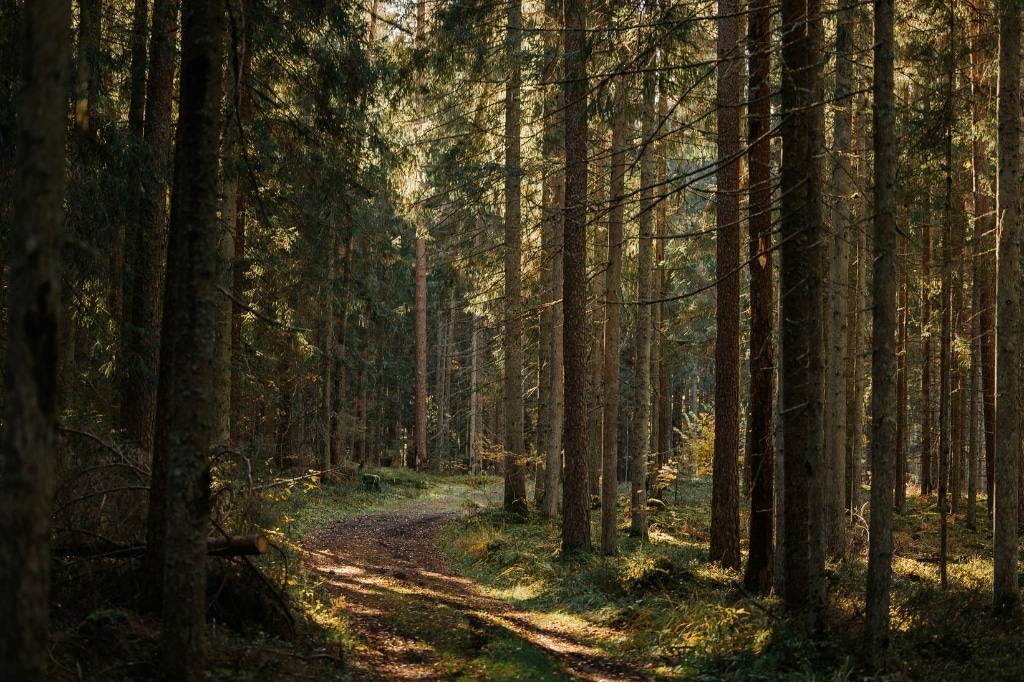
The number of tree cover loss and biodiversity decline across the world is alarming. In order to care for and make a case for nature, we should bring emphasis on the wide arrays of values attached to it – understand our deeper societal, cultural and anthropological connection to it.
The story of pine trees is a great example of how a single ecosystem can be linked, across the world, to generations of culture and history. From Native American traditions and the foundations to modern democracy to the Scottish rebellions of the 18th century, and through centuries of art work and poetry in China, Pines have been part of our human history. When you let your curiosity in, you’ll realize nature is part of our lived heritage.
Featured image: Robert Balog/Pixabay.
This story is funded by readers like you
Our non-profit newsroom provides climate coverage free of charge and advertising. Your one-off or monthly donations play a crucial role in supporting our operations, expanding our reach, and maintaining our editorial independence.
About EO | Mission Statement | Impact & Reach | Write for us