As the human population grows, the Earth and its resources remain constant. As each of us focuses more naturally on personal betterment and gain, common resources become overloaded and dwindle – this is the Tragedy of the Commons.
—
Thomas Malthus famously theorised that while population grew exponentially (“geometrically”), food supply would only ever grow linearly (“arithmetically”), indicating that humans would indubitably end up in famine and poverty. Was he subscribing to a kind of ‘doomism’? Or was he right in predicting the depletion of our resources to the point of no return?
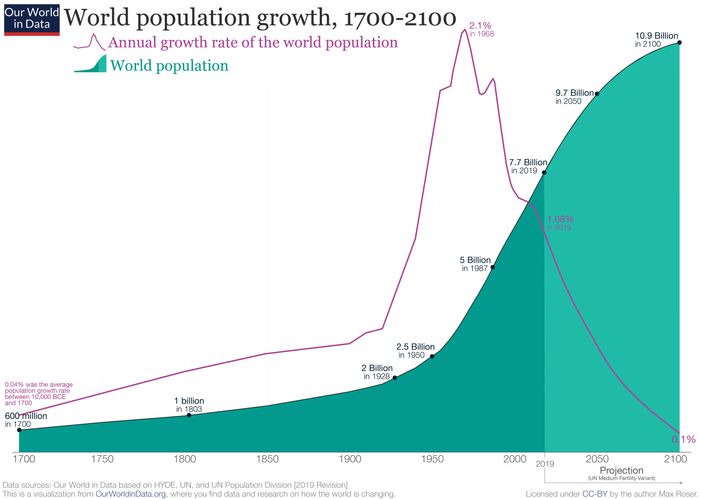
A graph depicting world population and world population growth between 1750-2100.
With an ever-growing world population—set to reach 11.2 billion by 2100—many are increasingly worried about the scarcity and fierce competition for resources that future generations will inevitably face. But the reality is that this concern exists now, and it existed almost two centuries ago. The usurpation of human self-interest over moral and rational behaviour has never been an uncommon phenomenon. Economists explore this through a problem called the “tragedy of the commons”.
The term was first mentioned in 1832, by a political economist called William Forster Lloyd, who lamented the devastation of shared pastures in England. Upon seeing the overgrazing of cattle, he asked, “Why are the cattle on a common so puny and stunted? Why is the common itself so bare-worn, and cropped so differently from the adjoining enclosures?”
More than a century later, ecologist Garrett Hardin conjured this concept back into the fore and named it the tragedy of the commons. In his essay, he perpetuated Neo-Malthusian ideals about shared resources and the difficulty of maximising good for everyone. But what exactly does the tragedy of the commons refer to?
The tragedy of the commons describes the conflict between short-term self interest and long-term common good. It proposes that self-interested decisions made by the rational individual are almost guaranteed to cause detriment to the well-being of the wider community. These decisions allow the individual to benefit themselves whilst simultaneously distributing the adverse effects on the larger population. Often this leads to social and environmental problems.
Source: Ric Stephens, University of Oregon College of Design, School of Planning, Public Policy, and Management.
Take driving your car for example: driving is more efficient than the subway and saves time in the morning. But as more people drive their cars, air pollution is worsened for everyone in the city, greenhouse gases are being emitted, and the roads become congested. The burden is shouldered by everyone because of the individual’s oh-so overwhelming desire to sleep in just that little bit more.
Hardin focuses on over-breeding and unnecessary childbirth as the root cause of the tragedy of the commons. He asserts that, if families only had themselves to depend on, and not the welfare state, over-breeding would not pose a threat to food availability. Over-breeding would negate itself through a negative feedback loop, as children who could not be provided for would simply not be able to survive. Hardin therefore blames the welfare state for providing support to those children, which has resulted in fiercer competition for resources.
One way the tragedy of the commons has manifested itself in the world is in the increasing problem of antimicrobial resistance (AMR). The increasing accessibility and (deceptive) efficiency of antibiotics has resulted in over 30% of them being deemed overprescribed and unnecessary. Not only that, but the numerous antibiotics pumped into food the food supply of animal products is only set to further increase. Antibiotic consumption in livestock in China alone is predicted to reach over 33,000 tons by 2030. Applying such selective pressure on short generation-time organisms like bacteria simply accelerates the emergence of resistant variants. Unfortunately, our antibiotic discovery rate cannot keep up with bacterial genetic variation, meaning that we will eventually lose this arms race if something does not change.
Timeline of antibiotic production. Source: Less of the Same: Rebooting the antibiotic pipeline, Harvard blog.
The UK government predicts that antimicrobial-resistant infections will kill 10 million people across the world by 2050, or as many as air pollution kills each year today.
The problem of the tragedy of the commons is deeply exacerbated by the core value of capitalism, namely the freedom to profit. With little-to-no government regulation of who-gets-what, also termed a laissez-faire approach, the free market is dominated by self-interest. When an individual is empowered by their community’s political system to pursue their desires freely, it is often the less fortunate that are on the receiving end of the disastrous consequences. While wealthy oil industry conglomerates reap the rewards of capitalism and profit from producing cheap energy, the poorly situated housing neighbourhoods located near the oil plants suffer from leukaemia, birth defects, respiratory diseases and poor air quality.
Some might notice that the tragedy of the commons carries eerie similarities to philosopher and social theorist Thomas Hobbes’ “state of war”, in which life is “solitary, poor, nasty, brutish, and short” because individuals are in a “war of all against all”. Hobbes, who viewed humans’ innate human nature as selfish, claimed that in order to prevent our self-interest from spiralling out of control, we needed an absolute sovereign. By this, we can infer that the only mechanism which will allow us to solve the tragedy of the commons is through direct and absolute control from the government. It emphasises the necessity of policies and social governance to maintain stability within a society.
Unsurprisingly, Hardin’s tragedy of the commons and the solution he proposed faced much criticism from other economists. Elinor Ostrom, in particular, argued that a bottom-up approach to controlling common pool resources would be much more effective in the long term. She emphasised that the individual and their community were capable of managing their collective resources, and that the government would need to work with them in order for intervention to be efficacious. Her contradictive response to Hardin’s essay would later win her the Nobel Prize for Economic Sciences in 2009.
Nonetheless, it seems Hardin’s view is prevailing – communities are rapidly losing resources and land to large corporations, thus negating Ostrom’s solution. There is an environmental awareness movement in the corporate world today in the form of ESG (environmental, social and governance) reporting and investing, but will it be enough? The Paris Agreement was a manifestation of Hardin’s call for governmental intervention, and despite the progress it has led to, we are still far from a 1.5°C or even 2°C path (currently on track for ~2.4°C by 2100 according to the latest IPCC report). We at Earth.Org are partial to more decisive policy, ideally legislated by a global, UN-like entity responsible for orchestrating the fight against climate change and environmental destruction.
Desertification was described as “the greatest environmental challenge of our time” by the UN’s top drylands official in 2010, Luc Gnacadja. Since the early 1980s, a quarter of the planet’s inhabitable land has been despoiled; now, climate change is making things worse.
Earth.Org takes a closer look.
—
What is Desertification?
Desertification is quite hard to define, but generally speaking, it is the process by which lands become infertile through a variety, and often a combination of mechanisms.
One of these is soil erosion, by which it is stripped of nutrient-rich topsoil by the action of wind, water and waves, all natural processes which are exacerbated by poor agricultural practices that leave the land bare.
Overuse of fertilizers can leave the ground acidified, just as saltwater intrusion can leave it salinated. And finally, climate change can make droughts too intense, and wildfires too frequent for the land to bear.
Where Desertification is Happening
Desertification is assailing the world’s arable lands. Increased drought, poor land-use decisions and bad agricultural practices leaves much of our land open to erosion, nutrient loss and other problems, eventually leaving it infertile.
Most of the world’s soil is currently in degraded condition, and this could rapidly become the biggest environmental problem on earth.
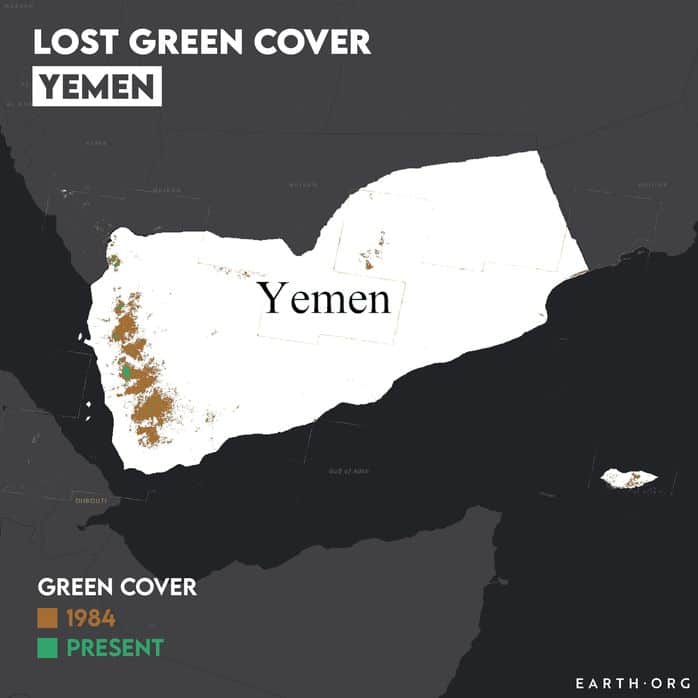
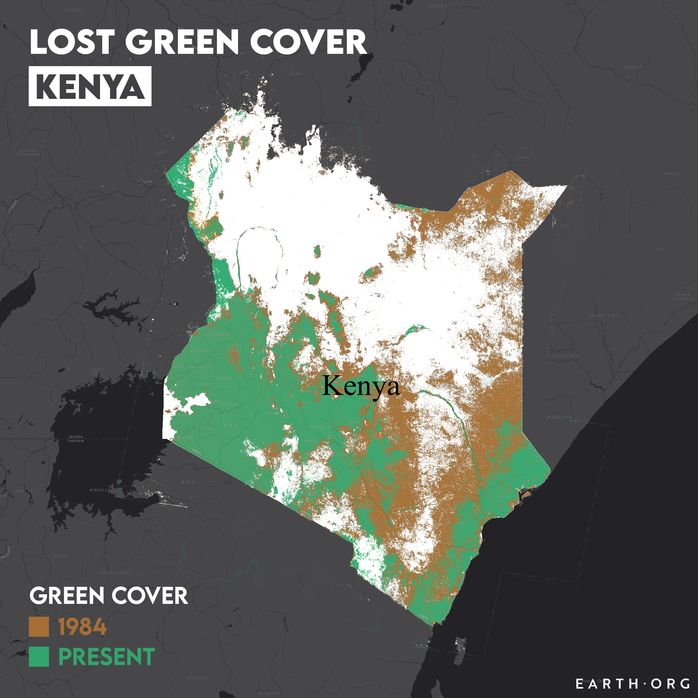
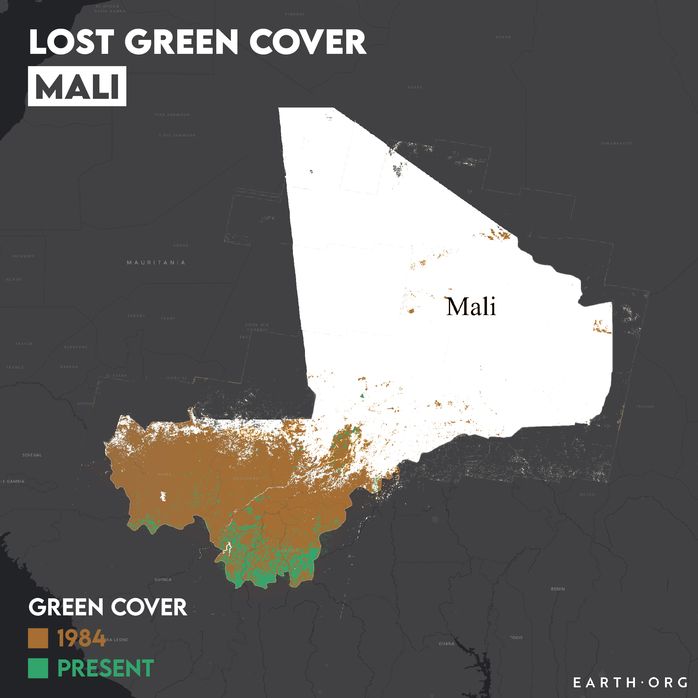
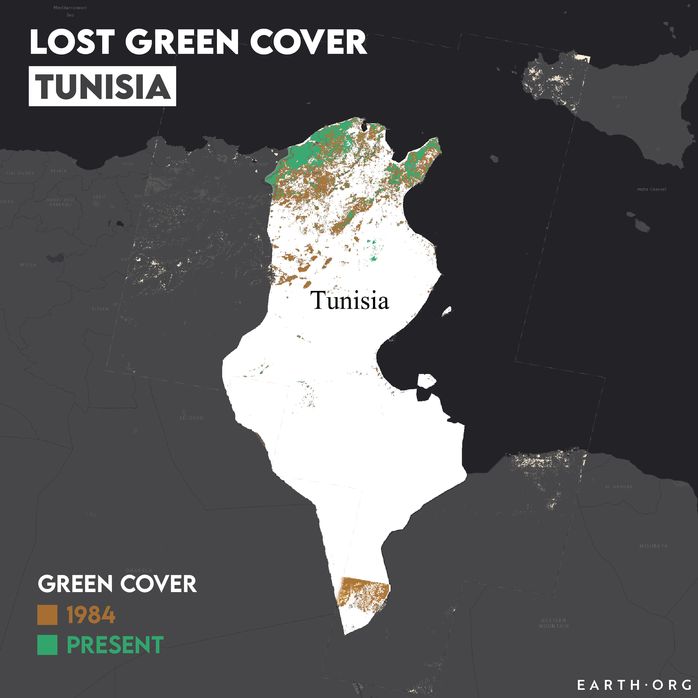
We used the Normalized Differentiated Vegetation Index (NDVI), a remote sensing technique, to look at the loss of greenery in some of the most rapidly-desertifying countries in the world.
Please remember that desertification is a complex process, and loss of greenery is, at best, a proxy of sorts but not an exact indicator of desertified land. Green cover varies year to year, though to a point, so the images below will show more of a general trend than the exact progress of desertification.
China
China’s share of desert land has rapidly increased since the 1980s and now stands at 30% of its total area. The creeping deserts threaten farmland, forcing people to abandon their homes, and will lead to food insecurity if they aren’t addressed.
Since 2012, a USD 80 million World-Bank financed project has been helping control desertification and rehabilitate natural vegetation in seven counties and cities in Ningxia, an autonomous region surrounded by three major deserts.
Combinations of agricultural techniques and grazing bans have led to the “re-greening” of certain areas, and over 21,000 hectares of desert have been worked on.
Yemen
People in Yemen lead difficult lives, with 75% of its population under the poverty line (US $3.10 a day). Difficult, arid conditions are compounded by a foreign-backed civil war and climate change, which increases the frequency, length and intensity of droughts.
Farmers have had to abandon their land as it dried up and cattle died of starvation, forced to move into big cities to work menial jobs.
The country also faces heavy sandstorms, which cause rapid soil erosion and damage to existing crops. According to the UN Office for the Coordination of Humanitarian Affairs (OCHA), Yemen loses 20% of its arable land to sandstorms each year.
Kenya
Population growth and food demand in Kenya have led to overgrazing in increasingly dry lands, partly driven by climate change. On top of this, rampant deforestation is further damaging the land, contributing to a rapid decline of soil quality in Kenya.
Various policies and strategies are being implemented to combat desertification, but Kenya needs to address its growing inequality and mismanaged resource-usage for this to be effective.
Mali
Mali is located in West Africa, straddling the Sahara so 65% of its area is desert or semi-desert. The Sahara itself is steadily expanding southwards at a rate of 48km per year, forcing many to evacuate and leave their homes behind.
Three-quarters of the population rely on agriculture for their food and income, and as the population grows and arable land dwindles, the situation becomes more untenable. Moreover, lack of food security feeds conflictual thinking, and civil strife has plagued the country for decades.
Finally, climate change is accelerating all of the above through increased drought: the UN says Mali’s average rainfall has dropped 30% since 1998.
Russia
Russian scientists and officials in vulnerable areas have been calling for help to combat desertification since the 1990s. Unregulated, excessive grazing is said to be the main cause, and it is compounded by sandstorms and drought.
Unfortunately, these lands are typically settled by different ethnic and nomadic tribes, who get less attention than others might, yet rely on the land all the more. One such community is that of the Nogai, living on the Nogai steppe in the Russian Republic of Dagestan. They’ve witnessed two landmark lakes disappear over the last 50 years, along with their farmland turning into sandy dunes.
The region of Kamylkia, just north of Dagestan, suffering the same fate, declared a state of emergency, which prompted UN and Russian governmental action. Farmers are now subsidized to encourage planting of trees and other desert-stopping plants, but large-scale grazing still hasn’t been banned.
Syria
The Syrian steppes have desertified terribly over the last few decades. Authorities claim it is due to climate change-driven drought, and while this is partly true, over-exploitation contributed just as much if not more.
The first signs of desertification appeared as far back as 1958, but calls for regulation failed. The resulting lack of arable land and food is a major cause of the country’s now decade-long civil war, says Gianluca Serra, ecologist and conservationist who worked with the UN to rehabilitate the Syrian steppes.
Tunisia
“Ninety-five percent of the [arable] land is in the process of desertification,” says Sarah Toumi, President and founder of Acacies for All, a social enterprise aiming to slow Tunisia’s creeping deserts.
The government has been doing the same since 1990 through reforestation, wind brakes and biological sand dune fixation, but efforts have been largely ineffective. As is often the case, land overexploitation is the core of the problem.
The issue is high-intensity modern farming, and a lack of incentive to let the land rest. But how do we tell people in a country with social tensions, high unemployment and an underperforming economy to sacrifice yields?
Land overexploitation and climate change are accelerating the process of desertification to the point where subsistence farmers are being displaced within their lifetimes. Geological change fast enough for humans to notice is extremely fast on geological scales, so there is reason to be worried.
However, we know what the causes are, and there are methods to address it. These will vary from place to place, but it generally involves changing agricultural practices and creating green barriers with the right species.
Generally speaking, we attempt to maximize agricultural yields to the expense of soil health. Worse, overproduction drives prices down, meaning farmers have to continue doing so in order to make ends meet, creating a vicious cycle. The only option is for the government to step in and regulate practices nation-wide so no farmer is left behind.
A growing body of literature supports the hypothesis that we may be in the early days of the 6th mass extinction. Habitat encroachment is worse than ever, and there is no sign of its relent, yet without nature, humanity cannot survive.
Earth.Org takes a closer look.
—
A landmark report, published in 2019 by the Intergovernmental Science-Policy Platform on Biodiversity and Ecosystem Services (IPBES), declared 1 (out of ~8.7) million species to be facing extinction within the next few decades. Food production is largely to blame as it is the main driver behind our reshaping of 75% of land and 66% of oceanic area.
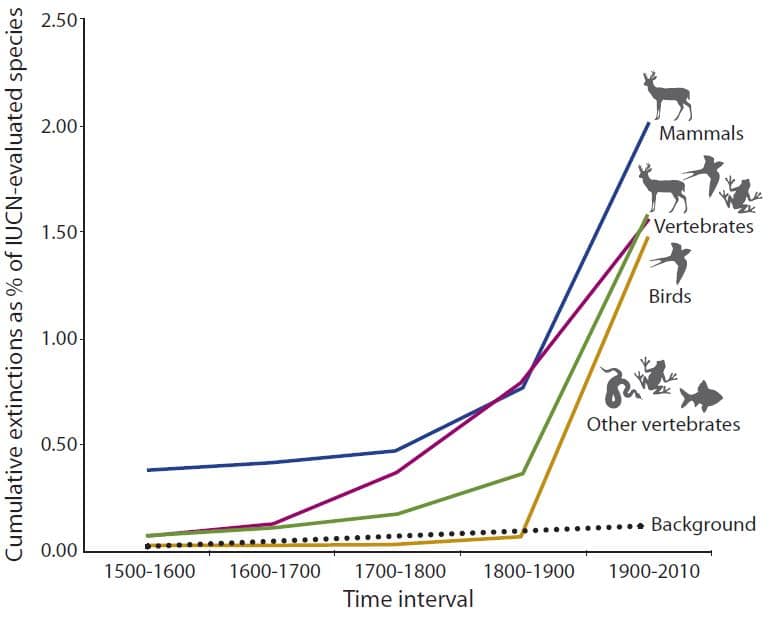
What really worries scientists is the extinction rate. There is a base extinction rate that has somewhat fluctuated over the ages, but is around 0.1 to 1 extinction per million species per year. A 2015 study found that current extinction rates are 10 to 100 times higher than the background rate, and these are highly conservative to conservative estimates respectively.
Extinction rates over time based on the IUCN Red List Database. Source: Ceballos et al. 2015.
Even if extinction rates plateaued where they are now, nearly 4 million species would disappear in the next 2 million years. If that seems like too long to be relevant, remember that past mass extinctions took 60,000 to 20 million years to wipe out between 75% and 90% of all species on Earth.
Plus, there is no reason to believe extinction rates won’t keep rising. Habitat encroachment may have slowed but it is still going strong (think Amazon deforestation), and climate change is set to exacerbate the situation to a point where even humans will find things difficult.
Map of the remaining untouched wilderness, 75% of which is found in just 5 countries. Source: EM Watson 2018, Nature article.
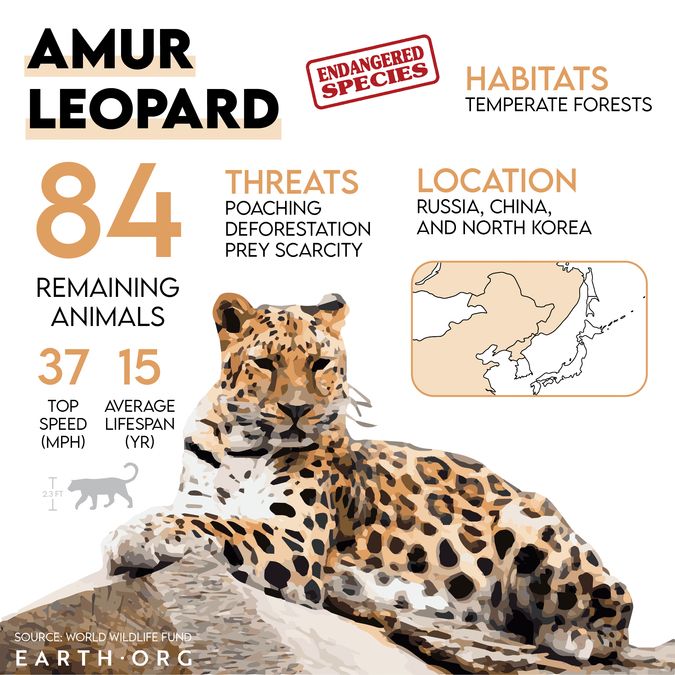
Considering we’ve lost 900 species in the last 500 years, and the extinction rate only recently accelerated, it is likely that we’re witnessing the beginning of the 6th mass extinction. Some notable species facing extinction now are the Javan rhino, the giant Pangasius or the Amur Leopard.
An important factor described in Ceballos, Ehrlich and Raven’s 2020 research article is that “extinction breeds extinction”. Because most ecosystems are complex webs of interdependent lifeforms all providing important services to one another, any of these disappearing makes survival more difficult for others.
So, where does that leave us?
Professor Paul Ehrlich of Stanford University says that more species should be listed as endangered, namely all those with populations under 5000 (currently at 2500). He also says that a global comprehensive binding agreement requiring parties to address the extinction crisis is a necessity, as a starting point if nothing else.
Mark Wright, the director of science at WWF, says, “The numbers in this research are shocking. However, there is still hope. If we stop the land-grabbing and devastating deforestation in countries such as Brazil, we can start to bend the curve in biodiversity loss and climate change. But we need global ambition to do that.”
The comment above only shows how far behind we are on an issue that might soon become irretrievable.
The issue with the environmental problems in the world today is that most of them require thinking beyond our lifetimes, something humans aren’t good at doing. It is likely that the 6th mass extinction won’t really affect you, but rather generations to come, and climate change is similar.
On the flipside, improved education and information access allow us to think more broadly than ever before as a species, therefore giving each an understanding of the stakes.
We are therefore at a critical juncture in time where we can, and must, work for a future we will not witness if we want humankind and our planet to coexist in the long term. We are all part of this planetary organism, but only we as humans have the choice.
The climate crisis is accelerating at an unprecedented rate, and we are not ready for it. While the crisis has many factors that play a role in its exacerbation, there are some that warrant more attention than others. Here are some of the biggest environmental problems of our lifetime.
—
1. Poor Governance
In a world governed by economics, our society has failed to factor in the value of Nature. It provides us with indispensable resources, yet is inexplicably free to overdraw from. Its services range from air, water, food, and medicine to other less obvious things like climate regulation and natural flood defences provided by forests.
In many cases, damaging or changing the environment is considered no more than a side-effect of business activities. In economics, this is known as an externality, i.e. a cost (or benefit) incurred by the producer, that is paid (or received) by a third party who did not agree to it.
Right now, our externalities are resulting in very real financial costs for those going through amplified natural disasters (droughts, floods, hurricanes), suffering from poor health due to air pollution, being displaced by sea level rise, and many other things.
Today, the prices we pay don’t capture all the costs, and this in and of itself is one of our biggest environmental problems. We ignore this fact because the unseen costs have only begun to appear and often in places of high vulnerability.
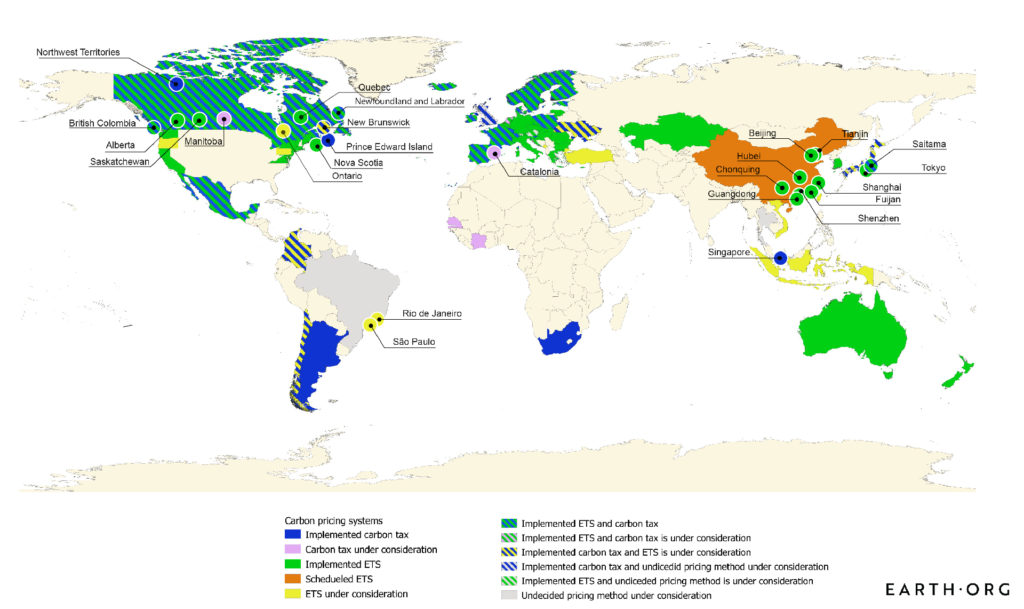
Current attempts at pricing externalities have come in the form of carbon taxes or emission trading schemes (ETS). As you can see from the map below, the vast majority of countries have opted for the latter, but ETS have had many shortcomings so far (for more, see our article here).
By Simon Papai.
Actual carbon taxes have only been implemented in Argentina, South Africa and Singapore, at values of (US) $10, $8 and $5 per ton of CO2-equivalent (CO2eq) emissions. Is that enough?
Accurately pricing carbon based on its detrimental effect on the environment is extremely difficult to do, because our best climate predictions have quite a bit of uncertainty. Therefore estimating the extent of a ton of CO2eq’s damage on the environment is impossible to confine to a single number, and the range is very wide (US $30 to over US $100).
While uncertainty and market properties make it difficult for the world to adopt a set carbon tax, it is still safe to say that US $10 a ton and under is not enough.
What you can do: be aware of when your next local or national elections are, and vote for candidates who are engaged on climate issues.
2. Food Waste
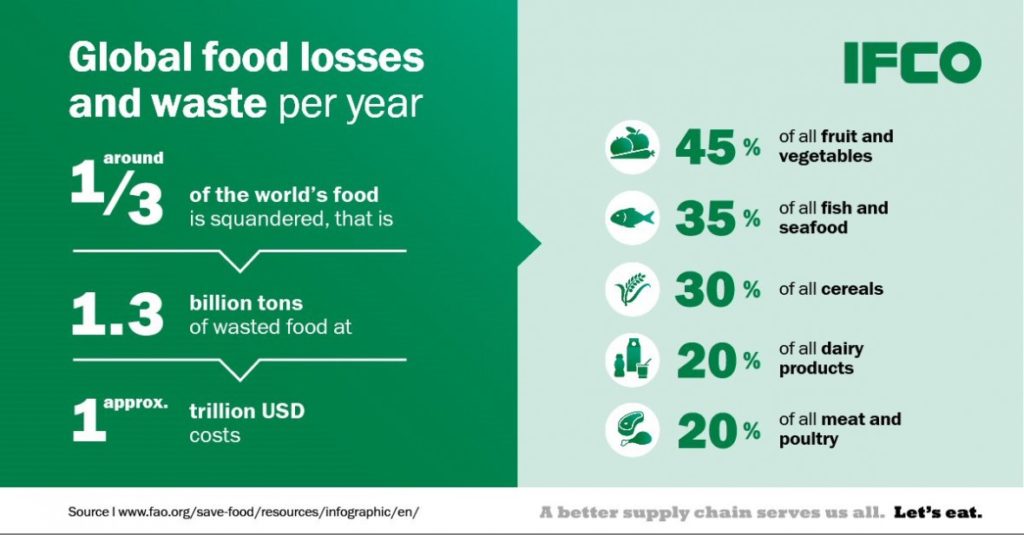
In 2013, the US Food and Agriculture Organisation estimated that around ⅓ of the world’s food was wasted every year. Since then, it has become a major issue which many entities around the world are attempting to solve.
The amount of food lost is equivalent to roughly 1.3 billion tons, which is enough to feed 3 billion people. Considering there are 690 million people suffering from malnutrition, it is clear we have more than enough for everyone to eat their fill. Beyond the human tragedy, the damage from producing this food is one of the biggest environmental problems on our planet, which we will expand on in the agriculture section furhter down.
Regarding food waste, the situation varies from country to country, but some is lost at every point along the food chain: on farms and fishing boats, in processing and distribution, in retail, in restaurants and at home. Developing countries see most of the loss occur in pre retail stages while developed countries waste more at the retail and consumer levels. In the US for instance, households waste around 43% of all food. For more, check out our article: 20 Facts About Food Waste.
Source: IFCO.
What you can do: to reduce food waste, we can shop more efficiently as consumers and avoid letting things sit past their expiration date. Governments are also addressing the problem; in 2015 the Obama administration pledged to cut food waste by half by 2030. The movement has also entered the entrepreneurial world, led by Too Good To Go, a company that connects you with retailers to help you pick up food that would otherwise go to waste.
3. Biodiversity Loss
Ever since the first Homo sapiens, biodiversity has suffered wherever we went. Today, it has developed into one of our biggeest environmental problems, with animal populations in critical state.
The 2020 Living Planet Report (LPR), published by the World Wildlife Foundation (WWF), gathered data on the declining population levels of biodiversity around the world. Globally, all monitored populations have declined by an average 68% since 1975, but some regions are in a far more critical state. Latin America & the Caribbean sustained a 94% loss over the same period.
Source: WWF Living Planet Report 2020.
The main cause of decline worldwide is land-use change, i.e. when we convert habitats like forests, mangroves or grasslands into agricultural systems. In fact, some scientists say that we are undergoing the 6th mass extinction.
What you can do: there are big initiatives to help save our biodiversity, like 30 by 30, by which world leaders have pledged to protect 30% of land and ocean by 2030. You can support these by electing representatives who support the movement.
4. Plastic Pollution
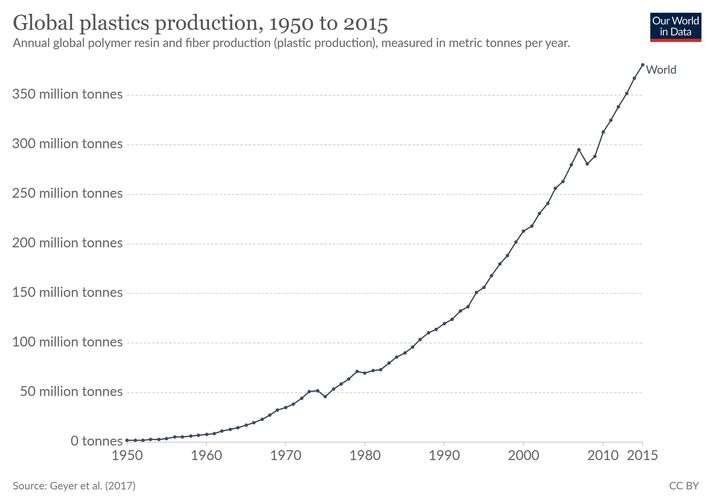
After World War I, improvements in chemistry allowed for the mass production of plastics to begin. By the 1950s, around 2 million tons of plastic was produced every year, and the wonder material’s popularity has increased ever since.
Unfortunately, market incentives for post-use processing haven’t kept up with production, resulting in one of the biggest environmental problems of our time: plastic pollution.
Of the 270 million tons of plastic produced each year, a small portion (that is, 8 million tons) ends up in the ocean. It then either sinks to the bottom, or decomposes into progressively smaller pieces called microplastics at the surface. Microplastics act like toxin sponges, binding many of the chemicals we carelessly let leak into our oceans, before being ingested by marine life. These can work their way up the food chain back to us.
But it’s more than just our oceans. Plastics have been found near the peak of Mount Everest, and car tyre rubber can go airborne and get carried hundreds of miles away. You’ll find pieces in your tap water, your beer and your tea bags.
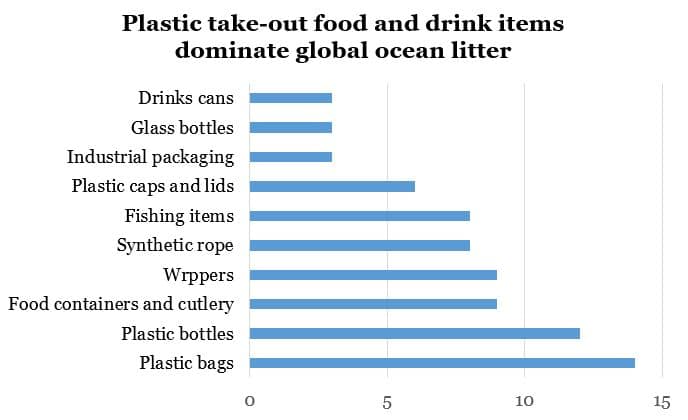
What you can do:a recent study found that the vast majority of plastic found in the environment actually comes from takeout.
Source: Caselles et al, Nature Sustainability, 2021
We have more power than we know as consumers. Every small effort can turn into a habit, and every bit makes a difference.
5. Deforestation
10,000 years ago, around the start of agriculture, forests used to cover 57% of all habitable land. Since then, we’ve lost a third, much of it replaced by crops or grazing land.
According to The World Counts, we are losing 20 football pitches worth of forest every minute, though much of it regrows. Far more critical is the rate of loss of primary forests that have remained untouched for millenia. 75% of these are found in just seven countries, and they are home to some of the most ecologically rich and diverse ecosystems in the world. New forests are not able to build up such biodiversity without centuries to do so, nor are they able to capture and store carbon so densely.
According to the WRI, we lost a football pitch of primary rainforest every 6 seconds last year, equivalent to 3.8 million hectares or an area roughly the size of Switzerland.
Not only does this lead to one of the other biggest environmental problems in biodiversity loss, but old, large forests like the Amazon provide water, materials, medicine and livelihoods for an entire continent (and beyond). Scientists say we are nearing a tipping point, past which enough deforestation will mean its slow, but inevitable disappearance.
What you can do: solutions here are more difficult for the average individual to apply, but since cattle are a large driver of deforestation, eating less meat can help. Many other products we use every day come from rainforests, such as cashews, vanilla, avocado, coffee, tea and cocoa. Make sure the ones you consume are sourced responsibly.
6. Air Pollution
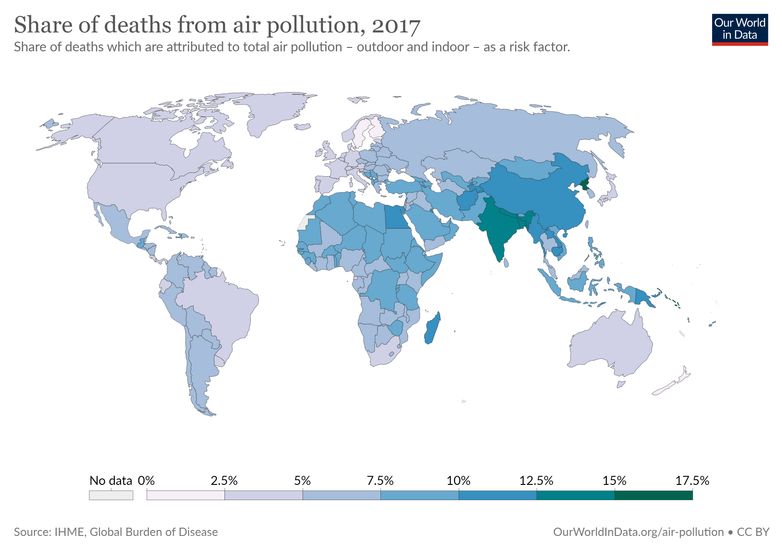
Air pollution is one of the world’s worst killers, attributed ~10 million deaths each year making it one of our biggest environmental problems. This is far more than was previously thought, and as the world continues to industrialize, it is not expected to subside soon.
When countries develop, this comes hand in hand with air pollution – mostly from industrial and vehicular sources, but also from indoor fuel combustion. Pollution builds up in the early stages, then legislation catches up and it begins reducing. Countries in Africa are a good example, with 258,000 people having died as a result of outdoor air pollution in 2017.
In the past four decades, China went through a very polluted stretch due to its rapid development, but it has made huge progress in the last decade. Most of its major cities now are just above the WHO’s guideline levels for fine particulate matter (PM2.5).
India remains in a critical state, with routine smogs in its densely populated agglomerations, affecting millions of people everyday.
What you can do: walk, cycle or use public transport rather than your car where possible. You can also use air quality index apps on your phone to track pollution in real time and choose healthier routes for yourself and others.
7. Agriculture
Agriculture appeared around 10,000 years ago, and has since become the principal type of land usage on Earth: nearly 50% of all habitable land hass become either crop or pasture.
The bulk of its growth came after the Industrial Revolution around 1780, and expansion only recently slowed. The amount of environmental destruction necessary for such land change could be one of our biggest environmental problems on its own, but there’s more. It also emits about a third of all human-caused greenhouse gas emissions.
Sustainable food production is one of the biggest challenges ahead, because climate change threatens food production while our current farming methods degrade our soils. Traditional farming techniques have given way to chemical fertilizer-heavy monocultures where soils are left bare after harvest. Wind and water erode it and fertilizers make their way to the oceans where they can cause oxygen-depleting algae blooms, also known as dead zones.
The current philosophy is to always maximize yields, when it is actually unnecessary. We produce more than we need, and farmers have reported low cereal prices due to overproduction.
In order for this to stop, everyone needs to be on the same page, because the lone farmer who reduces fertilizer use will find himself at a disadvantage. It will likely require authorities to step in and regulate the system rather than let the market do so, but this issue is very low on their priority list if at all, bringing us back to the first biggest environmental problem on the list – bad governance.
What you can do: inform and educate those around you. Vote for the right people.
8. Global Warming From Fossil Fuels
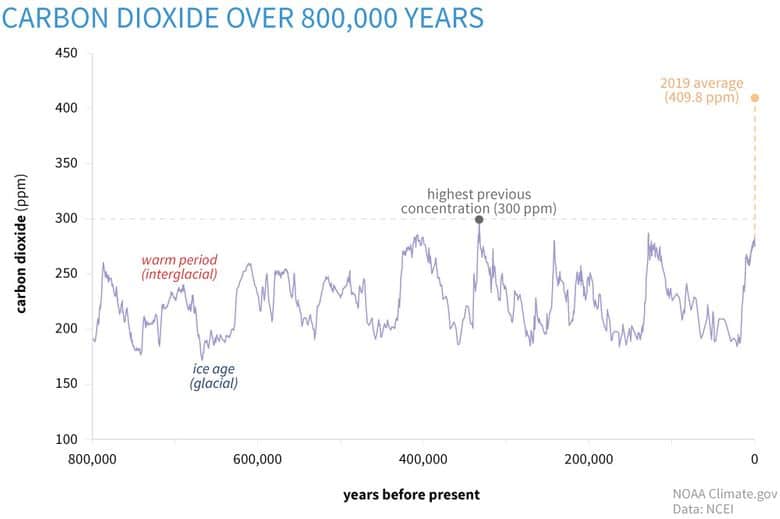
At time of publication, CO2 parts per million (ppm) is at 417.55 and the global average temperature has risen by 1 degree celsius. This phenomenon is central to climate change, with a myriad knock-on effects, and making it one of the biggest environmental problems of our time.
The Earth has a number of carbon emitting and capturing mechanisms that interact to create patterns over long periods of time. Despite large fluctuations in the past, the past 12,000 years have been uncharacteristically stable and temperate, allowing humans to flourish.
But since the Industrial Revolution, we have been drawing on long-stored carbon reserves, emitting it into the atmosphere far faster and longer than any natural process would.
As a result, we are experiencing rapid warming, launching a cascade of effects. Rain patterns change, ice caps melt, sea levels rise, weather extremes become more intense, ecosystems falter and we struggle to adapt.
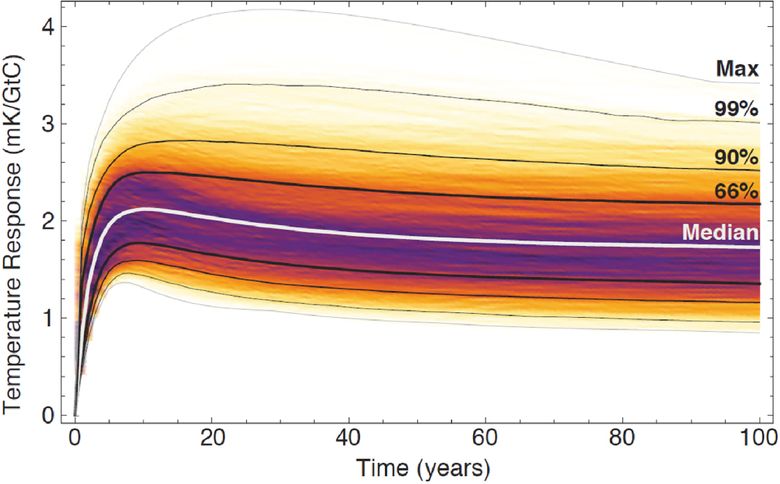
You may have heard that stopping emissions today would only mean an end to global warming around 2033. This is because, once emitted, CO2 takes some time to reach its full warming potential. Thankfully, the bulk of it happens quite fast as demonstrated by the graph below.
Temperature response to a pulse of GHG over time. Source: Ricke and Caldeira (2014)
What you can do: be aware of your carbon footprint. There are many ways to calculate and monitor it – for more see this carbon footprint calculator.
9. Melting Ice Caps
Most of the world’s freshwater is trapped in ice-form at the north and south poles, and in glaciers around the world. If all of it were to melt, sea level would rise by about 70 meters. Of course, that isn’t happening anytime soon, but the world as we know it could change quite a bit with just 1 to 2 meters sea level rise, which is expected to occur by the end of the century.
While the world has warmed by an average of 1°C, the north pole is now 2.8°C hotter than it was 100 years ago. Mountain glaciers and the Antarctic are also warming faster than the average, and as a result, ice melt has been accelerating globally. This visualization by Iman Ghosh illustrates the situation admirably.
Ice bodies are self-sustaining systems, and once enough is lost, they can enter the long, irreversible process of fully disappearing. The question of when exactly that threshold is crossed is incredibly hard to determine, so it would be wise to play this extra safe.
Mountain glacier melt is of particular concern, because they melt quicker and earlier each year, leading to potentially dangerous water overflow, followed by water shortage. The Hindu Kush, also known as the Third Pole, provides water to 2 billion people, and it is melting rapidly. The Andean glaciers in South America shrank nearly a third between 2000 and 2016.
All the above leads to sea level rise, the next biggest environmental problem on the list.
What you can do: once again, this comes down to carbon emissions. You can make smart decisions in your everyday life, but you must also make sure you elect the right representatives to push for green reform in your country.
10. Sea Level Rise
A recent paper published in Nature tripled the previous estimates of global vulnerability to sea-level rise and coastal flooding. Most sea level rise projections prior to this one fell below 1 to 1.5 meters, but it seems now that 2 meters is possible. Were that to happen, the authors of the study estimate that 680 million people would find themselves displaced, ushering in a gradual yet inexorable rearrangement of the coastal world.
Up to 3 billion people depend on the ocean and its ecosystems, and as a result, a massive amount of infrastructure and operations have been set up on low lying coastal land. Little attention has been given to rising sea levels, meaning adaptation will be arduous and costly.
Rising sea levels also make storm surges more potent, thus increasing flood potential in storm susceptible places like Bangladesh, the US and many others. In fact, over 70% of all natural disasters since 2000 were water-related, so their itensification spells trouble for people all over the world (Germany was hit with an unexpectedly powerful flood just a few days prior to publishing).
FOr a more visual example, let’s look at Shanghai’s megalopolis, built around the low-lying Yangtze river delta.
Data from CoastalDEM, Kulp & Strauss (2020).
As the 4th most populous city in the world, it could find itself so vulnerable to flooding that the whole area would have to be evacuated, or massively engineered to resist, by the end of the century. Sea level rise, while slow, is undeniably one of the biggest environmental problem on our hands and we need to prepare.
What you can do: if you are deciding where to live, be aware that a low coastal area may not be viable within the next few decades. If you do live in one, get in touch with your local representatives to find out what they are doing to prepare.
11. Food and Water Insecurity
The final of the biggest environmental problems on our list is food and water insecurity. Conflict and climate have long left people bereft of food and water. Now, climate change and population growth are set to worsen access to these fundamental resources.
While the number of undernourished people has been decreasing, there remain over 650 million worldwide. As explained above, we have a food surplus that is going to waste, and we need to do a better job of directing it toward places in need.
Undernourished numbers have stalled since the early 2000s, and there is no real reason to think they will drop again soon. In fact, they are more likely to begin rising again due to climate change.
A warmer atmosphere changes rain patterns, making droughts more frequent and intense, and rains more torrential and destructive. Countries with food insecurity usually have difficult climates to start with and as things get worse, other problems arise. Hunger drives conflict, which combined with a lack of finances makes it incredibly difficult to adapt.
Nations in the Sahel, the Horn of Africa and many others will need external help, as they will bear the early brunt of the climate crisis; how the global community handles these crises could be a defining moment of solidarity for humankind.
As for water issues, they will affect rich and poor countries alike, though the latter will once again have more to deal with.
Water issues are tightly linked to natural disasters, 73.6% of which were water-related between 2001 and 2018. According to UNICEF, 450 million children live with high water vulnerability, meaning they do not have enough to meet their everyday needs. When a disaster strikes, their water sources can be contaminated with diseases like cholera or typhoid disease, or simply destroyed.
High-income countries have their share of problems too – rising temperatures can make freshwater more suitable to microbes like Vibrio vulnificus, otherwise known as flesh-eating bacteria, cases of which have been occurring in the US. It’s western portions are also dealing with one of the worst droughts in recent history, and water reservoirs are at all-time lows. Since 70% of freshwater goes toward agriculture, this will eventually come back to affect food supply.
To cap it off, sea level rise is making coastal freshwater salty, and sometimes even causes ocean water to seep into underground aquifers, our last resort water stores.
The UN has warned that one in four children, nearly 600 million, will be living with extreme water scarcity by 2040.
What you can do: these issues are tied to the development of poorer countries, and how we handle climate change as a global community. The more we do now, the easier it will be for high-income countries to lend aid to those in need. It must not be underestimated how crucial it is for world leaders to set the right example for the rest to follow.
Stay informed, educate those around you and vote; the little things add up.
This article was written by Owen Mulhern. Cover photo by Matt Palmer on Unsplash.
This complex system forms one of the biggest environmental problems in the world, but will mainly affect people in crises areas. , biggest environmental problems, biggest environmental problems, biggest environmental problems
It is unclear how the drought that most of California is facing will affect wildfires in 2021. Using the latest satellite observations, scientists estimate that two-thirds of the state’s vegetation is drier than normal, resulting in high wildfire hazard.
—
This is a guest article, more about the authors in the footer.
Memories from the 2020 wildfires are burned into Californians’ minds. As residents woke up to orange skies laden with smoke, wildfires grew to extraordinary sizes. Among the six largest wildfires in California’s history, five occurred in 2020. Even beyond California, 2020 was a record-setting year. Wildfires burned over 10 million acres (1/10th the area of California) – three times the previous record – blanketing the West in smoke for weeks. As communities continue to recover from the aftermath of wildfires, a question looms- what will 2021’s wildfires look like?
Precipitation since last year has been dangerously low, and the snow that did accumulate in the mountains – which normally provides water to ecosystems during the warm spring and summer months – melted at record pace this spring, leaving California essentially without this critical resource as it enters the hottest part of the year. As of June 22, 2021, 85% of the state was in the two most severe drought categories , with more than a third now experiencing “exceptional drought”, according to the US Drought Monitor.
Dry vegetation provides fuel for forest fires. One of the major causes for last year’s wildfire intensity was both the amount and dryness of fuels. Now, elevated temperatures and low winter-time precipitation has left California’s vegetation primed for wildfires this year.
Sensing vegetation dryness from space
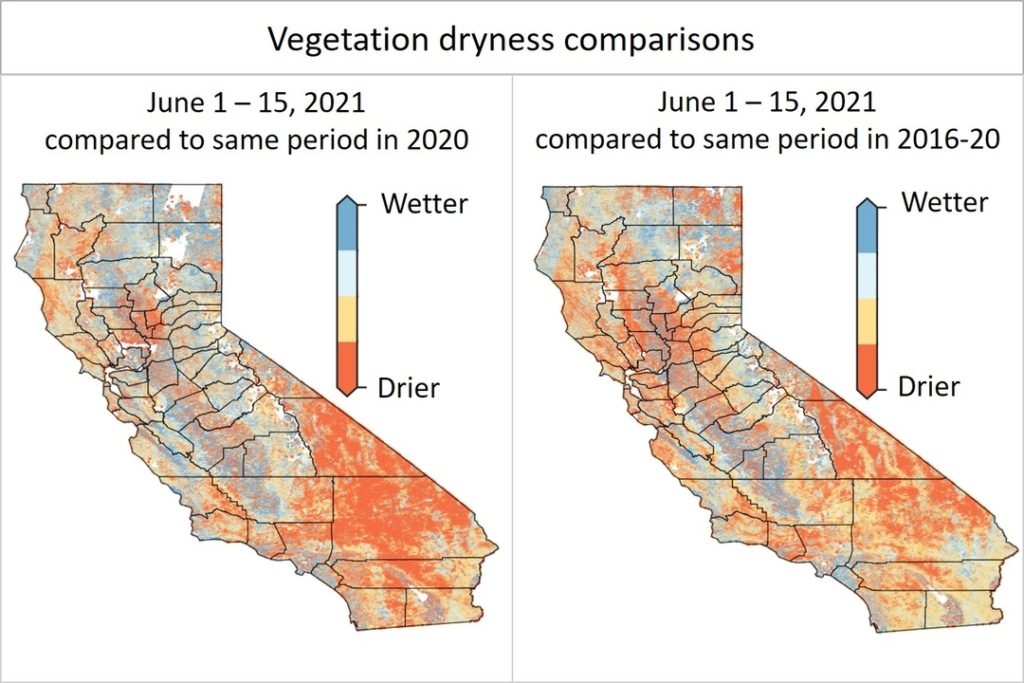
Vegetation dryness for the first half of June 2021. Vegetation dryness is referred to as “Live fuel moisture content” by fire scientists. Vegetation dryness estimates are not available for areas that burned in 2020 due to limitations with our estimation technique.
Historically, it has been difficult to assess vegetation dryness using only water availability and temperature because other things come into play, like depth of roots of plants. Thankfully, modern satellites allow us to observe vegetation dryness directly.
The map above shows our estimate of vegetation dryness using state-of-the-art satellites from the National Aeronautics and Space Administration (NASA) and the European Space Agency (ESA), and artificial intelligence. Akin to using X-ray to see what’s inside our body, we use very low power microwave radars to scan vegetation for their water content. Our system first learns to estimate vegetation dryness using ground-truth measurements collected by the US Forest Service. It then tracks small changes in microwave reflectance and vegetation color to estimate vegetation dryness. If you are interested in exploring vegetation dryness further, visit our interactive web-app updated biweekly. The app displays vegetation dryness for the entire western US since 2016 and is updated biweekly.
An abundance of dry vegetation
Vegetation dryness in the first half of June 2021 compared to the corresponding period in 2020 (left) and the average of the corresponding periods in 2016 – 2020 (right). Red colors indicate that 2021 is drier than the periods it’s being compared to.
About 65% of the state’s vegetation was drier in the first half of June 2021 than in the same period a year ago (left panel above) with the southern regions, home to Los Angeles, in the most critical state. Even a small decline in vegetation dryness can increase wildfire hazard significantly because the tendency for vegetation to ignite increases suddenly below certain dryness thresholds. Hand-drawn maps from experts at the US Drought Monitor also indicate extremely dry conditions across much of California priming it for a harsh spate of wildfires in 2021.
Regions in San Benito, Monterey, San Luis Obispo, Santa Barbara counties and much of the Central Valley had vegetation wetter in the first half of June 2021 compared to the average for the same period in the previous five years (2016 – 2020). This is shown in the right panel of the above figure. Nevertheless, even if they are wetter than in previous years, wildfire hazards can still exist in these places if the vegetation dryness remains below ignition threshold.
Does this mean the California wildfires will be large in 2021 too?
We don’t know.
2020 was an unusually catastrophic year for wildfires, not just because of the vegetation being dry, but because of at least two other factors. First, a very rare lightning storm occurred in August when humid air from the tropical storm Fausto came up the coast. Second, two intense heat waves set daily temperature records all over the west coast, the first of which preceded – and likely contributed to – the lightning storms, and the second of which occurred around the Labor Day holiday. While this spring and early summer are again setting temperature records in the state, the exact conditions that occurred in 2020 were quite rare.
Further, even though vegetation dryness is a key indicator of wildfire hazard, it is not the sole determinant. Wildfires are also affected by other factors such as when and where ignition sparks occur, weather conditions at the time of the fire (such as wind speeds), how much vegetation and litter is present, and more. Thus, having very dry vegetation does not alone ensure that there will be bigger wildfires, and the maps presented above should only be viewed as an indicator of greater risk.
Whether or not fires are as severe in 2021 as they were in 2020, it is clear that there is a lot of dry vegetation. The good news is that there are many preventive steps we all can take to prevent accidentally igniting wildfires, and harden our homes to mitigate the impact of wildfires. Taking preventative steps now can help to lessen the odds that this very dry start turns into the kind of widespread catastrophe that is quickly becoming an all-too-familiar feature of life in the Golden State.
About the authors
Krishna Rao, Noah S. Diffenbaugh, and Alexandra G. Konings are at Stanford University, Marta Yebra is at Australian National University, and A. Park Williams is at University of California, Los Angeles.
A recent published study has shown that items from takeout food and drink form the bulk of ocean plastic litter. Armed with this information, we can take decisive and effective action to help save ourselves and the environment.
Earth.org takes a closer look.
—
The attempt to turn off the tap of marine litter flowing into the ocean should be at the top of the global agenda. From fast food chains removing plastic straws to cotton bud bans across Europe, decision makers have been hard at work, however, we still haven’t made a dent.
Thankfully, a new study by Carmen Morales-Caselles in 2021 has finally provided evidence which should help us better direct our actions.
The research team studied and categorised over 12 million litter items from the seven oceans (both surface and seafloor environments). 80% of the items were either made out of or contained plastic and were found mostly in surface waters or shorelines. Of note, 10 types of products accounted for three-quarters of all litter items found globally.
(Credit: Caselles et al, Nature Sustainability, 2021)
Shockingly, takeout items such as plastic bags and wrappers made up the largest share of ocean plastic, from 50% to 88%, across all the environments examined except open water.
(Credit: Caselles et al, Nature Sustainability, 2021)
Despite all actions that have been done on “trending” plastic items such as plastic straws and stirrers, effort has not been put into resolving the core of the problem. International corporations such as McDonalds have been purposefully fading out straws and stirrers from their branches since 2019 but according to Phys and the UN, straws are responsible for just 0.025 percent of ocean plastic. Other examples like cotton buds and lolly sticks only represent 0.16% of European plastic waste.
Refinement and reinforcement of current policies is imperative, especially in times of a pandemic where people rely more on takeout than ever. Between July and August 2020, Just Eat, one of the UK’s major food delivery companies, received 46.4 million takeout orders.
The plastic involved in a single food delivery is often underestimated. Reporters from the Sunday Times revealed that in a single order of 15 meals, a shocking 103 individual pieces of plastic packaging were provided even after declining extra cutlery.
Even if our overall plastic production hasn’t increased, the amount produced for food delivery has soared during the pandemic. The researchers suggest a ban on avoidable takeout plastic items, like single-use bags, as the best option. For products deemed essential, producers should be made to take more responsibility for the collection and environmentally friendly disposal of products; deposit return schemes were highly recommended.
Ultimately, this study provides hard evidence that should allow representatives to push for much-needed hard reform.
Off the coast of Sonoman and Mendocino counties in California, climate change and a marine epidemic have combined to endanger one of the West Coast’s most productive ecosystems. In a very brief amount of time, the renowned Californian kelp forests have gone from vibrant to almost completely gone.
Earth.org takes a closer look
—
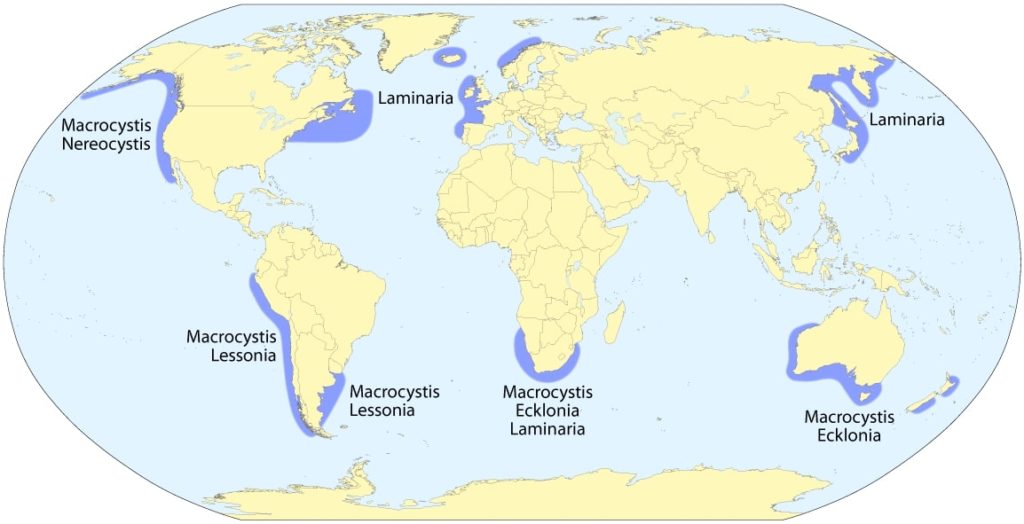
Bull kelp is easily the most abundant species of kelp north of Monterey Bay. With its long stems, it forms beautiful underwater forests that provide food and shelter to a host of unique species.
Shutterstock
It grows amazingly fast, up to 60cm a day, but it is quite picky about where it appears. It is generally found in cold, nutrient-dense waters, and doesn’t do well when it gets too warm.
Aside from providing the architecture for a unique type of ecosystem, the kelp of course stores large amounts of carbon dioxide, another natural sink that has slowed the effect of human emissions thus far.
So what’s the issue?
A once vibrant stretch of kelp forests along the coast of Northern California has collapsed over just a year, a catastrophe of rare proportion.
Results from a research by a team of researchers led by Meredith McPherson of the University of California, Santa Cruz, reviewed the decline of the once hardy kelp forest, as well as its struggle to regenerate. Using 34 years of satellite imagery, the team determined
that the Northern California kelp canopy declined more than 95% in 2014-2015, and has since been unable to recover.
Source: NASA Earth Observatory.
The kelp started receding in 2008 in the northern part of the map area shown, and then in 2012 in the southern part. But along the rocky environment in the middle, the bull kelp held strong. Then came “the blob”. In 2013, temperature in the Bering Sea rose due to a marine heatwave, and by 2014 the warm water reached the California coast. Water temperature was 2.4C above normal for a whopping 226 days.
Historically speaking, the system has survived many strong El Niño-driven high temperature episodes, losing a good amount of kelp canopy but recovering nonetheless. Despite this 2013 episode being particularly harsh, the kelp still survived the “blob”. However, they were less resilient to the loss of the sunflower starfish.
This starfish species is a key sea urchin predator, absolutely essential to keeping these voracious ground grazers in check. They came through the damaged kelp forests and decimated the vegetation – left with nothing to eat, they began killing nascent kelp sprouts and finally gave birth to what scientists call urchin barrens.
It is unclear where things go from here. The kelp hasn’t entirely disappeared, but it is kept in gridlock by the sea urchin invasion. It is possible that the forest could recover if a potent urchin predator finds its way back into the area, either naturally or by human reintroduction.
In the meantime, organisations like Urchinomics have been hiring divers to cull the urchin populations, either by simply killing them, or fishing them out for sale to high-end restaurants.
Source: Urchinomics.
Intervention can be dangerous, because it is difficult to tell what the knock-on effects can be. Scientists explain that temperatures have been above normal since 2014, but are now beginning to cool down, and they hope to see a natural rebound in kelp in the next few years. If this isn’t the case, it is probable they will start considering more drastic restoration options.
As a final note, sunflower starfish are recovering further up the coast, closer to Alaska. Near Monterey Bay, urchin-eating sea otters have been able to protect local kelp forests. And in spring 2021, there was a report showing new bull kelp growing at one of the surviving patches off the Mendocino coast.
It is good to remember that even without humans, there are natural fluctuations in many ecosystems, and this could be nothing more than a five year episode – long in human perspective yet incredibly brief on natural timescales.
Domestic or International, Which Market is killing the forest? It is well-known that commercial agriculture is one of the biggest contributing factors to deforestation in the tropics, especially in South America. A recent report has shown thought-provoking results, re-defining who is truly at fault.
—
Deforestation has been one of the most life-threatening environmental issues humans face. The world loses almost six million hectares of forest each year to deforestation; that is equivalent to half the size of Portugal. Worse yet, when the forest cut down is primary, old forest, it is pretty much lost for good as what grows back after will not be as effective as sequestering carbon or hosting the local ecosystems. Nearly 95% of those deforestation occurs in the tropics, which are mostly less developed countries with poor planning and regulations.
In regions such as Latin America and Southeast Asia, the main drivers behind deforestation are usually the production of crops such as palm oil and soy, or pasture clearing for beef production. Together, these commodities account for around 60% of tropical deforestation and 27% of global forest loss. The key is to understand that the country within which deforestation occurs is not the only generating the commodity demand that drives the whole process.
Results from a 2019 study published in the Global Environmental Change sheds some light on which market should the world put more attention into.
Region
Domestic consumption
International Trade
Latin America
77%
23%
Asia-Pacific
56%
44%
Africa
91%
9%
To everyone’s surprise, domestic markets account for 71% of tropical deforestation and only 29% of the productions are exported or traded. Reasons behind domestic markets being the major consumer are mostly because of development level and food culture: Brazilans tend to eat a lot of beef; Africans clear forests to produce more food.
Now that we know about where the issue really is, we tackle deforestation in areas with urgent needs. National-level interventions will be key: this can include improving policies on Brazil’s soy moratorium, implementing the REDD+ programme to compensate for the opportunity costs of preserving the forests, and aiding the advancements in agricultural activities in those tropical countries.
Thanks to all the effort from environmental activists and groups, more and more consumers in international trade are starting to pay attention to where the products are from and what they are made of; and be conscious about their carbon footprint.
As deforestation numbers keep growing, we are realizing that the main drivers (food) are rather easy to identify, but is this enough to narrow down the problem?
—
For the past 2 decades, the world has lost around 5 million hectares of forest every year to deforestation, mostly in the tropics. A third of tropical deforestation is concentrated in Brazil, home to the Amazon rainforest, where deforestation has surged to a 12-year high under far-right president Jair Bolsonaro. Alongside Brazil, Indonesia also stands out with the second largest proportion of tropical deforestation in a single country.
There is a common misconception that the leading cause of deforestation is the production of paper and wood. But in reality, food production is the leading cause of deforestation, beef, soy and palm oil in particular. In fact, three quarters of all deforestation today is linked to agriculture.
Beef
Beef bears the brunt of the responsibility for food related environmental damage, including deforestation. The clearing of pasture lands required for farmers to raise cattle to feed the growing appetite for beef contributes to 41% of deforestation worldwide – amounting to 81,081 square miles of lost forest every year – and 80% of deforestation in the Amazon. While many (but not all) governments have promised to fight deforestation, it has actually been allowed to worsen over recent years. Rising global incomes also means more people have the means to afford adding more meat and other environmentally damaging commodities to their lifestyles.
Soy
Following beef, soy is the second leading culprit of tropical deforestation, accounting for around 12% of tropical deforestation.
While increased attention has been paid to the deforestation linked to the rising demand for soy based products as an alternative to animal products, the reality is that the majority of soy is used to feed animals, not humans. Animal feed makes up 77% of soy production, while 19.2% goes directly into human foods.
So the deforestation caused by soy farming is really also driven by our animal product demand. Despite the scale of the problem, its unidimensionality should make it easier to solve.
Palm Oil
The production of palm oil is another leading driver of deforestation, particularly in South East Asia. There is a lack of consensus on the extent to which palm oil contributes to deforestation, Our World in Data places it at around 6%.
Palm oil emerged in response to the rising demand for vegetable oils in the 1960s, but really grew in popularity in the 90s due to its high yields, versatility, and low production cost. Today, palm oil is found in over two thirds of foods, from bread to chocolate to biscuits, as well as other household products like soap and shampoo.
But although palm oil is certainly a major contributor to deforestation, boycotting palm oil does not solve the problem.
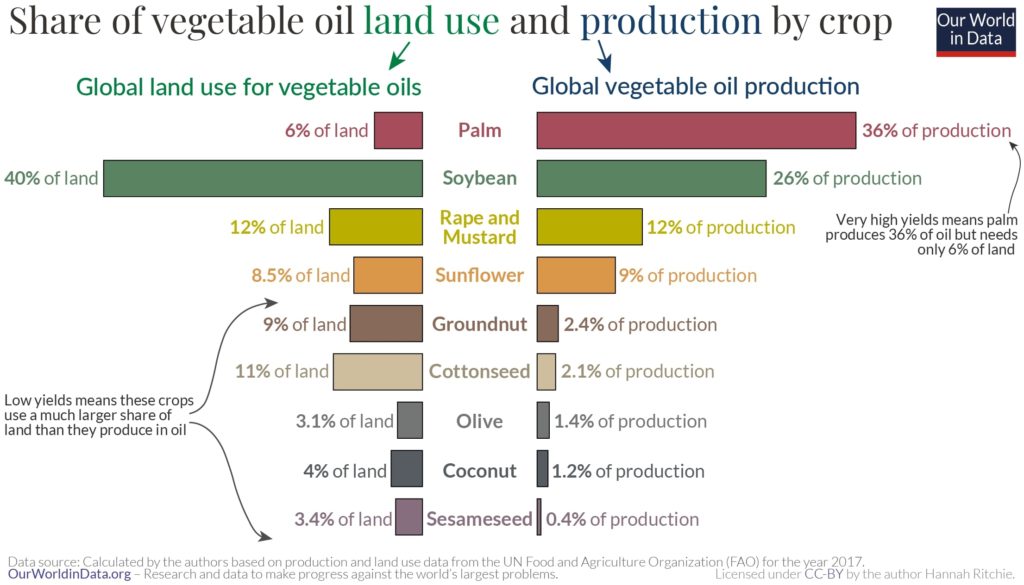
Palm oil is a very efficient oil to produce, creating substantially higher yields than other oil alternatives. The graph below shows how palm oil uses just 6% of land to create 36% of global oil production, whereas other oils are substantially less efficient.
If palm oil were boycotted today and we had to use a replacement, the alternative’s production would require a huge amount of land that would invariably lead to more damage.
The issue with palm oil is not not about the palm crop itself, but rather lies in the unethical and unsustainable primary rainforest clearing and habitat destruction to make room for it.
Environmental Impacts of Deforestation
About a third of the Earth is covered in forests, comprising rich and vibrant ecosystems and home to a variety of plants and animals.
They are one of the most important carbon sinks on the planet as a whole, and the carbon they absorb is released when they are cut down or burned. Our food demand has not only caused a biodiversity crisis, with an average 68% population decrease in all observed animal populations, but has also caused 10% of greenhouse gas emissions over the past decade.
Forests are also a vital source of food, medicine, fuel and fiber, clean air and water, and furthermore control floods and prevent erosion. For many of us, they are the kind of treasure we do not realize the value of till it is gone.
Looking Forward: A Sustainable Food System?
Combating global deforestation linked to food does not require the planet to go vegan, but it does require a fundamental shift in our food system and diets.
There is a role to play for governments, producers and consumers in minimizing deforestation tied to food production.
Consumers need to reduce their consumption of animal products, from meat to dairy and eggs. There are many dietary alternatives, though force of habit can certainly make it hard to reduce one’s consumption. A consciencous effort might be too much to expect us to achieve as a species, so government can step in and regulate production, supply and pricing – if these products were priced according to what they truly cost the environment, they would be much more expensive! In a world dictated by economics, the incorrect valuation of things can lead to disaster, while the correct valuation virtually fixes the problem.
Producers have the power to decide whether they act ethically or not, although this is changing with the wave of environmentally aware investing. A large amount of money is now available only to companies that are certified as sustainable, although this trend is till new and there are some kinks to figure out. As more investors join the “green investing” ranks, more companies are doing what they must to qualify for such funds, driving the private sector in an encouraging direction.
As most are aware, human-driven climate change is slowly but surely changing our weather patterns, making it warmer on average and throwing many different age-old systems out of whack. One of these are mountains, usually snow-capped above a certain altitude, which have seen their glaciers retreat due to accelerated melt over the last decades.
—
Decrease in glacial surface elevation over the last 20 years.
Now, new research from the University of Leeds has made a discovery with worrying implications. They found that melting glaciers could contribute to climate change by indirectly accelerating fungal decomposition, one of the biggest natural sources of CO2.
Fungi are the cleanup crew in many ecosystems, swooping in to consume and recycle dead organic matter. They are often found in freshwater rivers trickling down from the mountaintop glaciers, catching the grasses, shrubs and other materials being washed down.
The decomposition process releases CO2 as a by-product, and though much of it is taken up by the surrounding plants again, it still results in net emissions.
Warming temperatures have doubled the rate of glacial retreat in just the last two decades, melting an average 267 gigatonnes each year. This alone has contributed to 21% of the observed sea level rise over the same period, which is only one of the knock-on effects of this process.
Knowing all of this, the researchers set out to better understand how this affected fungi and their activity in the ecosystem. To investigate, they placed art canvases composed of >95% cellulose, the main component of organic matter found in streams, and left them there for a month; those that ripped more easily afterward had been more heavily decomposed. They found a correlation between stronger glacier melt and higher fungal activity, whom the explained were thriving thanks to sustained river flow and favorable warm temperatures.
The consequences? More CO2. Lead author Sarah Fell explains that this creates a positive feedback loop whereby climate change melts glaciers, which increases CO2 levels (through fungi), raising temperatures again. “This is an unexpected form of climate feedback,” says Dr. Fell.
This research is exciting as it will allow us to make much better predictions on how river ecosystems will continue to change. However, these findings have serious implications for the impact of glacial retreat on the global carbon cycle, and should be taken as yet another stark warning that increasing our CO2 emissions will have dire consequences.
Thankfully, we still have time on our side and climate change awareness is growing faster than ever. COVID-19 pit the world against a common enemy, and we are slowly but surely learning that cooperation is the key.
This article was written by Cara Burke and Owen Mulhern.
Boost this article
By donating us $100, $50 or subscribe to Boosting $10/month – we can get this article and others in front of tens of thousands of specially targeted readers. This targeted Boosting – helps us to reach wider audiences – aiming to convince the unconvinced, to inform the uninformed, to enlighten the dogmatic.