
Sign Up
  • Earth.Org Newsletters

    Sign up to our weekly and monthly, easy-to-digest recap of climate news from around the world.

  • This field is for validation purposes and should be left unchanged.
Earth.Org PAST · PRESENT · FUTURE
Environmental News, Data Analysis, Research & Policy Solutions. Read Our Mission Statement

We are all aware of the world’s plastic problem, although its scale can be hard to grasp. Over 8 million tons of plastic are dumped into the ocean each year, where it harms and kills marine life, absorbs toxins and works its way up the food chain back to our plates. Here we present a guest post that helps you visualize some of the solutions being deployed to combat this problem. 

Plastic products are so commonplace that it’s actually hard to imagine life without them. From the disposable forks we use at an outdoor picnic, the grocery bags we use to carry home goods, straws we use to drink to-go coffees or sodas and disposable bags we use for leftovers, these products play a huge role in the day-to-day lives of most people. 

Because it has become so ingrained in our lives, it’s sometimes hard to see the negative impacts of the product. When plastic gets lost in the ocean, they create a huge problem for the marine ecosystem and the waters. 

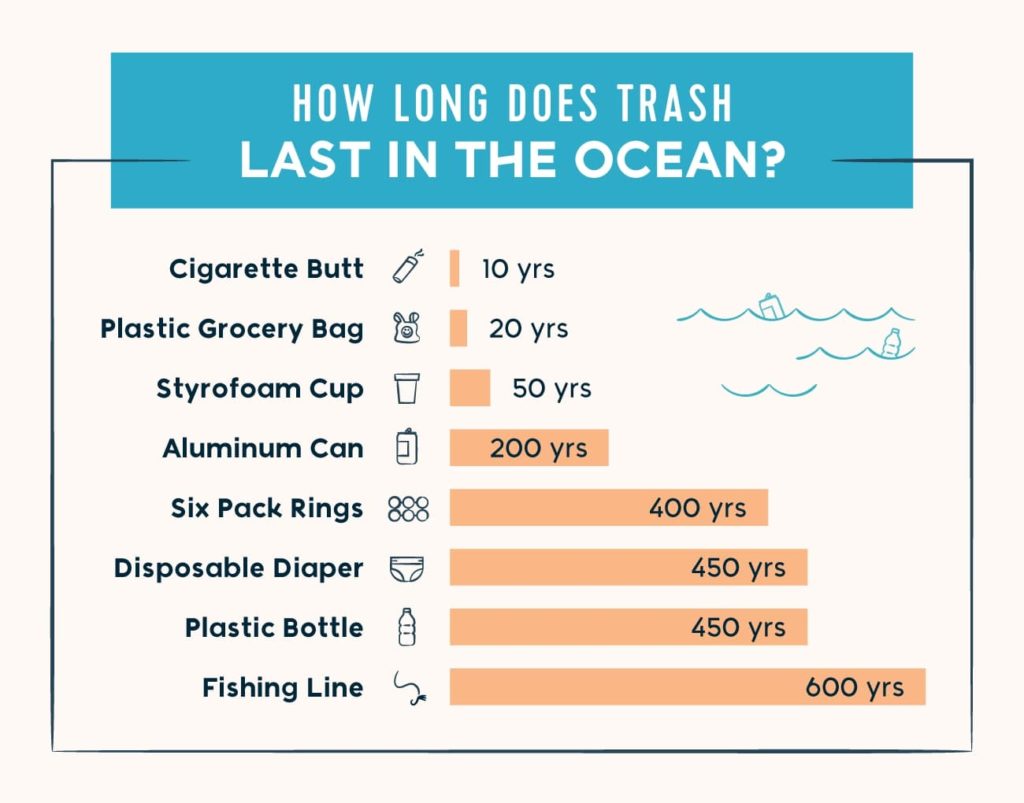
How Long Does Trash Last in the Ocean? 

There are many ways that these materials make their way into the waters. Whether deposited there during a beachgoer on a busy day, or blown there from a local landfill, they will last in the ocean for years after they make their way there. 
ocean cleanup 1

It’s important to keep in in mind that plastics never fully biodegrade. Typically, they break down into microplastics that continue to cause an issue for the oceans and the animals that live there. 

Ocean-Cleaning Efforts

There is a plastic crisis in our oceans. However, there are also researchers and scientists throughout the globe trying to solve the crisis by innovating new ways to clean up our oceans. We’ve rounded up some of the wildest ways we’re cleaning up our oceans, including some that are currently in use and still being tested. 

1. System 001

This prototype is working to target the gyre at the heart of the North Pacific Ocean, also known as the Great Pacific Garbage Patch. The gyre is about three times the size of France, and is found in the Pacific between Hawaii and California. System 001 is the first technology that is specifically targeting this area. 

The system is a large boom with an attached skirt that floats with the current to collect the plastic pollution in the gyre. The goal is the capture the plastics while they are still large enough and before they become microplastics. 

2. Seabin V5

Australian Surfers founded the Seabin Project to develop the Seabin V5, a floating vacuum that is made from recycled materials and is meant to operate in marinas, ports and other calm areas. The Seabin pumps water into a filter bag that captures the plastics and releases the water back into the harbor. The Seabin can also absorb detergents and oils that are commonly found in marinas. 

3. WasteShark

The WasteShark is an aqua drone that aims to prevent and reduce marine pollution by eliminating debris. Inspired by the whale shark that combs through the waters with its wide mouth, the drone also skims the surface and collects debris through a wide opening. The technology can run for up to 16 hours and collect up to 400 pounds of litter in one trip. 

4. Mr. Trash Wheel 

Mr. Trash Wheel, also known as the Inner Harbor Water Wheel, is a sustainably powered trash interceptor cleaning up the harbor of Baltimore. Powered by both hydro and solar power, the wheel pulls tons of trash out of the harbor each year. It is estimated to have blocked about 1.6 million pounds of debris from entering the Atlantic Ocean! Trash is funneled into the interceptor by the river’s currents. A conveyor belt then collects the trash, incinerates it and converts it into electricity. 

5. FRED

Student interns from several California high schools and colleges have partnered with Clear Blue Sea, a San Diego non-profit organization, to reduce garbage in the Pacific Gyre. FRED, also known as Floating Robot for Eliminating Debris, is an ocean-traveling robot that runs on renewable energy. This prototype is still in development, with a projected completion date of 2023. It’s designed with flaps in front of the machine that collect debris and transport them to a collection bin via a conveyor belt. 

6. Magnetic Coils

According to a study by scientist Xiaoguang Duag, a possible solution to tackle the global plastic problem could be a new type of nanotechnology. Duag and his team created tiny magnetic nano-coils — smaller than half the width of a human hair — that can break down microplastics in the ocean through a chemical reaction. 

These coil-shaped tubes are coated with nitrogen and a magnetic metal called manganese. This coating will react to the oxygen in the water, which is projected to attack microplastics and convert them into salt compounds, water and carbon dioxide. 

For more information on ocean clean-up efforts, check out the below infographic (credit to floridapanhandle.com).

You might also like: What’s Happening in Cambodia’s Forests?
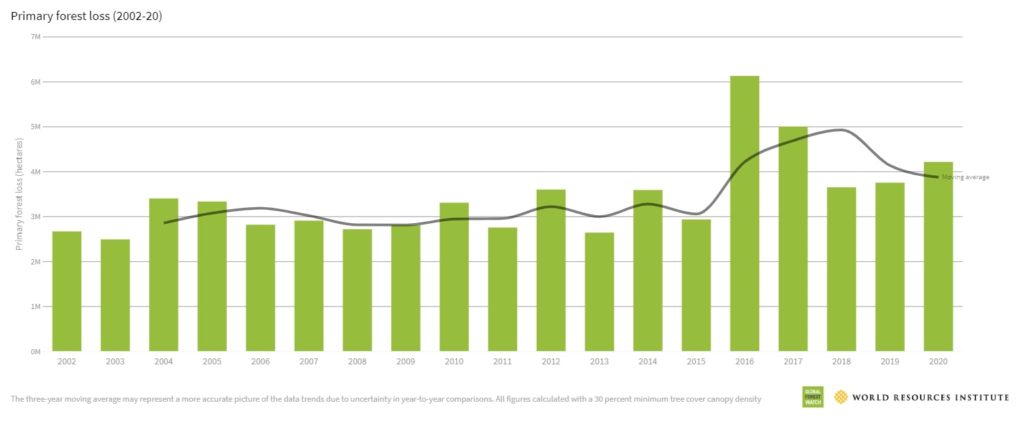
 

Tropical forest loss around the world was 12% higher in 2020 compared to the previous year, despite the drop in demand for deforestation-driving commodities due to COVID-19.

4.2 million hectares of primary tropical forest, meaning forest that had lain largely untouched, were lost in 2020. This resulted in a 12% increase from 2019, according to the World Resources Institute, whose subsidiary the Global Forest Watch monitors the state of our forests daily. 

deforestation primary forest 2001 - 2020 tropical forest loss

Tropical forests are confined to a relatively small land area around the equator, yet they make up 45% of all forest cover and contain 40% of the planet’s total carbon stock. Just last year’s tropical forest loss resulted in around 2.5 billion metric tons of carbon dioxide emissions, slightly less than India’s yearly average. 

Historically, the vast majority of this type of deforestation has come from three countries: Brazil, the Democratic Republic of the Congo, and Indonesia. Last year, Brazil remained on top by a wide margin, while Indonesia posted its fourth consecutive year of decline following a catastrophic fire season in 2015. Malaysia also did better, but this was outdone by deforestation spikes in Cameroon and Colombia. 

As in previous years, this was driven by conversion for commodity production, like industrial scale agriculture, mining, oil and gas and others. A recent study published in Nature found that rich nations with net reforestation numbers (e.g. China, India, G7 countries) are creating most of the demand. Their actual deforestation footprints have not changed despite domestic declines. 

Human-driven deforestation is nothing new, but there is progress in legislation and regulation, so we can hope that things will get much better within the decade. The problem at hand was illustrated by another notable event last year: the Pantanal wetlands wildfires. Climate change has made the region uncharacteristically dry, increasing the likelihood of runaway blazes from slash-and-burn farming. 

pantanal wetlands wildfires fire fires 2020


After Australia’s infamous 2019 fires, it became clear something about our climate was out of whack. Regular reminders have come in the form of the Californian and South American episodes, but there is a lack of accountability, These are essentially treated as freak accidents, and business continues as usual. 

These forests aren’t about to disappear, but there is a point where their death will be locked in well before they are entirely cleared. Deforestation feeds climate change through carbon release, which in turn reinforces deforestation and we have no idea where the tipping point lies. Let’s hope that the regulation trend comes back into full swing after COVID-19 dies down. 


This article was written by Owen Mulhern. 

You might also like: Arctic Lightning Strikes Have Tripled


In August 2019, lightning strikes came exceptionally close to the North Pole. Now, scientists show that Arctic lightning strikes have tripled in frequency in the last decade.

Earth.Org takes a closer look. 

Multiple lightning strikes were detected within a few hundred miles of the north pole in August 2019, a rather rare phenomenon as the necessary kind of storm rarely forms at those latitudes. The surprise was somewhat lessened by the near decade of reports that the Arctic is warming faster than expected, sea ice is melting along with permafrost, and meteorological conditions are changing. 

A team of researchers from the University of Washington’s department of Earth and Space Sciences measured the amount of lightning strikes above 65°N in the months of June, July and August between 2010 and 2020. This has its challenges, because detection efficiency has increased year by year since records began in 2004. The trick turned out to be measuring lightning strikes above 65°N as a fraction of total global strikes. 

lightning increase in frequency global

Number of total global detected lightning strikes for June, July and August (Blue) and the number of active detection stations (Red). Source: Source: Holzworth et al. 2020.

We can see that the increase in lightning strikes (blue) is closely related to the increasing number of stations (red) and therefore detection efficiency. The distribution of high latitude lightning (above 75°N) over the last 11 years is shown in the map below.

lightning above 75 degrees north arctic

Global distribution of Arctic lightning strikes in June, July and August for 2010 – 2020 above 75°N. Source: Holzworth et al. 2020.

A cluster of lightning strikes near the north pole all occurred on August 13, 2019, sparking interest and concern among scientists. It is difficult to derive any solid conclusions from a single event however, so it remains an outlier and nothing more for now. 

Moving on, the authors of the study compared the increased frequency of lightning strikes to NOAA global temperature anomaly data, finding that they had a linear relationship.

lightning strikes tripled in the arctic compared to temperature linear relationship

Ratio of (blue) lightning strikes above 65°N to the total number of global strikes, and the global temperature anomaly in degrees C (red), for June, July and August each year. Source: Holzworth et al. 2020.

Why should we care? 

Many of you may be asking yourselves this question at this point. We’re not just showcasing some of the latest climate-related data, we’re showing part of a larger picture. 

You may remember the outcry at the large arctic wildfires last year, burning up some of the largest and oldest carbon stores in the world. This is a result of a rapidly warming Arctic, going about three times faster than the global average. Higher temperatures make thunderstorm formation more likely, therefore increasing lightning strike and wildfire occurrence. Not to mention permafrost melt and methane release, which could be a ticking time bomb, and at best just makes things worse. 

The issue with uncharacteristically high latitude lightning is that it reflects the changing nature of Arctic weather. The first signs of it doing so in 12,000 years of stability, indicating that its state of equilibrium may not last. 

While it will undoubtedly take a long time for the Arctic to drastically change, we need to understand that a destabilized future can be locked in well before it comes to pass. We need to be careful not to push it beyond such a tipping point if we are to avoid a difficult future for the generations to come. 

This article was written by Owen Mulhern. Cover photo by Felix Mittermeier on Unsplash 

You might also like: Carbon Capture Out of the Blue


References
  • Holzworth, Robert H., et al. “Lightning in the Arctic.” Geophysical Research Letters (2020): e2020GL091366.

The ongoing pandemic has made it clear that when presented with similar circumstances of trouble or disaster, different people react in vastly different ways. The varied responses to COVID-19 across nations and communities resemble the typical responses to another big crisis that isn’t so easy to fully grasp, that of climate change. Studies on how these two issues are perceived sheds light on how to better communicate them in a way that garners more positive, sustained collective action. 

How one first perceives a crisis has a lot less to do with the facts of a situation than with their own psychology and socio-cultural background. We’re hardwired to assess risk based on various unconscious emotions and use past experiences, social cues, or feelings of control to fill in partial information. Hence our perceived sense of danger often doesn’t match how dangerous a thing really is. See the data for ‘public outrage’ versus ‘actual hazard’ below, for things like gun crime and credit card fraud. A typical example is how we drive our cars on busy highways every day but get anxious for an overseas flight even though plane crashes are far less likely statistically. 

perception of crises actual risk versus perceived risk

Source: Susanna Hertrich.

The Psychology Of Risk, And How To Leverage It 

First off, things like climate change don’t immediately trigger our intuitive sense of threat, developed throughout millennia of evolution. Harvard psychologist Daniel Gilbert has written about what drives individual behavior and why climate change is often met with indifference. 

A situation prompts response when it has four typical aspects: 

  1. The intention of a tangible agent
  2. The extent it violates our sense of morality
  3. The immediacy of danger
  4. Whether any effects are instantaneous rather than gradual 

Global warming is pretty benign by these standards, as is an invisible pathogen that hasn’t really bothered you or your immediate family. But see then how narratives can be framed so that people pay more attention. 

To appeal to a perceived intention, we can use the subject-verb: it is not that the globe is simply warming – there are specific agents causing that warming, be they fossil fuel companies or governments uncommitted to net-zero policies. 

To appeal to senses of morality, we can tell about the unfairness of climate change. Take the fact that the poor, in tropical, economically underdeveloped nations, will be most affected by increasingly extreme weather events (e.g. hurricanes and heatwaves) consequent of carbon emissions that they are largely not responsible for. Two-thirds of total global greenhouse gas emissions come from only a handful of developed or rapidly developing countries like the US, the EU, Russia and China. 

And to appeal to immediacy, we can share stories of people already grieving losses due to warmer temperatures. The Midwestern farmer, whose crops cannot survive prolonged heatwaves and dry spells, causing him to give up the land he’d inherited from his father and grandfather and generations past, a tremendous loss of purpose and identity. Or the Pacific island nations of Kiribati and Tuvalu consistently, visibly going underwater as sea levels rise, submerging not just land but history, cultures and ancestral homes.  

The Sociology Of Assessing Risk

Even with these appeals, though, risk perception is also strongly socially constructed, with some researchers arguing that outer influences are perhaps stronger than internal, psychological ones when it comes to what drives behavior. Interactions with colleagues, social norms, and the dominant media all shape what we believe we ought to think and do. 

There is what’s known as ‘the cultural theory of risk’ which maps social groups into four broad categories based on whether they are community-oriented or individual-oriented, and whether they see rules and authority as necessary or not so much. These categorical worldviews then shape how people see the built and the natural world, and in turn how they perceive messages about climate and public health. 


perception of crisis categorical worldviews, like climate change

Source: McNeeley and Lazrus, 2014.

Societies that are more individualistic and that disregard regulation tend to see climate change as not such a big deal, with manageable consequences that are ultimately one’s personal responsibility. More community-oriented groups see climate change as more serious and requiring swift mitigation.  

The cultural theory of risk has been debated and developed in recent decades but the main idea stands and generally follows what we see in today’s world. 

In a recent study, Ozkan et al. analyzed data from 110 countries and found that the more individualistic a country, the worse it was at handling climate emergencies and the COVID-19 pandemic, evaluated by each nation’s rate of mortality. In fact, the correlation between individualism and the COVID death rate was very similar to that between the COVID death rate and a nation’s climate risk – its vulnerability to damage from extreme weather events, based on physical geography but also readiness via policies and plans. This suggests that individualism may be a proxy for climate risk or vice versa.

climate change covid crisis perception

COVID-19 morality/death rate (DR) versus Climate Risk and Individualism for different nations. Source: Ozkan et al, 2021.

Perhaps the most influential societal factor in perceiving a crisis is one’s trust in those conveying the information, like public health officials or climate scientists, and this is rarely based solely on the speaker’s credentials. It’s based on who and what they represent, or appear to, and if people have ever felt misled by them. Once a level of trust is established, it can be very hard to change. 

Trust in institutions like the media and government varies across societies, and again one can spot patterns along countries with similar socio-political worldviews. A YouGov poll from last year in regards to information about COVID-19 showed most people do trust healthcare professionals while news outlets and politicians consistently fare worse. 

who do we trust on covid, perception of crisis

Again, recognizing all this can guide us towards better communication. We can appeal to a group’s specific values and recognize barriers that make certain efforts unproductive. 

A governor’s press conference is less likely to resonate with a French or American audience, and in Southeast Asian countries like Vietnam and the Philippines the views of family and friends might carry a bit more weight. 

To Keep From Tuning Out Catastrophe 

So what about when a crisis is fully, rightfully perceived – when we’ve made it past our instincts and social lenses to recognize that a real problem is at hand? 

In situations so vast and calamitous as a pandemic or global change, we often quickly realize that it is much more than any one of us can solve alone. The spark of wanting to do something can slip into overwhelming inability, and we freeze. We go into self-preservation mode, turning away from perceived helplessness and despair. 

Anthropologists have studied how and why good, well-meaning people have been historically indifferent to famines, mass murder and genocides, and it seems that when faced with crises so immense a sort of psychic numbing takes place – people stop caring, and so stop trying to enact change. 

Is there a way to change this, to change the reluctance to change? Again, we can improve the narrative. We can tell stories in a way that better inspires action.  

Here are four strategies:  

  1. Identify not only what is wrong but what the alternative could be. When the topic is habitat loss, paint the picture of abundant wildlife and vibrant ecosystems to highlight the kind of world we want to live in.  
  1. Incite hope and gratitude, not just grief and anger and despair, to maintain social and environmental movements. The latter are powerful motivators but positive emotions lead to more sustained engagement. 
  2. Explain the how and why of a situation as best as possible. The more we understand a situation, the more efficacy and agency we perceive, recognizing how even little actions do contribute to the big picture.
  3. Lay out concrete solutions that one can pursue now, drawing from a range of resources and talents that different people possess. An artist may not be able to donate significant finances to a rainforest conservation organization but they can spread awareness with their craft, and that is huge. 

Anthropogenic climate change and the COVID-19 pandemic are not the first global crises to afflict the modern world, but they are among the first where we have access to an enormous amount of information and competing voices with which to judge what’s real and what’s not, or what matters more and what matters less. 

As communicators (and, really, that is all of us), it is critical to know these influences well if we are to guide from seeing, to understanding, to doing something about it. 

This article was written by Debbie Sanchez. Cover photo by Mathilda Khoo on Unsplash 

You might also like: Adopting a Plant-Based Diet Would Reduce Agricultural Land Use by 3/4

We all know that meat consumption is an inefficient use of the world’s resources, but new statistics put this fact into new perspective. Using data and figures from Ourworldindata.org and the World Resources Institute, we demonstrate how agricultural land use could be dramatically reduced if we switched to plant-based diets.

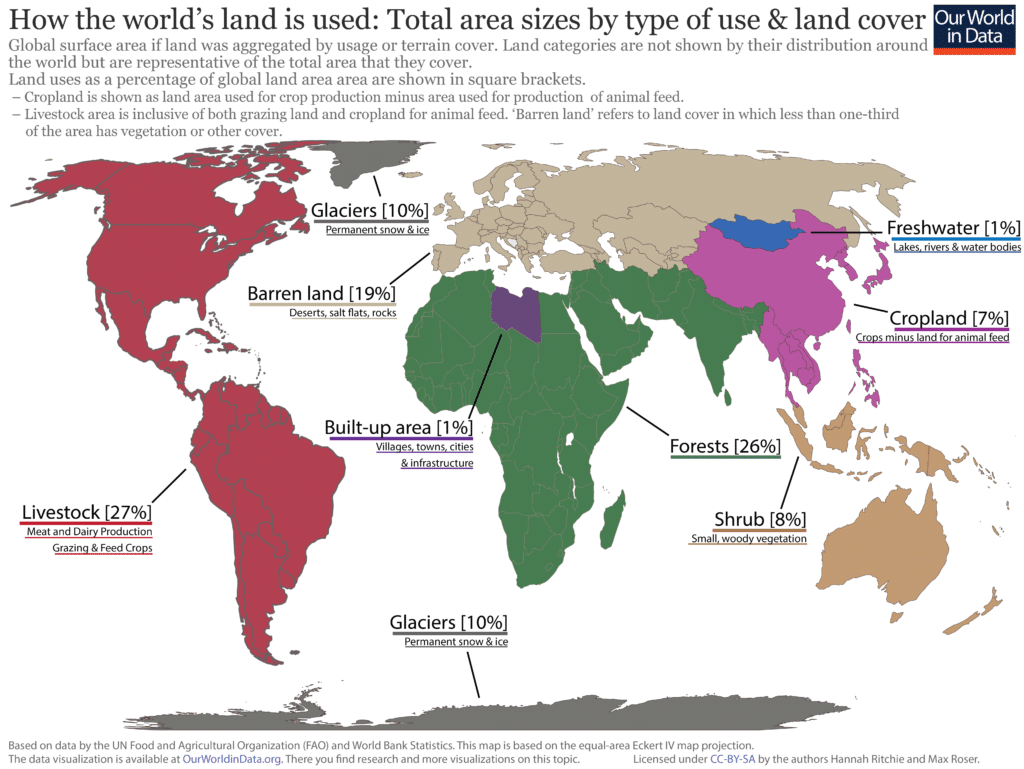
Agriculture takes up around 50% of all habitable land, equal to roughly 50 million square kilometers. Another 37% is forest, shrubs and bushes take up 11%, and 1% is urban and built-up land, with a final percent of freshwater area. 

agriculture land use usage country map

This raises a few problems. First, population growth predictions say we will reach around 10.9 billion by 2100, after which it is expected to slow down or even stop. Glossing over the fact that this implies a steep decline from the current rate (due to falling fertility rates), the question is: can we feed that many?

global land use usage for food production

The simple answer is that we can. One glance at the infographic above finds the inefficiency of meat when looking at land use vs. calorie or even protein production. Does this mean we shouldn’t be eating meat? It is not the cause of famine or hunger in the world, and even if we did away with meat and produced all that extra plant-based food, it is more likely to be wasted than brought to those in need. Indeed, 30% of all food is wasted, easily enough to help the 1 in 9 who go hungry, and efforts like those of Too Good To Go are to be supported and applauded. 

However, meat production does drive a massive amount of deforestation. According to the World Wildlife Fund, beef and soy drive more than two-thirds of the recorded habitat loss in Brazil’s Amazon, where the bulk of tropical rainforest loss occurs.

primary forest loss by country in 2019

Eating less meat would also discourage poor treatment of animals, poor quality meat production that undermines our health but, most importantly, it would reduce our encroachment on the world’s dwindling wildland. 

Why do we want that? 

Firstly, ecosystems provide many services, from clean water and air, to defence against natural disasters. Second, we dramatically increase the chances of disease from animal reservoirs by increasing the interface between wild and human lands. Third, we massively increase the potential amount of food (calories and protein-wise) we can produce.

If we went all the way and abandoned meat altogether, switching to a plant-based diet, we would actually reduce agricultural land by three quarters. 

global land use of different diets by Poore and Nemecek

This is due to the amount of cropland, AND pasture that goes into animal rearing. It is safe to say that we’ve invested too much of the planet’s resources into such a superfluous commodity. Yes, it has cultural and nutritional values, but the price we pay is too high even if it doesn’t obviously appear so. 

This article isn’t promoting plant-based diets as the solution, but it gives perspective on the issue. We should phase out our meat consumption or at least reduce it where we have the luxury to do so. This will pave the way for the necessary dietary changes that must take place over the next decades if we are to avoid serious consequences. 


This article was written by Owen Mulhern.

You might also like: Plastic Eating Bacteria: A Viable Solution to the Plastic Problem?


Plastic-eating bacteria are an exciting prospective solution to plastic pollution, but are they enough? 

Earth.Org takes a closer look.

Headlines blew up in 2016 when a study from the Kyoto Institute of Technology discovered that the bacteria Ideonella sakaiensis can break down PET using the enzyme PET hydrolase and MHETase. Though this is an exciting discovery, there are currently many challenges that stand in the way of it being a marketable solution to plastic pollution or recycling. 

plastic eating bacteria

Source: Yoshida et al. (2016).

At the moment, most plastic recycling is thermo-mechanic, which doesn’t fully degrade the plastics into its monomers (the “building blocks” of plastic). It tends to produce lower-quality plastics. Enzymatic degradation could degrade PET into its inert monomers. For the enzyme to be useful, it has to work fast, be marketable, safe, and deployed where plastic pollution is most abundant. 

We are currently on track to have the same mass of plastic pollution in the oceans as fish by 2050. Theoretically, dumping lots of plastic-munching bacteria into the oceans seems like a great idea. However, unleashing genetically modified and untested species into new environments could have many negative consequences. Besides, scientists have found that plastic-eating organisms are already present in the ocean and account for the fact that aquatic plastic pollution is not present at the levels we expect. 

The speed of these enzymes is also a key factor. If they can’t degrade hard plastic fast enough, they’re useless in the recycling process. PET is manufactured in varying levels of crystallisation; the more crystallised the plastic, the harder it is to break down. The study afore-mentioned used a small, low-crystalline PET sample, and it still took six weeks to be broken down. The enzyme has been improved since then: in 2018, UK scientists discovered the structure of PET hydrolase and modified it, accidentally causing it to work faster and on crystallised PET. In April 2020, the French company Carbios released a modified enzyme that could degrade 90% of PET bottles within 10 hours, though it still required a temperature of above 70°C. In October 2020, UK scientists combined the two enzymes involved in the plastic breakdown process and created a more efficient version that could work at room temperature.

These are significant improvements, but the risks involved in plastic degradation are still relatively high. Plastics contain toxins that may be released upon degradation. Next, the broken down plastic needs to be isolated from the other elements of the mix to be made reusable, which adds to the cost. Even if the degradation process was made cheaper and quicker, making plastics de-novo remains difficult to compete with. However, companies like Carbios are currently working on making this a viable marketable solution, and are collaborating with l’Oréal, Nestlé Waters, PepsiCo and Suntory Beverage and Food Europe. 

Whilst enzymatic plastic recycling has huge potential, we are already producing 270 million tonnes of plastic waste yearly, and scalable solutions need to be found now. The solution will likely be a combination of many approaches, including reduced production, governmental incentives, and better recycling infrastructure.

This article was written by Cara Burke.

You might also like: Species Reintroduction: How Wolves Saved Beavers in Yellowstone


Since the Green Revolution, an emphasis on cropland productivity has overtaken time-proven traditional practices that actually played an important role in the sustainability of farming. It has also shifted the landscape toward heavy monoculture instead of a healthy mix of wild crops, threatening food security by its “all eggs in one basket” nature. 

Earth.Org takes a closer look.

Cross-breeding between cultivated crops and their indigenous close relatives growing in the wild can help build a resilient food supply chain. Expanding the gene pool of the current food system is a practical strategy to produce crops with higher resilience to adverse weather conditions and  pathogens especially. Unfortunately, wild plants and their gene pool are endangered due to habitat loss and insufficient protection.

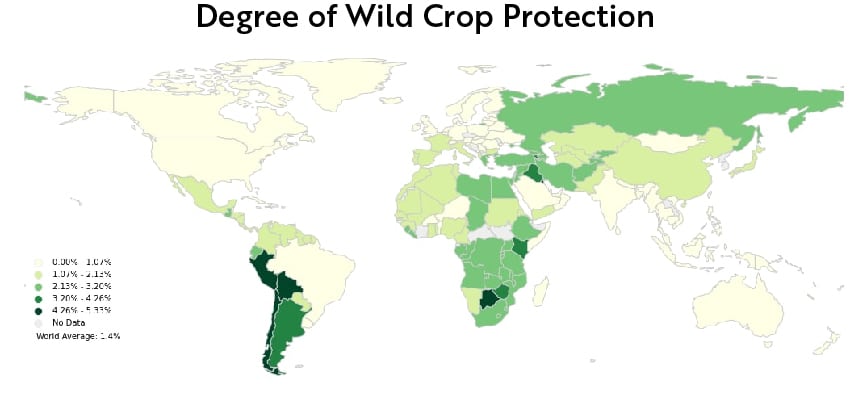
Colin Khoury, a leading researcher in agrobiodiversity, conducted a survey to measure the percentage of adequately protected useful wild crops  (see figure below). The results are concerning:  not  a single region scored in double-digits, with the global average standing at a mere 1.4%.

food wild crops

Source: Data Source: Food System Dashboard

Countries practicing intensive industrial farming performed the worst in this study. India, which experienced the Green Revolution in the 1960s performed on par with the US, Canada, Brazil, and Australia. On the contrary, Sub-Saharan African and South America are, on average, better at preserving and protecting useful wild crops.


This pattern reflects a crucial vulnerability of the new, industrialized food supply chain: the monoculture of only 25% of the strains grown in the past 10,000 years. Cultivated crops are becoming more susceptible to adverse climatic conditions, but importantly, to pathogens. This is because uniform genetic makeup means that the entire population is exposed when the right (or wrong) pathogen comes up.

One prominent direction of solution revolves around the integration of wild plants into the food supply chain. A team at Queensland University of Technology are now developing a new banana strain using genes from wild varieties. Although the project is still under way, the preliminary result was promising. A similar project is also being conducted by the International Center for Tropical Agriculture, breeding a new strain of bean derived from the wild tepary beans that can cope with the increasing heat stress. 

The protection of the natural environment not only constitutes climate action, but also an initiative to protect our food system. Preserving the natural state of the environment allows important wild crops to thrive and be introduced into the future food system. Better yet, agricultural businesses should respect the natural system and conform with indigenous environment. Such a reinvention of food production would maybe drop yields for a while until the methods were scaled up and optimized. In the meantime, let’s remember that 30% of all food is lost, and that there is well enough to feed everyone. Pushing productivity while sacrificing the long-term is not the way to go.

This article was written by Travis Yip. Cover photo by Amy Humphries on Unsplash 

You might also like: Emissions in a Post-COVID-19 World


A 2019 study demonstrated the cascading effect that a single species can have on an ecosystem, as beavers bounced back in the two decades after wolves were reintroduced into Yellowstone. This is proof the reintroduction is a viable strategy, and that it should be better studied and employed in order to provide resilience to our faltering ecosystems.

What is Species Reintroduction?
Species Reintroductions are attempts to return species to parts of their historic ranges.

In the past, reintroduction was used for species preservation.  But now, this has shifted to restoration of ecosystem function, especially as these face fragmentation and a shifting climate. 

The Yellowstone Stories
Reintroduction of wolves back in Yellowstone is said to be one of the most successful conservation endeavours in history. Not only has the wolf population continued to thrive, the direct and indirect consequences of the reintroduction have benefited the overall quality of the Yellowstone ecosystem.

You may also be interested in: The Fall and Rise of the American Grey Wolf

When wolves disappeared from Yellowstone, the elk populations were under much weaker predatory pressure. This led to high populations of elk tarrying in winter months and putting excessive pressure on plants, mostly affecting young willow, aspen and cottonwood. Beavers suffered indirectly from this as they need willows to survive in winter – a good example of the knock-on effects in an ecosystem.

Today, with three times more elks than in 1968, willow stands are robust. The predatory pressure from the wolves keeps elk on the move and willows avoid intense browsing. 

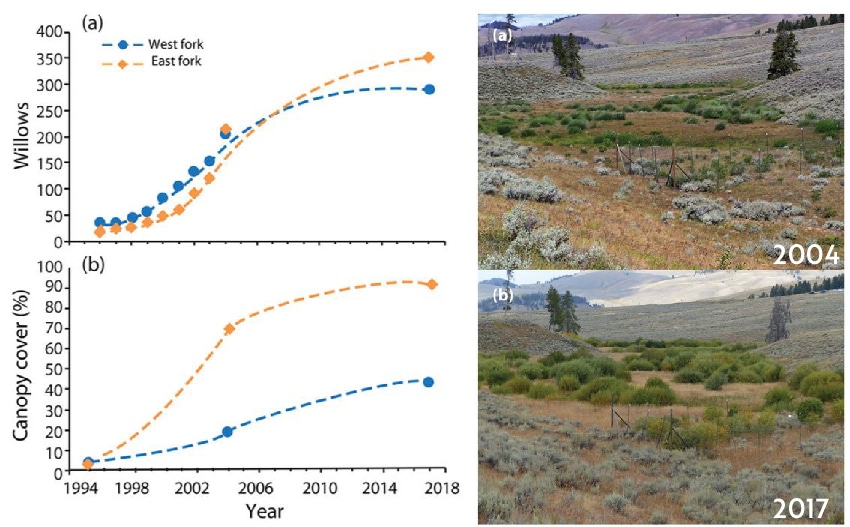
A study by Beschta and Ripple in 2018 sampled heights of willow along the Black Deer Creek, located in the northern range of the Yellowstone National Park, from 2004 and 2017. Comparing the records from the 1990s, the willow heights went from ≤52 cm to ≥200 cm in 2017. Canopy cover over the stream, essentially absent in 1995,  had increased to 43% and 93% along the West Fork and East Fork of the creek, respectively. 

reintroduction wolves yellowstone

Willow count and canpoy cover over beaver inhabited streams. Picture evidencce of willow regrowth after wolf introduction in Yellowstone Park. Source: Beschta, Ripple (2019).

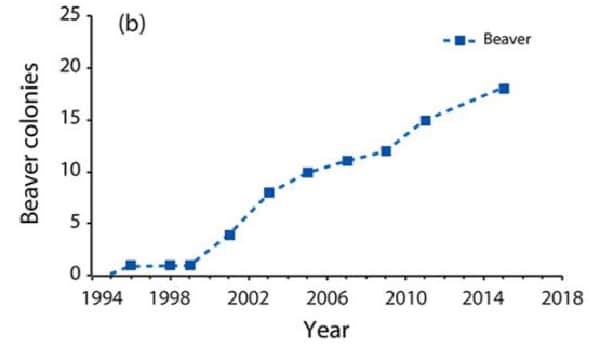
With the thriving of willow, beaver colonies have also grown from one in 1995 to 19 by 2015 with four active dams in use.

reintroduction beavers yellowstone wolves wolf

Source: Beschta, Ripple (2019).

Scientists are certain about the continuous benefits of reintroduction of wolves in Yellowstone will bring.

It was never intended for wolves to save the Yellowstone beavers, but this goes to show the potential of reintroduction. In other parts of the world, the practice continues to bring good news for conservation.

Other Recent Successful Stories

  • Bilbies in New South Wales, Australia
    In 2019, 50 adult bilbies were released into a feral predator-free breeding area at Mallee Cliffs; and in 2020,  the first baby Bilbies is going to be born at Mallee Cliffs National Park in over 100 years.

  • Red Kite in England
    30 years after 13 red kites were reintroduced to the UK, there are nearly 2,000 breeding pairs of red kites in nearly every English county.

  • Water Buffalo in Danube Delta, Ukraine
    A herd of seven animals were successfully released on Ermakov Island, in the Ukrainian part of the Danube Delta in 2019.

This news is certainly a big motivation for all, as the worrying decline in animal populations has most of us worried. As we realize the importance of our fragile ecosystems, more conservation efforts like these will surely take place, possibly starting a more sustained trend. 

This article was written by Wing Ki Leung. Cover photo by Eva Blue on Unsplash 

A recent article published in Nature Climate Change assesses national fossil fuel emissions under two different scopes: since the Paris Agreement, and since the COVID-19 pandemic. They report the contradictory nature of investments in fossil-fuel infrastructure and strengthened climate targets. Which of these two paths is reinforced by policy choices will decide whether we achieve the Paris Agreement goal of staying below 2°C global warming.

Earth.Org takes a closer look.

Since the adoption of the Paris Agreement in 2015, climate action has been building momentum. From the corporate world, where ESG has become standard, to the investment shift from coal and unsustainable ventures, to net-zero targets and activists of all ages, the movement is pervasive. Unfortunately, actual climate action is nowhere near fast enough to avoid serious consequences from global warming.

This is to be expected. Our society rewards making economically profitable decisions, and the natural world is severely undervalued. The cost of damaging our environment will mainly make itself felt in our food yields and our health (think poor air and water quality and a changing disease landscape). The sad truth is that poorer countries will bear the brunt of the impact, and this may be why richer countries unconsciously (or otherwise) take more time than they should to adapt. 

While we wait for governments to implement carbon taxes and other measures to correctly price our impact on the environment, nationally determined contributions, ratified under the Paris Agreement, reflect a growing awareness of the problem at hand. Between 2015 and 2019, high-income countries accounting for 35% of global emissions have, on average, slightly reduced their emissions. Other categories have all seen a net increase in average emissions. 

However, all of this changed in 2020, where the gridlock resulted in 7-10% emission cuts for all groups.

change in emissions since paris agreement and during covid-19 pandemic

Change in fossil CO2 emissions (percent per year) in the 5 years since the Paris Agreement. Source: Le Quéré, Corinne, et al. (2021)

Global fossil CO2 emissions decreased by around 2.6 Gigatons (GtCO2) in 2020 to 34 GtCO2 in total. This is 7% lower than 2019 levels, and though driven by the COVID-19 pandemic, such a drop in emissions has never been witnessed. 

It is concerning then that we need 1 to 2 GtCO2 drops per year throughout the next decade to avoid exceeding 1.5°C and stay well below the 2°C mark. 

paris agreement emissions reduction versus covid

Source: Le Quéré, Corinne, et al. (2021). Credit: AJ De Gol (https://twitter.com/ajdegol?lang=en).

As we recover from the pandemic, some (mostly European) countries have laid out exemplary rebound policies that encourage green infrastructure investment while discouraging fossil-fuel driven activity. Unfortunately, fossil fuels remain the dominant recipient of funds in most countries, including China and the US. Without true divestment, we risk making up for the 2020-21 slowdown in very little time, returning to the 2015-2019 mitigation rhythm of 0.16 GtCO2 per year. 

The first most attractive short-term solution is reforming transport systems, highly disrupted during the pandemic. Active transport (safe walking and cycling) in cities, public transportation and electric vehicles could become a new global norm in higher-income countries, spear-heading a trend for developing nations. Second is the promotion of renewable energy. The implied air quality benefits combined with the progressive reform of our energy production are the logical choice.

It remains to be seen whether authorities will take this unprecedented opportunity to reform or simply let things fall back into place. 


This article was written by Owen Mulhern. Cover photo by Elena Mozhvilo on Unsplash.

You might also like: Amazon Ablaze in 2020

References
  • Le Quéré, Corinne, et al. “Fossil CO2 emissions in the post-COVID-19 era.” Nature Climate Change 11.3 (2021): 197-199

A team of scientists reports a link between human-driven climate change and the declines observed in butterfly populations in the US. 

Earth.Org takes a closer look. 

You may be aware that sweeping declines have been reported in insect populations by many recent studies. The truth, as always, is much more complex, as described in our review article on the situation: Insect Decline: “Death By A Thousand Cuts”.

Nonetheless, some species and families are indeed in steep decline and it is important for us to understand why, especially when we are speaking of pollinators and other species vital to ecosystem health. 

A recent study published in Science aggregated monitoring data from over 70 locations spanning the western US. What they found was a 1.6% annual reduction in the number of individual butterflies counted over the past four decades. Causes for this are many, but a stronger correlation was found with warming during fall months, attributed to anthropogenic climate change. 

It is important to understand that 1.6% is not a little, it is massive. The once ubiquitous monarch butterfly used to carpet California and fly in orange and gold clouds – now they are sparse and scattered.

monarch butterfly california

Monarch Butterflies cluster roosting at Pismo Beach. Don Johnston_AH / ALAMY

The changes that take place in the planet’s geology and ecology usually occur over timescales far beyond our lifespans, and thus go by unnoticed. When we start to notice them, that means things are moving incredibly fast, and that can only mean a massive disruption of the incredibly gentle climate of the past 12,000 years. 

Let us put all of our efforts into limiting waste and encouraging cleaner energy generation. The movement has already begun, but the sooner the transition, the less damage will be done. 

This article was written by Owen Mulhern.


You might also like: Renewables on the Rise


Subscribe to our newsletters

The best environmental stories of the week and month, handpicked by our Editor. Make sure you're on top of what's new in the climate.

SUBSCRIBE
Instagram @earthorg Follow Us