
Originally set to kick off on December 30, 2024, the EU Deforestation Regulation (EUDR) had already been delayed by a year. A revision approved last week now pushes it to December 2026.
—
The European Parliament last week voted to delay the bloc’s controversial deforestation regulation to December 2026 amid mounting pressure from some EU and non-EU countries, global business partners and industry.
The move comes in response to mounting pressure from right (EPP) and far-right political groups, some EU and non-EU countries, global business partners and industry. Many of them were complaining about a lack of preparedness to comply with the new strict requirements.
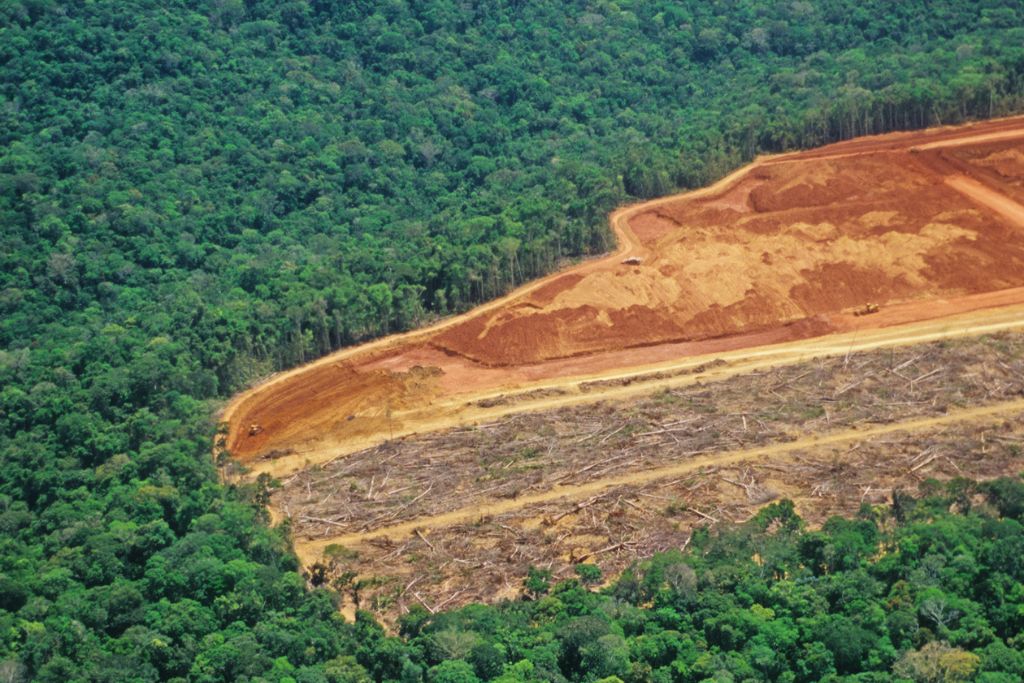
Originally set to kick off on December 30, 2024, the EU Deforestation Regulation (EUDR) had already been delayed once, to December 30, 2025. Now, the deadline has shifted again by another year. The law cracks down on commodities linked to deforestation and forest degradation for agricultural expansion, targeting cattle, cocoa, coffee, palm oil, soya, and wood sold within the bloc. These six commodities accounted for over 50% of total deforestation between 2001-2015.
The delay is a result of multiple challenges, including the readiness of the European Commission’s information system, which is essential for processing due diligence statements and verifying compliance; operators’ and auditors’ ability to meet stringent due diligence requirements, particularly for complex supply chains; and pressure from key trade partners. The latter include those in major commodity-producing regions, who have raised concerns about the economic and logistical feasibility of meeting EUDR standards within the original timeline.
More on the topic: Seizing the EUDR Delay: How Businesses Can Lead in Sustainable Supply Chains
The new revision sets December 30, 2026 as the deadline for large operators and traders to comply. Micro and small enterprises will have until June 30, 2027.
Green groups like ClientEarth criticized the move, arguing that it delays many key environmental and economic benefits the legislation would have resulted in, including a reduction of EU-consumption and production driven deforestation by 29% by 2030; at least 32 million metric tonnes of annual CO2 emissions savings; economic savings of at least €3.2 billion per year; and the preservation of at least 72,000 hectares of forest every year starting 2030.
Aside from the delay, the revision approved last week also streamlines the due diligence requirements. For ClientEarth, this effectively reduce key safeguards and accountability for some operators and traders. “By making only operators who are the first to place a relevant on the EU market responsible for ensuring that products are ‘deforestation-free’, the revised approach weakens full traceability and shared responsibility across supply chains,” it wrote.
The EU is responsible for importing products that account for approximately 13-16% of deforestation – and related emissions – associated with global trade.
This story is funded by readers like you
Our non-profit newsroom provides climate coverage free of charge and advertising. Your one-off or monthly donations play a crucial role in supporting our operations, expanding our reach, and maintaining our editorial independence.
About EO | Mission Statement | Impact & Reach | Write for us