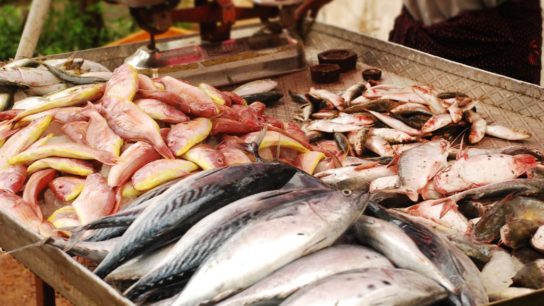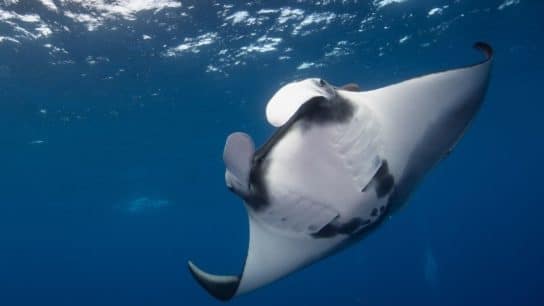



Two decades in the making, the High Seas Treaty aims to “preserve the marine environment.” Following the ratification by four countries last week, the treaty will become legally effective in January 2026.
—
The UN High Seas Treaty, the world’s first treaty to protect and conserve marine biodiversity in international waters adopted in 2022, will enter into force next year after clearing the ratification threshold last week.
Formally known as the Agreement under the United Nations Convention on the Law of the Sea on the Conservation and Sustainable Use of Marine Biological Diversity of Areas Beyond National Jurisdiction, or BBNJ Agreement, the treaty is centered around the creation of Marine Protected Areas (MPAs) on the high seas to preserve marine biodiversity.
The text, two decades in the making, aims to protect 30% of the high seas. Currently, only 1% of the high seas are protected, leaving marine life vulnerable.
While 142 countries and the European Union signed the treaty since it opened for signature in September 2023, a minimum of 60 ratifications were required for the agreement to come into force. The threshold was cleared last week, when Sri Lanka, St. Vincent and the Grenadines, Sierra Leone and Morocco ratified it.
“I welcome this historic achievement for the ocean and multilateralism,” UN Secretary-General António Guterres said in a statement on Friday.
Rebecca Hubbard, Director of the High Seas Alliance added that the “[t]he high seas is a powerful testament to multilateralism, showing what the world can achieve when we come together for the common good for our ocean, which covers 70% of the planet.”
Along with the creation of marine protected areas in international waters, the treaty also requires economic activity on the high seas, such as planned deep sea mining for transition materials, to present environmental impact assessments. It will also promote equity for developing countries through greater knowledge sharing and technology access, strengthening capacity, and ensuring the equitable access and sharing of the benefits of marine genetic resources.
The high seas begin where states’ exclusive economic zones (EEZ’s) end, at a maximum of 270 nautical miles (370 km) from the coasts, and are under no state’s jurisdiction.
Constantly overlooked in environmental protection efforts, marine life in international waters is frequently threatened by climate change, pollution, and overfishing. According to the International Union for Conservation of Nature (IUCN), 10% of marine species are at risk of extinction.
In a statement, Oceana’s Chief Scientist Katie Matthews noted: “For too long, the high seas have been a Wild West, lacking comprehensive oversight. The ratification of the High Seas Treaty will help bring order … What matters now is turning paper into protection. Nations must move quickly from ratification to real-world implementation. If world leaders are serious about protecting 30% of the ocean by 2030, that requires ambitious action on the high seas.”
Contested Waters
While the treaty is a significant step towards ocean conservation, it is “just the starting block,” said Hubbard, who argues that the treaty’s true strength lies in “universal protection.” Since no one country controls international waters, all nations have a right to ship and fish there, making the protection of these waters even more fragmented.
Under the binding agreement, the first Conference of the Parties (COP) must convene within a year of entry into force. However, it will need to work in coordination with other global and regional authorities that currently hold authority over portions of the ocean in order to implement its decisions, including regional fisheries and the International Seabed Authority (ISA), which regulates deep-sea mining in international waters.
The Deep Sea Conservation Coalition warned that destructive activities such as deep-sea mining and bottom trawling on seamounts, underwater mountains formed by extinct volcanoes, and other vulnerable marine ecosystems directly undermine the treaty’s objectives and vision. Critics have also pointed out that the treaty permits countries to conduct their own environmental impact assessments and make final decisions, whereas NGOs had hoped the COP itself would have this authority.
Turning the Tide
Countries are already shifting into high gear to establish High Seas MPAs once the treaty is operational and build institutions and processes in time for COP1, which will determine the treaty’s long term effectiveness. Among the proposed MPAs are the Sala y Gómez and Nazca Ridges, the Lord Howe Rise and South Tasman Sea, the Sargasso Sea and the Thermal Dome in the Eastern Pacific.

“We could see the first protected zones adopted perhaps by late 2028 or 2029,” estimated Lisa Speer of the environmental organization NRDC. The establishment of these zones is crucial because the “Ocean is the foundation of our very existence,” said UN Environment Program Executive Director Inger Andersen.
It is important to note, however, that major industrial fishing nations with the greatest impact on the high seas have yet to ratify the agreement. China has signed it but has not ratified it, while Japan and Taiwan have yet to sign it. Only Korea and Spain have so far ratified the agreement.
Several other governments are expected to ratify the BBNJ Agreement during the upcoming United Nations General Assembly High-Level Week, which will be held between September 22-26 in New York.
You might also like: What Was Achieved at the UN Ocean Conference in France?
This story is funded by readers like you
Our non-profit newsroom provides climate coverage free of charge and advertising. Your one-off or monthly donations play a crucial role in supporting our operations, expanding our reach, and maintaining our editorial independence.
About EO | Mission Statement | Impact & Reach | Write for us