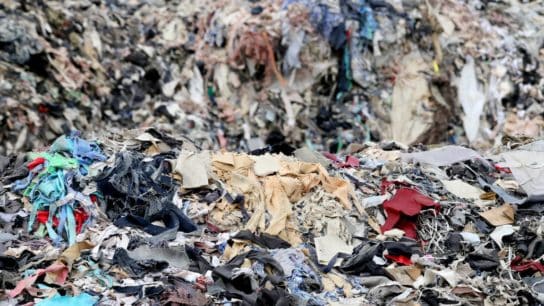


As federal regulations falter and “forever chemicals” continue to disproportionately impact disadvantaged fenceline communities, ordinary citizens are bypassing political gridlock to spearhead their own environmental justice movements.
—
By Sharon Udasin and Adriana A. Zuniga-Teran
This article is part of a series exploring the dangers of PFAS, policy developments and how communities around the US are responding to the threat. Check out part 2 – Decades of Using PFAS-Based Firefighting Foam Left Behind a Toxic Legacy – and part 3 – US States Are Filling the Federal Void on PFAS Regulation.
Communities plagued by cancer-causing “forever chemicals” are coming together to advocate for themselves, amid historic environmental injustice and political neglect.
Met with disregard from lawmakers unwilling to provoke polluters, ordinary people are seeking out local solutions to what has become a planetary-scale problem. The problem? A set of man-made compounds called per- and polyfluoroalkyl substances (PFAS), which can be found in nearly every living thing in every corner of the world.
Notorious for their inability to break down in the environment, PFAS are linked to many cancers and other serious illnesses. But these hardy compounds are also key ingredients in common household products, such as non-stick cookware, cosmetics, food packaging and waterproof apparel, as well as in certain firefighting foams.
Most humans encounter PFAS in one way or another, raising the question as to whether exposure to these compounds is an environmental justice issue. A recent review of the latest scholarship presented at last month’s National PFAS Conference in Tucson, Arizona, sought to answer this question.
Combing through 67 publications from across the US and worldwide, a University of Arizona research team found that “fenceline communities” – those situated near pollution sites – are grappling with excessive PFAS exposures. In other words: PFAS may be ubiquitous, but they are hitting certain groups harder than others.
Such groups often reside next to military or industrial complexes like landfills, refineries, mines, sewage treatment plants and hazardous waste incinerators, according to the researchers, led by Adriana A. Zuniga-Teran, along with Curtis Kline, Andrea Gerlak, and Gemma Smith. Meanwhile, these populations may already be “disproportionately in contact with other chemical toxins,” a 2021 study concluded.
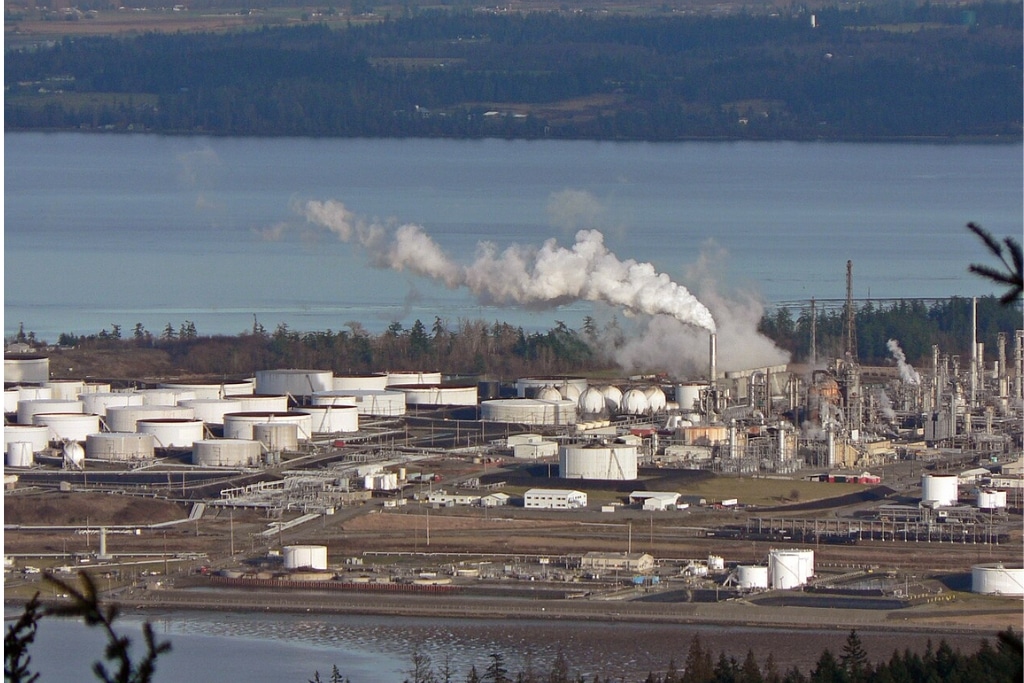
In California alone, some 8.9 million residents of state-identified disadvantaged communities – or 79% of people living in these areas – are getting their water from systems currently or previously polluted with PFAS, according to a 2024 Natural Resources Defense Council report, which was not part of the literature review.
Relying on the federal government to step in hasn’t been a feasible strategy, especially in today’s era of regulatory uncertainty. For example, just this past May, the Environmental Protection Agency (EPA) announced that it would be rolling back limits on four of six PFAS that had been regulated by the Biden administration.
Also complicating the pursuit of justice are a series of other natural and human-made boundaries that constrain residents of a given community, according to the University of Arizona study. Chief among these are state borders, since states operate as isolated geographical and political territories. And yet, industrial contamination can cross jurisdictions, particularly in the absence of federal oversight.
Though individual states have implemented their own regulations for certain types of PFAS, these rules vary across borders and there are thousands of PFAS with no such limits. The resultant regulatory fragmentation leads to a situation in which industries are able to continue producing many forever chemical varieties regardless of local interests.
Other legal boundaries, such as the act of designating land as “contaminated,” can shape property values, liability and public perception, researchers found. Meanwhile, racial and social boundaries often isolate populations and reinforce uneven protection.
Nonetheless, when members of neighboring communities decide to cross borders, their connection to each other can also engender and strengthen long-term advocacy efforts.
Key to their success is the dissemination of reliable information that avoids technical jargon and is available in multiple languages. Supporting grassroots efforts are networks of professional groups that foster activism and take legal action, breaking what researchers describe as a pollution-fueled “feedback loop of harm and poverty.”
Much of this activism is inspired by family experiences, with mothers of affected children at the helm. Personal stories have inspired community members to seek out solutions, such as in Merrimack, New Hampshire, where residents secured drinking water systems at schools, well filters, blood tests and health surveys from their town councils.
Meanwhile, in Paulsboro, New Jersey, a non-profit ended up uncovering PFAS pollution in the region’s water – four years after area officials had first identified a problem. This was a case in which a non-profit earned public trust after the government had eroded it.
Not Just a US Problem
The drive to tackle the PFAS problem on a local level has become a common plight among affected communities also outside of the US. For example, a contingent of “ordinary mothers exposed to PFAS” in Italy’s Veneto region joined hands to form the “MammeNoPfas” group, as detailed in a 2024 study. In this area, where a factory was discharging PFAS-polluted waste for decades, residents faced higher death rates from heart diseases, kidney and testicular cancers and Covid-19.
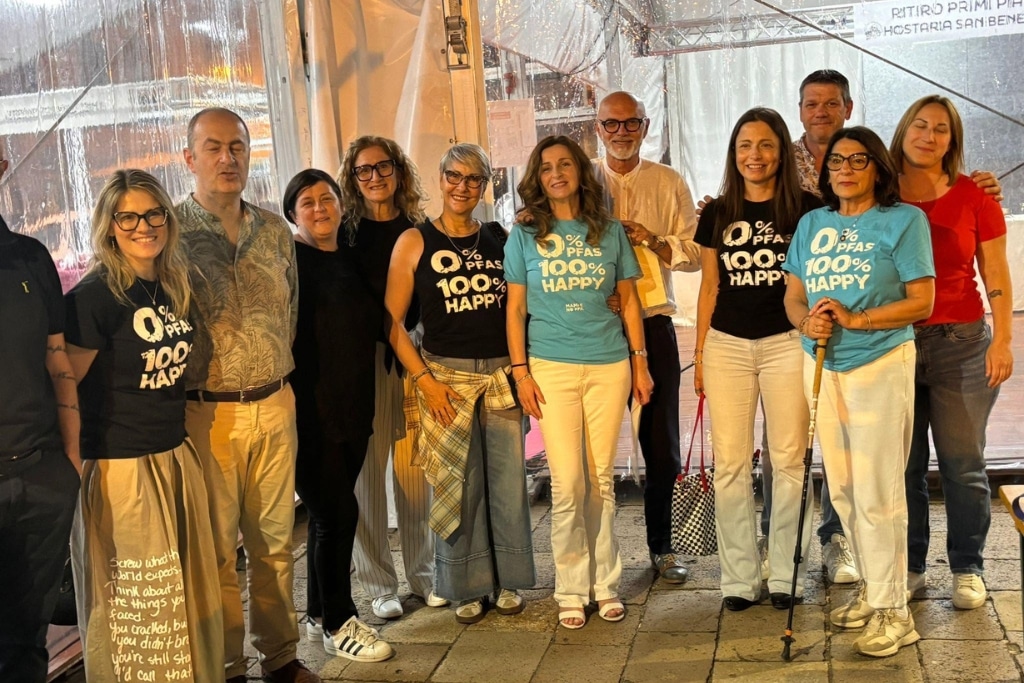
The MammeNoPfas group, the study authors explained, constitutes an “epistemic” community – a population committed to gaining knowledge and providing relevant information to their neighbors, thereby influencing political decisions. The Veneto mothers, many of whom hailed from a minority group, embraced “an accidental form of environmental activism,” mobilizing a pursuit of “justice against those who poisoned their land and bodies.” They had no previous political ambitions or firm ideologies.
Their pursuit only began after they learned in 2016 that their children had high levels of PFAS in their blood but only received information that was “ambiguous, negligible and full of contradictions.” But “the emotional bond with their family members was a strong motivation to act, understand and better manage the situation,” the authors observed.
Fighting For Justice
Drawing from this article and dozens of others, the University of Arizona study offered “a roadmap for contesting injustice” in three phases, starting with community organization – when people come together, conduct outreach and assess local needs.
Often, they come together regardless of borders, race or socio-economic status. A 2021 study observed how largely white, working-class residents of two New York and Vermont PFAS hotspots sent support to the Standing Rock Sioux Reservation, where an energy project was threatening water supplies. They also hosted Michigan moms affected by lead poisoning, wrote opinion pieces with nationwide reach and engaged with PFAS-polluted communities in India and China.
Following this initial coming-together phase is a second stage, during which researchers enter the fray to document exposures and conduct risk assessments. Their data points, the University of Arizona review explained, help bolster lawsuits, legislation and food consumption warnings. The benefits are mutual – though social movements gain strength from science, certain scientific opportunities are “a direct result of this grassroots activism,” according to 2023 research.
One activist featured in that same research recalled that amid a rise of PFAS activism in 2019, state agencies insisted that “this is not going to be a big problem in California.” The residents therefore took it upon themselves to surface EPA data on PFAS in public drinking water systems that were available at the time.

Finally, after the data documentation stage in the PFAS roadmap comes the response – funding and capacity-building in underserved areas, site clean-ups and a push for policies that support the public rather than the polluters.
As for the mothers in Veneto, Italy, their steadfast efforts to acquire knowledge led them through each of these phases and toward tangible action. They were able to pressure local leaders, rally church officials and recruit both national and international allies to their side. Ultimately, these wins brought the company to trial.
“A few worried and angry mothers joined to share the pain,” the authors observed. “Their anger was replaced by a resolve to make changes as mothers and citizens.”
Featured image: Mamme NoPfas/Facebook.
—
About the authors:
Sharon Udasin is a Colorado-based journalist and author of “Poisoning the Well: How Forever Chemicals Contaminated America“. She was a Ted Scripps Fellow in Environmental Journalism at the University of Colorado Boulder in 2019-2020 and received a SEAL Environmental Journalism Award in 2023. A graduate of both the University of Pennsylvania and Columbia Journalism School, Sharon has reported for numerous publications over the past two decades – most recently for The Hill.
Adriana A. Zuniga-Teran is an associate professor at the University of Arizona’s School of Geography, Development and Environment and the Udall Center for Studies in Public Policy. Her research lies at the intersection of urban planning, sustainability, and environmental governance, focusing on water infrastructure systems and their transition to incorporate green infrastructure.
This story is funded by readers like you
Our non-profit newsroom provides climate coverage free of charge and advertising. Your one-off or monthly donations play a crucial role in supporting our operations, expanding our reach, and maintaining our editorial independence.
About EO | Mission Statement | Impact & Reach | Write for us