
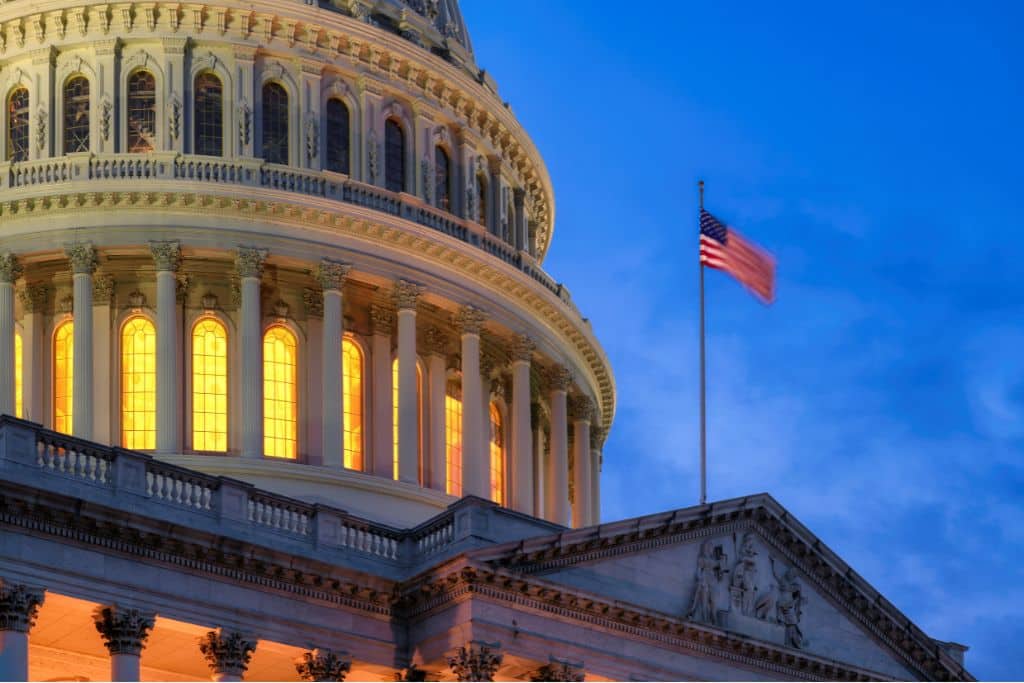
As the US government attempts to roll back rules related to cancer-causing PFAS, also known as “forever chemicals,” states are scrambling to fill a regulatory void with their own precedent-setting policies.
—
By Sharon Udasin and Gemma Smith
This article is part of a series exploring the dangers of PFAS, policy developments and how communities around the US are responding to the threat. Check out part 1 – Inside the Citizen-Led Battle Against Toxic PFAS Injustice – and part 2 – Decades of Using PFAS-Based Firefighting Foam Left Behind a Toxic Legacy.
The US faced a dearth of national action on these compounds, also known as per- and polyfluoroalkyl substances (PFAS), until the Biden administration’s Environmental Protection Agency (EPA) set drinking water standards for some of them in April 2024. Soon after, the EPA declared the two most infamous forever chemicals, perfluorooctanoic acid (PFOA) and perfluorooctane sulfonate (PFOS), as hazardous substances, enabling a mechanism to hold polluters accountable.
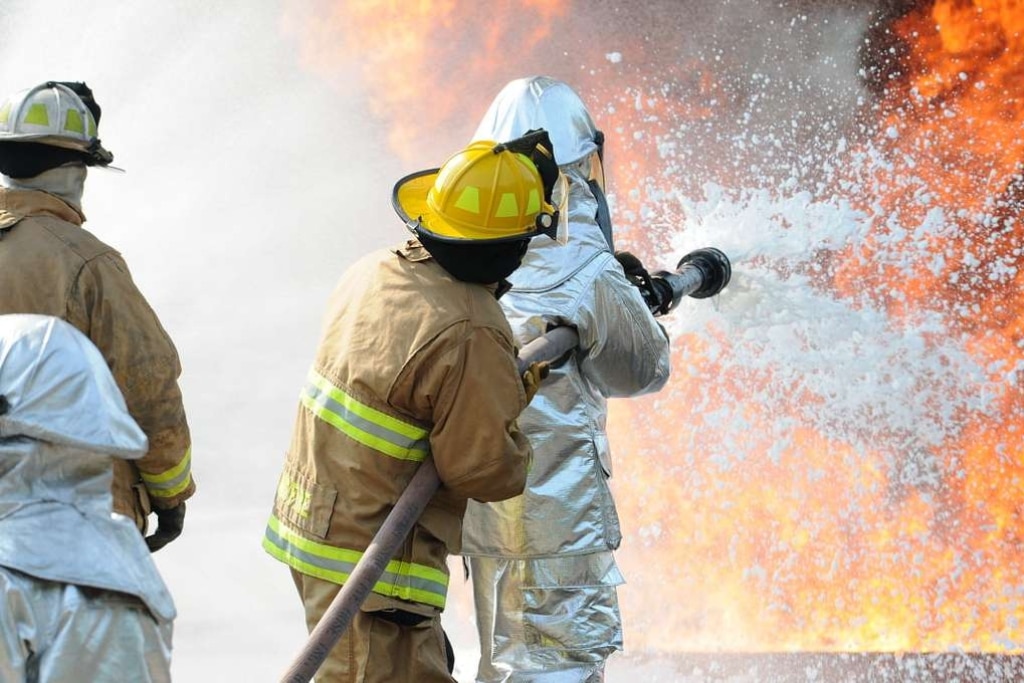
Notorious for their persistence in the body and in the environment, PFAS are key ingredients in numerous household items, such as non-stick pans and waterproof apparel, as well as in certain types of firefighting foams. There are thousands of types of PFAS, all of which are manmade and many of which have been linked to serious illnesses.
The federal headway made in 2024 has since faced setbacks. This spring, the Trump administration’s EPA proposed a rule to rescind the drinking water standards for four of six types of PFAS, leaving only PFOA and PFOS subject to scrutiny. But even for those two compounds, globally recognized as carcinogens, the compliance deadline could be extended from 2029 to 2031. The EPA did, however, decide to uphold the Biden-era hazardous substance declarations.
Water quality management in the country has long been viewed as a largely “cooperative” example of the relationship between federal and state governments. The federal government sets nationwide standards to provide a “floor” of protection available to all citizens, while states retain flexibility over how to implement those standards or develop even more protective policies. In a healthy federal democracy, cooperative federalism lets different levels of government check one another, fill the gaps, and allow space for innovation, while still protecting their citizens from significant environmental harm.
Today, however, this once cooperative relationship is increasingly fraught. Federal standards now more often constitute a ceiling rather than a floor, as many states adopt “no more stringent” laws that prevent them from taking action beyond what is mandated by the federal government. At the same time, federal policymaking on PFAS has been inconsistent and slow, dogged by longstanding gridlock in Washington and changing administrations’ priorities.
Yet in the absence of consistent national leadership on this issue, local and state entities have risen to the challenge in various ways, as observed in a 2025 Environmental Policy and Governance study by a team of University of Arizona researchers.
Local Leadership
One community that has made substantial progress on PFAS is Tucson, Arizona, which researchers explored as a test case in the study. Through interviews with water officials and community leaders, the authors considered how local, state and federal decisions affected the community.
Tucson has been contending with environmental contamination since the 1950s, when an aircraft company dumped toxic chemicals in the area. When it came time to tackle the PFAS problem – linked to the release of firefighting foam from area military bases and the airport – local agencies were “way ahead of the game,” as a community member told the study authors.
“Regulation – hamstrung by bureaucratic and political barriers at the federal and state levels – was hard to come by in these early days of PFAS discovery,” the researchers found. “Rather, sampling and monitoring were the focus.”
Fulfilling requests from the local water utility, the state decided to leverage federal programs and funnel state funds into this data collection. As it became clear that PFAS levels in drinking water were sky-high, additional investments from the state and local utility allowed for the construction of wastewater treatment facilities, even though Arizona’s “no more stringent” laws prevented other actions such as setting statewide drinking water standards.
When federal dollars became available through the Bipartisan Infrastructure Law in 2023, the state was able to transition “from monitoring the problem to facilitating remediation,” the authors noted. But only once the EPA set drinking water standards in 2024 did local and state actors start feeling “some surety,” according to the study.
Ultimately, the authors determined that state and local agencies went “beyond the norm to expand sampling, shut down wells, invest in mitigation technologies, engage the local community and construct new treatment facilities.” Yet although those efforts proved pivotal for the community, action at first faced constraints without federal involvement.
Bipartisanship and Innovation
States and local governments are playing a critical role, but their regulatory rollouts are uneven and plagued by inherent gaps. Not all communities are as proactive as Tucson, supported by an engaged citizenry and hard-won lessons from past contamination crises. And because PFAS are so difficult to destroy and can easily move across borders, this piecemeal approach can exacerbate environmental justice issues and risks leaving certain places behind.
Despite these potential problems, many states have made positive progress on PFAS, even inspiring bipartisan collaborations in an otherwise polarized political era. State attorneys general across the political spectrum have also been instrumental in launching legal action against polluters.
Several states have found avenues for success not just through litigation but also through legislation, particularly when lawmakers have worked to make changes through bipartisan collaboration. One place that stands out among others on this front is Maine, where decades spent applying PFAS-laden fertilizers, called sludge, to farmland had decimated dairy businesses statewide.
Local farmers and lawmakers reached across the aisle on multiple bills, making Maine the first state to enact a wide-ranging ban on PFAS in consumer products, as well as one of the only states to end the practice of slathering farmlands with the suspect sludge. The state also ended up instituting a $60 million “PFAS Fund” for buybacks of contaminated farmland.
“It doesn’t matter whether you’re Republican or Democrat,” farmer Fred Stone, who was involved in much of this legislation, argues in a recent book exploring how PFAS spread across the country.
“It’s very hard to vote against public health and food safety,” Stone said.
Maine’s example is a testament to the fact that state governments do not have to stay gridlocked on PFAS issues, and some other states have followed suit. In Minnesota, Republican and Democratic legislators crossed the aisle to approve the country’s second full ban on PFAS, also known as “Amara’s Law.” Meanwhile, Wisconsin this spring concluded months of bipartisan negotiations to allocate $125 million for fighting PFAS pollution.
Thus far, 10 states have prohibited the manufacture of certain PFAS-laden consumer products, often passing these bills together with targeted sale bans, according to ongoing analysis by researchers at the University of Arizona, which draws from the PFAS Governance Tracker and Safer States Bill Tracker. Among the goods included have been textiles, cosmetics, children’s items, ski wax, cookware, cleaning supplies, menstrual products and artificial turf.
The Threat of Preemption
But the ability of states to take meaningful action on PFAS in consumer goods, drinking water, and other potential exposures is at risk through various mechanisms that allow federal law to take precedence over state law, known as preemption.
Most recently, proposed changes to the Toxic Substances Control Act (TSCA) could allow federal rulemaking to override stronger state protections in how chemicals can be used. If the bill becomes law, state rules would need to be “no more stringent” than federal standards – raising regulatory hurdles for those seeking to strengthen chemical safeguards and tying their hands to whatever the federal government decides to do.

Across drinking water, consumer products, firefighting foam, sludge application to farmlands, and more, the PFAS fight is, in effect, a live test of US cooperative federalism, and the results so far are instructive. States and communities have shown they can act fast, learn from each other, and hold polluters accountable.
Yet a federal democracy perhaps works best as a relay, not a solo race. States and communities have carried this baton further than anyone expected, but they cannot cross the finish line until every runner gets the baton.
Amid the patchwork of PFAS-related actions occurring at local and state levels, many communities, and often the most vulnerable, are left waiting. Still more concerning are developments that would constrain capacity for state and local innovation without delivering on a federal alternative, such as the proposed revisions to TSCA. How these tensions are resolved will say a great deal about whether cooperative federalism can still make good on its democratic promise.
—
About the authors:
Sharon Udasin is a Colorado-based journalist and author of “Poisoning the Well: How Forever Chemicals Contaminated America.” She was a Ted Scripps Fellow in Environmental Journalism at the University of Colorado Boulder in 2019-2020 and received a SEAL Environmental Journalism Award in 2023. A graduate of both the University of Pennsylvania and Columbia Journalism School, Sharon has reported for numerous publications over the past two decades – most recently for The Hill.
Gemma Smith is an assistant professor at the University of Arizona’s School of Government and Public Policy and the Udall Center for Studies in Public Policy. An interdisciplinary scholar of environmental policy, governance, and engineering, her research examines complex, multi-jurisdictional water governance challenges such as per- and poly-fluoroalkyl substances (PFAS) and international cooperation over freshwater resources.
This story is funded by readers like you
Our non-profit newsroom provides climate coverage free of charge and advertising. Your one-off or monthly donations play a crucial role in supporting our operations, expanding our reach, and maintaining our editorial independence.
About EO | Mission Statement | Impact & Reach | Write for us